Thursday, July 26, 2012

10 Ethnonationalist Causes That Might Disrupt the Olympics

The Olympic Games are supposed to transcend politics.  That’s the whole idea.


The Olympic flag flying at half-mast at Munich in 1972 after the Black September massacre

But it has never fully succeeded.  Some of the most insistent images from our collective Olympic memory involve the Games being to make some political point: Adolf Hitler refusing to shake hands with the schwarzer Untermensch Jesse Owens at the 1936 Berlin games—United States athletes invoking the Black Power movement by raising defiant fists during the medals ceremony at Mexico City in 1968—the horrific Palestinian terrorist attacks on the Israeli Olympic team at Munich in 1972—and a bomb at the 1996 Atlanta games planted by a Bible Belt wingnut who viewed the Olympiad as a paean to socialism, atheism, and abortion.


Absences also—absences especially, actually—can be political: the U.S. snubbed the 1980 Moscow Olympics over the Soviet Union’s invasion of Afghanistan (even Jimmy Carter admirers, of whom I am one, think this was far from his finest moment), then the reciprocal East Bloc boycott (which only Romania defied) of the 1984 Los Angeles games.  And the 2008 Beijing games, though touted locally as harmoniously smooth, seemed cloaked only by a malevolent calm for Western media audiences who knew about the brutal police-state repression used to keep protesters away from the action.  (Poetic justice: the famous “bird’s nest” design of the Beijing National Stadium built for the games was conceived by Ai Weiwei, who has since become the personification of Chinese dissent in the international arena.)  Equally eerily, to watch footage of the 1984 Winter Olympics host city Sarajevo, which television puff pieces portrayed as a mountain-ringed paradise full of harmoniously co-existing ethnic groups in the true Olympic spirit, is to be reminded that a decade later Sarajevo was a city in ruins, the very center of the most destructive war to sweep through Europe in the second half of the twentieth century.


Tomorrow begins the Thirtieth Olympiad in London, England, and politics is sure once again to rear its head.  In fact, two days before the opening ceremonies (and it’s beyond me why they hold the first events before the opening ceremonies nowadays), the first diplomatic row occurred when the giant video monitor accidentally (or not?) displayed South Korea’s flag instead of North Korea’s as North Korea faced Colombia in tennis in a game in Glasgow, Scotland.  (Let’s remember that the next time a Scottish nationalist complains that foreigners tend to call the entirety of the United Kingdom “England.”)  (Scotland, incidentally, despite their independence movement, is not predicted to cause trouble at the games; after all, Scottish nationalists believe they have it in the bag and that 2012 will be the “Great Britain” team’s final lap.)


The London Olympics’ first diplomatic incident: wrong flag on the Jumbotron.

In fact, flags are a major source of diplomatic friction at the Olympics.  The People’s Republic of China (P.R.C.) and the Republic of China (R.O.C.) (i.e., Taiwan) have mainly enacted their hostilities at the Olympics over the years mainly in the vexillological arena.  In Melbourne in 1956, the R.O.C. flag was mischievously switched for a P.R.C. one, causing a diplomatic incident (which is probably why the North Koreans smelled a prank during the Glasgow match this week).  Since 1984, the R.O.C. has to call itself “Chinese Taipei” and use a specially designed “Chinese Taipei Olympic Flag” in the Olympics.  (The R.O.C. was offered the name Taiwan but rejected that, since it still insists it is the rightful government of all of China.  It is not clear why Chinese Taipei, in that light, is better, but whatever: they agree.)
The “Chinese Taipei” Olympic flag making its entrance in Beijing in 2008

Politics in the Olympics is not always a bad thing.  There should have been more of it to disrupt the games in Beijing, for example, in my opinion.  In a sense, the protests and politicizations, large and small, are part of what we—if this is actually a verb—are spectating.  Here is a solemn hope that no one gets hurt or killed in the inevitable intrusions of politics into this year’s Games, but it would be nice to see some overlooked just causes get their moments in the spotlight.  But enough editorializing.  Readers will find some of the causes listed below repugnant, and some laudable.  Here, anyway, in no particular order (but culminating in a biggie), is my list of the ten political causes which are most likely to make a splash during the London games:


1. Palestine


The struggle for an independent Palestine is one of the most divisive issues in international politics.  Quick review: Palestinian Arabs rejected the 1949 United Nations plan for a coexisting Israel and Palestine in the Holy Land, so Israel expanded into both designated areas step by step, creating a refugee population in occupied territories which slowly over the decades built itself into a quasi-nation—declaring independence in 1998 with a government-in-exile and then in the 2006 Oslo Accords being granted de facto quasi-independence through the Palestinian National Authority.  Most countries in the world grant Palestine full diplomatic recognition, the exceptions including Israel, Israel’s one ally the U.S., and most of the U.S.’s allies in western Europe.  Though the U.S. veto on the U.N. Security Council prevents Palestine from joining the General Assembly, Palestine participates as a sovereign nation in most other international bodies—including, since 1996, the Olympics.


Palestine’s official Olympic team, Atlanta, 1996

This year, a group representing widows of some of the 11 Israeli athletes killed by Palestinian terrorists of the Black September Organization (B.S.O.) in Munich, Germany, in 1972 are planning protests because no moment of silence to remember the 11 dead will be worked into the opening ceremonies.  One can understand the organizing committee’s reticence: after all, soon numerous pressure groups will be demanding their dead be recognized, and then they will have to craft rules for inclusion that will please no one.  Best to keep it separate.  One thing we can be sure of, however: where there are Israeli protesters, there will be Palestinian ones.  This is just one of the possible Palestinian-conflict flashpoints to expect during these games.


Palestine’s unofficial sharpshooting team, Munich, 1972

2. Kosovo


One thing that makes the Olympics necessarily political is that the games can proceed only if it can be agreed what is a country and what isn’t—and, as with Palestine, there are numerous examples where major and minor powers are unable to agree.  The Republic of Kosovo declared independence from the Republic of Serbia in 2008, after having been ushered into existence by a 1999 North Atlantic Treaty Organization (NATO) bombing campaign to shield Serbia’s ethnic Albanians from another Serb-engineered genocide.  Just under half the U.N.’s member-states recognize Kosovo, but (in a mirror-image of the Palestinian situation referred to above) the Security Council vetoes of Russia (which sides with Serb nationalists out of pan-Slavic chauvinism) and China (which, like Russia, is generally allergic to separatism) ensure that Kosovo will stay indefinitely in a halfway state as not-really-a-country.  But unlike Palestine, whose quasi-nationhood was achieved with the permission of the state it was seceding from (Israel), Serbia still calls Kosovo its southern province, so the stalemate is more severe in some ways.  One result: no Olympic team.  Kosovo has an Olympic committee itself, but the actual International Olympic Committee (I.O.C.) will not engage with it.  It did not even try to field a team in Beijing in 2008.


Kosovo has an Olympic committee, but no Olympic team

This year, however, the attention is on Majlinda Kelmendi, a judo champion from Kosovo whom the I.O.C. denied the chance to compete as an independent, under the Olympic banner, with no nation specified—the preferred solution for athletes whose national identity is too controversial or problematic.  (An example is Guor Marial, a marathon runner from the South Sudan, whose newly independent homeland is too poor and war-ravaged to have an Olympic committee; he chose to compete in London as an independent, rather than for the hated (north) Sudan.)  Kelmendi noted that, in Barcelona in 1992, athletes from what was left of Yugoslavia were allowed to compete as independents, even though that regime was under sanctions for crimes against humanity.  This makes her rejection more bitter.  However, the Republic of Albania is allowing Kelmendi to compete under the Albanian flag.  Kosovars will be rooting for Kelmendi, and they will be doing so under a cloud of politics.  It would be no surprise if Serb and Albanian activists faced off publicly during the games over the question of Kosovo.


Judo champ Majlinda Kelmendi, from Kosovo, competes under the Albanian flag

3. Falkland Islands


The Falkland Islands, a small array of storm-swept rocks in the sub-Antarctic seas off the coast of South America’s southern tip had no indigenous people.  Both Britain and France claimed it in the 1760s, unbeknownst to each other.  The French sold them to Spain, which declared it part of the colony that eventually became Argentina.  In the 1770s the Spanish pushed the British out, which was resisted only half-heartedly, since the British were at that time marshaling their military might to try to prevent the United States of America from coming into existence.  By 1811, the islands were empty again, since even the Spanish had gotten bored with them, but then a Connecticut-born mercenary, in 1820, claimed them in the name of the newly independent United Provinces of the Río de la Plata (later renamed Argentina).  A U.S. warship chased the Argentians off the rocks in 1831, but gradually both British and Argentine settlers made temporary camps there and lived and traded side by side until the Argentine settlement was wiped out by a “creole” and Indian rebellion, armed by the Americans.  The British established the islands’ first permanent colony in 1840.


Prince William being burned in effigy by Argentinian nationalists this spring

Argentina never renounced its claim, though, and the Falklands had become as British as Nottinghamshire by the time Argentina’s Perónist military junta invaded the Falklands in 1982, starting a brief war which the United Kingdom won handily.  This April, on the 30th anniversary, Argentina’s president, Cristina Fernández de Kirchner, revived the dispute—appealing to the U.N. and launching various political and legal initiatives against British oil exploration in the surrounding waters.  (Ah, yes, oil.  You knew there had to be a reason for all this blood and ink spilled over a few clumps of rock, right?)  That conflict began to seep into Olympic matters in April (as reported in this blog at the time) when Argentina began running a television spot showing one of their athletes huffing and puffing and jogging and doing push-ups all over the scenic streets and sidewalks of Stanley, the Falklands capital—in front of a pub, next to a red phone-box, etc., with the words, “To compete on English soil, we train on Argentine soil.”  (Watch the ad here.)  The U.K. Foreign Office spat fire, the American ad firm responsible apologized, the athlete depicted was dropped from the team, and Fernández (as reported in this blog at the time) went out of her way to caution Argentine athletes against trying to score any political points at the games.  (The Argentine claim on the Falklands is wildly popular among the Argentine populace.)  She’s certainly following her own advice, since she won’t even be there; when her non-attendance was announced July 25th, the British rightly interpreted it as the snub that it is.  So Argentina has already politicized these Olympics.  The question now is how public is it going to get.


President Cristina Fernández de Kirchner is boycotting the London Olympics.
(No, this photo was not taken at a quinceañera party.
These are the tasteful and understated regalia of the Argentine presidency.)

4. Gibraltar


Here’s another rock, a big one, and another big headache from the U.K.’s dwindling collection of rocks and jetties and bits of land scattered around the globe.  Spain formally ceded this boulder-like peninsula, with a town atop it, to the British Crown in 1713, after losing the War of Spanish Succession.  The Treaty of Utrecht is unambiguous that Gibraltar is British, and in a 2002 referendum 98% of the ethnically diverse Gibraltarians opted for the status quo instead of even any kind of shared Spanish sovereignty.  But Spaniards still feel Gibraltar should be theirs (though many Spanish nationalists hypocritically turn the tables when they insist on their right to rule two scraps of the Moroccan mainland called Ceuta and Melilla).  Just this past week, British and Spanish diplomats faced off over a Gibraltarian sport-fishing boat which London says the Spanish Civil Guard illegally hijacked in Gibraltarian (i.e., U.K.) waters.  This sort of thing happens from time to time.  And earlier this year, Spain’s Queen Sofía boycotted Queen Elizabeth II’s diamond jubilee over the Gibraltar question, so some Spaniards may be planning to make a public point about Gibraltar this Olympiad.
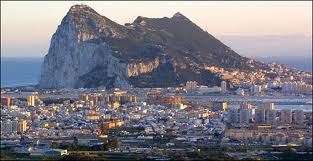

This boulder is the biggest obstacle in Anglo-Spanish relations.

5. Hong Kong


Yet another former U.K. colony, this one was handed “back” to the People’s Republic of China (P.R.C.) amid much pomp and ceremony in 1999.  Hong Kong for the most part has been a topic on which the U.K. and the P.R.C. can make nice, and bask together in what was a victory for diplomacy.  But many Hong Kongers themselves feel that, 13 years later, they ended up with the short end of the stick.  Although the Hong Kong Special Administrative Region (H.K.S.R.A.), which kept many of the U.K.’s freedoms, is one of the wealthiest and freest states or quasi-states in the world, the P.R.C. has made no secret of meddling ever more deeply into its political affairs.  When President Hu Jintao showed up in Hong Kong on July 1st of this year to celebrate H.K.S.R.A. Establishment Day, he was (as I reported at the time in this blog, in a special article on the subject) almost the only one celebrating: 400,000 protesters took to the streets, some waving the former Hong Kong colonial flag with the Union Jack on it, some carrying portraits of Queen Elizabeth II, but none of them openly saying they were tired of being part of China, since that’s one of the few freedoms of speech not permitted in Hong Kong.


Some Hong Kongers pine for the good old days

Hong Kong separatists (and, because of the restrictions, we don’t know how large the movement is—they are quite possibly very very few) were also, naturally, prevented from making their opinions known during the Beijing 2008 games.  So there is some pent-up anger there, and London seems like a pretty inviting place to express it.  (Hong Kong, interestingly enough, has its own Olympic team, and has since 1952, when it was still British.  Normally, you’d think the medal-hungry Communist Party of China would have folded Hong Kong into its own team instantly in 1999, but Hong Kongers carried the day on that one.  Having a separate Hong Kong team also provides cover for Beijing to pretend there is nothing amiss with Taiwan having its own team.  As a compromise, at medals ceremonies—so far just one silver for ping-pong, sorry, I mean table tennis—the Hong Kong flag is raised, but the Chinese national anthem is played.)


Nice flag, Hong Kong.  But enough with the creepy mascots, okay?

6. Tibet


The situation is slightly different for Tibet, which is ruled by the P.R.C. as the so-called Tibet “Autonomous” Region.  Compared to Tibet, Hong Kongers have almost nothing to complain about.  The Communists overran Tibet in 1950, exiled the Dalai Lama and the Tibetan government in 1959, and promptly set about demolishing ancient temples, cracking down on the Tibetan language, forcing atheism on millions of Buddhists at gunpoint, rounding up anyone who complained into concentration camps, and killing a quarter-million Tibetans in an engineered famine.  And that was just the first few years.  The plight of the Tibetans is one of the most galvanizing human-rights issues in the Western world, and backers of Tibetan sovereignty are probably holding high-profile protests somewhere in the world on any given day.  After Tibetans and their supporters watched with nausea the P.R.C.’s portrayal of itself as a joyous, harmonious, multiethnic workers’ paradise at the 2008 games, London 2012 seems like the perfect occasion to take off the kid gloves and raise a stink.  I’m no fan of self-immolation, but anything nonviolent, angry, and attention-catching—bring it!


7. Abkhazia and South Ossetia


Again, here is the question of what is a country.  Abkhazia and South Ossetia were two autonomous regions within the Georgian Soviet Socialist Republic which, after the collapse of Communism in 1991, split away from the newly independent Republic of Georgia.  De facto independent they were, until 2008, when Georgia’s military decided to retake South Ossetia once and for all.  The result was a war with Russia in which Georgia got a bloody nose and Russia got two new client states, whose newly minted de jure independence is recognized only by Russia, Venezuela, Nicaragua, Nauru, Vanuatu, and Tuvalu.  (Venezuela and Nicaragua, here, are just trying to thumb their nose at the U.S.  Naura, Vanuatu, and Tuvalu, on the other hand, opened embassies in the two statelets in exchange for lucrative Russian development deals.)


Abkhazians and South Ossetians consider themselves neither Georgian nor Russian.  In fact, of late they have been chafing more than ever at Moscow’s expectations of them; their Russian-won “independence” leaves them little wiggle room as truly free countries.  Ethnic Georgians were ethnically cleansed out of the two republics in the early 1990s, so most residents are Abkhaz or Ossete, plus quite a lot of expat Russians—and nearly everyone there has a Russian passport, or is eligible for one.  So the obvious solution for South Ossetian or Abkhazian athletes is to compete on the Russian team.  All well and good, and not much Georgia can do about that, as far as formal citizenship goes.  But just this past week the Georgian Olympic committee raised a stink after noticing that two wrestlers from the Russian team, an Abkhaz and a South Ossetian, had their birthplaces listed as Abkhazia and South Ossetia, respectively, with both locations designated as part of Russia.  Even if that kerfuffle gets cleared up, which I’m sure it will, Georgian nationalists are fierce, and they may decide to raise a ruckus over the issue of the two “lost” republics that they have never given up on.


Besik Kudukhov, the Olympic wrestler whose birthplace listing as “South Ossetia, Russia,” infuriating Georgia

8. Western Sahara


This swath of coastal desert in North Africa is one of the world’s forgotten conflicts.  After the Spanish and French had dismantled most of the rest of their African colonies in Africa, Francisco Franco, Spain’s dictator, negotiated an agreement that, after the Spanish departed the area to the south of Morocco, called the Spanish Sahara, the territory would be co-governed by the independent states of Morocco and Mauritania.  The idea was to make a more graceful exit than the Moroccan military seemed to be itching to force upon them, so that they could maintain their economic stakes in the territory.  But as soon as Spanish forces left, Morocco swallowed up the entire territory, calling it part of “Greater Morocco.”  The native people, the Sahrawi, declared their own Sahrawi Arab Democratic Republic (S.A.D.R.), claiming all of Western Sahara but in reality governing only the eastern sliver of territory they were able to hang onto, the boundaries of which are now solidified by a series of massive earthen walls built by the Moroccans.  The U.N. doesn’t recognize the Moroccan occupation of Western Sahara, but it doesn’t recognize the S.A.D.R. either—neither does the I.O.C.—so there the matter sits, at a decades-old stalemate, during which the Sahrawi suffer, forgotten.


The unrecognized Sahrawi Arab Democratic Republic is shown in red.

The plight of the Sahrawi is brought to the world’s attention every now and then, and one dramatic instance of this was in 2003, when Salah Ameidan, a Sahrawi track-and-field star born under Moroccan occupation, competed under the Moroccan flag in a Paris track meet but unfurled a Sahrawi flag as he crossed the finish line.  Subject now to persecution if he returns home, he lives in exile in France and has become a voice abroad for the plight of the Sahrawi people.  Ameidan aspires to race in the Olympics one day but is resolute that he will never do so under any flag other than the Sahrawi one—politely turning down an offer from France to apply for citizenship for that purpose.  For now, there is no Sahrawi Olympic team.  Let’s hope they get theirs one day soon—before Ameidan is too old to compete.  A forthcoming documentary about Ameidan called The Runner, along with a documentary called Sons of the Clouds: The Last Colony, produced by the Spanish actor Javier Bardem (reported on recently in this blog), are bringing more attention to Western Sahara.  In these times of Arab Spring, London seems like a good place to unfurl a Sahrawi flag or two.


Salah Ameidan with his country’s flag

9. Syria


The conflict on everyone’s mind this month is Syria.  When the 18 members of the Syrian Olympic team arrived in London, they were badgered with questions during the welcoming ceremony, but steadfastly refused to talk politics.  Not surprising in the case of one of them—the equestrian Ahmed Saber Hamcho, who is related to Syria’s mass-murderer dictator Bashar al-Assad.  Already, some Syrians living in London have shown up at the Olympic Park carrying Syrian flags alongside portraits of Assad.  Let’s hope that the athletes take the high road and concentrate on competing—as hard as that is knowing that people are being killed back home.  But I also hope that as long as the pro-Assad wingnuts are making their views known, the pro-democracy Syrians—hey, maybe even some Kurds—will as well.


Syria’s swim team arriving in London.
Having just flown in from a civil war, Heathrow actually looks sort of orderly.

10. The Circassians


The most volatile issue connected to the Olympics has nothing to do with London in 2012 but may make an appearance this year anyway.  It concerns the 2014 Winter Olympics to be held in Sochi, Russia.  Sochi is not just in any part of Russia.  It is on the scenic Black Sea between the Caucasus and the border with Ukraine, in the historic homeland of the Circassian people.  Like many minorities in the Russian Federation, Circassians have their own more-or-less autonomous-ish republic—in fact, three separate ones, part of a deliberate divide-and-rule tactic of breaking up their homeland into disparate shards of territory.  In only one of those republics do Circassians number just over 50% of the population, and they are far outnumbered by Russians in Krasnodar Krai, the Russian province where Sochi sits—and where Russian ultranationalist thugs try to keep the Circassian minority out of public life.


And why are there so few Circassians in the vast territory that is, in point of fact, Circassia?  Well, I’m glad you asked.  The Russian Empire, in a series of brutal expansionist wars in the 1860s and ’70s, murdered and exiled hundreds of thousands of Circassians, essentially shattering an ancient civilization into pieces, in the process of extending their boundaries south to rub against the Ottoman Empire.  But Circassian nationalism has been on the rise since the fall of Communism.  While not fighting for secession per se, Circassians have been speaking up for more rights in exile in Turkey (where they number 2 million, one of Turkey’s largest minorities), would like to unite the disparate Circassian territories into a single autonomous republic, and are trying to get more from the Circassian diaspora to return to Russia—something that Vladimir Putin, who smells another Chechnya brewing thereby, is trying to block.  As a result, tragically, many Circassians in exile in Syria are trapped in the civil war—the one country that might take them, Russia, having turned its back.  Circassians tend to be politically moderate, but—like their neighbors the Kurds and the Armenians—they nurse their ancient grievances, which include what they call Russian-engineered genocide, defiantly and proudly.


Circassian protesters marking the Russian genocide

Also, since Circassians are Muslim and Turkic-speaking, radical Muslims from ethnic Russian republics to the east in the North Caucasus—in Chechnya, Ingushetia, and Dagestan—usually include Circassia (and Abkhazia, which some classify as part of Circassia) in their imagined Caucasus Emirate, the independent jihadist republic they would like to carve out of southwestern Russia.  In places like Dagestan, bombings and assassinations are an almost daily occurrence, as readers of this blog well know.  So far, the violence tends not to spread as far west as Sochi, but that may change as 2014 approaches.  Sochi itself used to be the urban center for the Ubykh ethnic group, who are—excuse me, were—considered a subgroup of Circassians.  Ubykhs were nearly wiped out by the Russians in the 1860s and ’70s, their culture was erased from the Russian landscape, and the last speaker of the Ubykh language died in exile in Turkey in 1992.  So for Circassian nationalists and anti-Russian Islamists, the 2014 Olympics might as well be a Cossack dancing on a mass grave.  And the 2014 Olympics will also fall directly on the 150th anniversary of what Circassians call their genocide.  The timing and location, then, are considered a deliberate provocation.  It is a provocation which will be answered loudly and clearly in 2014, I will wager.  And in London this month we may see some dress rehearsals.  (It won’t be the first time pro-Moscow and Islamist forces have carried out terrorist proxy wars in the streets of London.)
The 2014 Winter Olympics mascot Cheburashka
kidnapping two Circassian children to take back to his lair and devour

Hang onto your seats.  It’s going to be a bumpy ride!


[Also, for those who are wondering, yes, this blog is tied in with a forthcoming book, a sort of encyclopedic atlas to be published by Auslander and Fox under the title Let’s Split! A Complete Guide to Separatist Movements, Independence Struggles, Breakaway Republics, Rebel Provinces, Pseudostates, Puppet States, Tribal Fiefdoms, Micronations, and Do-It-Yourself Countries, from Chiapas to Chechnya and Tibet to Texas.  Look for it in spring 2013.  I will be keeping readers posted of further publication news.]

Tuesday, July 24, 2012

Valtellina: A History Lesson on Europe’s Tense North–South Border

Europe’s cultural and even political boundaries have never been more fuzzy and contested.  The Euro Zone crisis is intensifying chauvinistic opinions on what it means to be Northern European and Southern European.  Padania (northern Italy), Catalonia, and even France’s region of Savoy (see a report on Savoyard separatism from this blog), are itching to secede.  Switzerland is content to be a gaping doughnut hole in the European Union (E.U.).  And an island in Greece is even trying to join the Republic of Austria (as reported last week in an article in this blog).  It’s always an exercise in perspective to take a look at central Europe’s complicated history and figure out how we got here and where we might be headed.


Valtellina

In that spirit, an academic conference held jointly in the nearby border towns of Tirano, Italy, and Poschiavo, Switzerland, on June 22-23 was the occasion for historians to mull the significance of the 500th anniversary of the annexation, in June 1512, of the Italian region of Valtellina by the Free State of the Three Leagues, which is now the Swiss canton of the Grisons (Graubünden in German, and Grigioni in Italian).  Today, Valtellina forms more or less the province of Sondrio in the Lombardy region of northern Italy, but in 1512 it was under the control of the Holy Roman Empire’s Duchy of Milan until the Three Leagues annexed it.  It remained a Three Leagues dependency without ever being asked to join the Free State’s tripartite confederation (the three leagues were the League of God’s House, the Grey LeagueGraubünden literally means “Grey League”—and the League of Ten Jurisdictions).  Thus, after conquering Switzerland and northern Italy, Napoleon Bonaparte in 1798 gave the Valetellinesi the choice of which Napoleonic puppet state to join: the Cisalpine Republic, with its capital in Milan, or the Helvetic Republic, where it would be part of the Canton of Raetia (corresponding to the ancient Roman imperial province of the same name).  It chose the Cisalpine Republic, where more fellow Italian-speakers lived.  (The Helvetic Republic was, as its successor state Switzerland is today, mostly German-speakers).  So, when the Helvetic Republic was reorganized in 1803 under Napoleon into the loosely federal Swiss Confederation we know today, it was with a truncated Grisons replacing Raetia, while Valtellina became part of Napoleon’s Kingdom of (northern) Italy, then the post-Napoleonic Kingdom of Lombardy and Venetia and, later, modern Italy.


Switzerland in the late Napoleonic period.  Valtellina is shown with diagonal grey stripes in the lower right.
Today’s Grisons (Graubünden) is “Rhätien,” in lavender, just above it.  Bellinzona and Lugano later united as Ticino.

But what if the Valtellinesi had chosen differently?  As a Grisonian “fourth league,” muses the Milan University historian Guglielmo Scaramellini, Valtellina’s inclusion might have tipped the Grisonian ethnolinguistic and political balance and dampened the Grisons’ motivation to join the Swiss Confederation after Napoleon—“so that still today,” Scaramellini speculates, “there would be a Republic of the Four Leagues, independent and sovereign.  Another miniature Switzerland—but competing with the original!”  The Grisons of today is already trilingual—with a German-speaking majority outnumbering valleys populated by speakers of Italian and Romansh (Rhaeto-Romanic) (Romansh being one of Europe’s threatened languages, related to the much healthier Friulian language spoken in northeastern Italy).  But an independent Grisons that included Valtellina would be dominated by Italian language and culture, and, says the Swiss historian Florian Hitz, “One cannot be sure if a Switzerland weighted to the southeast, with Valtellina, would have been able to withstand Italian irredentism.”


Flags of Switzerland and the Grisons

Nowhere more than on Switzerland’s borders with its neighbors, none of which corresponds to a linguistic boundary, is the arbitrariness of the lines laid down by history more obvious.  (Maybe that’s why the Swiss are so xenophobic: they are trying to change the subject so no one notices that there are no ethnolinguistic grounds for the country existing at all.)  The cultural affinities that run across the border from Valtellina to the Grisons might be something to contemplate, in light of several recent developments.


Chur, capital of the Grisons, in 1803, the year the modern Swiss Confederation was formed

Since 1995, the Council of Europe has recognized (mostly for touristic and cultural-exchange purposes) a transnational “Euroregion” called Insubria, embracing part of the Italian regions of Piedmont and Lombardy and Switzerland’s Italian-speaking canton, Ticino, to the Grisons’ west—but not, oddly enough, either Valtellina or the Italian-speaking Poschiavo valley in the Grisons.  And an Italian linguist named Lorenzo Banfi founded, in 2005, the bioregionalist nationalist political party Domà Nunch (“Only Ours,” in Lombard dialect) with the quixotic idea of one day declaring an independent Insubria.


A map of “Insubria”

More relevant here, to the east, is the Euroregion of Raetia Nova—or, if you want to get pedantic about it, Rætia Nova—which as far as I can tell seems to embrace the historically Romansh-speaking areas of: Graubünden; adjoining areas of the Austrian Alps (including Vorarlberg, which after the carnage of the First World War voted overwhelmingly in a referendum to join Switzerland, but without effect); Valtellina; and the Italian autonomous region of Trentino–Alto Adige/Südtirol, where hundreds of thousands of speakers of Friulian and Tyrolean German constitute Italy’s highest concentration of linguistic minorities.  It is hard to get reliable maps of Raetia Nova, suggesting that as a Euroregion it hasn’t really gotten up and running yet, though there was a Raetian football (soccer) team that competed in this year’s VIVA World Cup competition for unrecognized states, held June 9th in Arbil, in Iraqi Kurdistan (as reported on in this blog at the time).  (Since you ask: Zanzibar, Western Sahara, and Tamil Eelam massacred them out of the top ranks with 6-0, 4-0, and 3-0 wins, respectively.)


The flag of Raetia, as used by the region’s resolutely unofficial football team.
Note the use of grey, as in the “Grey League”—otherwise a rather unusual color in flags.

Meanwhile, northern Italy’s separatist Lega Nord (“Northern League”) has recently mooted the idea of a “Greater Padania” (see my article from this blog on that particular benchmark in Umberto Bossi’s descent into silliness) that embraces all of the Alpine region, as far as northern Bavaria.  (See an article from this blog listing Padania as one of “Ten Separatist Movements to Watch in 2012” and another profiling Bossi’s son Renzo Bossi as one of “The World’s 21 Sexiest Separatists.”)

A Lega Nord–produced map of a sort of European-mini-empires fantasy league, showing,
in dull orange in the middle of everything, “Greater Padania”

Hitz says that Valtellina would theoretically make a fine Swiss canton: “Ticino was conquered territory, too, so that would fit,” he says, adding, “The country would just have been bigger and more beautiful!”  (Ah, yes, I like my countries Rubenesque myself.)  In fact, in March of this year Switzerland’s minister of defense, Ueli Maurer (ironic onomastic synchronicity: Maurer means wall-builder, but never mind), quipped that Switzerland would be economically capable of annexing Lombardy.  He was not serious, but several tens of thousands of Lombards were when, over the next few weeks, they signed a petition supporting the idea.  Under Swiss rule, Lombards would have more autonomy, a better infrastructure, an automatic exemption from foreign military adventurism, and even lower taxes—since, in this Lega Nord way of thinking, there won’t be millions of lazy, jobless Sicilians and Neapolitans to subsidize.


Switzerland’s minister of defense, Ueli Maurer (right), posing with a compatriot

Bossi, the Lega Nord’s founder, had another idea, telling a crowd of supporters recently, “We could declare war on them” (them meaning the Swiss; Bossi is a Lombard), “and then promptly surrender.”  Somehow, I think those are the only terms of annexation the xenophobic—and in particular Italophobic—Swiss would accept.  (Lega Nord sent a delegate to the Valtellina conference to take careful notes.)


The flag of Insubria is a mighty wicked flag, in my opinion.
Yes, that’s Jonah being eaten by a (rather serpent-like) whale.  Twice.
’Cause that’s how Insubria rolls.

But all of these jokes and quips and petitions should be a wake-up call.  Many in central Europe are unhappy with the way the borders are drawn.  They don’t feel the lines and colors on the map reflect their histories, identities, and allegiances.  Sooner or later, something has to give.


[Also, for those who are wondering, yes, this blog is tied in with a forthcoming book, a sort of encyclopedic atlas to be published by Auslander and Fox under the title Let’s Split! A Complete Guide to Separatist Movements, Independence Struggles, Breakaway Republics, Rebel Provinces, Pseudostates, Puppet States, Tribal Fiefdoms, Micronations, and Do-It-Yourself Countries, from Chiapas to Chechnya and Tibet to Texas.  Look for it in spring 2013.  I will be keeping readers posted of further publication news.]

Monday, July 23, 2012

Syria’s Kurds Are Setting Up a Quasi-State—How Long Can It Last?


Kurds flying their national flag in parts of Syria liberated by Kurdish rebels in the past couple days


After more than a year of fighting and waiting and hoping in Syria’s civil war, Kurdish rebels are now governing parts of Syrian Kurdistan and are on the brink of taking over its capital, Qamishli.  How will the world respond?  Will the Kurds ever let go of this quasi-state now that they have it?  And why should they?

[Note: See these earlier articles from this blog on related topics, especially with respect to the Kurds and the Arab Spring: “And Now Civil War ... Could Syria Break Up?” (Nov. 2011), “The Iraq War Is Over, but Is Iraq’s Partition Just Beginning?” (Dec. 2011), “Ten Separatist Movements to Watch in 2012” (Dec. 2011); “Get Ready for a Kurdish Spring” (March 28, 2012); “Shifting Alliances in the Kurdish Struggles” (April 1, 2012); “Turkish Delights Hide Ugly History” (April 4, 2012); plus, a more recent article,  “Liberation of Syrian Kurdistan Infuriates Turkey, Iraq, and the Free Syrian Army—in Fact, Everyone but Assad” (Aug. 4, 2012), and, on a pretty much weekly basis, installments of my “Week in Separatist News” columns.]


First, the news as it is coming in ... which is changing hourly and may be obsolete by the time you read this (it is the morning of July 23rd) ...

Kurds Bar Arab Rebels from Freed North Syria Towns, Will Govern Alone.  The tipping of the military advantage in Syria’s civil war in favor of anti-government forces after a July 18th suicide-bombing gutted the dictator Bashar al-Assad’s cabinet has been a boon, so far, for the Kurds who predominate in the mountainous north of Syria—called “Western Kurdistan” by Kurdish nationalists—along the border with Turkey.  Kurdish rebel forces immediately, on the 18th, began securing small parts of northern, Kurdish-dominated towns.  On July 19th the town of Kobane, in Aleppo province, was liberated by the Kurds’ “Popular Protection Units,” and the following day the towns of Amude and Efrin fell to rebels with little violence.  Derki, a center of Syria’s oil industry, was liberated the following day.  Syrian flags were lowered, and the Kurdish national flag, along with the flag of Turkey’s banned separatist Kurdistan Workers’ Party (P.K.K.), were raised on all government buildings in Kobane, Amude, and Efrin after the liberation.  The P.K.K. by July 20th had reportedly sent 2,000 troops into Syrian Kurdistan (more on that below).


According to a June 11th agreement between different Kurdish political factions in the war—signed at summits in Arbil, in northern Iraq, presided over by Iraq’s autonomous Kurdistan Regional Government (K.R.G.)—the liberated areas will be co-governed by the Kurdish National Council (K.N.C.) and the Democratic Union Party (P.Y.D.) (other sources call the P.Y.D. entity in the agreement the National Council of Western Kurdistan)—anti-government groups in Syria which cooperatively run the “Popular Protection Units.”  On July 19th, soldiers from the mainstream, Sunni-Arab-dominated Free Syrian Army (F.S.A.) were prevented from entering Kobane.  An official from the P.Y.D., Hussein Kochar, explained, “The Kurdish forces rejected a request by the F.S.A. and told them that they [Kurds] can control their own areas.”

Kurds marching this week in liberated Amude with photos of those killed in a 2004 Kurdish uprising

In Qamishli, the largest city in, and notional capital of, Syrian Kurdistan, the Kurdish flag was beginning to be raised in some areas on July 20th and the city was expected to fall to Kurdish rebels by the day’s end, though by next day there was still fierce fighting in the city.  The People’s Council of West Kurdistan in the Kurdistan Region of Iraq, an exile group, said that now “All the Kurds are waiting for the liberation of Qamishli city, since it is the largest Kurdish city in Syria and it is considered as the political and administrative capital of the Kurdish region in Syria.  Only then we will be able to breathe freedom in Syria’s Kurdistan.”  Meanwhile, in Dayr ez-Zawr, a town just south of the Kurdish region, in eastern Syria, the Arab Local Coordination Committee claimed that it was the F.S.A., not Kurds, who were on the brink of taking Qamishli, which Kurds in Qamishli rejected as false.

Members of the Kurds’ Democratic Union Party (P.Y.D.) in liberated Kobane just yesterday

The F.S.A. is not happy.  It is accusing Syria’s Kurds of allowing Kurdish fighters from northern Iraq to join the fight in Syrian Kurdistan, and, it is feared, take over.  That was the claim made by Kamal al-Labwani of the Syrian National Council (S.N.C.), the F.S.A.’s political arm.  But Syrian Kurds rejected the S.N.C.’s claims, calling them Arab propaganda intended to divide.  Yilmaz Saeed, a member of Syria’s Kurdish Youth Movement, said that those Kurds flowing into northern Syria from northern Iraq “are Syrian Kurdish soldiers who defected from the Syrian army and resorted to Iraqi Kurdistan where they received military training and got organized.”  Saeed also tried to squelch what he called rumors that Kurds were in places doing battle against the F.S.A., adding, “Kurds are a main and institutional part of the ongoing pro-democracy revolution, and they have participated actively since the first day to topple this totalitarian regime, but it seems that the regime could make a deep chauvinistic influence on some pan-Arabism opposition figures.”


9,000 Kurdish Refugees from Syria Stream into Iraq’s Kurdish Region.  In Iraq’s autonomous Kurdish region, as many as 9,000 mostly Kurdish refugees from northern Syria had arrived across the border, according to a K.R.G. official on July 21st.  The K.R.G. is accepting the refugees unilaterally, despite a statement by Iraq’s Shiite-Arab-dominated central government in Baghdad the day before that Iraq could not accept any refugees from the Syrian war.


Talabani’s Condolences over Cabinet Bombing Irk Kurds.  But, even though Syria’s Kurds have reason to be grateful to the K.R.G. and its president, Massoud Barzani, for brokering the agreement that paved the way for Kurdish rule in Syrian Kurdistan, their enmity toward Iraq’s president, Jalal Talabani, who is also a Kurd, was deepened by Talabani’s letter of condolence to Assad for the death of his brother-in-law, Gen. Asef Shawkat, in the July 18th attack.  Shawkat was deputy minister of defense, and thus with near certainty was directly or indirectly responsible for murdering Kurds in the Syrian civil war.  One banner held by Kurdish demonstrators in Syria on July 21st read, “We promise you, Talabani, that we will soon free Syria.”

Jalal Talabani, Iraq’s president, who happens to be Kurdish, is no friend of any Kurdistan

What next?  Several questions present themselves.  Mostly, what will the international community do in response to a de facto Kurdish state in the northern sliver of Syria?

But, more specifically, what will Turkey do?  Turkey has for decades battled, with sickeningly pitiless success, to prevent the fifth of its own population that is Kurdish from making any progress in achieving autonomy or independence in the southeastern portion of Turkey which they dominate—and which the United States president, Woodrow Wilson, and the international community tried to establish as an independent Kurdistan after the First World War, before that dream was crushed by the genocidal mercilessness of Kemal Atatürk’s “Young Turks” regime in the jingoistic Turkish Republic that succeeded the Ottoman Empire.  This spring saw an attempt at a “Kurdish Spring” in Turkey in emulation of the ongoing “Arab Spring” revolutions (including Syria’s) (see my blog article on the Kurdish Spring).  It lost momentum, but it has not died down.  Turkish repression of Kurds continues, as do clashes between Kurdish and Turkish forces in Turkey—always the case when the snow begins melting in the mountainous Kurdish homeland.  Turkey—which pulled back from the brink of all-out war with Bashar al-Assad’s father Hafez al-Assad’s Syrian dictatorship in 1998 over the question of Syrian aid to Turkish Kurds—has never been cosy with Syria, but once the Syrian civil war gained momentum Ankara became Assad’s fiercest critic.  With one of the world’s largest militaries, just over the border, Turkey is also Assad’s most credible threat, and Turkey has openly contemplated invading northern Syria (i.e., Syrian Kurdistan) to set up a buffer zone—both to prevent Syrian refugees, both Arab and Kurdish, from stampeding in unmanageable numbers into Turkey, and to prevent what is happening right now: the establishment, with the P.K.K.’s apparent cooperation, of a Kurdish quasi-state in northern Syria.  Is this the time for Turkey to take a step?  Possibly not.  Turkey is a member of the North Atlantic Treaty Organization (NATO), which means that any action by Turkey that invites a reprisal by the Assad regime (or, indeed, a fiercely anti-Kurdish or anti-Turkish wild-card Arab regime after Assad) against Turkish territory requires, by treaty, that all NATO states, including three nuclear powers (the U.S., the United Kingdom, and France) to respond in defense.  No one, on either side, wants that.  In fact, all of the diplomacy over the past months has been oriented to preventing that.  So, in the short term, Turkey will exercise the restraint that NATO demands of it.  But in the long term, Turkey will do everything it can, covertly or overtly, short of all-out war, to prevent a Kurdish state from forming.  (Turkey’s increasingly warm economic relationship with the K.R.G. is now in jeopardy too, if it turns out that the K.R.G. is aiding Syria’s Kurds in a way that Ankara feels is destabilizing to Turkey.)

The 2012 “Kurdish Spring” uprising

Will the international community accept a Syrian Kurdistan?  Probably not an independent one; an autonomous one, like the K.R.G., maybe.  The West has been very encouraging of as much autonomy for the K.R.G., in Iraq, as is possible, since the K.R.G. is a fiercely pro-American and, increasingly, pro-Turkish and even pro-Israeli regime that is an important staging ground, along with Azerbaijan, for any anticipated cold or hot conflicts with Iran.  But too much Kurdish autonomy in northern Iraq is not good for Iran’s enemies either, since the more Kurds cut themselves out of, or are cut out from, the Iraqi central government’s political life, the greater the majority the Arab Shiites wield in the rest of Iraq and, thus, the more that Arab Iraq is likely to become an Iranian client state.  Don’t think that the West and NATO have figured out yet how to unravel this Gordian knot; they haven’t, hence the skittish and back-and-forth U.S. foreign policy with respect to Iraq’s Kurds.  But this crisis may push them toward a firm position, for better or for worse.

Massoud Barzani, president of northern Iraq’s Kurdistan Regional Government

Keep in mind also that the P.K.K. is listed by almost all Western countries, the European Union (E.U.), etc. as a terrorist organization.  This is not because they are particularly terroristic nowadays.  They choose military targets almost exclusively, which makes them, technically, less terrorist than countries like the U.S. and the U.K., whose standard war tactics include merciless bombing of civilian infrastructures for the purposes of inspiring “shock and awe.”  The P.K.K. are called “terrorists” merely as a diplomatic bone thrown to a country (Turkey) that used to be a rather crucial NATO ally in the cold-war days.  Maybe it’s time to de-list the P.K.K., especially if the the U.S.’s Central Intelligence Agency (C.I.A.) may now have to work with them in Syria.  (Oops, did I just say that the C.I.A. is helping the opposition in Syria?  Please disregard that statement; I can neither confirm nor deny.)  Otherwise, Syrian (and Iraqi) Kurds will be smart to refrain from being too visibly associated with the P.K.K. or with the cause of Turkey’s Kurds.  Perhaps the P.K.K.’s association with Syria’s Kurds right now is only cynical and strategic anyway: earlier this year, the P.K.K. was capturing F.S.A. fighters fleeing into Turkey, including Kurdish ones, and delivering them into the hands of Assad’s torturers—so fearful were they (as I read it) of being perceived by Ankara of upping the ante by forming a military alliance with Syrian Kurds.  So the P.K.K.’s long-term goal of a Kurdish superstate is for the moment completely subservient to their short-term goal of survival, and what that means depends on how Turkey responds.  Their short-term goals may change day by day, and there may already be different P.K.K. factions taking different approaches and different gambles.

Kurds flying one version of the Kurdistan Workers’ Party flag (on left) in Berlin

What will Iraq do?  The Arab-Shiite-dominated government in Baghdad has already been fiercely resistant to the increasingly strident steps in the direction of independence that the K.R.G. has been taking.  Now it is facing the prospect of an already autonomous K.R.G. that now has a strong ally in a quasi-independent Syrian Kurdistan.  They might even try to merge to create a transnational Kurdish state out of northern Iraq plus northern Syria—long a dream for a people spread out over four or five separate countries.  (Iran’s Kurds, who can barely move under the ayatollahs’ heel, are not a factor just yet.)  Baghdad would hate that as much as Ankara would.  But, to be realistic, I think that many in Baghdad have written off the north as lost.  They are concerned mainly with keeping oil-rich Kurdish areas that are outside the K.R.G.’s territory, such as Kirkuk, in Iraq.  They have reconciled themselves to the fact that the K.R.G. has powerful Western friends and that their hands are tied.  Plus, as mentioned above, the loss of the K.R.G. would mean that Iraq’s Shiites would have an even more overwhelming majority over the Sunni Arabs, who have a much less coherent territory that they could secede with.

Iraq’s three major ethnoreligious groups—
but the line between Sunni and Shiite areas is not nearly so clean as this map indicates

What will Israel do?  Israel is less concerned with what goes on in northern Syria than with what goes on in the south and in Damascus—whether Baathist and other nationalist Syrian Arabs will ally themselves with Hezbollah in Syrian refugee communities in Lebanon; whether a power-vacuum will inspire an Arab or Druze (or both) retaking of the Golan Heights; and whether some wacko Arab nationalist will succeed Assad, come into possession of his arsenal of chemical weapons, and contemplate using them against Israel.  Mostly, Israel has been happy that the fall of Assad means Iran no longer has an ally on Israel’s border—and it robs Hezbollah of a land route to Iran.  They mostly want a peaceful transition and a new regime in Damascus that is grateful for Western help and thus a likely, if only grudging, friend of Israel.  Israel has, for strategic reasons to do with Iran (mentioned above), been surprisingly tolerant of the K.R.G.’s autonomy; if things go smoothly, they could be fine with an autonomous or independent Syrian Kurdistan as well.

Another version of the P.K.K. flag


[Also, for those who are wondering, yes, this blog is tied in with a forthcoming book, a sort of encyclopedic atlas to be published by Auslander and Fox under the title Let’s Split! A Complete Guide to Separatist Movements, Independence Struggles, Breakaway Republics, Rebel Provinces, Pseudostates, Puppet States, Tribal Fiefdoms, Micronations, and Do-It-Yourself Countries, from Chiapas to Chechnya and Tibet to Texas.  Look for it in spring 2013.  I will be keeping readers posted of further publication news.]


Subscribe Now: Feed Icon