Showing posts with label Qaddafi. Show all posts

Thursday, November 14, 2013

Cyrenaican Nationalists in Libya Form Regional Government, No Longer Even Pretending It’s Not about the Oil


The question of centralism vs. federalism in the new Libya, and in particular the question of whether the oil-rich east of the country, called Cyrenaica (or Barqa, in Arabic), should have its own autonomous government, has returned.  And this time the pro-home-rule Cyrenaicans seem to really mean it.  Separatist militants have even taken over oil-industry facilities, crippling the nation’s power grid.


In March of last year (as reported at the time in this blog), with Libyans still reeling from a quick European-facilitated Arab Spring revolution which eliminated their long-time dictator, Moammar al-Qaddafi, leaders in the Cyrenaica region declared that they were now an autonomous region.  The leader of the autonomists, Prince Ahmed al-Zubair al-Senussi, was a great-nephew of King Idris, a member of the Sufist “House of Senussi” which ruled Cyrenaica during its brief period of British-backed independence after the defeat of the old colonial power, Italy, in the Second World War.

Moammar al-Qaddafi
Idris stayed in power when the United Nations and the United Kingdom folded the Emirate of Cyrenaica into a United Kingdom of Libya in 1951, joining it to the former British colony of Tripolitania to the west and the vast, arid Fezzan region to the south, which had been part of French West Africa.  The 1951 constitution guaranteed strong local powers to the three regions, in a loose federation.  The new Libyan capital was officially Tripoli, capital of Tripolitania, but Idris ruled from the old Senussi family seat in Benghazi, Cyrenaica.  In 1963, King Idris centralized the government, dissolving the three autonomous regions and breaking them into smaller, less powerful provinces.  Tripolitanians regarded this as a Cyrenaican power-grab.  By 1969, Libya was seen as weak and precarious with its aging, childless monarch regarded as a British stooge beholden to European oil interests (as, arguably, he was—otherwise the British would not have installed him).  Plus, the Suez Canal crisis and, more immediately, the 1967 Arab–Israeli War had stoked unprecedented Arab nationalism, which made the Senussis look like some kind of Ottoman-era anachronism.  So an ambitious army colonel named Moammar al-Qaddafi, born in a Bedouin tent in Tripolitania, overthrew the king in 1969, kicked out foreign oil firms, and installed a petroleum-fueled socialist dictatorship which shifted power back to Tripoli.  A failed Senussi-led monarchist coup in 1970 only tightened Qaddafi’s grip on the east.

King Idris—once ruler of Cyrenaica, then of Libya
Thus, when, in 2011, it looked like the Arab Spring revolutions would come to Libya next, Cyrenaica was unsurprisingly the center of rebellion, and for quite a while during the 2011 civil war, the internationally backed transitional rebel government was based in Benghazi.  The June 2012 elections went smoothly, despite threats by Zubair’s Cyrenaica National Council and other regionalists to disrupt them.  Then, near the first anniversary of those elections, came another autonomy declaration from Zubair.  It was largely ignored, but the next developments weren’t.

Ahmed al-Zubayr al-Senussi at this year’s autonomy declaration
In July, a mostly non-political labor strike at Cyrenaican oil fields and refineries provided the occasion for more militant Cyrenaican nationalists, led by Ibraham al-Jadhran, to piggy-back their cause onto that of the oil workers and add autonomy for Cyrenaica to the strike demands.  In October, Jadhran’s Political Bureau of Cyrenaica (P.B.C.) declared the formation of a Cyrenaican government, one with no Senussis in it.  Zubair later clarified at a press conference that his own group, now called the Council of Cyrenaica in Libya (C.C.L.), had failed to find an accommodation with Jadhran and had nothing to do with the new “government”—which, incidentally, the central government in Tripoli also denounces as illegitimate.

The flag of the former Emirate of Cyrenaica
Now that the gentle, Sufist, royally-descended, and for the most part accommodationist autonomists of the C.C.L. have had the banner of Cyrenaican pride snatched from them by a more radical and better-armed militia led by Jadhran, it is not clear what the movement’s new direction will be.  Is there an Islamist component to the new provisional government?  It is not yet clear, but the fact that Benghazi has, in the post-Qaddafi era, become a breeding ground for salafist radicals who are contemptuous of the region’s Sufi heritage makes one wonder.  (This is only one part of the world where Islamists are going head to head with more moderate Sufis—and winning.  It also happened in northern Mali last year and is also the dynamic in the North Caucasus, western Saudi Arabia, and northern Somalia.)  After last year’s killing of the United States ambassador in the city, the very name Benghazi has in the U.S. at least become synonymous with the vulnerability of Western interests, and of Libya’s fragile democracy, to fundamentalist violence.


Nor is eastward the only direction in which Libya is being pulled apart.  The southern region, Fezzan, also declared an autonomous government this summer.  Fezzan is an ethnic mix of mostly non-Arabs—including Toubous who were dismissed by Qaddafi as “black Chadians” and stripped of their citizenship rights, as well as Tuaregs who were traditionally loyal to Qaddafi and who stoked a separatist Tuareg uprising in northern Mali last year which was co-opted by Algerian-based Islamist radicals and then, early this year, toppled by France’s military.  It is very unclear as yet what role Tuareg nationalists—or, even, Islamist radicals—might have in Fezzan’s emerging regionalist movement.

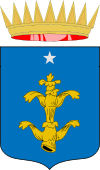
Cyrenaica’s coat-of-arms
The ongoing talks on a new Libyan constitution are now being boycotted not only by the Cyrenaican and Fezzani separatists but, in Tripolitania itself, by the Berber minority.  Berbers, who are in some sense the indigenous people of the North African Maghreb, are linguistically and culturally related to the Tuareg and make up about 5% of Libya’s population but a quarter of Algeria’s and 40% of Morocco’s. The mostly mountain-dwelling Berbers of Libya, who fought bravely against Qaddafi on his home turf, want Berber declared an official language and their cultural rights and autonomy enhanced.  Berber activists from the Amazigh High Council have taken over a harbor in Mellitah—in Tripolitania, along the border with Tunisia—which is crucial to Libya’s oil economy, and in particular to Italy’s energy supply.

Berbers initially celebrated the new post-Qaddafi order in Libya
Libya’s movement toward a constitutional democracy is now stalled, and its very economy is being held hostage.  So far, the ardent nationalism seems mostly to be of the regional kind, but, as we have seen in Mali, purely local regional fights can, in a power vacuum, become something else entirely.  Is this the beginning of the break-up of Libya?

Rebels fly a Berber flag at the captured Mellitah oil harbor in western Tripolitania

[You can read more about these and many other separatist and new-nation movements, both famous and obscure, in my new book, a sort of encyclopedic atlas just published by Litwin Books under the title Let’s Split! A Complete Guide to Separatist Movements and Aspirant Nations, from Abkhazia to Zanzibar.  The book, which contains 46 maps and 554 flags (or, more accurately, 554 flag images), is available for order now on Amazon.  Meanwhile, please “like” the book (even if you haven’t read it yet) on Facebook and see this interview for more information on the book.]


Friday, September 13, 2013

Mali Civil War May Be Reigniting; Tuaregs Suddenly No Longer Satisfied with Autonomy


Last month, I reported in this space that the Tuareg rebels of the northern Mali were prepared to set aside their demands for full independence (as some sort of “Republic of Azawad) but promised that violence could be renewed if the incoming Malian president denied the region its autonomy.


But no sooner did a former prime minister, Ibrahim Boubacar Keïta, take office, with barely any time to articulate an Azawad policy, than violence has erupted again.  The main Tuareg rebel group, the National Movement for the Liberation of Azawad (M.N.L.A.), was calling, on September 4th, for pro-independence protests protests to coincide with the inauguration of “I.B.K.,” as Malians call their new leader.  He had promised to open negotiations with the M.N.L.A. within 60 days of taking office.

“I.B.K.”

On September 11th, it was reported that M.N.L.A. rebels clashed with Malian government soldiers near Léré, in the Niafunké district of Timbuktu province, near the border with Mauritania but also right near the former border between the three provinces that make up “Azawad” and the Mopti province that forms a buffer between Tuareg and non-Tuareg parts of Mali.  Each side blames the other for starting the violence, which violates a cease-fire agreed to in June.  Three Malian troops were injured.

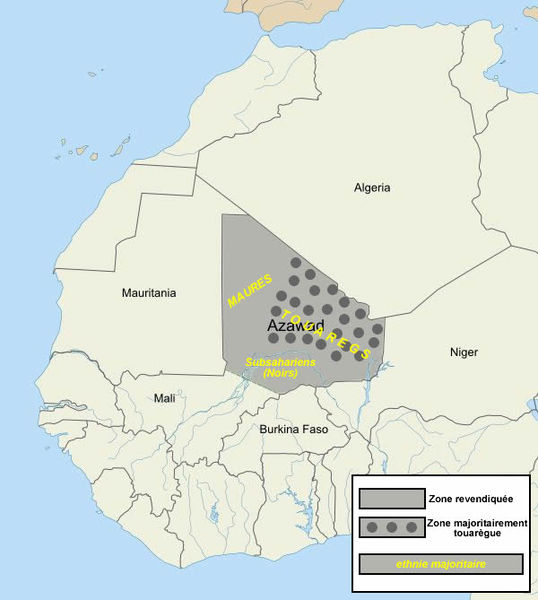
Where Tuaregs live.
It is unclear what position the two other main rebel groups in the north—the generally more moderate High Unity Council of Azawad and the ethnic-“Moor”-dominated Arab Movement of the Azawad (M.A.A.)—are taking on the question of peace with the central government.  Nor is it clear how unified the M.N.L.A. is on the question, or whether the renewed fighting was an intentional restarting of hostilities—and, if so, by which side.

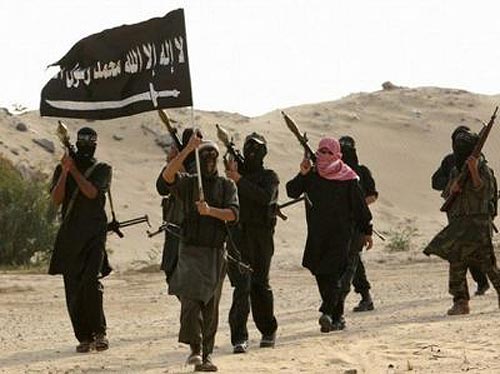
Ansar al-Dine on parade
The current troubles—which this blog has been reporting on in detail all along—began last year when displaced pro-regime Tuareg militias from the civil war in Libya fled, bristling with Moammar al-Qaddafi’s weapons, into northern Mali and reignited the latest in a series of Tuareg uprisings which date back to the early periods of colonial rule by France.  Tuaregs made a fatal alliance with Islamists affiliated with al-Qaeda and with radicals in Algeria, notably the Movement for Unity and Jihad in West Africa (MUJAO) and Ansar al-Dine.  Discontent in Mali’s capital, Bamako, over the government’s response to the Tuareg crisis sparked a coup d’état, which in turn created the power vacuum necessary for the M.N.L.A., MUJAO, and Ansar al-Dine to take over the northern two-thirds of the country with little opposition and declare an “Islamic Republic of Azawad.”  When, earlier this year, they attempted to spread their area of control into Mopti, with the avowed goal of placing all of Mali under shari’a (Islamic law), troops from France, Chad, and other countries intervened and put the north back into government control.  At least the cities.  Most of the hinterlands are still in rebel hands, though the Islamists have mostly melted away into the desert.

What happens next is anyone’s guess.  This, the Fifth Tuareg Rebellion (by many historians’ count), may not be over yet.  Or we may be ready for a sixth.  Without the Islamist factor, it remains to be seen how much the outside world will care this time.


[Also, for those who are wondering, yes, this blog is tied in with a forthcoming book, a sort of encyclopedic atlas to be published by Auslander and Fox under the title Let’s Split! A Complete Guide to Separatist Movements, Independence Struggles, Breakaway Republics, Rebel Provinces, Pseudostates, Puppet States, Tribal Fiefdoms, Micronations, and Do-It-Yourself Countries, from Chiapas to Chechnya and Tibet to Texas.  Look for it some time in 2013.  I will be keeping readers posted of further publication news.]

Monday, August 27, 2012

Obituary: Dom Mintoff (1916-2012), Who Ushered the Republic of Malta into Being


Media reported this past week on the death, on August 20th, at age 96, of Dominic “Dom” Mintoff, who was the 8th Prime Minister of Malta—first, from 1955 to 1958, when it was a Crown Colony of the United Kingdom, and again from 1971 to 1984, during which time he ushered the five-year-old independent commonwealth domain into its new status as a republic with no ties to the U.K.


A tiny, ancient archipelago, the reputed home (the Maltese island Gozo is presumed to be what the ancients called Ogygia) of Calypso from Homer’s Odyssey, as well as the isle on whose shores St. Paul the Apostle was shipwrecked, was Phoenician, Greek, Roman, Norman, Italian, and French, before the U.K. wrested it from Napoleon in 1814.  At 122 square miles, it is the 9th-smallest independent state in the world.

Odysseus had a grand old time in Malta.
Dominic Mintoff—known as Duminku Mintoff in Maltese (a dialect of Arabic using the Roman alphabet and heavily lexified by Italian, English, and other languages)—was born in Conspicua, Malta, in 1916, one of nine children, to a devout Catholic family.  (Malta, an Apostolic See, is 98% Catholic—though Mintoff later became a combative nuisance to the Church).  He was a Rhodes Scholar at Oxford University in England and in the 1940s returned to his homeland to enter politics, as a socialist in the Labour Party.  He was instrumental in rebuilding Malta after the pummeling it took in the Second World War.

St. Paul the Apostle didn’t have nearly as much of a grand old time in Malta as Odysseus had.
Then again, read the New Testament: Paul didn’t know how to party.
When Malta became independent from the U.K. in 1964, but still as a Commonwealth domain with Queen Elizabeth II as its head of state, Mintoff boycotted the independence celebrations.  Taking power in 1971, he did everything he could to limit British cultural, economic, and political influence in Malta, even going so far as to ban the Times of London.

The flag of the Republic of Malta
Finally, in 1974, Prime Minister Mintoff succeeded in establishing a Republic of Malta, and when the military agreement with the U.K. ended in 1979, he sent Her Majesty’s armed forces packing, never to return.  Aid from Italy and—less felicitously—the People’s Republic of China and Moammar al-Qaddafi’s dictatorship in Libya helped plug the economic hole the British left behind.  Malta joined the European Union (E.U.) in 2004 and the Euro Zone in 2008, but never the North Atlantic Treaty Organization (NATO).

Moammar al-Qaddafi and Dom Mintoff celebrating
the departure of the last British troops from Malta in 1979.
Mintoff’s state funeral was held August 25, 2012.


[Also, for those who are wondering, yes, this blog is tied in with a forthcoming book, a sort of encyclopedic atlas to be published by Auslander and Fox under the title Let’s Split! A Complete Guide to Separatist Movements, Independence Struggles, Breakaway Republics, Rebel Provinces, Pseudostates, Puppet States, Tribal Fiefdoms, Micronations, and Do-It-Yourself Countries, from Chiapas to Chechnya and Tibet to Texas.  Look for it in spring 2013.  I will be keeping readers posted of further publication news.]

Monday, May 7, 2012

Introducing the Republic of Wadiya

Last month in this space I introduced readers to the world and Africa’s newest (de facto) independent country, the Independent State of Azawad, carved for the time being out of the northern, Tuareg-dominated two-thirds-or-so of what the rest of the world still regards as the Republic of Mali.  While that drama is ongoing (and reported on in this blog’s “This Week in Separatist News” installments), yet another, not-too-dissimilarly named African country has made its debut: the Republic of Wadiya.  But it isn’t showing up on any real maps.  It is the fictional country ruled by the dictator Admiral General Aladeen, played by Sacha Baron Cohen in his new film The Dictator, due to be released in American theaters on May 16th.


The last time Baron Cohen parodied the third world (while at the same time parodying the West and everything and everybody else) was with his 2006 mockumentary Borat! Cultural Learnings of America for Make Benefit Glorious Nation of Kazakhstan.  The title character, Borat Sagdiyev, was an amalgam of numerous stereotypes of Slavic, Muslim, Middle Eastern, and third-world men in general (he is the dark side of Steve Martin and Dan Aykroyd’s Czechoslovakian “wild and crazy guys” from Saturday Night Live), though the script is careful to mention he is non-Muslim, following an (invented) indigenous Kazakh religious system.  (Likewise, his new character Aladeen is “not an Arab” and is also, fairly apparently, not a “black” sub-Saharan African.)

Borat Sagdiyev in his native Kazakh village (actually, Romania)

The Republic of Kazakhstan, needless to say, was not amused at Baron Cohen’s deadpan portrayal of a Kazakh filmmaker who masturbates in public, tongue-kisses his sister, marries a prostitute, is gleefully misogynistic and anti-Semitic, cheerfully refers to African-Americans as “chocolate-faces,” and tries to stuff Pamela Anderson into a traditional Kazakh “marriage sack”—or the film’s portrayal of Kazakhstan as a nuclear-contaminated, backward, dirt-poor wasteland (the Kazakhstan scenes were shot on location in Romania) full of bigots, fanatics, perverts, and holders of an undying, unspecified grudge against Uzbekistan.


A timeline of Kazakh history, from the coffee-table book published to accompany the film Borat


The Kazakh government threatened law suits against Baron Cohen and his producers, and Kazakhstan’s president, Nursultan Nazarbayev, even very somberly took the matter up with the United States’ president, George W. Bush, during a state visit.  However, a Kazakh journalist who got around his country’s ban on the movie by screening it at a film festival in Vienna, declared, “Cultural Learnings is certainly not anti-Kazakh, anti-Romanian, or anti-Semitic.  It is a cruelly anti-American movie.  It is amazingly funny and sad at the same time.  I think this is the best film of the year.”  (Baron Cohen, incidentally, is permitted over-the-top anti-Semitic jokes; he is himself an Englishman of Jewish extraction, who wrote his Cambridge thesis on the role of Jewish Americans in the 1960s civil-rights movement.)

A scene from Borat showing Kazakhstan’s supposed annual “running of the Jews” ceremony

More than five years later, Kazakhstan’s ruffled feathers are not yet smoothed down.  As I reported in this blog in March of this year, the Kazakh government flew into a diplomatic rage after a Kazakh receiving her gold medal at a sharpshooting competition in Kuwait stood on the podium and had to hear the mock Kazakh national anthem from Borat played over the public-address system.  The lyrics say, in part, “Kazakhstan, greatest country in the world / All other countries are run by little girls ... / Kazakhstan, Kazakhstan, you very nice place / From plains of Tarashenk to northern fence of Jewtown / Kazakhstan, friend of all / Except Uzbekistan, they very nosey people with bone in their brain ... / Kazakhstan, prostitutes cleanest in the region / Except of course for Turkmenistan’s.”  The athlete, Maria Dmitrienko, smiled uncontrollably while it played (watch her reaction here), but her government refused to believe it was not deliberate and demanded an apology.  The incident in actuality showed nothing more than the dangers of hastily searching YouTube to find obscure countries’ national anthems.  (It is also worth mentioning that the tournament Dmitrienko won was called the Arab Shooting Championships—which, with or without a hyphen, itself sounds like something out of Borat.)

Kazakh markswoman Maria Dmitrienko hears the Borat version of her country’s national anthem

The Dictator—not to be confused with the identically titled 1935 silent classic featuring Charlie Chaplin as Adolf Hitler—not only stars but is written by Baron Cohen as well.  It is a fully fictional, scripted film, unlike the guerilla Candid Camera approach taken in Borat, where Baron Cohen is mostly improvising opposite unwitting American dupes who think he is a genuine Kazakh journalist.  The Dictator tells of Aladeen’s unlikely assimilation into American life.  One feature of the new film’s promotional campaign has been a website for the Republic of Wadiya featuring film trailers but also information on Wadiya itself.  (Its level of professionalism is eerily reminiscent of the actual website for the Independent State of Azawad, which may indeed have helped inspire the fake Wadiya site.)  A map, under “Invest in Wadiya” on the Wadiya site, shows its position, on the Horn of Africa—or, rather, on what used to be the Horn of Africa until it was digitally shaven down to resemble Aladeen’s profile.  (See this announcement of the ribbon-cutting ceremony for the newly sculpted Aladeen Beach, which more or less erodes the Puntland State of Somalia out of existence.)


Now, it is one thing to piss off the Republic of Kazakhstan, as Baron Cohen did with Borat.  A few Kazakhs even managed to figure out that Baron Cohen has no grudge against Kazakhstan per se; he chose it because Kazakhstan is so little known in the West, because it sounds remote and obscure and has a funny name.  It would be quite another thing to piss off an actual living dictator.  Aladeen, in his unhinged flamboyance, resembles no one more than Libya’s Moammar al-Qaddafi.  The Dictator was conceived and began shooting well before Qaddafi’s downfall and execution in October 2011, but presumably by that point Libya’s dictator was already clearly on his way out (a fate he might have avoided if he had done what Baron Cohen’s Aladeen does: in order to avert a possible future Arab Spring uprising, he has all of the spring months removed from the national calendar).  (See my blog article on conflict in post-Qaddafi Libya.)

The original Aladeen?

But, still, one doesn’t want any actual dictator deciding that he is the model for Aladeen and taking appropriate Lockerbie-esque or Salman-Rushdie-fatwa-esque action in retaliation.  So Baron Cohen has shifted his fictional country into a zone where hardly any government functions at all, Somalia.  Perhaps coincidentally, Azawad, which resembles Wadiya somewhat in name (see my recent blog article discussing the name Azawad), was founded during The Dictator’s post-production, though the name Wadiya also somewhat resembles Awdal, a self-governing pseudo-state in extreme northwestern Somalia (i.e. Somaliland).  (See my recent blog article on the fragmentation of Somalia.)

The actual mess that is “Somalia” today (at least as of a few months ago; it skips a few recently created statelets).
Neither Sacha Baron Cohen nor Evelyn Waugh could have made this up.

Situating Wadiya in the Horn of Africa also fits with the film’s portrayal of Aladeen and the Wadiyans as neither Arab nor really black African either—though there are hardly examples of Somali demagogues quite as colorful as, say, Qaddafi, Egypt’s King Farouk, or the Central African Republic’s Bokassa.  (Ethiopia’s Emperor Haile Selassie is a possible inspiration, however.)  In choosing the Horn region, Baron Cohen is also following in the tradition of Evelyn Waugh, whose darkly comic novels Black Mischief (1932) and Scoop (1935), which set the high-water mark for satirizing third-world inefficiency and venality, were set in fictional East African or Horn of Africa nations called, respectively, Azania and Ishmaelia.  (Azania has since then been suggested as a name for post-apartheid South Africa, for the aspirant state which was eventually named the Republic of South Sudan, and for the self-governing Somali state in the far south more often called Jubaland or, sometimes, Greenland (itself a confusingly unoriginal name, but let’s not digress too much).)  Waugh knew the Horn, having worked as a journalist in Ethiopia, covering the Second Italo-Abyssinian War.  The chances that Baron Cohen is not a Waugh fan are approximately nil.

The frontispiece and title page for the first edition of Black Mischief, including “Azania”

John Updike’s brilliant comic novel The Coup (1978), however, shifts the geographically unspecified action a bit to the southwest, Congo-ward, in the countries of Kush and Zanj, though a neighboring country referred to as Sahel perhaps suggests more proximity to the Horn—and the original, ancient Kingdom of Kush is approximately where the Republic of Sudan is now.  And readers of Marvel Comics may be aware that the superhero known as the Black Panther is actually a prince from the Kingdom of Wakanda, situated more or less in the part of Ethiopia wishing to split off as Oromia, in the Horn of Africa region.  (See my blog article on separatism in Ethiopia.)

Map showing location of Wakanda, home of the superhero the Black Panther.
Just out of shot, not far from Waugh’s Azania, is the island nation of Genosha, where mutants are kept as slaves.
(Boy, they were asking for it when they tried to enslave Wolverine, though.  I know, right?)

But perhaps Baron Cohen has not entirely escaped something like the barrage of lawsuits and diplomatic kerfuffles that followed upon Borat.  It seems possible that some African dictator—or, just as likely, some “non-state actor,” as the jargon has it—may decide that Wadiya bears a little too close a resemblance to a real country, or aspirant country, or deranged demagogue.  Qaddafi is safely in his grave, but I wouldn’t want to make any enemies among Ansar al-Dine or the Polisario Front or Boko Haram.  Their tentacles are everywhere.

Borat’s family tree.  Just because.

In the meantime, the Republic of Wadiya website’s Tourism page invites us to visit Wadiya and see for ourselves.  Attractions include the Wadiyan State Zoo (“including pandas, white tigers, and Amnesty International officials”) and the Wadiyan Museum of Tolerance (“Open daily from 9 to 5; Women, Jews, and disabled not allowed”).

The flag of the Republic of Wadiya


[You can read about many separatist and new-nation movements, both famous and obscure, in my new book, a sort of encyclopedic atlas just published by Litwin Books under the title Let’s Split! A Complete Guide to Separatist Movements and Aspirant Nations, from Abkhazia to Zanzibar.  The book, which contains 46 maps and 554 flags (or, more accurately, 554 flag images), is available for order now on Amazon.  Meanwhile, please “like” the book (even if you haven’t read it yet) on Facebook and see this interview for more information on the book.]


Thursday, April 5, 2012

A New Country in Africa: Islamic Republic of Azawad

[Note (4/16/2012): Since this post was published, the Islamic Republic of Azawad has adopted the formal name Independent State of Azawad, though both names are in use.]


The establishment of an independent Azawad, depending on how long it lasts, is bad for Mali, bad for Africa, and bad for the world.  Here is a rundown of what has happened, what it means, and what might happen next.

For the first time since the birth of the Republic of South Sudan in July 2011, there is a newly independent country as of this week, and it is also in Africa.  But, unlike South Sudan, no one is recognizing or welcoming this new state, and it certainly won’t be joining the United Nations General Assembly any time soon.  It also has the unwelcome distinction of being perhaps the first independent state run by an affiliate of al-Qaeda (unless you count the al-Qaeda-ruled portions of southern Somalia and northern Yemen as nascent states, or unless you regard the Taliban’s Afghanistan as, in its final years, al-Qaeda-run).  This new state is the Islamic Republic of Azawad, and it might not be around for very long.


In February of this year, I wrote an article for this blog on the latest Tuareg rebellion in the Republic of Mali. Since Mali’s military coup d’état on March 22nd, this has become very nearly the most widely read article in the blog.  Turns out there weren’t that many people blogging about Mali yet.

The Azawad, the northern part of the area that is now Mali, as I discussed in that article, has seen repeated rebellions by the Tuareg minority in its vast northern deserts, some of them asking for outright independence.  A revolt against France’s colonial rule in 1916-17 was smothered by the French military and resulted in thousands of deaths.  After the Republic of Niger and the Federation of Mali (a brief-lived union of what are now Mali and the Republic of Senegal) broke free from France in 1960, Tuaregs fought to establish a state for themselves in northern Mali, but the newly established Malian military responded with savage finality, creating a refugee crisis in neighboring Algeria and a resentment of the central government that would burn in the Azawad region for decades.  In the early 1990s, Tuaregs who had been devastated by the famine that had raged across the Sahel in the 1980s (most famously in Ethiopia and Somalia) agitated again for a separate state.  Some of these separatists operated from bases in Moammar al-Qaddafi’s Libya to the north.  A smaller rebellion occurred in 2007-09 when Tuaregs who had dispersed to other countries in the 1990s rebellion returned and ended up in conflict with other groups.

Flag of the N.M.L.A., and of the Islamic Republic of Azawad

It was, indirectly, Qaddafi that made a difference this time around.  In his later years Qaddafi used Tuareg people—whose territory covers much of Libya, Algeria, Niger, and Burkina Faso, in addition to Mali—as mercenaries.  A nomadic, warlike people, Muslim but darker-skinned than most Arabs (though also not technically sub-Saharan), Tuaregs were like Qaddafi’s personal Cossacks; they did his dirty work in foreign adventures in places like Chad, and also in repressing other groups in southern Libya.  Tuaregs know the desert like the backs of their hands.

Tuareg mercenaries in Libya

The Tuaregs are lone wolves when it comes to geopolitics.  They are not Arabs, nor are they quite Berber, but their language is related to Berber.  (The Berber, unlike the Tuareg, it should be noted, were among the fiercest opponents of Qaddafi during the civil war.)  After 2003, when Qaddafi turned over a new leaf and began cooperating with the Central Intelligence Agency against al-Qaeda’s inroads into north Africa, the Tuaregs became C.I.A. stooges as well.  Any love they may have had for the United States, however, surely dissipated last year as the U.S. and its allies sided against Qaddafi in the civil war that finally removed him from power.  The dictator’s defeat left Libya’s Tuaregs isolated, angry, and armed—and, not incidentally, subject to reprisals by Libyan Arabs who branded them Qaddafi loyalists.  They began flooding into Mali, bringing with them huge portions of Qaddafi’s vast arsenal.  (See my recent blog article discussing the aftermath of the Libyan civil war.)

The Tuareg region

The civil war and power vacuum in Libya in 2011, as well as the sundering of the Tuareg–C.I.A. partnership which had been keeping al-Qaeda to a lesser or greater extent at bay, were the opportunity al-Qaeda’s local arm, the Al-Qaeda Organization in the Islamic Maghreb (or A.Q.I.M.), had been waiting for.  In February, as the newly formed Tuareg militia, the National Movement for the Liberation of Azawad (N.M.L.A.) (M.N.L.A., in French), began launching random, surprise attacks on northern Malian towns, they got help from a radical fundamentalist Islamist militia called Ansar Eddine, an affiliate of A.Q.I.M.  Ansar Eddine is run, and was possibly founded, by Iyad ag Ghaly, a Tuareg who led the 1990s Tuareg rebellion in Mali.  Although the fog of war still hangs heavy over all attempts to get information on the current crisis, it seems likely that the majority of Ansar Eddine’s rank and file are Arab—and that they are bolstered by mercenaries and would-be martyrs arriving from other jihadist trouble spots.

For most of February and March, Mali’s war against the N.M.L.A. and Ansar Eddine was going badly, but they weren’t losing.  Then, things changed on March 22nd, when a military uprising in Bamako, Mali’s capital, became a full-blown coup d’état.  The new junta’s main grievance was that soldiers fighting Tuaregs in the north were undersupplied.  The coup put a nobody, Capt. Amadou Haya Sanogo in charge, brought the condemnation of the international community, and led quickly to crippling economic sanctions by the 15-member Economic Community of West African States (Ecowas).  The rest of the world had been counting on Mali to at least keep the al-Qaeda-allied Tuareg uprising at bay.  But now that was not possible.


The N.M.L.A. and Ansar Eddine took advantage of the power vacuum. On March 30th, they took Kidal.  On March 31st, Gao fell to the rebels.  And on April 1st, the ancient city of Timbuktu, a Unesco World Heritage Site, fell as well.  That took care of the main three cities of the Azawad region, and the bulk of its population.  Reports were filtering to the outside world that it was not the N.M.L.A. but Ansar Eddine who planted their ominous black flag in downtown Timbuktu, in an elaborate ceremony.  And gunmen were going from shop to shop in all three cities demanding that any images of unveiled women be taken down.  Shari’a law is now in full force there.  Within a few days, the N.M.L.A. had announced control of the Azawad and the creation of the Islamic Republic of Azawad.   An N.M.L.A. spokesman, Hama ag Mahmoud, explained, “Our objective is not to go further than the Azawad borders.  We don’t want to create problems for the government of Mali, and even less create problems for the sub-region.  We don’t want to give anyone the impression that we are gung-ho for the war, so for now we have liberated our territories and our objective is achieved, we stop there.”  But this was no comfort to Capt. Sanogo, panicky and out of his depth with this latest turn of events.  Today (April 5th), he begged Western countries to intervene and turn back the Islamists, saying, “The enemy is known and it is not in Bamako,” adding, “If the great powers are able to cross oceans to battle fundamentalist structures in Afghanistan, what’s stopping them coming to us?”  Sanogo had been surprised to learn that in the modern era coups in Africa are not tolerated by the international, or even regional community.  But, for him, the loss of Azawad is worse yet: the international community really doesn’t like coups that allow for the creation of an al-Qaeda state smack dab in the middle of north Africa.  He is trying, a little too late, to distance himself from events in the north and to ingratiate himself with the international community.

The flag of the Al-Qaeda Organization in the Islamic Maghreb (AQIM)

The prospects for international recognition of Azawad are approximately zero.  For what it’s worth, I will opine here that the prospects for a near-permanent state of dysfunctional civil war, à la Somalia or Yemen, are about 50%, while the prospects are also about 50% for an eventual Libyan-style intervention by one or more Western countries.  If so, then how soon that happens will depend greatly on how this month’s elections in France go (Nicolas Sarkozy is a bit more likely to take on another such war than François Hollande is), and, much more crucially, how the U.S. president, Barack Obama, estimates the effects of the timing of such an intervention on his prospects for reelection in November.  Any moment now, Sen. John McCain will start waving his “kill some towelheads” banner, which will put pressure on Obama to not look weak.  (Sadly, even after Obama’s killing Osama bin Laden and removing Qaddafi, Republicans are still deft at making him look ineffective.)


For the time being, Azawad has now joined the ranks not of partially recognized states like the Northern Cyprus, Kosovo, or Abkhazia, but of de facto sovereign but utterly unrecognized states like the Republic of Somaliland or the former Chechnya (1992-2000).

Keeping that in mind—okay, we’re done with complex, nuanced geopolitical analysis, the rest of this article is just for geography geeks—this week has seen a sudden rejigging of the rankings of largest country in the world.  Mali, up until last week, was, at 1,240,192 square kilometers, the 24th-largest country in the world.  As of this week, however, the Azawad separatists control three of Mali’s eight regions—Tombouctou, Kidal, and Gao—and, although they claim Mopti as well, they don’t control it, or only control about half of it, depending on whom you believe.  Let’s split the difference, grant them half of Mopti’s 79,017 square kilometers, for a total of 859,436.5 square kilometers.  This places it between Venezuela (the new no. 32) and Namibia (the new no. 34) as the 33rd-largest country in the world.  What’s left of Mali, meanwhile, is now, at 380,755.5 square kilometers, way down at no. 61, between Zimbabwe and Japan.

This is the first change to the top-25 ranking since South Sudan replaced Algeria as no. 10 last year, which also knocked what was left of Sudan to no. 45, between the Central African Republic and Ukraine. (It would be no. 46, if Somalia were to be counted as one country, but if what the world calls Mali is treated as two countries then what the world calls Somalia is at least seven or eight.)  That, in turn, was the first modification of the top-25 list, or indeed of the top-10, since Kazakhstan entered the list at no. 9 in 1991.   To find a modification to the top-10 list before that, we’d have to go to 1964, when the United Kingdom dropped from no. 7 to no. 16 by granting independence to Zambia, Tanzania, and Malawi.

More importantly, Azawad is now the only country whose dominant language (Tuareg) uses (like Berber) the Tifinagh script, which looks like this (see below).  I must say, al-Qaeda or no al-Qaeda, that’s pretty darn cool.


[Also, for those who are wondering, yes, this blog is tied in with a forthcoming book, a sort of encyclopedic atlas to be published by Auslander and Fox under the title Let’s Split! A Complete Guide to Separatist Movements, Independence Struggles, Breakaway Republics, Rebel Provinces, Pseudostates, Puppet States, Tribal Fiefdoms, Micronations, and Do-It-Yourself Countries, from Chiapas to Chechnya and Tibet to Texas.  Look for it in spring 2013.  I will be keeping readers posted of further publication news.]

Thursday, March 15, 2012

The Cyrenaica Crisis: Will Libya Stay United?

The long struggle for Libya—which ended in late 2011 with the ignominious execution of Moammar al-Qaddafi by rebels, after months of civil war—may not be finished.  With the world’s attention now on the Syrian chapter in the Arab Spring saga, it has been easy to assume that Libya was one of the Arab Spring countries that was out of the woods—the dictator dead, a newly installed government born from the pro-democratic rebel movement, promising elections and recognized and supported by the international community.  First, though, came the disturbing news reports about how most of the impromptu militias which formed around the vast desert nation to bring down Qaddafi were not quite giving up their arms.  Then came the bombshell last week, when an organization calling itself the Congress of the People of Cyrenaica declared, unilaterally, that the oil-rich eastern third of Libya was now “autonomous.”  This was not a declaration of independence; these Cyrenaicans merely want a return to the very loose federal system that prevailed before Qaddafi took power in 1969, under which the three regions—Cyrenaica (Barqah, in Arabic), Tripolitania (Tarabulus, in Arabic), and Fezzan—mostly ran their own affairs.  But the Transitional National Council which has run Libya from Tripoli, in Tripolitania, since Qaddafi’s defeat, is reacting as though it were a declaration of independence.  Its chairman, Mustafa Abdul Jalil, has said that Libya will remain united, by force if necessary.  A Cyrenaica–Tripolitania divide is not an utterly new wrinkle, however; these are old rifts in Libyan society, exacerbated by the oil boom and by an inevitable struggle over what a post-Qaddafi Libya will stand for.

Libya’s traditional regions

Cyrenaica has been independent before.  From 1949 until 1951 it was the sovereign Emirate of Cyrenaica, established through the United Nations and the United Kingdom as part of the plan to deliver Libya into post-colonial hands after it was taken by the victorious Allies as Second World War booty from Benito Mussolini’s defeated Italy.

Flag of the independent Emirate of Cyrenaica (1949-1951)

Italy had conquered all of what is now Libya from the Ottoman Empire immediately before the First World War, in the Italo-Turkish War (not counting a brief period during which a largely unrecognized Republic of Tripolitania existed from 1919 to 1923—one candidate for the first republic in the Muslim world, a distinction also claimed by Azerbaijan).  When the Ottoman Empire was dismembered under the Treaty of Versailles, Italian lordship over the country was made official.  The Italians originally worked deftly through local leaders—in Cyrenaica, for example, co-opting one Sayyid Muhammad Idris bin Muhammad al-Mahdi as-Senussi and placing him in charge of the colony as Emir.  Idris was the grandson of Muhammad ibn Ali as-Senussi, the founder of the Senussi order, a local Islamic revivalist political and religious order which had been fighting, and later continued to fight, against European colonizers, be they Italian, French, or British.

Flag of the Tripolitanian Republic, 1919-1923

But by Mussolini’s time that kind of indirect rule, verging on autonomy, was swept away in favor of Fascist authoritarianism.  When the Allies carved up Italy’s colonies, the U.K. got Tripolitania and Cyrenaica (both territories corresponding to Ottoman vilayats, or provinces), and France got the former vilayat of Fezzan in the south, a mostly uninhabitable desert region abutting what were already the French colonies of Algeria, Niger, and Chad.  The English were much better than the French at striking deals with local traditional rulers and were instrumental in propping up the Emirate of Cyrenaica, reinstalling Emir Idris—who had aided the British against Nazi Germany’s Erwin Rommel during the war—as head of state.

Idris, first and only king of the United Libyan Kingdom

But make no mistake: all of this back-and-forth was not motivated by European (or Turkish) altruism, not even when, in 1951, the U.N. was ushering in a United Libyan Kingdom under the old emir, now King Idris I.  (Tripoli was the nominal capital, but Idris’s palace was in Benghazi, Cyrenaica’s main city.)  The British, by 1951, were seeing in Algeria what a headache it could be to have a North African colony and were easily coaxed by the U.N. into allowing Tripolitania to become part of the new kingdom.  Under the Senussi dynasty, European powers (whichever ones were in charge at the moment) had access to Cyrenaica’s vital harbors and eventually access to Libya’s share of that twentieth-century gold rush, the oil boom.  With Idris on the throne as head of state, British corporations were still a presence—even after the Suez Crisis in 1956, to the chagrin of Arab nationalists everywhere, who were becoming more anti-British after that showdown over control of Mediterranean trade routes.  And the way the Libyan economy was structured—this was more the case in Libya than in post-French Algeria or post-Spanish Morocco or certainly in Egypt after the Suez Crisis—not too much of that oil wealth trickled down to Africans themselves.  Idris also raised some hackles of regional leaders when he abolished the three more or less autonomous regions in 1963 and recast Libya as a unitary state subdivided into small, weak provinces.  It is all this that explains the appeal of Colonel Moammar al-Qaddafi, who took power in a military coup in 1969, using the moment of weakness when Idris, who had failed to produce an heir and had become enfeebled, was handing the reins of state to his nephew Prince Hasan al-Senussi (see genealogy below).  Qaddafi declared the Libyan Arab Republic, on Islamic socialist principles and as an avowed enemy of all forms of European colonialism.

Flag of the former United Libyan Kingdom—
and of the new, post-Qaddafi Libya as well

This anti-Europeanism served Qaddafi and Libya well.  Foreign firms were chased out.  Libya followed a Saudi Arabian model of strict authoritarianism coupled with a deft manipulation of its oil production for maximum revenue.  Qaddafi made Libya that rarest of birds: a debt-free Third World nation.  And it wasn’t even Third World: Libya had the highest standard of living in Africa and a form of cradle-to-grave socialism, free education, and free everything that put it in the same league as super-rich countries like Saudi Arabia and Sweden.  And, unlike Saudi Arabia, they did it without entanglement with European and Western corporations.  However, like the pigs in Animal Farm, Qaddafi turned into a king himself—a self-styled “King of Africa,” with him and his family enjoying lavish lifestyles funded by the nation’s oil revenues.  Nor was there any such thing as regional government; Qaddafi was the government.  Himself a tribal Bedouin Arab born in a tent in Tripolitania, he manipulated public opinion against the large Berber minority in Libya, calling their very existence a myth (though he was enlightened when it came to the cultural rights of “black” (sub-Saharan) Africans in Libya’s south).  And he favored Tripolitania in his many flamboyant development projects, leaving Cyrenaica, by the time of the 2011 civil war, with a rotting infrastructure.

Moammar al-Qaddafi

When the Libyan people joined the Arab Spring, Cyrenaica joined first, and for much of the bloody civil war that followed Benghazi was the rebel capital.  Tripoli was the last redoubt of the Qaddafi government, and he also managed to find succor among local people near the end in Fezzan—where tribal Tuareg nomads had long been his personal Cossack-type mercenary shock force.  The Senussi dynasty was right there aiding the rebels as well.  In fact, the current head of the pro-autonomy Cyrenaica Transitional Council is Ahmed Al-Zubair al-Senussi, who is not only the most important Cyrenaican on the internationally recognized Transitional National Council currently ruling Libya (a former political prisoner himself, he has the political-prisoners portfolio) but is also a great-great-grandson of the Senussi order’s founder, Muhammad ibn Ali as-Senussi and thus second-cousin-twice-removed to King Idris I.  (He was also King Idris’s nephew, since Ahmed al-Senussi’s aunt Fatima married Idris—Fatima and Idris being first cousins once removed—but never mind all that; see the genealogy below if you’re interested).

Ahmed al-Senussi, leader of the Cyrenaican autonomy movement

The autonomy declaration was also supported by all the major tribes from Cyrenaica, including the al-Manfah tribe, represented by Muhammad al-Mukhtar, son of Omar al-Mukhtar, a Libyan national hero in the struggle against Fascism rule during the Mussolini era.

Cyrenaicans, and especially the Senussi dynasty, perhaps hated Qaddafi more than anyone else.  But why are they still discontent now that he’s gone?  Numbers tell part of the story.  Cyrenaica has about 20% of Libya’s population, but 80% of its oil reserves—plus (unlike poor South Sudan) pipelines, refineries, and harbors to get it to market.  (Fezzan’s population is negligible.)  The autonomy they envision would allow the wealth to be distributed locally.  This is a familiar pattern: relatively sparsely-populated, oil-rich areas seeking independence or autonomy so as not to share so much of their resources and wealth with the larger population.  Separatist movements in Scotland, Alaska, and Kurdistan come to mind.  (See my recent article on the Scottish and Iraqi situations.)


When Chairman Jalil, Libya’s current transitional ruler, responded to the Cyrenaica declaration last week, he not only exaggerated the declaration of autonomy into essentially separatism, but he blamed the autonomy movement on back-stabbing “sister Arab nations” (he must have meant Morocco or Algeria?; Egypt and Tunisia both condemned the autonomy declaration) and remnant Qaddafi loyalists.  That last accusation is not only laughable but outrageous.  Ahmed al-Senussi spent most of his adulthood in one of Qaddafi’s prisons after he led a failed monarchist uprising in 1970.  And Cyrenaica was so much the solid heartland of anti-Qaddafi sentiment that at various points in the civil war observers wondered whether a military stalemate would lead to an independent Cyrenaica, leaving Qaddafi in charge of Tripolitania and Fezzan—a sort of Korea situation.  The civil war would have been no more than a slightly messy coup d’état if it had not been for Tripolitanian Qaddafi loyalists.  And Jalil himself was Qaddafi’s Minister of Justice for years until the 2011.  And in Qaddafi’s Libya, believe you me, whoever claws his way to becoming the minister in charge of that dictatorship’s vast secret police network and kangaroo courts is not going to be a nice person.  Jalil is hardly in a position to accuse the Cyrenaican élite of being pro-Qaddafi.

Mustafa Abdul Jalil, Libya’s transitional ruler

Essentially, Jalil is trying to paper over some uncomfortable facts that the Cyrenaica declaration lays bare.  First, the revolution is not over.  Libyans who sacrificed everything to depose Qaddafi are noting that just next door in Egypt the new military transitional government is trying so hard to hold onto power that street protests have erupted all over again.  The leadership at the very top in Egypt has not really changed, and, so long as Jalil is still in charge, that is true in Libya as well.  Libyan elections have been scheduled, but Libya won’t be a democracy until they’re actually held.  Libya has never had a democratic government before; many Libyans worry that a former Qaddafi minister might not be the person to trust with that transition.

Second, related to the above, I will conjecture from what is happening in public that Ahmed al-Senussi and Jalil have butted heads in private on the T.N.C.—likely on the question of political prisoners and the reform of the justice system, an area of expertise for both of them, from different ends of the gun.

And, third, in this tumultuous time it is safe to say that whether Libya will be open for business and with whom is still an open question, debated within the T.N.C.  Certainly, the North Atlantic Treaty Organization, in helping the rebels win the war, hoped that Libya would reengage economically with the world, and also has been eager to ensure—as per usual in United States and western European military interventions—a transition to a Western-friendly government that is open for business.  During the later Qaddafi years, especially after his 2003 rapprochement with the international community, there was quite a lot of U.S. and U.K. investment in Libya’s oil business (Italian, Canadian, and French as well).  But Qaddafi’s oil industry (like Saddam Hussein’s) was nationalized; foreign firms cut deals with the Libyan state oil monopoly, but could not own any of it—and a huge amount of Libya’s oil profits was swept right back into the state’s socialist coffers.  How much of that will change? and who can make the transition?

Libyan rebels during the 2011 civil war

Keep in mind that, for all the U.S. demonization of him in the 1980s, Qaddafi had by the very end become a sort of ally of the West.  He gave up his nuclear program in 2003—wisely, after watching the U.S. bomb Iraq into the Stone Age as punishment for a nuclear program they didn’t have—and was finally playing ball with international courts on compensation for the 1988 terrorist bombing over Lockerbie, Scotland.  Qaddafi surely understood that the War on Terror was, among other things, a cover for taking down the small number of regimes that would not open up their oil wealth to U.S. interests—meaning, as of 2001, Iran, Afghanistan, Iraq, and Libya.  This was, as is well documented, the explicit policy of George W. Bush’s presidency, well before the September 11, 2001, attacks (though Libya, more in the European zone of economic influence, was at the bottom of the list).  So Qaddafi, protean desert fox that he is, turned himself into someone who was useful to the West in the battle against al-Qaeda in the Arab world.  Qaddafi and his Tuareg mercenaries worked closely with the U.S. Central Intelligence Agency (C.I.A.) in the late Bush and early Barack Obama administrations.  And we all remember how rebels sorting through Qaddafi’s presidential palace last year found documentation of Qaddafi’s creepy love-crush on the Bush’s Secretary of State, Condoleezza Rice.  No wonder U.S. participation in NATO’s Libya operation was so restrained and half-hearted; in U.S.-foreign-policy parlance, Qaddafi had become our son of a bitch.  Perhaps the U.S. even helped make sure that former Qaddafi loyalists like Jalil were on the N.T.C.—you know, just for continuity, if there has to be a revolution.


Qaddafi’s secret photo album.  He also reportedly spent a lot of time writing
“Mrs. Condoleezza al-Qaddafi” in flowing cursive all over his Pee-Chee folder.


So who will be the West’s son-of-a-bitch now?  Who will be the West’s man to run Libya?  Jalil, who surely, given his position, was privy to (if not deeply involved in) Qaddafi’s cooperation with the C.I.A., would be one candidate—and one with ready-made ties to the C.I.A. and to the U.S. corporations it serves.  Ahmed al-Senussi, with his family’s ties to the British intelligence network and the corporations it serves, would be another.  It remains to be seen just how convergent U.S. and U.K. interests in Libya are, and who their proxies are.

Obama and Qaddafi

There may be elements of a power struggle within the Senussi dynasty as well.  King Idris’s great-nephew and designated heir, son of Prince Hasan, is Muhammad al-Rida al-Senussi, who was born and raised in Tripoli and educated in the U.K. (see the genealogy below).  A rival claimant is Sayyid Idris bin Abdullah al-Senussi, who was born and raised in Benghazi, then exiled when Qaddafi came to power.  Now, in Arab culture, there is no rule of primogeniture as there is in European royal families.  That is to say, for example, Queen Elizabeth I is not allowed to decide that Prince Charles is a cad and a bounder and his ears stick out too much and therefore Edward or Andrew shall be the next king; the rule of the first-born is paramount.  In Arab dynasties, however, succession is flexible and highly politicized; it is all about whom the incumbent monarch designates.  This makes for dramatic and occasionally unpredictable transfers of power—and it also makes for a situation where brother princes compete with one another.  As it happens, Ahmed al-Senussi’s branch of the family is Sayyid Idris’s, not Muhammad al-Rida’s, though it’s unclear at this point where his sympathies lie in royal politics.  Presumably, as a Cyrenaican autonomist, he might favor the branch with the actual close cultural ties to Cyrenaica, i.e. Sayyid Idris’s (although here I am careful to frame my opinions of this opaque society as the sheer conjectures of an observer—however an educated observer, and one with extensive professional experience documenting and analyzing traditional forms of political succession in other parts of the world).  None of these Libyan royals is actively seeking a restoration of the Senussi or any monarchy.  But, even as a decommissioned royal class, their politics—which right now are Libya’s politics—are inflected by family dynamics.  The implications for Libya’s direction are possibly quite direct.


Granted, we will probably never know exactly what is going on behind the scenes in this new regional-based power struggle in Libya—and who knows, perhaps the Cyrenaican autonomy movement will go nowhere.  But it may just be that different foreign and internal powers have dogs in this fight.  And, sorry to point this out, but they still haven’t quite held those elections yet, have they?  No, the Libyan revolution is not quite over.  And it is in the hearts and minds of Cyrenaican nationalists that the next phase may be played out.

Cyrenaica’s coat of arms

(For more commentary on the Cyrenaica declaration, see this insightful Al-Jazeera opinion piece.)

[You can read more about these and many other separatist and new-nation movements, both famous and obscure, in my new book, a sort of encyclopedic atlas just published by Litwin Books under the title Let’s Split! A Complete Guide to Separatist Movements and Aspirant Nations, from Abkhazia to Zanzibar.  The book, which contains 46 maps and 554 flags (or, more accurately, 554 flag images), is available for order now on Amazon.  Meanwhile, please “like” the book (even if you haven’t read it yet) on Facebook and see this interview for more information on the book.]


Subscribe Now: Feed Icon