2014 promises to be an earth-shaking year for separatist movements. In addition to already scheduled referenda in Catalonia and Scotland (more on them below), February will bring us the Winter Olympics in Sochi, Russia, which is already proving to be a magnet for extremists with (sometimes very legitimate) ethnonationalist grievances (more on them below as well). There will also be at least one referendum in northern California on whether particular counties want to split away to become the State of Jefferson. In fact, with Colorado and Maryland facing partition challenges as well, state-secession movements proliferated more in 2013 than at any time since the Civil War (well, maybe not, but it sure seems that way) (more on that below too).
 |
| Officials in Weld County announcing results of a North Colorado statehood referendum in 2013 while baffled spectators look on from above. |
 |
| The Sultan of Sulu, who commanded an invasion of Malaysia in 2013 |
10. Cyrenaica (Libya)—it’s about the oil

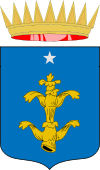
The vast eastern region of Libya called Cyrenaica or, in Arabic, Barqa, was a colony of Italy until the Second World War and then was set up in 1949 by the new landlords, the United Kingdom, as an independent Emirate of Cyrenaica. In 1951, the United Nations sponsored the new, Western-leaning emirate’s merger with the British colony of Tripolitania, to the west, and the landlocked colony of Fezzan, part of French West Africa, to form a new United Kingdom of Libya, with considerable autonomy for the three regions. But when the kingdom’s monarch, King Idris I (freshly promoted from Cyrenaican emir), abolished autonomy and created a unitary state in 1963, Tripolitanians smelled a Cyrenaican power-grab, stoking regional tensions that erupted in 1969 with a military coup d’état by a bedouin army colonel from Tripolitania named Moammar al-Qaddafi. Cyrenaican royals staged a failed monarchist counter-coup in 1970, which ushered in years of persecution of monarchists and a neglect of the Cyrenaican infrastructure—except for those parts of it that processed and exported Libya’s oil, 80% of which is in Cyrenaican territory, even though the region has only 20% of the national population. No surprise, then, that when revolutions toppled dictators in the 2011 “Arab Spring,” it was in Cyrenaica that the anti-Qaddafi insurgency began. Now, with Qaddafi dead and a fragile interim government trying to craft a new constitution, both Cyrenaica and Fezzan are demanding that the new Libya be a decentralized one, with autonomy for the regions, just as King Idris had at first implemented. Idris’s nephew, Zubair al-Senussi, founded the Congress of the People of Cyrenaica, since renamed the Cyrenaica National Council (also called the Council of Cyrenaica in Libya), but, though Senussi soft-pedals any kind of monarchist revanchism, he yielded the spotlight in 2013 to a more radical group, the Political Bureau of Cyrenaica. With no members of the Senussi dynasty in it, the P.B.C. has done Senussi’s earlier declaration of autonomy (reported on at the time in this blog) one better by unilaterally forming an interim government for the eastern region, with ministers and everything. Fezzan followed suit and did the same. (See my recent report on those developments.) Most dramatically, the P.B.C. piggy-backed its cause onto ongoing labor unrest in Cyrenaica’s oil refineries, adding autonomy to the demands of those strikers who have been holding Libya’s economy hostage and causing power blackouts in Tripoli and other western cities. Libyan Berbers have begun to do the same, with refineries in their far-northwestern corner of the country as well. Western media have concentrated more on Islamist insurgencies in Cyrenaica, since the killing of the United States ambassador in an attack in Benghazi, the Cyrenaican capital, in 2012 became a partisan football in Washington (the sanctimonious lecturing of Obama’s diplomats by Republican senators who had earlier backed the disastrous Iraq War was breath-takingly hypocritical), but in reality the biggest threat to Libyan unity, for better or for worse, are minority groups like the Cyrenaicans, Fezzanis, and Berbers, who have their hands on the oil spigots and are making it clear that Libya will be structured the way they want it to be structured, or will come apart at the seams. Tripolitanians will have to choose.
 |
| You take the middle stripe out of the post-Qaddafi flag of Libya and it’s the black flag of the formerly independent Emirate of Cyrenaica |

The People’s Republic of China’s vast northwestern desert regions, now called the Xinjiang Uyghur Autonomous Region (though there is nothing remotely autonomous about it), have for centuries been the homeland of the Uyghur people, Muslims who speak a Turkic language related to those spoken in neighboring former Soviet nations like Turkmenistan and Kazakhstan. There is a large Kazakh minority in Xinjiang as well. In 1933, Uyghurs and Kazakhs in this part of China founded an Islamic Republic of East Turkestan in defiance of the new Kuomintang (Nationalist) government that had toppled the imperial family in the 1911 revolution. Using shock troops from the Hui ethnic group (Han Muslims), the fledgling republic was snuffed out and its emirs executed. Hui warlords ruled Xinjiang as their own fief, but when Japan began plotting its takeover of the Chinese mainland, Josef Stalin pulled the region into the Soviet Union’s orbit, which the K.M.T. allowed, knowing that they could not defend all of the mainland on their own. But the Soviet–Japanese non-aggression pact of 1941 led to a Soviet withdrawal and the Uyghur leadership switching sides to the K.M.T. This betrayal, as it was seen, inspired a more grass-roots East Turkestan Republic in 1944, in the northern reaches of Xinjiang near Mongolia, but the Russians were too busy fighting Germans to back it, and in 1945, after the war, Stalin bargained it away to the K.M.T. in the Yalta conference, on condition it stay autonomous. When Mao Zedong’s Communists took Beijing in 1949, Mao let the region be for a while but absorbed it the following year. Kazakh rebels backed by the K.M.T. kept fighting until 1954. Since then, Communist rule in the Uyghur homeland has been brutal. The Uyghur language has been suppressed, Muslim religious practices are hemmed in or even outlawed, and, as in Tibet, an aggressive program of settlement by migrants from China’s dominant Han ethnic group has made Uyghurs a minority in their own “autonomous” region, at 40% (though, if Kazakhs and others are added, Turkic-speaking Muslims still outnumber Han). In the past five years, violence between Uyghurs and the central government has flared up like never before. Uyghur activists blame Beijing’s heavy-handedness, while Beijing blames the East Turkestan Islamic Movement (ETIM), which supposedly (though there is no evidence for this) launches operations out of Pakistan’s lawless Waziristan region. In fact, most Uyghurs, especially abroad, are more amenable to groups like the more moderate World Uyghur Congress (W.U.C.), based in Germany. These conflicting views were crystallized in the aftermath of what seems to have been a Uyghur suicide attack in October 2013 in Tiananmen Square, the Beijing landmark that represents Chinese unity for Han Chinese but for the rest of the world is synonymous with anti-Communist dissent. A video from the Turkestan Islamic Party (TIP) praised the attack, which killed two tourists and injured dozens, which the Chinese government interpreted (after initially blaming ETIM) as a claim of responsibility. But the W.U.C. smells a rat: it is odd for there to be no claim of responsibility for such a dramatic attack at the symbolic heart of Chinese power, and the attack also has proved to be a suspiciously handy excuse for an accelerated crackdown on Uyghur activists in China, even moderate ones. We may never know the truth, but the suggestion that this was a “false flag” operation engineered by Beijing itself is not at all implausible. Look for more friction, and more bloodshed, between Uyghurs and the Chinese government in the year to come.
 |
| A young Uyghur at a protest in Europe. If he waved this flag back home he’d disappear into a reeducation camp within minutes. |

Russian nationalists—and that includes the Russian Federation’s president, Vladimir Putin—have never really in their hearts accepted the fact that Ukraine is independent. Its capital, Kiev, was the center of Kievan Rus’, the medieval empire that both Russians and Ukrainians regard as their ancestral polity. Russians still smart from their defeat by the Ottomans in the Crimean War in the 1850s, even though one of the results of that series of Russo-Turkish wars was the ethnic Russification of the Crimean peninsula, which had been dominated by Tatars and other Muslims for centuries. Crimea is only part of Ukraine today because Nikita Khrushchev transferred it from the Russian S.F.S.R. to the Ukrainian S.S.R. in an ill-considered whim, and in a special deal struck with Moscow at independence in 1992, Russia’s Black Sea fleet will make its home in Sevastopol harbor at least well into the 2040s. More to the point, losing Kazakhstan or Estonia or Armenia was one thing, but the line between Russians and Ukrainians has always been blurry: they understand each other’s languages (which by one technical definition makes Ukrainian only a dialect), and Ukraine really just means “borderlands” in Russian (and in Ukrainian)—that is, borderlands of the Russian Empire. So Putin has long treated as a line in the sand the very idea of Ukrainian membership in the European Union (E.U.) (which Estonia, Latvia, and Lithuania have already joined), or the North Atlantic Treaty Organization (NATO), which has already swallowed up eight former Communist satellite states as well as the three Baltic states. When the Republic of Georgia was seen in the 2000s to be tipping too far to the West, tensions with the Kremlin led to the South Ossetia War of 2008, in which Abkhazia and South Ossetia, two chunks of the old Georgian S.S.R., were made into technically independent puppet states of the Russian Federation. That same year, Moscow was widely suspected of being behind an out-of-the-blue declaration of independence for the Republic of Carpathian Ruthenia, now the Ukrainian oblast of Transcarpathia but in the interwar period the eastern tail of Czechoslovakia and still home not only to some ethnic Russians but to the Rusyn (Ruthenian) minority. Ethnic Russians have indeed been on the political offensive in Ukraine’s dirty, shaky 21st-century “democracy”: in 2012, a proposed law (since passed) to make Russian an equal language alongside Ukrainian in Russian-speaking areas led to one of the most spectacular brawls to ever break out in a parliamentary session anywhere (as reported on at the time in this blog) (the video of it is a must-see). Already ethnic Ukrainians were seeing President Viktor Yanukovych’s Party of the Regions as a mouthpiece for the 30% of Ukrainian citizens who speak Russian. These are mainly concentrated in the Crimea, around Odessa, in Kiev, and especially in the industrial Dnieper valley in the east, including the Donetsk region, where Yanukovych was born to a Russian mother and a Polish–Belarussian father. But in November 2013, Yanukovych’s decision, after a meeting with Putin, to renege on a promise to sign a (mostly symbolic) “association agreement” with the E.U. led to an unprecedented wave of street protests by ordinary ethnic Ukrainians—and not a few Russians—who want to accept Brussels’ extended hand instead of Putin’s offer to join Russia’s rag-tag excuse for a customs union with Belarus and Kazakhstan. (Though, really, who needs luxury cars and high tech when you can get exclusive access to radioactive Belarussian turnips and Kazakh goat meat?) There have been pro-Moscow counter-demonstrations but so far no open demands for a partitioning of the country along linguistic lines or for re-annexation of the east to Russia. But Lvov and other ethnic-Ukrainian-dominated western oblasts are declaring themselves no longer subject to the Ukrainian central government’s authority, moves which Yanukovych angrily decries as “separatism,” so perhaps the seeds have already been planted. A drive to split Ukraine would also run right through Crimea, where Russians outnumber Ukrainians but where the Mejlis of the Crimean Tatar nation openly sides with the E.U. proponents. A split would also complicate things for Transnistria, a sliver of eastern Moldova which is an ethnic-Russian-dominated puppet state sponsored by Moscow and which you will notice in the very theoretical and (for now) fanciful map above as part of a new pro-Russian (eastern) Ukrainian State. It’s getting cold in Kiev, and the anti-Yanukovych demonstrators are not giving up. Ukraine is already divided ideologically. A more concrete division may soon be on the table.

7. The State of Jefferson—a Teapartistan among the timbers

Originally, the State of Jefferson was to be the 49th state, when John Childs, a Crescent City, California, judge in 1935 declared himself governor of a new entity that would free itself from Sacramento’s legislative yoke. Then, in 1941, the mayor of Port Orford, Oregon, lobbied to transfer his county, Curry, to California, and that tapped a vein of discontent over infrastructure, water rights, and other issues that galvanized voters in the borderlands. Oregon’s four border counties and three, later five, northern California ones formed the kernel of the new state, mock roadblocks were set up at its “borders” to pass out protest flyers, and a Jefferson flag was designed, with two “X”es to represent the “double cross” by city-slicker legislators in Salem and Sacramento. Childs was elected governor of Jefferson on December 5th, but, in a spectacular piece of unlucky timing, Japan bombed Pearl Harbor two days later, which made state-partition movements suddenly seem frivolous, even unpatriotic. Alaska and Hawaii were admitted to the United States in 1959, and the idea of a 51st state with a capital at Yreka receded, until the Barack Obama years, when a rising tide of anti-government sentiment spawned the Tea Party movement. That wave of activism has resuscitated the corpse of the State of Jefferson. Jefferson joined all 50 actual states in lodging online petitions on the White House website to secede from the U.S. in the wake of Obama’s reelection in 2012. Referring to Thomas Jefferson, who first opened the Oregon Country to U.S. settlement with the Lewis and Clark expedition, the proposed state’s name now also evokes the Jeffersonian idea of popular revolt which makes the third president an icon of the “don’t tread on me” crowd that was behind most of those petitions, as well as most other statehood movements, in places like New York, Pennsylvania, Maryland, Illinois, “South California,” and Michigan’s Upper Peninsula. But whereas Childs and the original Jeffersonians wanted more government services, today’s statehood proponents in the California–Oregon borderlands want the government to tax less, build less, spend less, and all in all just do less—especially when it comes to guns, environmental regulations, and helping the needy. The boards of supervisors of Siskiyou and Modoc, two original Jefferson counties in northern California, voted in 2013 to secede and form a State of Jefferson, and the board in Tehama County, just to the south, has said it will put the proposal on a ballot in 2014. A similar wave of county referenda in northeastern Colorado in 2013 saw five out of 11 counties voting “yes” to a new State of North Colorado. Perhaps by November the turnout in Jefferson will dwarf that. And it might not even end there. Already, Silicon Valley technocrats talk of seceding, and one has devised a plan to break up the state into “Six Californias.”

6. French Polynesia—itching to ditch Paris in paradise

Of all European colonial powers, France has struggled the hardest to hang on to its overseas territories well into the 21st century. The one most eager to break free is French Polynesia, the vast swathe of the Pacific that includes Tahiti as well as the Mururoa Atoll where the French have tested many nuclear devices. Between two-thirds and three-quarters of the territory’s population is indigenous Polynesians (France has not asked about ethnicity in a census here since 1988), with almost 10% being of mixed French and Polynesian ancestry (the so-called Démis), but the territorial parliament is just about evenly split by anti- and pro-independence parties—the question of independence being what all partisan politics in French Polynesia pivots on. In 2013, the long-serving pro-independence territorial president, Oscar Temaru, a traditionalist with mixed Tahitian, Chinese, and Māori ancestry, was voted out of office last year and replaced by Gaston Flosse, who is part French and part Polynesian and once made France’s president, Jacques Chirac, godfather to one of his sons. As a parting shot before leaving office, Temaru finally cajoled the United Nations into putting French Polynesia back on its list of “Non-Self-Governing Territories” (a highly politicized list, as discussed before in this blog, which includes many completely self-governing territories, such as Bermuda and the Falkland Islands). Lately, Flosse has been pushing for a referendum on independence as soon as possible. In an exact parallel with the anti-independence strategy in another French Pacific possession, New Caledonia (reported on earlier in this blog), he is banking on the “no” votes carrying the day and putting the matter to rest for a long time, rather than waiting too long and holding a referendum after the swelling indigenous population and white emigration have tipped the demographic balance. Other events kept Polynesian self-determination in the news in 2013, including the death of Tauatomo Mairau, a Tahitian prince who had lobbied hard for a restoration of the monarchy, and a proposal from the culturally similar colony of Easter Island (Rapanui), to the east, to secede from Chile and join French Polynesia, even if the latter stayed French (see my report on that development in this blog). A pro-independence activist named Athenase Terii, who calls himself King Pakumoto, tried to stage a takeover of the territorial legislature in Papeete in 2013 and later ran into legal troubles for “Pakumoto Republic” “citizenship cards” that he was selling at rather steep prices (never mind the contradiction in having a “republic” with a king). If President Flosse gets his hoped-for referendum in 2014, or even if he doesn’t, battle lines are being drawn.
 |
| Tahitians proudly bearing their flag into a FIFA soccer match. They have their own team, and now they want the rest of the independence package. |

Sochi—what a terrible idea for a place to hold the Winter Olympics! Patriots in Russia are all excited at hosting their first Olympics since 1980, but they managed to locate it in the most restive, separatist region of the country. The Caucasus region and the northern Black Sea coast were the northern fringe of the Ottoman Empire which Russian czars conquered in a series of bloody wars in the 19th century. One crucial battle between Russians and indigenous Circassians was right near Sochi, just west along the coast from Abkhazia (see map above), and it assured the complete obliteration of the Ubykh branch of the larger Circassian ethnic group. For Muslim and other minority activists in Russia and elsewhere, the 2014 Olympics will amount to a crass, triumphalist sesquicentennial of a genocide. Today, Circassians are scattered among three different ethnically-designated republics within the Russian Federation (the Adyghe Republic, Kabardino-Balkaria, and Karachayevo-Cherkessia), so Circassian nationalism and separatism, while strong, are not centrally organized. That cannot be said of a radical Islamist group based farther east in the Caucasus region, the Caucasus Emirate, which aims to split away from Russia the entire Muslim belt between the Caspian and Black Seas—including Dagestan, Chechnya, Ingushetia, North Ossetia (a Christian enclave, but they want it anyway), the Circassian republics, and all the ethnically Russian bits in between. They plan to make their new state into a militant theocracy on the model of Saudi Arabia (from which they get their ideology) or Afghanistan under the Taliban (which is where many C.E. fighters were hardened). Boris Yeltsin and Vladimir Putin’s flattening of Chechnya in two post-Soviet wars which saw the most devastating bombing campaigns in Europe since the Second World War are a more immediate memory than the Ubykh genocide, but in the Caucasus memories are very very long. Already, the Emirate’s tentacles have been reaching out to Tatarstan and even to ethnic-Russian turf like Volgograd, where two train bombings on December 29th and 30th are being blamed on the Caucasus Emirate. It’s safe to assume that they will try to make a splash at the Olympics, which will put Chechen and Circassian independence to the forefront and Russia’s unity in the crosshairs.
 |
| The Caucasus Emirate: it’s kind of like Duck Dynasty, but with a lot more guns, a lot less beer, ... and approximately the same amount of facial hair and homophobia. |
4. Kurdistan—a dramatic détente with Turkey

Kurdistan is a prominent topic in this blog, as regular readers well know, and this year’s round-up is no exception. Spread out among four different nations—Turkey, Iraq, Syria, and Iran—the 30 million or so Kurds are reckoned to be the most numerous stateless nation in the world. 2013 has brought huge changes to all parts of Kurdistan. A landmark peace deal between the Republic of Turkey and the banned army known as the Kurdistan Workers’ Party (P.K.K.) resulted in a virtual disarmament of the group and a phased withdrawal of their forces—this after an acceleration of violence between the two sides in recent years which, combined with spillover fighting from Syria, nearly created a ground war in the far southeastern corner of Turkey. Huge reforms are expected to emerge from the deal, and so far the withdrawal has been with surprisingly little incident. Many of the P.K.K. fighters are decamping to the Kurdistan Autonomous Region of northern Iraq, an increasingly quasi-independent statelet which began assembling itself under the protection of the United States and NATO’s “northern no-fly zone” between the two Gulf Wars and was enshrined in the new Iraqi constitution after the U.S.’s 2003 invasion. Iraqi Kurdistan made great strides in 2013 as well, including a more aggressive policy of forging oil deals with foreign states and firms unilaterally—without either seeking the approval of the Arab-Shiite-dominated central government in Baghdad or, more to the point, giving them a cut of revenues. This has pushed Baghdad and Iraqi Kurds farther apart than they have ever been politically, with more and more observers openly predicting full independence, and it has also improved ties with Turkey, which had initially been hostile to the idea of an autonomous Iraqi Kurdistan. With Turkey as an ally, Iraqi Kurdistan will be able to deliver oil to Europe through a planned network of pipelines and not through the Arab-Shiite-controlled Iraqi port city of Basra. Over to the west in Syrian Kurdistan, things are more complicated, and here Ankara is not at all happy about the de facto independent West Kurdistan Autonomous Region—also called Rojava—which Kurds aligned with the P.K.K. have declared along the northern fringe of the country, along the border with Turkey (as reported recently in this blog). The Rojava administration, which is not run by the faction favored by the Kurdish government in northern Iraq, is trying to portray itself as a confederation of autonomous enclaves for Kurdish, Arab, Turkmen, and Assyrian (Christian) ethnic groups, but for the most part it seems to be a Kurdish project.

The embattled Shiite-run central government of Syria had long ago surrendered the border areas to the Kurds—it creates a buffer zone which makes running guns to rebels via Turkey a bit harder—but Syrian Kurdistan is still fighting for its life against the Western-backed Free Syrian Army as well as the new bully on the block, which brings us to number 3 ...
3. “Al-Sham” (Syria and Iraq)—jihadists gain a Syrian foothold
 |
| The original for this image can be found at the wonderful and highly recommended blog Political Geography Now. |
 |
| Syria’s children deserve a better future than the one al-Qaeda is planning for them. |

“Catalunya is not Spain” is the common refrain, and it was spelled out in banners waved by a human chain of hundreds of thousands of Catalans holding hands across 400 kilometers of Catalonia, from the border with France to that with the Autonomous Community of Valencia to the south—that was the scene on September 11th, the 299th anniversary of Catalonia’s reabsorption into the Kingdom of Spain after Spain’s defeat by the United Kingdom, a Catalan ally, at the end of the Spanish Wars of Succession. The 300th continuous year of Catalonia’s inclusion in the kingdom will, if nationalists have their way, be its last. The Euro Zone crisis of 2011 and Catalonia’s position as a prosperous nation-within-a-nation that subsidizes poorer Spanish regions led to failed talks between Madrid and Barcelona in 2012 and a determination by nationalists to hold a referendum, soon, on independence from Spain. The central government in Madrid now says the vote will not be held, that it would be in defiance of the Spanish constitution, and that Catalonia may not secede. Catalonia’s pro-independence president, Artur Mas i Govarró, tried to wiggle out of it recently, backpedalling and saying that his ruling coalition, Convergence and Union (Convergència i Unió, or CiU), would instead wait and treat the next regional elections in 2016 as a symbolic plebiscite on Catalonia’s status. But Mas governs with only a 30% mandate for CiU itself and depends for his job on the more left-wing and radically separatist junior coalition partner, the Democratic Left of Catalonia (Esquerra Republicana de Catalunya, or E.R.C.), which is more deeply socialist and also calls for unification with Catalan lands over the border in France and for (and this one is a deeply unpopular opinion in Spain at large) continued British rule over Gibraltar (discussed earlier in this blog). (See my recent article about an even farther-left Catalan party.) Well, E.R.C. would have none of Mas’s talk of canceling the referendum, so CiU has kept its initial promise and has now scheduled a vote on independence for November 9, 2014. The advantage of that is that it gives several weeks to absorb lessons from Scotland’s referendum on independence on September 18th, including the crucial question of whether secession would mean ejection from the European Union (E.U.), as the Spanish government has sternly promised it would. Pro-independence sentiment is running, according to recent polls, just a hair over 50%. But eleven months is a long time; anything can happen.
 |
| This is the only kind of colony Catalans want any part of. |
1. Scotland—divorce? or just the usual 307-year itch?

Scotland has been a part of the United Kingdom for longer than Catalonia has been continually Spanish. In fact, it is the reason that it is the United Kingdom, rather than just the Kingdom of England with Wales tacked on. It was in 1707 that the two kingdoms of England (including Wales) and Scotland merged to become the United Kingdom of Great Britain (Great Britain being technically just the island that England, Scotland, and Wales sit on). In 1800 it became the United Kingdom of Great Britain and Ireland when the Emerald Isle was added in, and then the United Kingdom of Great Britain and Northern Ireland when most of Ireland, except the Protestant bits, became independent in 1922. Now Scotland is challenging the United part of the equation and seeks to take the St. Andrew’s Cross out of the Union Jack. Enthusiasm for Scottish independence picked up steam during the Margaret Thatcher years in the 1980s, and when the Labour Party took power in London again in 1997 one of the first things Tony Blair did was devolve powers to Scottish and Welsh parliaments. Scottish parliamentary elections in 2007 and 2011 solidified the pro-independence Scottish National Party (S.N.P.) as the ruling party north of Hadrian’s Wall, and Scotland’s S.N.P. First Minister, Alex Salmond, spent 2012 hammering out an agreement with the U.K.’s Conservative Party prime minister, David Cameron, on an independence referendum. The big vote is now scheduled for September 18, 2014, just three months after the 700th anniversary of the Scottish defeat of the English at the Battle of Bannockburn. 2013 brought not only that announcement but, recently, a white paper from the S.N.P. outlining what an independent Scotland would look like. Junior partners in the independence movement, the Scottish Greens and the Scottish Socialist Party (S.S.P.) had favored a Scottish Republic, but with support for independence declining during 2013 from 39% to a new low this month of 27%, it is crucial to keep mainstream voters on board, and mainstream voters love the Queen and that nice handsome young man, Prince Harry. So an independent Scotland would become a Dominion realm, like Canada, Australia, or Jamaica. The Dominion of Scotland would stay in NATO but would kick the U.K.’s nuclear submarines out of Scottish waters (a long-standing grievance). In fact, much of Salmond’s increasingly desperate sales pitch is now not so much about all that North Sea oil but rather about how little would change after a “yes” vote: Scots would still use the pound, at least for the time being (they may eventually mint their own currency, or adopt the euro, like Ireland), would still be able to watch EastEnders on the B.B.C., and would remain in the European Union (E.U.). Wait—or will they? Cameron says no way, and legal scholars are divided. This sort of thing hasn’t actually come up before, so success probably hinges on whether Scottish voters can be reassured on this point. But things are happening in England too which might affect the outcome. In particular, the United Kingdom Independence Party (UKIP), a libertarian movement which advocates taking the U.K. out of the E.U., is rapidly becoming the fourth-largest party in the U.K., though much more in England and Wales than in Scotland. It is threatening even to eclipse the Liberal Democratic Party, Cameron’s junior coaliton partner. Sensing which way the wind is blowing, Cameron has said that if he wins reelection in 2016 he will hold a referendum on the U.K.’s continuing membership in the E.U. This makes Cameron and the U.K. look weak, and it makes some Scots—who have always been more global and, frankly, Scandinavian in their social and international views than the English—wonder if maybe, rather than being grounds for automatic ejection from the E.U., Scottish independence might be the only way to ensure staying in it.

[You can read more about these and many other separatist and new-nation movements, both famous and obscure, in my new book, a sort of encyclopedic atlas just published by Litwin Books under the title Let’s Split! A Complete Guide to Separatist Movements and Aspirant Nations, from Abkhazia to Zanzibar. The book, which contains 46 maps and 554 flags (or, more accurately, 554 flag images), is available for order now on Amazon. Meanwhile, please “like” the book (even if you haven’t read it yet) on Facebook and see this interview for more information on the book.]