Showing posts with label Ethiopia. Show all posts

Wednesday, September 23, 2015

Somalia’s New Autonomous Regions Hit Lethal Snags on Road to Federalism


The barely functioning Federal Somali Government (F.S.G.) is pushing forward this fall to replace its original system of small administrative regions with large autonomous “regional states,” officially enshrining a fragmentation that has been going on over a quarter-century of civil war.  But the plan is running into problems, notably with outbreaks of factionalism and fighting in the central Galmudug and Hiiraan regions.  Some say it is long past time to abandon the whole idea of Somali unity.

It’s only gotten more complicated since.
The most well known of these states, Puntland State of Somalia, has been de facto self-governing since 1991, when Somalia fragmented in civil war following the end of its sponsor state, the Soviet Union.  Today, Puntland is in most ways independent, though the government is nominally “unionist.”  Another region, the former British Somaliland, is the de facto independent Republic of Somaliland, which, unlike Puntland, does not pretend to be part of the Federal Republic of Somalia, though Somalia insists it is.  Somaliland is diplomatically unrecognized, but treated by the United Nations and many states as independent in every respect other than the exchange of ambassadors—mostly because of its oil wealth, exploited by firms from the United Kingdom, Canada, the United Arab Emirates, and elsewhere.

Puntlanders with their flag
The federal government gave its blessing last July to an officially autonomous “Central Regions State,” just south of Puntland.  (That’s the occasion for the flag display at the top of this article.)  That entity has now reverted to calling itself Galmudug Regional State (Galmudug being a portmanteau of the names of the smaller Mudug and Galduduud administrative regions), the name used when it first declared itself self-governing in 2004 amidst the chaos of the Somali civil war.  Galmudug’s formal establishment last year created tensions not only with Puntland—the two states’ shared border is in dispute—but with neighboring entities on its western and southern side which have long aspired, with less success, to formal autonomous status, notably Ximan and Xeeb (also spelled Himan and Heeb) State and Hiiraan State.  Puntland, jealous of threats to its preeminence as a stable, economically viable, and (not incidentally) territorially expansive pseudo-state, has (as discussed before in this blog) repeatedly threatened to withdraw from the Somali federation whenever another autonomous state begins establishing itself.

Mudug + Galgaduud = Galmudug
Internally, Galmudug is riven by factionalism within Ahlu Sunna, a moderate Islamist militia whose conservative faction controls some areas of Galmudug, including the town of Dhusamareb.  Twenty people were killed in a two-day battle for Abudwaak this month between the Interim Galmudug Administration (I.G.A.) and the traditionalist Ahlu Sunna Wajameeca faction, with the I.G.A. securing control of the town.

Warring Ahlu Sunna factions make a stable Galmudug difficult to achieve.
Just last week the newly elected president of Galmudug, Abdikarim Guled, said that Galmudug was in talks with Puntland to end their hostilities.  The Puntland–Galmudug conflict swirls mostly around rival claims on the Northern Mudug administrative district (in the terms of the old, vestigial map of Somalian regions and sub-regional districts), where Galmudug’s newly relocated capital, Adado, sits.  Local clans do most of the fighting in these disputes.  Formerly, Galmudug used the southern part of the city of Galkayo as its capital; Galkayo straddles, Berlin-like, the de facto border between Galmudug and Puntland.  Adado is farther south but is still claimed by Galmudug.  Awkwardly, it is also the capital of the aforementioned Ximan and Xeeb State, an intermittently self-governing landlocked pocket of desert which theoretically aspires to be a Mogadishu-recognized autonomous regional state.


To add to the mess, al-Shabaab (literally “the Youth”), a radical Islamist terror group which affiliates itself with al-Qaeda, is in a constant tug-of-war with these entities, the central government, and with the African Union (A.U.) Mission in Somalia (Amisom), a peacekeeping group dominated by Ethiopia and Kenya, for control of remote towns.  Just last week, federal troops, joined by some of the 2,000 Amisom troops there from Djibouti (a country which sponsors insurgent separatists in western Somaliland, incidentally), drove al-Shabaab out of two Hiiraan villages.  Hiiraan and Middle Shabelle (also called Hiiraan and Jawhar) Regional State was supposed to begin its implementation process on September 1st and complete it in December.  So there is a big push to stabilize that region so it can keep to its timetable.  There is also tension within Amisom, since Djibouti—which sponsors insurgent separatists in western Somaliland, incidentally—suspects Ethiopia of having an anti-Djiboutian agenda in the peacekeeping operations.  Djibouti is ruled by its Issa (Somali) minority, which is in perpetual conflict with its Afar majority, which is also a powerful minority in neighboring Ethiopia and Eritrea.

Somalian subdivisions—old style ...
The current parliamentary system is an arcane one involving unelected traditional clan elders as a sort of estate or upper chamber within the representative system.  But one of the plans being considered divides Somalia into seven large legislative districts: Puntland, the Interim Jubba Administration in the far south (also called, at various times, Jubaland, Jubbaland, Azania, or even Greenland), the Interim South West Administration (also called sometimes Asal, just to the north of Jubaland) (see article from this blog), Galmudug, Benadir, Somaliland, and the Hiiraan–Shabeelle entity (see above).  Jubaland, in particular, is supported by the A.U. and by the Kenyan military command which operates through the A.U. in southern Somalia; Kenya sees it as a useful buffer state between the Kenyan homeland and the al-Shabaab-ruled areas bent on exporting terrorism across the border into Kenya.  (See an article from this blog on Jubaland.)

... and old old style.
Somaliland, in the far northwest, will never accede to being part of the failed state of Somalia; it has done well on its own, and federal forces would never try to subdue Somaliland’s capable military.  But the Puntland, Galmudug, Hiiraan–Shabelle, South-West, Benadir, and Jubaland regional states are gradually trying to normalize themselves, in almost impossible circumstances.  Whether they can ever succeed is an open question.  In my opinion (as I have written as long ago as 2012), the problem is that the international community unanimously backs the failed idea of a central government based in Mogadishu.  The world’s leading nations should grant diplomatic recognition to Somaliland and showcase the country, imperfect though it is, as the island of stability it is in its horrifically dangerous neighborhood (near, among other places, South Sudan and Yemen).  This might encourage Puntland to declare independence as well (it is a quite viable state), or might convince Mogadishu to craft with local leaders a very loose confederation of four or five large regions.  The alternative is today’s dysfunction, with vast areas under no clear governance and becoming a breeding ground for al-Shabaab.  It would be good to get this in place before al-Shabaab, like Boko Haram in Nigeria, switches its allegiance to Islamic State.

The flag of Hiiraan State
[You can read more about Puntland, Galmudug, and many other separatist and new-nation movements, both famous and obscure, in my new book, a sort of encyclopedic atlas just published by Litwin Books under the title Let’s Split! A Complete Guide to Separatist Movements and Aspirant Nations, from Abkhazia to Zanzibar.  The book, which contains 46 maps and 554 flags (or, more accurately, 554 flag images), is available for order now on Amazon.  Meanwhile, please “like” the book (even if you haven’t read it yet) on Facebook and see this interview for more information on the book.]


Monday, September 2, 2013

Jubaland and Puntland Deals May Help Reassemble Fragmented Somalia

 Farah Sheikh Abdukadir and Ahmed Madobe shake on it, and bring Jubaland back into “Somalia”
On August 28th, the Jubaland State of Somalia reached an agreement to cooperate with the Federal Republic of Somalia.  It was signed in Addis Ababa, Ethiopia, by the Somalian minister of state, Farah Sheikh Abdulkadir, and Sheikh Ahmed Mohamed Islam (better known as Ahmed Madobe), who only the most powerful and resilient of several warring self-proclaimed presidents of Jubaland, and not even the only one who claims to have been “elected.”  The deal allows Madobe to govern Jubaland during a two-year transition under a so-called Interim Jubba Administration (I.J.A.).  In exchange, the federal government will run the airport and harbor of Jubaland’s capital, Kismayo, and will absorb “all security elements” of what passes for government in Jubaland at the moment—i.e., Madobe’s powerful militia, the Ras Kamboni Brigades.  Though Jubaland is and will be to a great extent self-governing, this agreement makes nominally a part of a nominally federal “Somalia”—though true Somalian administration extends very little beyond the federal capital, Mogadishu.  The deal also represents a victory of sorts for Somalia’s prime minister, Abdi Farah Shirdon, who had been pushing Somalia’s skeptical president, Hassan Sheikh Mohamoud, to welcome the formation of Jubaland.


Jubaland consists, according to the new agreement, of the nominal Somalian gobols (regions, or provinces) of Gedo, Middle Jubba, and Lower Jubba.  Madobe’s Ras Kamboni fighters helped troops from Kenya and Ethiopia, under an African Union (A.U.) mandate, liberate the Jubaland area last year from an al-Qaeda-affiliated Islamist militia called al-Shabaab, which has since been dispersed into the hinterlands.  Madobe then tried to set up a Puntland-style (see below) federal autonomous region in the south called Jubaland (also spelled Jubbaland, and sometimes also known as Azania or Greenland) but met with initial resistance from Mogadishu.  (Jubaland was listed in this blog at the beginning of this year as one of “10 Separatist Movements to Watch in 2013.”)

A Somali political cartoon addresses the controversy over recognition of Jubaland.
(This is only one of several proposed Jubaland flags in circulation.)

Two days after the Jubaland deal, President Mohamoud said the federal administration was open to talks that would repair relations with the Puntland State of Somali, a de facto independent parliamentary republic at the tip of the Horn of Africa which announced last month it was formally severing all ties with the Mogadishu government (as reported at the time in this blog).


These two developments indicate the possibility of the northern and southern ends of “Somalia” being brought into the nominal federal fold—or perhaps even more than nominally.  (Puntland is considered the northern end of Somalia only because Mogadishu has, despite official protests, in reality long resigned itself to the de facto secession of the internationally-unrecognized Republic of Somaliland, to Puntland’s west.)  The Jubaland agreement, in particular, is being praised by the United Nations (U.N.), by the mostly pro-Mogadishu international community generally, and by the government of Puntland.  But there may be associated tensions emerging in the nation’s middle section . . .

Jubaland delegates at an annual Somalia conference in London.  (This is another proposed Jubaland flag.)
In response to the Jubaland accord, hundreds of residents of Baidoa, Somalia’s third-largest city, took to the streets on August 31st to protest Jubaland’s reabsorption into Somalia.  Baidoa is culturally and geographically part of the larger Jubaland region and in fact used to be the capital of Upper Jubba province before internal borders were reorganized.  It is now the capital of Baay (also spelled Bay) province (see map above).

Protesters ralied in Baidoa, Baay province, on August 31st.
Like most parts of Somalia, Baay province is only nominally under Somalian administration, at best.  Local control is in the hands of clan elders.  An elder’s-council spokesman, Malaq Ali Mumin, who also represents elders from the province of Bakool, told media during the protest, “We have withdrawn our support from the Somali federal government in Mogadishu.  We call on parliamentarians and other federal government officials hailing from this region to come back.”  Elders said that federal government officials were now banned from Baay.  Mumin, of the elder’s council, told reporters that his organization was declaring war in order to “liberate the regions of ‘Lower Jubba, Middle Jubba, and Gedo.’”
Somali troops celebrating the taking of Kismayo from al-Shabaab in 2012
Jubaland and Puntland may be on the brink of being tamed and brought in from the cold.  But do we now have to contend with a Republic of Baay?

[Also, for those who are wondering, yes, this blog is tied in with a forthcoming book, a sort of encyclopedic atlas to be published by Auslander and Fox under the title Let’s Split! A Complete Guide to Separatist Movements, Independence Struggles, Breakaway Republics, Rebel Provinces, Pseudostates, Puppet States, Tribal Fiefdoms, Micronations, and Do-It-Yourself Countries, from Chiapas to Chechnya and Tibet to Texas.  Look for it some time in 2013.  I will be keeping readers posted of further publication news.]

Thursday, March 7, 2013

Ethiopia’s Oromos Mourn Separatist Leader


The Oromo people of southern Ethiopia this week are mourning the death on March 3rd of Abdulkarim Ibrahim Hamid (nom de guerre: Jara Abba Gadaa (also spelled Jaarraa Abbaa Gadaa)), a founder of the Oromo Liberation Front (O.L.F.) and its armed wing the Oromo Liberation Army (O.L.A.), a key player in the decades-long struggle for a separate Oromo state in southern Ethiopia.  Hamid was 77 years old and died of kidney failure in Yemen, where he had been living in exile.


Hamid was born in 1936 in eastern Oromia (also spelled Oromiya) and in 1967—during the reign of Emperor Haile Selassie—joined the Bale rebel movement of Gen. Wako Gutu.  After serving a five-year prison term in Somalia, he returned to Oromia in 1976, where he helped found the O.L.F.  By this point, Selassie, who claimed Oromo ethnicity among his mixed ancestry, had been deposed by the Communist regime of Mengistu Haile Mariam, which ushered in a period of ethnic insurrection by ethnic groups formerly loyal (of only uneasily) to the Emperor.  This period was complicated by Somalia’s aggressive territorial claims on southern and western Ethiopia, including a Somali claim that the Oromo, like the Ogaden, were in fact simply western Somalis, an issue which tore at the loyalties of some Oromo separatists.

Jarra Abba Gadaa (center, next to flag-holder), with O.L.A. rebels in 1978.
After a falling-out in 1979, Hamid founded the Islamic Front for the Liberation of Oromia (IFLO), supported by outside interests in Djibouti and Saudi Arabia—though, then as now, Oromo separatism has always been ethnic rather than religious in character.  In 1991, the collapse of Mariam’s sponsor state, the Soviet Union, led to his fall as well.  Ethiopia was taken over by Meles Zenawi’s multi-ethnic Ethiopian People’s Revolutionary Democratic Front (E.P.R.D.F.), composed mostly of Tigrays, Oromos, and anti-Communists from Ethiopia’s dominant Amhara ethnic group.  But the O.L.F. quit the E.P.R.D.F. soon after it took power, leaving the ruling coalition dominated by the ethnic Tigray minority, to which Zenawi belonged.


The two Oromo factions reconciled in 2000, and Hamid was a key figure in the two groups’ successor organization the United Liberation Forces of Oromia (ULFO), later renamed the Front for Independent Democratic Oromia (FIDO).  Zenawi died in 2012, but Oromo rebels remain an armed opposition to the still-Tigray-dominated successor government.

There are currently attempts to bring Hamid’s body home to Oromia from Yemen for burial.

[Also, for those who are wondering, yes, this blog is tied in with a forthcoming book, a sort of encyclopedic atlas to be published by Auslander and Fox under the title Let’s Split! A Complete Guide to Separatist Movements, Independence Struggles, Breakaway Republics, Rebel Provinces, Pseudostates, Puppet States, Tribal Fiefdoms, Micronations, and Do-It-Yourself Countries, from Chiapas to Chechnya and Tibet to Texas.  Look for it some time in 2013.  I will be keeping readers posted of further publication news.  (Meanwhile, if you still have money burning a hole in your pocket, an excellent way to support the “Springtime for Nations” blog is by considering donating a volume to the “Springtime of Nations” Research Library via the “Springtime of Nations” Amazon wish list.)]

Saturday, September 15, 2012

Catalonia, New Hampshire, Barotseland, Julian Assange’s Aboriginal Passport, Maori Wind Claims, Kosovo Moves Forward, Palestinian Statehood Application, Transitions in Horn of Africa: The Week in Separatist News, 9-15 September 2012

Photo of the week:  Thousands of Catalan thronged the streets of Madrid and Barcelona this week to push for independence from Spain, a nation devastated by Europe’s financial crisis.

TOP STORY:
HORN OF AFRICA IN TRANSITION:
ZENAWI’S DEATH RESHUFFLES ETHNIC DECK IN ETHIOPIA;
NEW PRESIDENT IN (WHAT’S LEFT OF) SOMALIA;
TENSIONS ALONG SOMALILAND–ETHIOPIA BORDER

Ethiopia and Ogaden Rebels Return to Negotiating Table.  The Ogaden National Liberation Front (O.N.L.F.), which controls much of the vast, desert border region between the Somali Republic and Ethiopia, announced September 8th that it recently began peace talks, in Kenya, with the Ethiopian government.  Addis Ababa also confirms the talks.  The Ogaden people are related linguistically and culturally to the Somali peoples.  It is not clear if the opportunity for détente was attributable to the death on August 20th of Ethiopia’s long-serving authoritarian prime minister, Meles Zenawi.


2 Swedish Journalists Imprisoned in Ethiopia for Ties to Ogaden Rebels Freed.  Two journalists from Sweden were pardoned and freed by the Ethiopian government on September 11th after being arrested in July 2011, then sentenced to 11 years in prison for crossing the SomaliaEthiopia border illegally and supporting “separatist rebels.”  The two, Martin Schibbye and Johan Persson, a reporter and photographer respectively, were freed under an (Ethiopian) New Year’s Day amnesty signed by Ethiopia’s prime minister, Meles Zenawi, shortly before his death on August 20th.  Charges against them included consorting with the Ogaden National Liberation Front (O.N.L.F.).

Somaliland Abuses of Oromo and Other Ethiopian Refugees Alleged, with 1 Dead.  The Human Rights League of the Horn of Africa (H.R.L.H.A.) this week issued an expression of concern and urge to action regarding Ethiopian refugees in the part of the Somali Republic which functions as an unrecognized Republic of Somaliland.  According to H.R.L.H.A., Ethiopians, most of whom are members of the Oromo nationality, were surrounded by Somaliland troops on an unspecified recent date in Hargeisa, Somaliland’s capital.  One refugee was shot in the leg and others beaten.  One Somaliland soldier was also killed in what seems to have been an all-out mêlée.  Some 56 refugees are, as of August 31st, reportedly still being imprisoned by authorities in Hargeisa.  The border between Ethiopia and Somaliland has been tense, with military build-ups on both sides (as reported in this blog), since the death on August 20th of Ethiopia’s long-serving authoritarian prime minister, Meles Zenawi.  There are also worries, especially among Oromos and others, that Ethiopia’s precarious ethno-political balance will be disrupted, since Zenawi was a member of a former Tigray separatist-army-turned-political-party that had become allied with the country’s traditionally dominant Amhara ethnic group.


Afar Militia Rampage in Somali Part of Ethiopia Kills 17; Injured Flee to Somaliland.  Elsewhere along the border between Somaliland and Ethiopia, a militia from Ethiopia’s Afar Regional State called the Liyuu Police—who were accused by Somaliland last month of conducting cross-border raids (as reported at the time in this blog)—conducted a violent rampage in the Ethiopian border town Harshin, which is in Ethiopia’s Somali Region, another regional state populated by Somali-speaking ethnic groups such as the Ogaden.  First the Liyuu Police killed four people in a violent crackdown and then, when they were chased out of the town by residents, they regrouped and re-entered the town September 11th with a column of armored vehicles, fired into crowds, and killed 13 more, mostly women and children.  28 people were injured.  The death toll may be higher: some of the at least 28 injured managed to flee across the border, where some were treated at a hospital in Hargeisa, Somaliland’s capital.  The town itself is deserted and may contain more bodies.  The central government in Addis Ababa has sent troops to Harshin to confront the Liyuu Police.  


Somaliland Congratulates Somalia’s New President, Won’t Retreat on Independence.  The president of the de facto independent but unrecognized Republic of SomalilandAhmed Mahmoud Silanyo, in a press release this week congratulated Hassan Sheikh Mohamoud on being unanimously appointed by parliament the new president of the Somalia, from which Somaliland seceded unilaterally in 1991.  Mohamoud inherits an office that is nominally in charge of the 44th-largest country in the world and the 19th-largest in Africa but in reality only administers the capital city, Mogadishu, and its outskirts.  Mohamoud’s accession ends the period of the Transitional Federal Government (T.F.G.), as the Somali Republic formally becomes the Federal Republic of Somalia.  Silanyo’s statement does not push the issue of independence, but mentions a “hope that the two neighbouring countries will partner in working for a better Horn of Africa.”


Somalia’s new president, Hassan Sheikh Mohamoud
Somaliland Opposition Party Vows to Boycott November Elections.  The United People’s Democratic Party (UDUB), an opposition party in the unrecognized Republic of Somaliland, announced this week an intent to boycott the November 28th Somaliland local elections.  The party’s leader, Ali Mohamed Waran-Cadde, told a press conference that the boycott was in response to maneuvers against UDUB by the electoral commission, which last week voided his own candidacy in the election.  Somaliland’s former president, Dahir Rayale Kahin, has also written to the current president, Ahmed Mohamed Silanyo, asking him to postpone the election, citing similar irregularities.

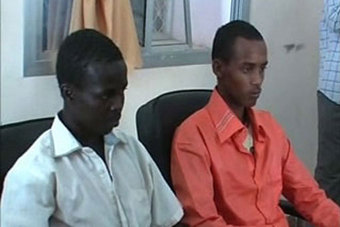
2 Al-Shabaab Rebels Surrender to Authorities in Puntland.  In the Somali Republic’s fully self-governing Puntland State, two young rebels, aged 18 and 24, defected on September 6th from the al-Qaeda-affiliated al-Shabaab militia based in the Galgala Mountains and turned themselves in to the Puntland government.  They had been with al-Shabaab in the mountains for 13 months.


Defectors from al-Shabaab
THE REST OF AFRICA


Talk of War in Barotseland Follows Rounding Up of Activists.  In Mongu, the capital of the Republic of Zambia’s Western Province, police have begun rounding up and interrogating members of the Lozi (Barotse) nationality which dominates western Zambia over an activist stunt on September 6th involving ripping up copies of a draft proposed national constitution seen as granting insufficient autonomy to Barotseland.  Nathaniel Mubukwanu, a member of parliament for Mongu, said that the stunt was criminal because the draft copies were government property.  Others have compared the acts to treason.  Fifteen people have been arrested, most of them reportedly minors.  This has prompted the Barotse litunga (king), Libosi Imwiko II, to declare that the Lozi people will do battle with the Zambian state if Zambia sends police and soldiers into Barotseland (though it of course already has, since it administers the area).  And the commander of the Barotseland Liberation Army (B.L.A.), Lt. James Mwiya, has ordered Lozi people in Western Province (formerly known as Barotseland Province) to wear red clothing to symbolize their readiness for coming bloodshed in the quest for independence.

King Libosi Imwiko II is ready for war.
Darfuri Rebels Claim Killing of 10 Sudanese Soldiers in South Kordofan.  In South Kordofan, a state that remained, mostly against its will, in the Republic of Sudan when the Republic of South Sudan seceded last summer, rebels from (north) Sudan’s southwestern Darfur region are said to be battling Sudanese government forces.  This bolsters suspicions by some that there are increasing links between Darfuri groups and rebels operating in South Kordofan and Blue Nile states under the banner of the Sudanese People’s Liberation Movement–North (S.P.L.M.–N), an offshoot of the S.P.L.M. at large, which became South Sudan’s military upon independence.  This week’s announcement, referring to 10 government soldiers killed, was made by the Justice and Equality Movement (J.E.M.), an anti-government (but itself not separatist) insurgent army from Darfur.  The Sudanese government denied any such battle had occurred.

7 Militants, 3 Christian Youths Killed in Northern Nigeria Boko Haram Violence.  Authorities in Nigeria claim seven Islamist rebels were killed in a gun battle that followed a suspected Boko Haram attack an army checkpoint in Maidiguri, capital of Borno State in far northeastern Nigeria, on September 7th.  Thirteen arrests were made, but there were no reported military casualties.  Boko Haram is also suspected in an attack the same day on the home of the mother-in-law of neighboring Yobe State.  Militants stormed into the residence, ordered the occupants out, and burned it down.  There were no reported injuries.  In Bauchi State in the north, three young Christian men were killed on September 10th by unidentified members of the Fulani ethnic group—a nationality which dominates Boko Haram—in a drive-by shooting, and on the night of September 11-12 authorities arrested 11 suspected Boko Haram members in Borno State and recovered a cache of weapons.  Nigeria’s Muslims also staged a demonstration in Jos, in anger over a low-budget American film parodying the Prophet Mohammed, similar to but milder than other demonstrations around the Muslim world.  The protesters, some of whom wore shirts with the words “To Hell with America, to Hell with Israel,” were dispersed with live assault-rifle fire by police.

Biafran Independence Activists Arraigned in Nigeria.  Five members of an outlawed Igbo separatist organization, the Movement for the Actualization of the Sovereign State of Biafra (MASSOB) were arraigned in Onitsha, in southeastern Nigeria, on September 7th on charges of belonging to an “unlawful society,” as well as other offenses such as the possession of Biafran flags.  The five include Chief Arinze Igbani, who was receiving medical treatment at a clinic when he was nabbed in the September 4th round-up (as reported on last week in this blog).


Mombasa Republican Council Accused of Inciting Tana River Violence in Kenya.  Villagers in the Tana River district of Kenya’s Coast Province are reportedly saying that “outsiders” with a political agenda are behind the latest wave of killings, ostensibly over grazing rights, between the Pokomo and Orma ethnic groups.  Dhadho Godhana, a member of parliament for Galole, at the mouth of the Tana, was charged with inciting violence on September 12th, then released, and he has lost his post as assistant minister for livestock for his presumed role in the conflict.  Over 100 people have been killed in the retaliatory raids between the two groups this month.  Some Orma also accuse the Mombasa Republican Council (M.R.C.)—based in the predominatly-Muslim city of Mombasa at the other end of Coast Province, which the M.R.C. wants to establish as a separate state—of being behind an attack on September 10th in which 38 were killed.  Some Pokomo, who are 90% evangelical Christian—are sympathetic to the M.R.C.

Spaniard Captured, Released by Ansar al-Dine in Northern Mali.  A citizen of Spain boating down the Niger River was abducted September 6th by Ansar al-Dine, one of the two al-Qaeda-affiliated Islamist militias that rule the northern two-thirds of the Republic of Mali as the Tuareg-dominated Independent State of Azawad, before releasing him the following day.  He was grabbed just outside the town Niafunké, in what the Malian government regards as the far south of its Timbuktu province.  From there he was brought south to the town of Mopti, capital of the multiethnic province of the same name, where Ansar al-Dine and other jihadists have recently extended their influence.  Elsewhere in Azawad, Nabil Sahrawi, an Algerian citizen and a senior military commander for the al-Qaeda Organization in the Islamic Maghreb (A.Q.I.M.) who went by the nom de guerre Abu Olqoma, died in a car accident on September 9th in Gao.
  [Related articles: “Mali Becomes the Latest African Country to Split along North–South Lines” (Feb. 2012), “A New Country in Africa: Islamic Republic of Azawad” (April 2012), “Why It Matters What You Call Your Country: Cyprus vs. Northern Cyprus, Azawad vs. the Azawad” (April 2012), “Dream of a Tuareg State Fizzles: Is This the End of Azawad?” (July 2012), “Mali Becomes the 92nd Country to Formally Recognize Kosovo ... or Not” (Aug. 2012).]


Nabil Sahrawi
EUROPE

On Eve of Mass Independence Rally, Catalan Leader Gives Scots Separatists a Pep Talk.  On September 10th, on the eve of a major pro-independence rally in Madrid, Spain (September 11th marks a Catalan defeat at the hands of King Felipe V in 1714), the father of Catalonia’s separatist movement, Jordi Pujolvisited London this week and offered words of support to Scotland’s much younger independence movement.  He pointed out that successful independence movements often start out as a minority movement, giving the United States as an example, pointing out that when the American Revolution was begun, only a third of the population supported it.  That is about the same proportion of Scots today that favor independence from the United Kingdom.  But Pujol said that a successful secession relies on “not only the will of the population but also the skill of the leaders.”  Scotland is due to vote on separation from the U.K. in 2014.


Paying homage to Catalonia
Spaniards March to Protest Release of Dying Basque Prisoner.  In Spain’s Basque Country, about 100 members of the Victims of Terrorism Association marched to Zaballa prison in the town of Nanclares de la Oca on September 8th to protest an August 30th court ruling (reported on last week in this blog) ordering the release of a terminally ill convicted Basque terrorist.  The prisoner, Jesús María Uribetxebarria Bolinaga, is dying of cancer while he serves a prison term for kidnapping and murder and was the focus of a hunger strike (reported at the time in this blog) by hundreds of Basque prisoners in France and Spain last month.  He is a member of the disarmed and mostly disbanded rebel army ETA (Euskadi Ta Askatusana, “Basque Homeland and Freedom,”), which fought for an independent Basque state in north-central Spain and southwestern France.


The families of terrorism victims protest a Basque militant’s release
On National Day, Gibraltar’s Leader Says Rock “Will Never Be Spanish.”  The chief minister of Gibraltar, an overseas British territory whose status has been a thorn in the side of relations between the United Kingdom and Spain since the early 18th century, vowed on the occasion of its National Day on September 10th, “We will never concede one grain of sand, one breath of our air, or one drop of our waters.  Gibraltar will never be Spanish.”


Kosovo’s “Supervised Independence” Formally Ends, but NATO, E.U. Are Staying On.  On September 10th, the Republic of Kosovo—which is recognized by only just under half of the world’s sovereign states, and not at all by the Republic of Serbia, from which it seceded in 2008—ended its period of “supervised independence.”  This means that the International Civilian Office (I.C.O.), set up by the International Steering Group for Kosovo (I.S.G.)—a 25-member body consisting of the United States, the European Union (E.U.), the North Atlantic Treaty Organization (NATO), Russia, and most E.U. member-states, plus Norway, Switzerland, Croatia, and Turkey—will disband.  The I.C.O. was empowered to step in and take over Kosovo’s governmental powers if human-rights abuses (against Serbs) or similar problems arose, but it never did.  NATO and the E.U.’s European Rule of Law Mission (Eulex) still maintain a presence in Kosovo.


Serbian Prosecutor Claims New Witness Can Testify to Kosovo War Organ-Harvesting.  In the Republic of Serbia, a public prosecutor said September 9th that he has detailed witness testimony of ethnically Albanian rebels harvesting organs from captured Serbs during the Kosovo War.  The harvesting allegedly occurred in northern Albania, during 1998 or 1999.  The general accusations are not new: in 2010 the Council of Europe reported on Kosovo Liberation Army (K.L.A.) detention camps along the Albanian border and an organ-harvesting ring implicating the highest Kosovar and Albanian circles, all the way to Hashim Thaçi, the current prime minister of the Republic of Kosovo, a state Serbia and much of the world do not recognize.  The charges are being investigated by the European Union (E.U.) as well.  The Serbian prosecutor, Vladimir Vukčević, says the witness, a former K.L.A. member, is being kept under close guard.


Separatists Bomb of 7 Supermarkets in Corsica; None Injured.  Seven supermarkets were the targets of a wave of bombings on September 9th across Corsica, an island in the Mediterranean Sea near Italy that has been administered for centuries by the French Republic.  There were no injuries and only minor damage to the buildings.  The Corsican National Liberation Front (F.N.L.C.), which seeks a separate Corsican state, claimed responsibility, saying it was a strike at “social and trade-union struggles of our people against the multiple outposts of French colonialism in Corsica.”

Corsica’s flag.  The original flag had the Moor blindfolded,
but Corsican separatists moved the bandana up a bit to symbolize liberation.
[For the latest news from the North Caucasus (including DagestanChechnya, and Ingushetia), see this week’s Caucasus Update.]

BITS OF ASIA THAT LIKE TO PRETEND THEY’RE PART OF EUROPE

[For the latest news from the South Caucasus, including ArmeniaAzerbaijan, and Georgiasee this week’s Caucasus Update.]

WikiLeaks Wires Tell of Possible of Karakalpak Separatist “Time Bomb” in Uzbekistan.  Diplomatic cables sent home in 2008 by the United States ambassador to the Republic of Uzbekistan and now released by WikiLeaks shed light this week on the separatist situation in the Republic of Karakalpakstan, an ethnically distinct autonomous region making up almost the entire western half of Uzbekistan, including its access to the Aral Sea.  Separatist momentum was weak, according to the cables, mostly because of emigration by the Karakalpak, who are a minority in their own republic, outnumbered by Kazakhs and Uzbeks.  Independence is being pushed by the Free Karakalpakstan National Revival Party, which accuses Uzbeks of genocide.  The Uzbek government was in 2008 denying that separatism was a problem, according to the then-ambassador, Richard Norlan, but other experts called the Karakalpak situation a “time bomb.”  Karakalpakstan has its own parliament and constitution and considers itself a sovereign state, according to the cables.


[For the latest news from Turkey, including Turkish Kurdistan, see this week’s “Kurdistan and Syria Update.”]

ASIA—MIDDLE EAST


[For more news from Syria and Iraq, including the Kurdistan regions, see this week’s “Kurdistan and Syria Update.”]

Palestine to Apply for U.N. General Assembly Seat Again This Month.  The president of the Palestinian National Authority (P.N.A.), Mahmoud Abbas, in a press conference in Ramallah, the Palestinian capital, on September 8th, announced that this month the State of Palestine would again apply for admission to the United Nations (U.N.) General Assembly as a member state.  The Palestine Liberation Organization (P.L.O.) has had U.N. “observer” status since 1998.  Palestine is diplomatically recognized by most of the world (133 sovereign out of, depending on how you count them, 193 sovereign states), and is treated as a member state by U.N. institutions such as Unesco, but it is effectively blocked from a General Assembly seat by veto powers wielded on the U.N. Security Council by Israel’s only ally, the United States.  The U.S. scotched a previous Palestinian application last year.  General Assembly membership would be consequential because it would make Israel’s brutal occupation and blockade of Palestine an unambiguous act of aggression by one state against another.

Basra Pushes for Unified Autonomous Southern Region in Iraq.  As the northern autonomous Kurdistan region solidifies its quasi-separate status and fighting between Shiite and Sunni Arabs reaches newer heights throughout Iraq, centrifugal forces have emerged in the far south as well.  This week Sabah al-Bazouni, who heads the Basra Provincial Council, in Iraq’s far south, says that the city of Basra, now on track to being declared Iraq’s “economic capital,” wants to form a unified Southern Region, with an autonomous status similar to Kurdistan’s, formed out of several provinces and with Basra, Iraq’s only port, positioned at the country’s tiny wedge of coastline, as its capital.  Southern Iraq is where most of Iraq’s Shiites are concentrated.


Map showing the proposed unified southern province for Iraq
Former Vice President Will Return to Yemen from Exile to Aid Southern Movement.  The former vice-president of the Republic of Yemen, Ali Salim al-Beidh, whose withdrawal from the coalition government in 1993 sparked the 1994 civil war over southern secession, said September 13th that he plans to return to Yemen to aid the Southern Movement in its quest for independence.  He has been living in exile since 1994, when he fled Aden, the former capital of South Yemen, as federal troops seized it.  He went first to Oman, but now lives in Beirut, Lebanon.


Ali Salim al-Beidh
South Yemeni Separatist Leader Survives Car-Bombing on Day of Rally.  Thousands of supporters of independence for South Yemen, which was separate from Yemen until unification 1990, gathered at a stadium in the city of Daleh on September 10th.  Honoring the dead in the recent independence struggle, the crowds chanted “No unity—no federation—no colonialism!”  Meanwhile, the same day, the separatist leader Mohammed Ali Ahmed, who served as “interior minister” for South Yemen in a failed secession bid in 1994, survived an assassination attempt when a bomb planted in his car blew up while he was at a meeting in a nearby hotel in Hadhramaut province, in the eastern part of the former South Yemen.  Ahmed returned from political exile in March.

ASIA—SOUTH ASIA

Set Back by Vote, Tamil Party May Yet Form Coalition Government in 1 Province.  Overall, Sri Lanka’s Tamil party came in third in this week’s provincial elections, but in one province may be able to hobble together a coalition.  The nation’s ruling party, the United People’s Freedom Alliance (U.P.F.A.), this week narrowly won, with 51.05% of votes, three out of three provincial council elections held September 8th.  At stake was the leadership in the Tamil-dominated provinces of North Central and Eastern and the south-central Sabaragamuwa province.  The United National Party (U.N.P.) came in second, with 27.67%, while the Tamil National Alliance (T.N.A.), which has pushed the Tamil-autonomy agenda since the end of the Tamil–Sinhalese civil war in 2009, trailed with only 9.63%.  However, in Eastern Province, the U.P.F.A.’s plurality was so narrow that the T.N.A. said September 9th it was working with the U.N.P. and the Sri Lanka Muslim Congress (S.L.M.C.) about forming a coalition provincial government.


Sri Lanka’s provinces
U.N. Team Arrives in Pakistan to Investigate Balochistan “Disappearances.”  A United Nations (U.N.) fact-finding team that focuses on “disappearances” arrived in Pakistan this week for a 10-day investigation of allegations that the government is abducting and disposing of troublemakers, especially in the separatist province of Balochistan.  The group, the U.N. Working Group on Enforced or Involuntary Disappearances, arrived September 9th at the invitation of the Pakistani government.  It is headed by Olivier de Frouville, of France.

Parties in Pakistan Pick Sides over Sindhi Separatists’ General Strike.  In Karachi, the nationalist, traditionalist political party led by Pakistan’s former prime minister, Nawaz Sharif, the Pakistan Muslim League–Nawaz (P.M.L.–N), threw its support behind separatists in Sindh state who are calling a general strike September 13th to protest a new local-government system in the state.  In reply, Altaf Hussain, the chief of Sindh’s ruling party, the centrist, secular Muttahida Qaumi Movement (M.Q.M.), on September 8th called the P.M.L.–N “enemies of democracy” and “hypocrites,” adding that the party “is conspiring to break up the country, but this conspiracy will never be successful as long as the M.Q.M. is here.”


Village Chief, Policeman Killed, Soldier Hurt in Kashmir Violence.  In Kashmir, India’s only majority-Muslim state, one Indian special-forces policeman was killed and a soldier was wounded by Kashmiri separatists in the town of Sopore on September 8th.  The rebel group Lashkar-e-Taiba claimed responsibility.  A manhunt was on for the perpetrators.  Then, on September 10th, a village chief in Kashmir’s Baramulla district was shot and killed by separatists, according to police.


Soldier Killed, 12 Wounded by Separatist Bombs in India’s Manipur State.  In Imphal, capital of the state of Manipur, in India’s ethnically diverse far northeast, a soldier and a civilian were hurt by a bomb planted by the People’s Liberation Army (P.L.A.)—which shares the name of the People’s Republic of China’s military but is in fact the armed wing of Manipur’s separatist Revolutionary People’s Front (R.P.F.).  The following day, also in Manipur, an Indian soldier was killed and 10 were wounded on September 9th by an improvised explosive device.  The P.L.A. or another rebel outfit, the United National Liberation Front (U.N.L.F.), is suspected in that incident.


ASIA—EAST ASIA


R.K.K. Leader in Southern Thailand Promises General an End to Insurgency.  A Thai military commander met with nearly 100 ethnic-Malay rebels from the Runda Kumpulan Kecil (R.K.K.) militia and their leader in Narathiwat province on September 11th and secured a promise to cease their insurgency in the predominantly-Muslim southern provinces of the predominantly-Buddhist Kingdom of Thailand.  The commander, Gen. Prayuth Chan-ocha, hailed it as an historic step.  The separatist leader, a wanted insurgent named Wae-Ali Copter Waji (nom de guerre: Jeh Ali), turned himself in along with 90 rebels, but it was not clear if this was a formal surrender, let alone how much of the insurgency he actually commands.  The general added, “The talk had been prepared for a period of time but we could not reveal it to the public.  The coordination was done through their families and society.  The Army has always opened doors for them.”


General Chan-ocha and Jeh Ali bury the hatchet
Hong Kong Government Backtracks on Pro-Beijing School Curriculum.  The Beijing-leaning government of the People’s Republic of China’s Hong Kong Special Administrative Region backtracked on September 8th from a controversial school curriculum which had sent thousands of protesters into the streets (reported on last week in this blog) to decry “brainwashing.”  The curriculum will now no longer be mandatory.  The curriculum touted single-party authoritarian rule as enlightened, as opposed to the decadent democracy and freedom characteristic of most of the rest of the world—and, incidentally, of Hong Kong, whose Western-style political system was guaranteed in the 1997 agreement that ceded the territory from the United Kingdom to the P.R.C.  The sudden decision is seen as an attempt to, as one political scientist put it, “relieve the pressure on the pro-establishment and the pro-Beijing candidates” in the elections for Hong Kong’s semi-elected, semi-appointed legislature the following day.

Indonesian Confesses to Terror Plot against Buddhists, Angry over Rohingya Issue.  A citizen of Indonesia surrendered to authorities in Jakarta on September 9th and confessed to plotting a suicide-bomb attack on Buddhists in the city, in protest over the treatment of the predominantly-Muslim Rohingya minority in Burma by that country’s Buddhist-majority government.  Police were led to the man, Muhammad Toriq, by smoke emanating from his apartment.  A subsequent raid yielded a cache of explosive supplies.


Civil War in Burma’s Kachin State Spreads to South.  Fighting in Burma’s Kachin State raged on September 10th along a remote rail line, according to the Kachin Independence Organization (K.I.O.), part of a cycle of ongoing violence.  This follows the destruction of a railway bridge by Kachin insurgents the week before and affirms the spread of violence between the government and rebels into the southern part of the state.  Meanwhile, in eastern Kachin State, Kachin Independence Army (K.I.A.) forces reportedly killed 26 government soldiers in two early-morning attacks on September 12th.  There were no K.I.A. casualties.


OCEANIA


New Zealand Māori Activists Plan to File Claim to Indigenous Ownership of the Wind.  It sounds like poetry, but it is intended to be serious.  An elder from the indigenous Māori people of New Zealand, David Rankin, plans to bring a claim before the Waitangi Tribunal—a sort of supreme court which makes non-binding interpretations of the country’s founding document, the 1840 Treaty of Waitangi—to file a claim to New Zealand’s winds.  This will mean that Māori would share automatically in any energy revenue from wind farms and would have a say in where wind turbines can be built.  Traditionally, according to Rankin, the wind was a deity in Māori culture, and the settler government has no right to use without consent from Māori people.  Given how coldly New Zealand’s prime minister, John Key, has greeted Māori claims for marine tenure, i.e. rights to energy from water resources (as reported on in this blog), air tenure is probably a non-starter.  As Key told a reporter who asked the question, “My view is pretty clear: no one owns water, no one owns wind, no one owns sunlight, no one owns the sea.  I could give you quite a long list if you like.”


Julian Assange to Be Awarded Australian Aboriginal “Passport” in Ceremony.  According to a September 9th press release by Australia’s Indigenous Social Justice Association, a planned September 15th ceremony in Sydney, New South Wales, to award over 200 “Aboriginal Land Passports” (reported on earlier in this blog) will now honor a celebrity recipient: Julian Assange, the embattled and wanted founder of the whistleblower website WikiLeaks.  Assange’s father, John Shipton, will accept the passport on his behalf, since Assange is for the time being wanted on criminal charges and a virtual prisoner inside Ecuador’s embassy in London.  The point of the ceremony is to remind the public that Australia is aboriginal land, amid a series of controversies over the treatment of asylum-seekers by the Australian government.  But the I.S.J.A. announced on September 14th that several Aboriginal nations were seriously considering giving Assange “refuge and sanctuary.”


John Shipton with his son Julian Assange’s Aboriginal passport
Charles Pidjot, New Caledonian Separatist Leader, Dies at 50.  Anti-colonialists in Melanesia this week mourned the death this week of Charles “Charly” Pidjot, founder of the Caledonian Union, the oldest political party advocating independence of New Caledonia from the French Republic.  He was 50 years old and died on Tanna Island in the nearby Republic of Vanuatu “after complications from a traditional operation.”  Tribal healers were attempting to relieve him of back pain resulting from a car accident, but complications arose because, according to the director of the hospital where he was eventually taken, the healers did not know their patient was diabetic.


Charles Pidjot
NORTH AMERICA

Canada Government Keeps Wary Eye on Possible Changes to Quebec Language Policy.  In Canada, the federal Commissioner of Official Languages, Geoff Fraser, put the incoming Parti Québécois (P.Q.) minority government in Quebec on notice September 7th that he will be watching closely to ensure that toughening of the province’s language laws, as promised during the campaign of the new premier, Pauline Marois, do not run afoul of the Charter of Rights and Freedoms.  A Quebecker himself, Fraser said, “The existing Charter of the French Language in Quebec has been tested by the courts and the current version is Charter-proof.  ...  I’ll be watching it to see: are they changing it in ways that might change that?”  Marois, who calls the decline of French in urban Quebec “at the heart of our concerns,” made campaign promises (as reported in this blog at the time) to expand the types of firms that must conduct all business in French and to require immigrants to receive higher education in French.
  [Related article: “Quebec Cracks Down on Crimes against the State—Like Playing Hopscotch in English” (Nov. 2012).]

Group Sex, Boozing, Born-Again Christianity Figure in Portraits of Quebec Gunman.  More details emerged this week about Richard Henry Bain, the 61-year-old (some sources say 62) man who disrupted the separatist Parti Québécois’s election victory rally September 4th (as reported in this blog last week) with a fatal shooting that authorities are treating as a possible assassination attempt on the incoming provincial premier, Pauline Marois.  A couple from London, Ontario, who had recently hired him as a fishing guide, described him as obsessed with Quebec politics and that he had claimed to have written Jean Charest, the premier, to press him on the issue of granting land rights to owners of rural cottages such as himself.  The wife in the couple, Anthea Rowe, said, “We were complaining to people after we got back, like, ‘Oh, this guide who was supposed to take us fishing just spent the entire time talking about Quebec politics.’  It just seemed inappropriate for someone who was running a business.  We got sick of it.”  They say he also bragged about heavy drinking, three-way sex on the eve of an iron-man race, and the acceptance of Jesus Christ into his heart 18 months earlier, which he said made him unafraid to die.  Bain is now charged with first-degree murder, arson, and 14 other offenses.


Richard Henry Bain
Tea-Partiers Found New Hampshire Separatist Party.  At a meeting in Keene, New Hampshire, by-laws and a five-plank platform were adopted for a new political party called the New Hampshire Liberty Party, which advocates secession from the United States, as well as all individuals’ “right to declare themselves independent from any government.”  It also advocates non-violence and the release of prisoners convicted only of victimless, non-violent crimes such as drug possession or prostitution.  The co-chairs of the party are Ian Freeman, co-host of the radio show Free Talk Live; Conan Salada, a television producer; and Darryl W. Perry, former chair of the Boston Tea Party National Committee.


New Hampshire’s spectacularly lame flag (just the state seal on a blue background, like so many lame state flags), which one hopes would be dispensed with if New Hampshire became independent.
North Carolina G.O.P. Lawmaker Appears on White-Supremacist Radio Show.  Rep. Walter Jones, who represents most of coastal North Carolina in the United States House of Representatives for the (you’ll never guess) Republican Party, appeared on a notorious white-supremacist radio show on September 8th to tout his newly proposed legislation for the impeachment of President Barack Obama.  Though he mainly talked about health-care and foreign policy, the show, Political Cesspool, broadcast from Memphis, Tennessee, has been cited as hate speech by groups such as the Southern Poverty Law Center (S.P.L.C.) and the Anti-Defamation League (A.D.L.).  Its co-host, James Edwards, has called African-Americans “subhuman ... heathen savages” and insisted that slavery was “the greatest thing that ever happened” to them.  The show’s mission statement calls the show “pro-White” and supports raising “the White birthrate” in order to “grow the percentage of Whites in the world relative to other races.”  It also comes out in support of Southern secession.  Jones is also famous for having, in 2003, pushed the effort to rename French fries “freedom fries” as a response to the French Republic’s opposition to the illegal U.S. invasion of Iraq, but he later split with much of his party by becoming an isolationist in the libertarian mold, opposed to foreign adventurism, and a supporter of Ron Paul.


A book by the neo-Nazi talk-show host James Edwards
PRACTICALLY BLOODY ANTARCTICA

Fewer than One-Third of Falklanders Call Themselves “British.”  New census results for the Falkland Islands reveal that fewer than a third of Falklanders consider themselves British.  59% reported their nationality as “Falkland Islander.”  The 2,563 Falklanders—only 1,973 of whom are “status holders,” i.e. Falklands citizens—are overwhelmingly British in ancestry and are nearly unanimous in their desire to remain an overseas territory of the United Kingdom in the face of aggressive territorial claims by the Argentine Republic.  The territory has also experienced zero population growth since the last census, in 2006.


SPORT


Mo Farah Was a Top Target of Foiled London Olympics Terror Plots.  British media revealed this week that, during this year’s Summer Olympics in London, the United Kingdom’s intelligence agencies foiled up to 30 terrorist plots, arresting suspects throughout Europe and the Middle East.  Near the top of the target list was Mohamed “Mo” Farah, the double-gold-medal-winning runner, who was born in the Somali Republic and raised partly in the unrecognized Republic of Somaliland.  Apparently some Somali terrorists associated with al-Qaeda were angry that Farah was playing for Team Great Britain.


[Also, for those who are wondering, yes, this blog is tied in with a forthcoming book, a sort of encyclopedic atlas to be published by Auslander and Fox under the title Let’s Split! A Complete Guide to Separatist Movements, Independence Struggles, Breakaway Republics, Rebel Provinces, Pseudostates, Puppet States, Tribal Fiefdoms, Micronations, and Do-It-Yourself Countries, from Chiapas to Chechnya and Tibet to Texas.  Look for it in spring 2013.  I will be keeping readers posted of further publication news.]

Subscribe Now: Feed Icon