Showing posts with label National Front. Show all posts

Saturday, November 23, 2013

Lega Nord, Flemish Separatists, Others at Secret Vienna Summit Plot Far-Right Slate for Strasbourg


On November 15th, in Vienna, Austria, history of a sort was made as seven far-right parties from across Europe met in secret to form the beginnings of a coherent voting bloc that could try to push their shared decentralist, anti-Brussels, anti-immigrant agenda in the May 2014 European Parliament elections.

Flemish nationalism and religious bigotry on display at a Vlaams Belang rally
The parties involved were: Belgium’s ethnic-separatist Flemish Interest (Vlaams Belang, or V.B.) party, France’s notorious but influential National Front (Front national, or F.N.), the NetherlandsParty for Freedom (Partij voor de Vrijheid, or P.V.V.), the neo-Nazi-tinged Freedom Party of Austria (Freiheitliche Partei Österreichs, or F.P.Ö.), the Swedish Democrats (Sverigedemokraterna, or S.D.), the Slovak National Party (Slovenská národná strana, or S.N.S.), and Italy’s Northern League (Lega Nord), which seeks a separate republic called Padania.   Two other parties which planned to attend cancelled at the last minute: the United Kingdom Independence Party (UKIP), which wants the U.K. to leave the European Union (E.U.), and Alternative for Germany (Alternative für Deutschland, or AfD), a rather ideologically mild party by this summit’s standards, which wants Germany to abandon the euro but not the E.U.  The Netherlands’ Party for Freedom (Partij voor de Vrijheid, or P.V.V.) was also not at the summit, but its membership in the new alliance is assumed; two days earlier, its founder, Geert Wilders, had met with the F.N.’s leader, Marine Le Pen, to declare a new working relationship.  (Wilders, whose party is unlike the F.N. not anti-gay or anti-Semitic—they prefer to focus their energies on hating just Muslims—had earlier been wary of associating too closely with the F.N. and even forbade P.V.V. members of European Parliament (M.E.P.s) from sitting next to F.N. ones.)

The Dutch ultranationalist GeertWilders
Not all of these movements believe in the same kind of decentralism.  Vlaams Belang would like to see the Kingdom of Belgium dissolved and replaced by the separate independent states of Flanders, Wallonia, and maybe even Brussels and the German-Speaking Communities (an autonomous sliver of Wallonia along the German border).  And Lega Nord would like to see a Federal Republic of Padania with significant self-rule for regions such as Lombardy, Liguria, and Venetia, as well as enhanced linguistic rights for German-speakers in the South Tyrol, speakers of Arpitan/Savoyard French and Walserdeutsch in Val d’Aosta, and speakers of Friulian and Ladin near the borders with Switzerland and Austria.

Umberto Bossi, founder of Italy’s Northern League
The Swedish Democrats, on the other hand, want the trans-national and ultimately toothless Sami Parliament, which represents indigenous northern (Lappish) people in Norway, Sweden, and Finland, shut down, while the Slovak National Party pounces on any attempts by the Hungarian-speaking minority in the Slovak Republic to secure more linguistic or cultural rights—fearing the kind of Magyar irredentism that haunts autonomy movements in Serbia’s Vojvodina province (see my recent article) and Romania’s Transylvania region (see my article on this).  And, even though the National Front’s founder, Jean-Marie Le Pen, was born in a village in a Brittany, his party recently called any government efforts to preserve minority languages like Breton, Occitan, Basque, Catalan, and Alsatian German “pure madness” (ironically, since France already has the nastiest policies in western Europe when it comes to linguistic rights).

The National Front’s Marine Le Pen, as portrayed at a controversial Madonna concert
But one thing all parties can agree is an opposition to European integration and hostility toward immigrants, especially Muslim ones.  The F.P.Ö. leader, Heinz-Christian Strache, said, in announcing the meeting after the fact, “There are many important patriotic parties in Europe that have recognised problems and are prepared to work together,” adding that there is now “a real chance that with the partnership that we’re working on we can have a strong parliamentary group.”


Make no mistake, this is not a move of desperation by these disparate groups but an attempt to capitalize on existing momentum.  The F.P.Ö. currently has only two seats in the European Parliament in Strasbourg, won with 12.7% of the Austrian vote in 2009 elections, but earlier this year it took more than a fifth of the popular vote in national parliamentary elections and is considered to be on a roll.  The F.N. is also expected to enlarge its current three-seat delegation.  The Slovak nationalists have one of Slovakia’s 13 European seats, but none in the national body.  Many expect UKIP to dislodge the U.K.’s ruling-coalition junior partner, the Liberal Democratic Party, as the country’s number-three party, at least in Strasbourg.  Vlaams Belang is also optimistic: the more moderate separatist party, the New Flemish Alliance (Nieuw-Vlaamse Alliantie, or N.-V.A.), is expected to become the ruling party in Belgium in next year’s national elections, which will only raise V.B.’s profile and influence.  The euro crisis has obviously played a large role in all of this.

One of Vlaams Belang’s more controversial ad campaigns
But in order to form a functioning, recognized slate in the European Parliament, a coalition needs seven parties from seven different E.U. member states and 25 seated parliamentarians.  To fill this out, they have had not much luck in reaching toward the more moderate end of the Europhobic spectrum.  The Danish People’s Party (Dansk Folkeparti, or D.F.), which controls 13.8% of Denmark’s parliament, turned down an offer to join the group, citing mainly fear of association with the Le Pens and their anti-Semitism.  That might leave the extremist F.P.Ö., which is spearheading the slate, to reach out to the farther right fringe for new allies, such as Hungary’s Jobbik: Movement for a New Hungary (Jobbik Magyarországért Mozgalom), the neo-Fascist Tricolor Flame Social Movement (Movimento Sociale Fiamma Tricolore, or M.S.–F.T.) in Italy, Spain’s Phalangists, Romania’s New Right (Noua Dreaptă), or the openly neo-Nazi paramilitary movement in Greece, Golden Dawn (Laïkós Sýndesmos–Chryssí Avgí), which has benefited from anti-northern, anti-Brussels feeling in the recent currency crisis but has recently been all but shut down by the Greek government.

Members of Greece’s Golden Dawn party.  That kind of angled curly thing in the middle of their flag?
Um, that’s, um, that’s supposed to represent Theseus and the Minotaur in the Labyrinth.  Yeah, that’s it.
(It would be less politic perhaps for the alliance to reach out to the neo-Fascist British National Party (B.N.P.) or Anglo-separatist English Democrats—largely in some ways an outgrowth of the B.N.P.—for fear of alienating the more moderate and successful UKIP.  (See a recent article on the English Democrats from this blog—which even features its founder, Robin Tilbrook, chiming in critically on the comment thread!).)

Robin Tilbrook of the English Democrats
This right-wing fringe constitutes more natural allies for the extremist F.P.Ö.  The party rose to prominence under the leadership of Jörg Haider, a confidante of Saddam Hussein and Moammar al-Qaddafi who once called the Waffen-S.S. “decent men of good character” and referred to Nazi death camps as merely “punishment camps.”

The late Austrian neo-fascist leader Jörg Haider.
Most Europeans’ complete and utter lack of any kind of gaydar whatsoever
(I mean, come on, people—right?) preserved his reputation until his death.
(Haider, who was married and loudly homophobic, died in a car crash in 2008—on his way, as it was revealed posthumously, to his grandmother’s 90th-birthday party from a gay bar in Klagenfurt, where he had had a lover’s spat with his “LebensmenschStefan Petzner.  As further evidence that there is an element of self-loathing in all bigotry, the head of Hungary’s virulently anti-Semitic Jobbik movement, Csanád Szegedi, was revealed last year—as reported at the time in this blog—to be Jewish himself.  He has since experienced a personal political transformation and has embraced his Judaism.  There is little of such wisdom or courage—belated though it was—among most of Europe’s far-right fringe.)

Csanad Szégedi’s new look.
Which way the new far-right alliance will swing as it seeks sufficient breadth to secure a place at the table in Strasbourg will depend on the volatility of European politics in this time of financial crisis—and ultimately it will determine the success of the movement, and its effect on European policy, as well.

Strasbourg or bust?  The Slovak National Party on parade


[You can read more about many of these and other separatist and new-nation movements, both famous and obscure, in my new book, a sort of encyclopedic atlas just published by Litwin Books under the title Let’s Split! A Complete Guide to Separatist Movements and Aspirant Nations, from Abkhazia to Zanzibar.  The book, which contains 46 maps and 554 flags (or, more accurately, 554 flag images), is available for order now on Amazon.  Meanwhile, please “like” the book (even if you haven’t read it yet) on Facebook and see this special announcement for more information on the book.]


Thursday, November 1, 2012

The Islamic Republic of Belgium?

Belgian Muslim women protesting a head-scarf ban
If you thought the ascendancy of Flemish secessionists in Antwerp’s municipal election on October 14th (reported at the time in this blog) was a worrying challenge to Belgium’s identity, you may be even more alarmed by the statements being made by two Belgian Muslims who won local town-council seats in Brussels.


Redouane Ahrouch (left) and Lhoucine Aït Jeddig (right)
The two, Lhoucine Aït Jeddig and Redouane Ahrouch, now hold seats representing districts in Brussels, Belgium’s cosmopolitan, multicultural capital, and say that they seek, in the long run, to establish a Belgian Islamic state ruled by shari’a (Islamic law).  Members of the tiny Islam Party, the two told a press conference on October 25th, “Islam is compatible with the laws of the Belgian people.  As elected Muslims, we embrace the Qur’an.  We consider Islam a universal religion.”  They pointed out that Islamic culture made European civilization possible (an arguable point, since Europe was lifted out of the Dark Ages partly by returning Crusaders importing products of Arab civilization such as mathematics, chemistry, astronomy, and the university system), and they say their short-term goals are limited to bringing halal meals to cafeterias, recognizing Muslim holidays, and allowing the hijab to be worn in public.


Map showing density of Muslim population in different European countries.
If Catalonia were independent, it would be colored dark green, like France and Belgium.
Wait a minute—yes, American readers, you read correctly: Belgium has laws dictating which religious clothing people are allowed to wear?  Yeeup: as in other “civilized” countries, such as the NetherlandsGermanyFranceSwitzerland, etc., Belgium has laws restricting all sorts of peaceful forms of religious expression, dictating how religious minorities are allowed to dress or what their houses of worship are allowed to look like.  If Catholic-dominated governments in Europe imposed restrictions like that on Protestants or vice versa, there would be civil war.  But anti-Muslim legislation is socially acceptable in modern Europe.  And Islamophobia is largely responsible for radical fascist political movements like France’s National Front surging into mainstream politics for the first time since the Second World War.  (Some of that has been discussed in this blog, such as new legal restrictions on infant circumcision in Germany, Switzerland, and Austria—an initiative which also tucks anti-Semitist agendas inside a more-acceptable Islamophobia.)  It is mainly because of the National Front, for example, that France’s former president, Nicolas Sarkozy, was elected on campaign promises to “powerhose the scum out of the ghettoes”—and why he led an intolerant campaign against halal butcheries (halal is the Muslim equivalent of Jewish kosher dietary rules) when his popularity faltered earlier this year (as discussed in this blog at the time).  Maybe, after all, Europe is still in need of a bit of enlightenment from the Muslim world.  One wonders how western Europeans that favor such persecution of religious minorities think themselves superior to societies where, say, people are required to dress modestly, rather than, as in much of Europe, being forbidden to.  (And, mind you, European laws, like laws everywhere, also require women, and men, to dress modestly; they just define that differently.)


Members of the far-right Flemish-separatist political party Vlaams Belang holding an anti-Mulsim rally
Let’s not take these points too far, though: Ahrouch’s other envisioned improvements to Belgian society have included executions, child marriage, restrictions on divorce, and the segregation of the sexes in all public places.  Medieval Arabs may have (by being invaded) delivered some forms of civilization to Europe, but some (not all) Muslim immigrants in Europe are bringing poisonous ideas and customs with them.  (Do I need to mention female circumcision?)


A Belgian cartoonist’s paranoid view of history.
(By the way, shouldn’t it show an American kicking the Nazi out of Belgium?)
Brussels’ two new councilmen have not a shred of hope of introducing any aspects of shari’a in Belgium, a country which has, you know, a constitution and stuff like that.  Muslims—most of them with ancestry in Morocco, Algeria, or Turkey—make up 30-35% of Brussels’ population, but only 6-9% of Belgium as a whole.

Maybe, however, their illiberal proposals can provoke a discussion that will bring both cultures toward a more moderate middle ground.

Probably not, actually, but it’s a nice thought.

[For those who are wondering, yes, this blog is tied in with my forthcoming book, a sort of encyclopedic atlas to be published by Litwin Books under the title Let’s Split! A Complete Guide to Separatist Movements and Aspirant Nations, from Abkhazia to Zanzibar.  (That is shorter than the previous working title.)  The book, which contains 46 maps and 554 flags (or, more accurately, 554 flag images), will be on shelves and available on Amazon on March 1, 2015.  I will be keeping readers posted of further publication news.  Meanwhile, please “like” the book (even though you haven’t read it yet) on Facebook and see this special announcement for more information on the book.]


Friday, March 23, 2012

Toulouse Shooting Spree Deepens France’s Divisions

The shooting spree at a Jewish school in Toulouse, France, this week and then the revelation that the gunman, who was eventually killed in a police stand-off, was a Muslim named Mohammed Merah came as terrible news to nearly everyone.  To Jews in France and worldwide, the confirmation of the suspicions that the killings of three children and a rabbi were motivated by radical Islam and anti-Semitism must have been sickening.  To Muslims in France, the news meant that soon there would probably be a backlash against France’s Muslim minority, already the targets of widespread prejudice.  For anyone in France, of any heritage, that values peace, tolerance, pluralism, and understanding between religious and cultural groups, this was a tragedy afflicting not only the families of the victims but the society as a whole.  But there was one group in France that had reason to celebrate the news that these heinous acts could be put under the heading of “Islamic terrorism”: the campaign team working to re-elect Nicolas Sarkozy in next week’s presidential elections.

Location of Toulouse, France

For months, Sarkozy had been polling badly against his Socialist oppenent, François Hollande.  Then, earlier this month, he decided to take a different tack.  Hollande was capturing the center, so the only place Sarkozy had to go to find new votes was on the far right.  He began engaging in angry, anti-immigrant, nationalistic rhetoric that is traditionally the trademark of the anti-Semitic, racist, neo-fascist National Front party.  For Sarkozy, who sailed to the presidency in 2007 on a campaign promise to “power-hose the scum out of the ghettoes,” this strategy was quite congenial to him.  First, he threatened to withdraw France from the European Union’s passport-free zone if Italy did not shut the door more firmly on refugees from Libya, Syria, and elsewhere amid the ongoing Arab Spring revolutions.  Next (as reported on in this blog last week), Sarkozy whipped up anti-Muslim feeling with a shamefully disingenuous concocted scandal over French butchers selling halal meat to non-Muslims.  (Halal is the Muslim equivalent of kosher and requires ritual slaughter of animals that sometimes includes procedures otherwise criminalized as inhumane.  Some butchers in France slaughter all their animals according to halal rules to save the costs of two separate production lines.)  Ah, yes, Sarkozy the long-time animal-rights advocate.  Anyway, it all worked.  Sarkozy’s poll numbers spiked, even exceeding Hollande’s in some surveys.

Nicolas Sarkozy, born-again animal-rights champion

When the Toulouse shootings occurred on March 19th, it must have been a nervous moment for Sarkozy’s reelection campaign.  Would the killer turn out to be some ethnically-French National Front wacko out to kill Jewish children?  Would it be someone who, once caught, would spout hysterical, anti-minority, jingoistic phrases lifted from Sarkozy’s speeches?  No, it was a Muslim.  Whew.


Nicolas Sarkozy

We still know little about Merah.  Raised in France by a single mother from Algeria, he turned to petty crime in his teens, then was exposed to Islamist extremism in prison (as if any more demonstration were needed that disproportionately heavy sentences imposed on Muslim youth in France actually feed terrorism).  Suspicious-looking trips to Pakistan and Afghanistan put him on the United States’ “no fly” list and made him a target of official French surveillance as well.  He bragged of links to al-Qaeda, which may or may not have been just bluster since, if nothing else, he was clearly deeply mentally disturbed.  In any case, the horrors of the shootings (Merah had also killed three French soldiers of Algerian extraction) fit neatly into the prevailing narrative of Sarkozy’s campaign, and increasingly of center-right politics in Europe more generally.  I guarantee the next polls will show Sarkozy ahead.  And he may just win.

Mohammed Merah

At least one European politician tried to change the narrative, but in a regrettably ham-fisted way, and the resulting controversy just adds to the general air of division in European society.  On March 19th, Baroness Ashton of Upholland, an English peeress who is the E.U.’s High Representative for Foreign Affairs and Security Policy—i.e., in one sense, western Europe’s highest-ranking foreign-policy voice—said, “When we think of what happened in Toulouse today, when we remember what happened in Norway a year ago, when we know what is happening in Syria, when we see what is happening in Gaza and different parts of the world—we remember young people and children who lose their lives.”  At one level, those remarks can be read as an attempt to put this Muslim-on-Jewish violence in a wider, human context that transcends specific groups, by invoking Islamophobically motivated Christian-on-Christian violence (Norway), Muslim-on-Muslim violence (Syria), and Jewish-on-Muslim violence (Gaza).  However, Lady Ashton ought to have known better.  The public seized on the implicit equation between Merah’s terrorist, anti-Semitic killing spree and Israeli Defense Forces (I.D.F.) soldiers who inadvertently kill Palestinian children—though usually as a predictable collateral effect of the I.D.F.’s aggressive forays into Palestinian civilian areas (including, earlier this month, as reported in this blog, two Gaza teenagers killed by Israeli bombs aimed at Islamic Jihad assassins).

Baroness Ashton of Upholland.
How do you translate “Open mouth, insert foot” into 27 different languages?


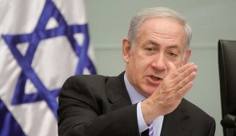
Binyamin Netanyahu, Israel’s right-wing, hawkish prime minister, was quick to seize on the remarks, condemning what he saw as an equation of “intentional massacre of children and an execution-style killing of an 8-year-old with the I.D.F.’s defensive and surgical actions meant to harm terrorists who use children as human shields.”  Netanyahu was right to pick up on a disturbing undercurrent in Ashton’s remarks, whether intended or not.  Progressive political opinion in Europe (Ashton is from the United Kingdom’s Labour Party) has shifted strongly toward sympathy with Palestine in the past couple decades, and this has nudged awake some dormant anti-Semitism in western Europe and dovetailed with not-so-dormant anti-Semitism in eastern Europe.  Some European politicians, in a kind of diplomatic version of Tourette’s syndrome, just can’t stop themselves from casting every atrocity against Jews anywhere in the “context” of Israeli war crimes against Palestinians—with an unnerving “they’re asking for it” subtext.  Some, sickeningly, even do this when talking about the Holocaust.

Binyamin Netanyahu

Nonetheless, it’s a sad fact that, at a moment when the Israeli Prime Minister should be able to speak to the world as the conscience of the Jewish people on a day of tragedy, he was instead so easily maneuvered into ascending a podium to defend the killing of children.  (Still, if you have to get someone to defend the killing of children, Bibi is definitely the man for the job.  He has lots of practice.)

No one knows what the social and political repercussions of the shootings will eventually be.  The vast majority of Europeans and Middle Easterners regard the crimes as horrifying, inexplicable, and an occasion for mourning, impotent anger, and sad reflection.  But so far, of those who have grabbed the microphone to politicize this tragedy, no one looks good.  No one.


[Also, for those who are wondering, yes, this blog is tied in with a forthcoming book, a sort of encyclopedic atlas to be published by Auslander and Fox under the title Let’s Split! A Complete Guide to Separatist Movements, Independence Struggles, Breakaway Republics, Rebel Provinces, Pseudostates, Puppet States, Tribal Fiefdoms, Micronations, and Do-It-Yourself Countries, from Chiapas to Chechnya and Tibet to Texas.  Look for it in spring 2013.  I will be keeping readers posted of further publication news.]

Subscribe Now: Feed Icon