Tuesday, September 17, 2013

Other California & Oregon Counties May Be Jumping on “State of Jefferson” Bandwagon


The fires of secession lit in California’s remote northern Siskiyou County last month (as first reported in this blog) may be spreading. The county’s board of supervisors voted 4-1 on September 3rd (as reported here) to seek separation from the rest of California as the State of Jefferson, with the idea that other counties in northern California and southern Oregon might join in.  Talk of northern California splitting off, as either the State of Klamath, the State of Siskiyou, or the State of Shasta, dates to the 1850s, but the far more serious State of Jefferson movement in 1941 aimed to create a 49th state out of California’s three northern border counties and a seven-county block in Oregon’s mountainous southwest.  Japan’s attack on Pearl Harbor chased Jeffersonian statehood off of people’s priority lists, but some feel it may be time again.  By now, the idea of splitting from ultra-liberal California is a pipe dream not of farmers and loggers, as in earlier eras, but of Republicans of the Tea Party persuasion who have a beef with the state government’s approaches to guns, taxes, and the environment.  California’s usual rural–urban and north–south rifts over water allocation play a role as well.


It took a week or so, but other counties have started chiming in.  To Siskiyou’s east, the board of supervisors in Modoc County, which borders both Nevada and Oregon, plans to vote on secession on September 24th.  Members of the board of commissioners in Klamath County, one of Oregon’s original “Jefferson” counties, said this week that they found the secession idea appealing and would confer with their Siskiyou counterparts this month or next on the subject.  Klamath borders Siskiyou, whose county seat, Yreka, was in 1941 the proposed Jeffersonian state capital.

I’m not sure this metaphor works.  What’s inherently “independent” about toilet paper?
And who wants their T.P. rough anyway?
Then, on September 10th, a member of the public urged the board of supervisors of Tehama County, a large rural jurisdiction to Siskiyou’s south, to consider joining a secessionist State of Jefferson; the citizen, Tom Mohler, promised to begin organizing a petition to that effect.  In fact, a rancher and radio broadcaster in Yreka, Mark Baird, says he has had expressions of support from no fewer than fifteen California counties.

Over the years, proposals for which counties should be in a State of Jefferson have varied.
Most politicians at the state level or higher pooh-pooh the idea as impractical while acknowledging the ideological rift that divides California’s urbanites from the less populous hinterlands.  But Doug LaMalfa, of the United States House of Representatives, told media that if the majority of citizens in the region supported a State of Jefferson then he would too.  He even, who knows how seriously, offered his services as governor.  Rep. LaMalfa represents California’s 1st Congressional Districts, which includes Siskiyou and covers a large inland swath of the state’s northeast, almost to Lake Tahoe.

Governor?
It remains to be seen if Jefferson statehood will catch on as quickly as last month’s secessionist rebellion in northeastern Colorado, where eleven states now plan to include a referendum on the formation of a State of North Colorado or New Colorado on the November ballot.  (See my articles on North Colorado here and here.)  Already, the 2013 Jefferson statehood movement is eclipsing last year’s aims to set up a State of South California, consisting mostly of Republican-dominated areas of rural south and central California, plus, oddly, San Diego (a movement discussed in detail at the time in this blog).  I predict more counties will be lining up to join the movement soon—though perhaps without the original proposed state’s coastal counties, which are a little less rural and isolated now than they were in 1941.

A State of Jefferson flag displayed in the history museum in Klamath County, Oregon
[Also, for those who are wondering, yes, this blog is tied in with a forthcoming book, a sort of encyclopedic atlas to be published by Auslander and Fox under the title Let’s Split! A Complete Guide to Separatist Movements, Independence Struggles, Breakaway Republics, Rebel Provinces, Pseudostates, Puppet States, Tribal Fiefdoms, Micronations, and Do-It-Yourself Countries, from Chiapas to Chechnya and Tibet to Texas.  Look for it some time in 2013.  I will be keeping readers posted of further publication news.]

Sunday, September 15, 2013

Catalans Link Arms for Independence While Their President Pulls Back from Separatist Precipice


Hundreds of thousands of Catalans, perhaps more than a million according to some accounts, linked arms in a dramatic human chain across their small nation on September 11th to notify the world that they crave independence from the Kingdom of Spain.  But the stunt proved to be less of a momentum-building event to carry the message through to a referendum next year on secession and more of an awkward backdrop to the newest statement by Catalonia’s president and the ruling separatist party’s leader, Artur Mas i Govarró, who seems suddenly to be climbing down from his previous confrontational stance toward Madrid.

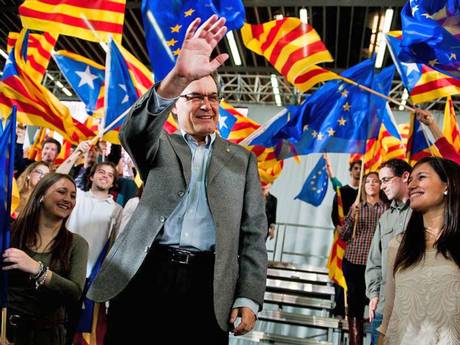
Artur Mas, greeting a separatist rally last year.  He might not get such a warm reception today.
Initially, Mas’s Democratic Convergence of Catalonia party (Convergència Democràtica de Catalunya, or C.D.C.) had defiantly said it would hold a referendum on independence whether the Spanish government approved or not, and it would be binding.  But Madrid made it perfectly clear that any such referendum would be constitutionally impermissible.  Now, on September 14th, Mas came right out and said that no referendum would be held against the wishes of the central government.  Since the central government’s implacable position is well known, this is tantamount to Mas canceling the referendum.  He said that instead the 2016 elections would be interpreted as a symbolic plebiscite on the future direction of Catalonia’s status—a rather weak substitute indeed.


The human chain stretched over 400 kilometers, from the French border in the north to the internal border with Spain’s autonomous Valencia region to the south.  It ran mostly along the coast, including some of Catalonia’s nude beaches (see photo above).  It took place on la Diada, Catalonia’s national holiday, which commemorates this year the 299th anniversary of the reabsorption of Catalonia into Spain after Spain’s defeat by the United Kingdom (whom the Catalans backed) in the Wars of Spanish Succession.

The route of last week’s human chain
The stunt was directly modeled on the Baltic Way, a similar human chain in 1989 which snaked through Estonia, Latvia, and Lithuania in a mass demand for independence from the Soviet Union.  (Recognizing this, a Catalan reporter asked Latvia’s prime minister, Valdis Dombrovskis, whether he would recognize an independent Catalonia.  “Provided there is legitimacy of the process, I would say, theoretically, why not?” he replied, leading to a formal protest from Madrid and the recalling of Spain’s ambassador in Riga.)

Only a little over half of all Catalans support independence, actually, but more than 80% tell pollsters they want a referendum.  This, one would think, is enough of a mandate for Mas to take a less conciliatory tone.  But Mas’s climbdown is a political gamble in more immediate ways.  The coalition that C.D.C. dominates, Convergence and Union (Convergència i Unió, or CiU) coalition, does not have enough seats to rule on its own and relies on the support of the Democratic Left of Catalonia (Esquerra Republicana de Catalunya, or E.R.C.), which typically takes more controversial hard-line stands, such as recognizing the legitimacy of British rule in the disputed colony of Gibraltar (as reported recently in this blog) and calling for unification with the much smaller Catalan region just over the border in southeastern France.  The E.R.C. has always been more committed to a referendum than C.D.C., so now the ruling coalition may collapse.  That would put secession even farther out of reach.


The human chain across Catalonia might simply mark the end of the line for the small nation’s dream of independence.

[Also, for those who are wondering, yes, this blog is tied in with a forthcoming book, a sort of encyclopedic atlas to be published by Auslander and Fox under the title Let’s Split! A Complete Guide to Separatist Movements, Independence Struggles, Breakaway Republics, Rebel Provinces, Pseudostates, Puppet States, Tribal Fiefdoms, Micronations, and Do-It-Yourself Countries, from Chiapas to Chechnya and Tibet to Texas.  Look for it some time in 2013.  I will be keeping readers posted of further publication news.]

Saturday, September 14, 2013

Quebec Separatists Challenge Canadian Tolerance with Proposed Islamic-Headscarf Ban


It is a common self-deprecating joke of Canadians that their country had the opportunity to enjoy French cuisine, American industry, and British traditions, but unfortunately got stuck with American traditions, French industry, and British cuisine.  Like many such jokes, there’s some truth to it.  But now at least one corner of Canada is amending that list by indulging in a particularly French form of religious bigotry as well.  On September 10th, timed for the eve of the anniversary of the 9/11 terrorist attacks, lawmakers from Quebec’s ruling separatist party, the Parti Québécois (P.Q.), announced a push for a law banning Islamic religious garb—following a trend in many parts of Europe, most notoriously France.

Quebec
The proposed law, as part of the party’s so-called “Charter of Quebec Values,” would forbid any specifically religious clothing to be worn by public servants while on the job.  (Elected officials would be exempt.)  Religious symbols that could no longer be worn include Muslim headscarves, Sikh turbans, Jewish yarmulkes, and “large” Christian crucifixes.  (How large is not defined—Jews do not seem to be able to sneak past the law with really really small yarmulkes—but this follows the language in similar French legislation.)  Though the law has no chance of passing, the proposal offers a taste of what kind of place Quebec would be to live in if it ever really separated from Canada.

Nor is it only Muslims who would be affected ...
Similar legislation is already in play in France, where, as in the rest of Europe, there are fewer constitutional protections of free expression than in Canada (where such a law, if passed, will surely be knocked down the first time it is tested in court).  Though it is ostensibly neutral—it pertains to all such religious symbols—everyone understands that such policies are designed to target Muslims.  Before 2001 and the cresting of anti-Muslim prejudice, no one was seriously worried about the disruptive societal effects of wearing large crosses (which few French do anyway); nor was there any kind of a widespread panic over nuns’ habits.  Last year, the French president at the time, Nicolas Sarkozy—who rose to power on a campaign promise to “powerhose the scum out of the ghettoes”—suddenly decided in the 2012 election season (as reported in this blog at the time) that it was necessary to crack down on animal cruelty among halal butchers (halal being the Islamic equivalent of Jewish kosher dietary rules).  Sarkozy was even such an animal sentimentalist that he took time away from his busy schedule of authorizing baton-swinging police raids on Gypsy encampments to tour halal butcheries and tut-tut over the nastiness of it all.  He did everything but pose for the camera with a quivering lamb in his arms and whisper in its ear that he would protect it from the big bad mullahs.  Everyone, of course, understood that he was playing to the Marine Le Pen vote, not the Brigitte Bardot one.  (He lost, thankfully.)

Nicolas Sarkozy, born-again animal-rights champion
The P.Q. is doing the same thing.  Such laws will never pass Canadian constitutional muster—and the P.Q. does not have enough of a majority in the provincial assembly to push through laws on its own—but the separatist party’s leader, Pauline Marois, is pandering to ignorant xenophobes and preying on fears of terrorism to revive sagging poll numbers in the face of apathy on the question of secession from Canada, the party’s raison d’être.  (See an earlier article from this blog on language politics in Quebec.)

As one might expect, civil-rights groups and Muslim organizations in Quebec are up in arms.  Jewish groups are not happy either.  (Jews and Muslims each make up between 1% and 2% of the population of Quebec, which is about 84% Roman Catholic and about 6% non-religious.)

Pauline Marois looks down her nose at minorities.
Earlier this year, Marois backed a rule barring Sikhs from wearing turbans while playing soccer, on so-called safety grounds.  The International Federation of Association Football (FIFA) promptly struck down the rule—not the only time that Québécois cultural chauvinism has run afoul of more tolerant international bodies.  (Sikhs, though numerous on Canada’s on West Coast, barely register demographically in Quebec, numbering only about 8,000.)  Marois’s government has also been accused of intentionally scheduling 2016 elections to coincide with Rosh Hashanah, and thus suppress Montreal’s mostly anti-separatist Jewish vote.

Proudly Sikh, proudly Québécois, proudly Canadian—something Pauline Marois can’t get her head around
Opposition parties have reacted angrily to the P.Q.’s moves.  Thomas Mulcair, leader of the New Democratic Party (N.D.P.), said, “We’re categorical in rejecting this,” adding that such discrimination is “intolerable in our society.”  But this is part of the plan.  The P.Q.’s narrow-minded electoral base already scorns Anglophone liberals as contemptibly tolerant of minorities.

Within the separatist camp, there has been discord over the P.Q. proposal.  One federal Bloc Québécois member of parliament, Maria Mourani, spoke out strongly against the religious-garb ban.  But within days she was ejected from her party because of so-called irreconcilable ideological differences with the party line.  Mourani, a Lebanese-Canadian born in Côte d’Ivoire (Ivory Coast), who has in the past been outspoken on such issues as Tibet (as reported in this blog), will now sit as an independent.

Maria Mourani (left), excommunicated for her tolerance
But how much of a danger to society, and to the ruling party, are Muslims really?  Ironically, at her victory rally after winning office almost exactly a year ago, Marois survived a probable assassination attempt (as reported at the time in this blog) when a gun-toting lunatic was arrested after killing one person and wounding another; police think he may have been gunning for Marois next.  Who was this killer?  Was he an immigrant jihadist?  A turban-wearing Sikh terrorist?  Nope—the gunman, Richard Henry Bain, an Anglophone fishing-lodge owner from northern Quebec, is a born-again Christian who (as reported here) told media after his arrest, “I’m a Christian soldier, and we will never surrender to fight the evil separatists.  I fight for freedom, democracy, justice, and to speak one’s mother tongue.”  He said Jesus Christ had told him to embark on his shooting spree.  Gee, and he wasn’t even wearing a “large crucifix” to warn people that he was a nut.  You just never can tell who the problem people will be, can you?

Richard Henry Bain, who murders for Jesus (not covered by pending legislation)

[For those who are wondering, yes, this blog is tied in with my forthcoming book, a sort of encyclopedic atlas to be published by Auslander and Fox under the title Let’s Split! A Complete Guide to Separatist Movements, Independence Struggles, Breakaway Republics, Rebel Provinces, Pseudostates, Puppet States, Tribal Fiefdoms, Micronations, and Do-It-Yourself Countries, from Chiapas to Chechnya and Tibet to Texas.  The book, which contains dozens of maps and over 500 flags, is now in the layout phase and should be on shelves, and available on Amazon, by early fall 2014.  I will be keeping readers posted of further publication news.  Meanwhile, please “like” the book (even though you haven’t read it yet) on Facebook.]

Friday, September 13, 2013

Mali Civil War May Be Reigniting; Tuaregs Suddenly No Longer Satisfied with Autonomy


Last month, I reported in this space that the Tuareg rebels of the northern Mali were prepared to set aside their demands for full independence (as some sort of “Republic of Azawad) but promised that violence could be renewed if the incoming Malian president denied the region its autonomy.


But no sooner did a former prime minister, Ibrahim Boubacar Keïta, take office, with barely any time to articulate an Azawad policy, than violence has erupted again.  The main Tuareg rebel group, the National Movement for the Liberation of Azawad (M.N.L.A.), was calling, on September 4th, for pro-independence protests protests to coincide with the inauguration of “I.B.K.,” as Malians call their new leader.  He had promised to open negotiations with the M.N.L.A. within 60 days of taking office.

“I.B.K.”

On September 11th, it was reported that M.N.L.A. rebels clashed with Malian government soldiers near Léré, in the Niafunké district of Timbuktu province, near the border with Mauritania but also right near the former border between the three provinces that make up “Azawad” and the Mopti province that forms a buffer between Tuareg and non-Tuareg parts of Mali.  Each side blames the other for starting the violence, which violates a cease-fire agreed to in June.  Three Malian troops were injured.

Where Tuaregs live.
It is unclear what position the two other main rebel groups in the north—the generally more moderate High Unity Council of Azawad and the ethnic-“Moor”-dominated Arab Movement of the Azawad (M.A.A.)—are taking on the question of peace with the central government.  Nor is it clear how unified the M.N.L.A. is on the question, or whether the renewed fighting was an intentional restarting of hostilities—and, if so, by which side.

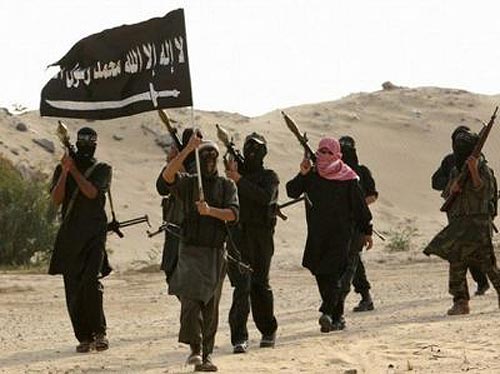
Ansar al-Dine on parade
The current troubles—which this blog has been reporting on in detail all along—began last year when displaced pro-regime Tuareg militias from the civil war in Libya fled, bristling with Moammar al-Qaddafi’s weapons, into northern Mali and reignited the latest in a series of Tuareg uprisings which date back to the early periods of colonial rule by France.  Tuaregs made a fatal alliance with Islamists affiliated with al-Qaeda and with radicals in Algeria, notably the Movement for Unity and Jihad in West Africa (MUJAO) and Ansar al-Dine.  Discontent in Mali’s capital, Bamako, over the government’s response to the Tuareg crisis sparked a coup d’état, which in turn created the power vacuum necessary for the M.N.L.A., MUJAO, and Ansar al-Dine to take over the northern two-thirds of the country with little opposition and declare an “Islamic Republic of Azawad.”  When, earlier this year, they attempted to spread their area of control into Mopti, with the avowed goal of placing all of Mali under shari’a (Islamic law), troops from France, Chad, and other countries intervened and put the north back into government control.  At least the cities.  Most of the hinterlands are still in rebel hands, though the Islamists have mostly melted away into the desert.

What happens next is anyone’s guess.  This, the Fifth Tuareg Rebellion (by many historians’ count), may not be over yet.  Or we may be ready for a sixth.  Without the Islamist factor, it remains to be seen how much the outside world will care this time.


[Also, for those who are wondering, yes, this blog is tied in with a forthcoming book, a sort of encyclopedic atlas to be published by Auslander and Fox under the title Let’s Split! A Complete Guide to Separatist Movements, Independence Struggles, Breakaway Republics, Rebel Provinces, Pseudostates, Puppet States, Tribal Fiefdoms, Micronations, and Do-It-Yourself Countries, from Chiapas to Chechnya and Tibet to Texas.  Look for it some time in 2013.  I will be keeping readers posted of further publication news.]

Thursday, September 12, 2013

Hawaiian Native Activists Reject Watered-Down B.I.A.-Style “Sovereignty”


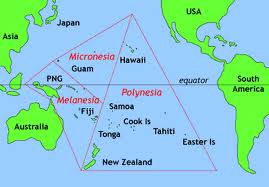
France fumed, but the soi-disant “minister of foreign affairs” of a shadow monarchist government on the Hawaiian Islands called the Hawaii Kingdom told media this past week that he and his fellow Polynesian separatists were among those buoyed by the United Nations’ recent reinstatement of French Polynesia (which includes Tahiti) on its finger-wagging list of “Non-Self-Governing Territories” (i.e. colonies).  The minister, Leon Siu, called the move “a huge boost to our efforts” of establishing Hawaii as an independent kingdom—or rather, since they believe it still is one, of garnering international recognition and the opportunity to govern.


The Hawaii Kingdom is one of a whole raft of Hawaiian independence movements, many of them monarchists loyal to either the House of Kamehameha or the House of Kalākaua, and many operating self-styled governments-in-exile of one sort or another.  But while Siu and other idealists pursue that dream, Democratic Party politicians in Washington and Honolulu are contemplating another form of sovereignty for Native Hawaiians, and the monarchist sovereigntists are rejecting it out of hand.

Sen. Daniel Akaka
Sen. Daniel Kahikina Akaka, the first Native Hawaiian in the United States Senate, had long sponsored a bill, the Akaka Bill, which would offer Native Hawaiians a form of sovereignty akin to that of American Indians and Alaska Natives in the other 49 states.  But Akaka retired this year after 23 years’ service and his efforts got nowhere.  The new push, by Sen. Brian Schatz (a non-Native Hawaiian, born in Michigan to a Canadian father), calls for a direct executive—i.e., presidential—intervention to extend some sort of tribal recognition.  As Schatz put it earlier this year, “The president is being asked to consider a number of potential executive actions.  That could take many forms, including something by the Department of the Interior [which includes the Bureau of Indian Affairs], or at the secretary level or something at the presidential level.”

Some indigenous Hawaiian separatists use this flag.
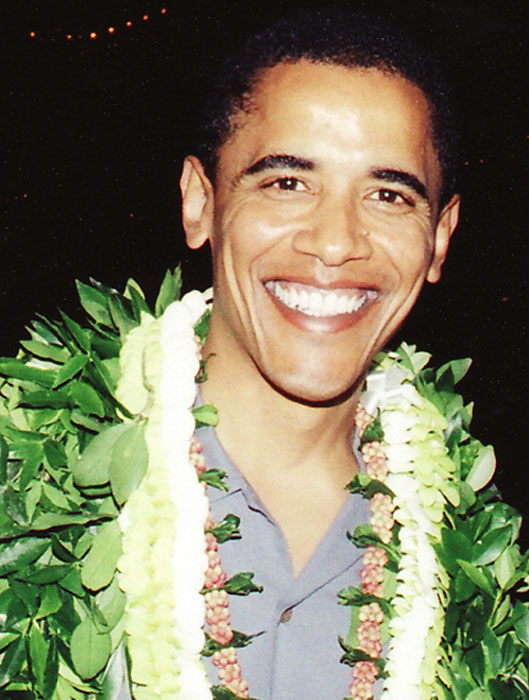
President Barack Obama, who was born in Hawaii and is of mixed African and European-American ancestry, has not taken a position on the matter yet.  But Hawaiian monarchist separatists are already speaking out.  Kekane Pa, the self-styled Speaker of the House of the Reinstated Hawaiian Government, says that the “true intent” of the new legislative push “is to have the Hawaii people give up their claim to their native lands to the U.S. government.”  An August 27th petition on the White House website’s “We the People” petition page, titled “We Petition the Obama Administration to Not Bypass Congress by Signing an Executive Order for Federal Recognition of Native Hawaiian,” opposes “tribal recognition” because it seems to attempt to formalize U.S. sovereignty over Hawaii and create a subordinate status for Native Hawaiians.

Barack Obama, a Hawaii native if not a Hawaiian Native,
is being asked to grant “tribal sovereignty” to indigenous Hawaiians.
Hawaii was an independent kingdom until the mid 19th century, until annexation by the United Kingdom in the 1840s.  The U.S., still a military and economic rival to the U.K., replaced the colonial government with a restored kingdom hemmed in by treaties allowing U.S. corporations access to the archipelago’s resources.  An example was the Bayonet Treaty of 1875, which King David Kalākaua was forced to sign at gunpoint, stripping the monarchy of many of its powers.  David’s sister, Lili‘uokalani, succeeded him in 1891 and attempted to restore the monarchy to its former preeminence, and this prompted an invasion by U.S. Marines in 1893.  After a brief time as a U.S. puppet state called the Republic of Hawaii, the territory was formally annexed in 1898.  Ever since, monarchists have argued that, even though Queen Lili‘uokalani surrendered the throne, she did so under duress and that the kingdom’s legitimacy was never extinguished.  The State of Hawaii, created in 1959, is, by this reasoning, illegitimate.

Early contact
It is not clear if the Obama administration will entertain tribal recognition.  In surveys, the majority of Hawaiian residents, including three-quarters of Native Hawaiians (who are imperfectly counted but probably number between 10% and 20% of the state’s population), support some form of federally recognized sovereign status.  Meanwhile, supporters of full independence for the state reached only, for example, the 27% mark in 1995.  It is not clear that the monarchist sovereigntists have the people on their side either.  Their online petition has been taken down, but at last count it had only 53 signatures.

A protest organized by the group Hawaiian Kingdom
[Also, for those who are wondering, yes, this blog is tied in with a forthcoming book, a sort of encyclopedic atlas to be published by Auslander and Fox under the title Let’s Split! A Complete Guide to Separatist Movements, Independence Struggles, Breakaway Republics, Rebel Provinces, Pseudostates, Puppet States, Tribal Fiefdoms, Micronations, and Do-It-Yourself Countries, from Chiapas to Chechnya and Tibet to Texas.  Look for it some time in 2013.  I will be keeping readers posted of further publication news.]

Monday, September 9, 2013

Croatia Honors ’70s Terrorist Hijacker with Hero’s Funeral


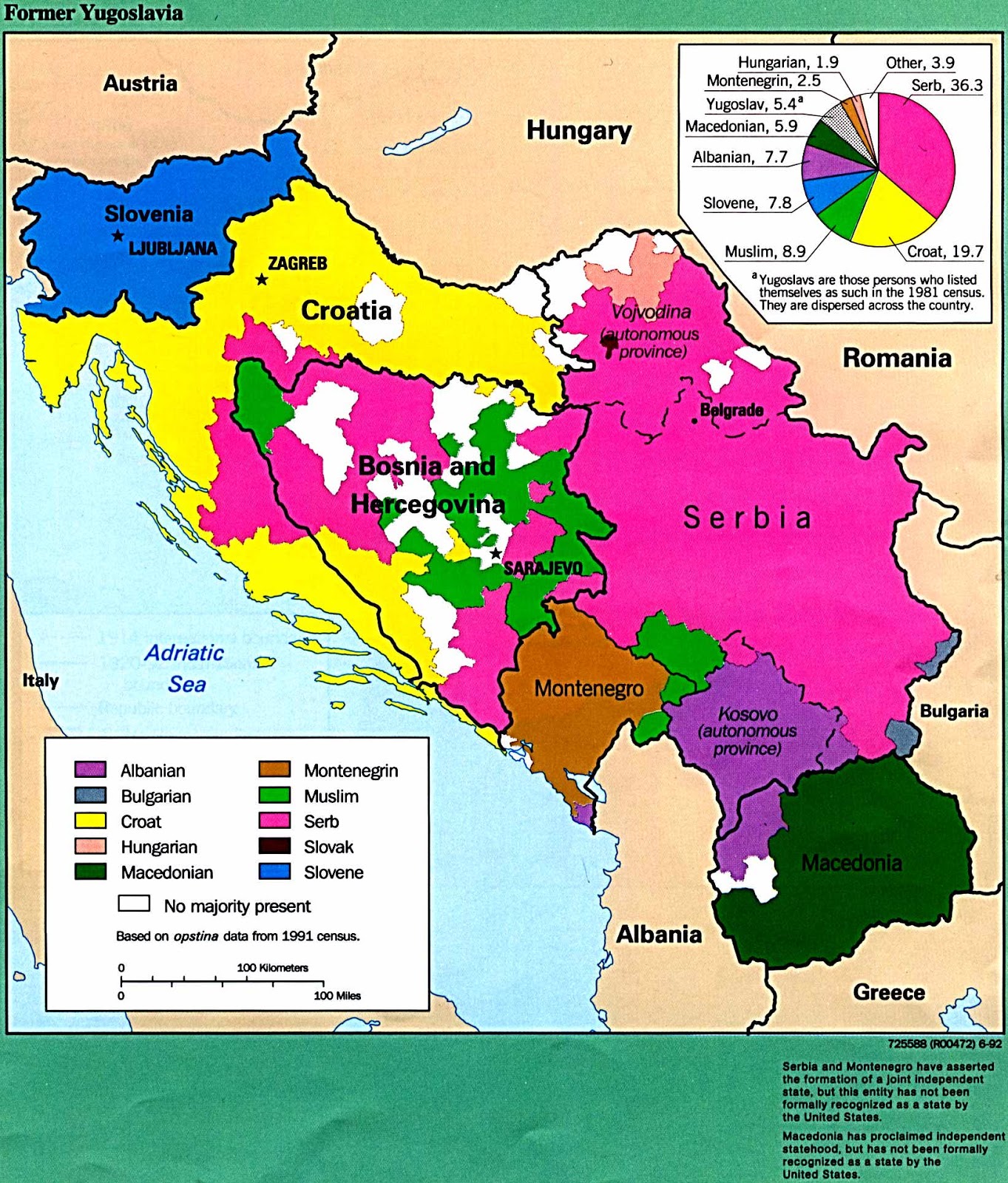
Leading Croatian politicians joined nationalists and others in the downtown of Zagreb, Croatia’s capital, on September 4th to give a hero’s funeral to Zvonko Bušić, who in 1976, in the years of Yugoslavia’s Communist dictatorship, hijacked an American jetliner in a series of horrific events that ended in the death of a New York policeman.  For the political mainstream in a western nation—the European Union’s newest member—to so honor a killer who threatened the lives of hundreds of civilians for a political cause (that’s the definition of terrorism, by the way) is part of the topsy-turvy world of post-Yugoslav symbolic politics in the new Europe, where everything Croats do is forgiven and Serbs can do nothing right.

The hijackers’ perp walk
Bušić—who was born in 1946 in Gorica (now in Bosnia and Herzegovina, on the Croatian border) and immigrated to the United States—hijacked a Trans-World Airlines (T.W.A.) flight from New York to Chicago in 1976 in league with his wife (a nurse from Oregon) and three other Croatian-Americans.  The five threatened to blow up the plane and detonate another device in a locker in New York City’s Grand Central Station unless a Croatian declaration of independence were printed in leading newspapers and leafleted over five major world cities.  Those demands were met, but it turned out the “bomb” on the plane was a fake prop, while the Grand Central Station bomb was real—but was not intended to go off (so Bušić later said).  The idea was that police, after being given directions to the rail-station locker by the hijackers, would find the real bomb and falsely believe that the one on the plane was also real.  While none of the 80-plus airline passengers was harmed, a New York City police officer died trying to disable the Grand Central bomb when it exploded.  Another policeman was blinded and two others wounded.  The plane was diverted to Paris, and French police, showing more interventionist gumption than the Americans—or, if you prefer, more recklessness, tempered with luck—shot out the wheels and forced the hijackers to surrender.

An only slightly outdated map of the former Yugoslavia
In 1977, Bušić and his wife, Julienne Eden Bušić, received life sentences for air piracy in an American court.  In 1987, Bušić escaped from prison in New York state but was apprehended on the run in Pennsylvania shortly after.  Two years later, Mrs. Bušić was released.  In 2008, seventeen years after the Republic of Croatia regained its independence amid the rubble of Leninism, Bušić was paroled on good behavior (a move decried by New York police and others) on condition that he leave the U.S. for good.  He returned to his native Croatia and was active in nationalist politics.  On September 1st, at their home near Zadar, on the Dalmatian coast, Julienne found her husband’s body beside a suicide note, a bullet in his head.

Black banners and the glorification of violence—old habits die hard.
(A scene from Bušić’s funeral.)
Bušić had in later life said of his crimes, “If I had ever imagined that anyone could have been hurt, I would never, even if it had cost me anonymous death at Yugoslav hands, embarked on that flight.”  But in his defense he also called the hijacking “the scream of a disenfranchised and persecuted man.”  By most accounts, the T.W.A. passengers were not mistreated.  One later said, “They had nothing against us, but wanted only to get a story across.  They were concerned for our welfare, and we were treated well during most of it.”  The cop who found Bušić after his prison bust said of him, “He seemed very intelligent and articulate, basically a very gentle man.  He was just worn out.”

Julienne and Zvonko Bušić in later life
Nonetheless, he was a terrorist, and it seems odd that the Croatian political mainstream would celebrate their integration into “civilized” Europe—they joined the E.U. the month before last—by putting on a pedestal a man who caused such suffering while also not advancing the Croatian nationalist cause an inch.  (He may even have harmed it.)  But Croatian nationalists can perhaps be forgiven for such illogicality.  The West—and especially the United NationsInternational Criminal Tribunal for the Former Yugoslavia (I.C.T.Y.) in the Hague, in the Netherlands—seems determined to read the Wars of Yugoslav Succession in the 1990s as simply a war of nasty, dirty Serbs against everyone else.

Croatia (in purple) within the European Union (blue and purple)
Croatian nationalism as it emerged after the fall of the Berlin Wall in 1989 was largely built upon the ashes of the Nazi puppet state known as the Independent State of Croatia, which existed briefly during the Second World War.  The stormtroopers of Croatia’s dreaded fascist terrorist militia of that era, the Ustaša, were never discredited and scorned in the post-war era in the way that their counterpart in Germany—the Schutzstaffel (S.S.)—was.  Unlike Germany, Italy, and Japan, Croatia never undertook the earnest, apologetic soul-searching after the war to atone for their role in the rise of fascism.  Like France and Austria, Croatian nationalists disingenuously managed to persuade themselves and most of the world that they had been only the victims of fascism, never perpetrators.  (Ironically, Kurt Waldheim, the former United Nations secretary general who was elected to Austria’s presidency in 1986 even after it was revealed that he was complicit in Nazi war crimes, served as a Wehrmacht officer in a fascist-Croatian-occupied area of what is now northwestern Bosnia, for which he was awarded the Nazi puppet state’s Medal of the Crown of King Zvonimir.)  The newly revived independent Croatia after 1991 shamelessly resurrected the symbols and banners of the Ustaša.  Nor was that empty romanticism: in the wars that followed, Croatian nationalists tried to purge Serbs from Croatia—and from Bosnia and Herzegovina—nearly as ruthlessly as Serbs tried to purge Croats and Bosniaks from Serb-controlled terrorities.  Though it was Serbia that brought the practice of ethnic cleansing to the most horrific levels, the term was in fact first coined to describe what Croats were doing to Bosniaks in the early 1990s.

Kurt Waldheim (middle)
The West, during the Yugoslav Wars of Succession, needed a Hitler-like enemy, and the Serbs (nasty as Serbian nationalist violence actually was, mind you) fit the bill nicely.  Unfortunately, this also meant overlooking the atrocities of the Serbs’ enemies.  The fact that the Serbian capital, Belgrade, had also been the capital of Communist Yugoslavia, and that Serbs politically dominated the federation, was doubtless part of it.  But there was also a xenophobic subtext: Croatians are Catholic and use the Roman alphabet and have long-standing cultural ties with neighboring states like Italy and Austria; Serbs, meanwhile, are Cyrillic-alphabet-using Eastern Orthodox Christians—practically Saracens in the eyes of many ordinary Western Europeans.  They were easy to demonize.  Their concentration camps and the thunderous rhetoric of their nationalists made it easy too, as did the fact that Russia, then as now, tends to side with the Serbs.  Never mind that both Serbia’s president, Slobodan Milošević, and Croatia’s, Franjo Tuđman, had both allegedly conspired, in the early stages of the wars, to carve up Bosnia and Herzegovina to add to their own mini-empires.

Franjo and Slobo occasionally found things to agree on.
The international community’s double standard was most evident late last year, when (as reported at the time in this blog), two Croatian war criminals and one from the Kosovo Liberation Army (K.L.A.) were cleared by the I.C.T.Y. of all charges, including charges of torturing and killing defenseless Serbs, Roma (“Gypsies”), and collaborationist ethnic-Albanians in prison camps.  Sickeningly, the three were treated in their communities as returning heroes, and Serbs and Russians were suitably appalled.  The I.C.T.Y. has yet to fully demonstrate that they believe the lives of Serbian civilians are worth as much as those of Croats, Bosniaks, and Kosovars.

Croatian nationalists celebrating the acquittal of Croatian mass murderers last year
Serbian war criminals, make no mistake, have been among the nastiest of all the world’s nasties.  Bušić’s nemesis, the part-Croatian, part-Slovenian dictator Josip Broz Tito was another one (and a worse one than Bušić).  But the world is full of nasties, some of them even ending up on the winning side of wars.  None of them should be given heroes’ funerals.

[Also, for those who are wondering, yes, this blog is tied in with a forthcoming book, a sort of encyclopedic atlas to be published by Auslander and Fox under the title Let’s Split! A Complete Guide to Separatist Movements, Independence Struggles, Breakaway Republics, Rebel Provinces, Pseudostates, Puppet States, Tribal Fiefdoms, Micronations, and Do-It-Yourself Countries, from Chiapas to Chechnya and Tibet to Texas.  Look for it some time in 2013.  I will be keeping readers posted of further publication news.]

Subscribe Now: Feed Icon