Showing posts with label Hawaii. Show all posts

Tuesday, April 15, 2014

Vermont Snub on Karabakh May Signal Crimea Crisis Has Derailed Armenian-American Pressure-Politics Gravy Train


For decades, the Armenian-American political lobby in the United States has pushed aggressively to chalk up symbolic victories by pressuring state and other legislative bodies into granting utterly-nonbinding “recognition” to the independence of the Nagorno-Karabakh Republic (N.K.R.), the Armenian puppet state which the newly independent Republic of Armenia, with the help of Russia, carved out of Azerbaijan’s western flank in a bloody campaign of ethnic cleansing in the late 1980s and ’90s.  The N.K.R. has essentially no recognition in the real world of international diplomacy, except from three puppet states of the Russian Federation: Abkhazia and South Ossetia (within Georgia) and Transnistria (within Moldova).  Not even Armenia or its close ally, Russia, recognizes the N.K.R.  But the Armenian National Committee of America (A.N.C.A.) and other groups have successfully cajoled the state legislatures of Louisiana, Maine, Massachusetts, and Rhode Island, as well as the Los Angeles city council, to “recognize” the N.K.R.  (Abroad, Australia’s state of New South Wales recognizes it too.)

Armenian-American demonstrators in Los Angeles display Nagorno-Karabakh flags.
Some reckon that the Armenian lobby is the third most powerful immigrant-minority lobbying group in U.S. politics, exceeded in influence only by the Jewish and Cuban-American lobbies.  They have also been pushing for recognition of the Armenian genocide at the hands of Anatolian Turks a century ago as a genocide, something the U.S. has over the decades resolutely refused to do, mostly to avoid offending Turkey, a North Atlantic Treaty Organization (NATO) ally.  There are perhaps as many as a million and a half Armenian-Americans in the U.S., mostly in southern California and New England.  There are, for example, only three cities in Armenia itself that have more Armenian residents than there are in Glendale, a suburb of Los Angeles.  For legislators confronted with an N.K.R.-recognition bill, the choice is between capitulating, passing the bill, and moving on, on the one hand, or, on the other, needlessly alienating and infuriating a powerful ethnic lobby.  There is, by contrast, almost no Azeri-American community of any size to exert pressure of the same kind.

Mammad Talibov tells the Vermont Senate the Azeri side of the story.
But the Armenian lobby’s winning streak, in New England at least, ended last week when Vermont’s state senate declined to wade into South Caucasus politics and recognize the N.K.R.  Vermont senators debating on the resolution were paid a visit by Yusif Babanly of the U.S. Azeris Network and a legal attaché from the Azerbaijani embassy in Washington, D.C., Mamma Talibov.  Babanly and Talibov gave the (in America, rarely heard) Azeri perspective on the Nagorno-Karabakh conflict and emphasized the strategic relationship between the U.S. and oil-rich Azerbaijan.  Azeris are closely related to the Anatolian Turks of Turkey proper, both culturally and linguistically, and Azerbaijan is a front-line state in the U.S.’s cold war with Iran.  (The Azeri lobby, which is closely linked to Turkey, is no stranger to manipulation and propaganda either.  See an article from this blog which touches on Azeri and Turkish efforts to build up the very minor 1992 “Khojaly Massacre” into a full-fledged “genocide” by Armenians.)  Mostly, the senate threw up its hands and decided the situation on the ground was too complex for the body to take a position on it.  As Norm McAllister, a Republican senator said, “We’re never going to know in this little committee who’s actually telling us the whole story.”


Earlier, in 2004, Vermont’s governor, James H. Douglas, officially recognized the Turkish genocide of Armenians during the First World War.  There are not a lot of Armenians in Vermont, but they include the novelist Chris Bohjalian, possibly the most prominent Armenian-American writer, who has written novels about the genocide and lives in Lincoln, Vermont.  It was Bohjalian who brought the N.K.R. recognition issue to Montpelier.

Chris Bohjalian poses before a statue in Yerevan, Armenia,
of William Saroyan, another Armenian-American writer.
Not only that, but Armenian-Americans are on the defensive elsewhere.  They only just barely managed to scotch Azeri-initiated bills this spring in Mississippi and Tennessee on recognizing Azerbaijan’s territorial integrity—i.e., declaring the N.K.R. illegitimate.  Hawaii, South Dakota, and Wyoming also rejected pro-Azerbaijani bills in February.  Similar Azeri lobbyists to those that swayed Vermont were involved in those states’ efforts as well.

Armenians with their national flag
Why did Azeris manage to keep Vermont in their column—or at least out of Armenia’s—after trying and failing to do so in those other five states?  The answer may have something to do with Crimea.  Armenia was one of only eleven countries which (as discussed recently in this blog) sided with Russia and against Ukraine in a recent United Nations General Assembly vote condemning Russia’s invasion and annexation of Ukraine’s Crimean peninsula.  Others in that small club included some of the most brutal dictatorships in the world, like North Korea, Syria, and Sudan.  It is possible, in fact, as an Armenian politician recently suggested (discussed recently in this blog), that Kremlin arm-twisting brought Armenia into Russia’s new “Eurasian Union” trade bloc with Belarus and Kazakhstan, using the threat of seeing to it that Armenia would lose its grip on the N.K.R. (which many Armenian nationalists hope, and most of the rest of the world fears, could be among the next territories President Vladimir Putin is eyeing for annexation).  We may never know whether the Armenian government was bullied by Putin into backing him at the U.N. or whether it found immoral and hypocritical reasons of its own for doing so.  But Armenia’s international standing has taken a hit.  Pre-Crimea, it was a mere detail of Caucasus geopolitics that Armenia was more aligned with Russia while Georgia and Azerbaijan were more aligned with NATO and the West.  But after Crimea, it matters quite a bit.  Supporting Armenia’s foreign-policy agenda is now, in a not so indirect way, support for Putin’s new cold-war project of aggressively expanding the territories in which Russians—and allied nationalities, like Armenians—are in charge.  “Recognizing” N.K.R. is, for state legislatures today, not just taking an irrelevant position on an obscure struggle.  It’s actually siding against U.S. interests.


The Armenian lobby in the U.S. should have just stuck with the genocide question.  Their moral stance on that issue is unassailable.  Instead, they opted for mimicking the fundraising model of Jewish-American groups raising money for Israel in the early days of Israeli settlement.  In fact, the N.K.R. was largely built with money from Armenian-American donors.  But Armenia has now squandered the moral authority it enjoyed as a nation victimized by genocide.  Armenian-Americans had better climb down from their support for the N.K.R. now.  Because if Nagorno-Karabakh does become the next Crimea-type battleground in Putin’s Russo-fascist expansionist schemes, it could get very uncomfortable for them in the U.S.

You won’t see this picture on the Armenian National Committee of America
website: Syria’s dictator Bashar al-Assad with Armenia’s president, Serzh Sargsyan
Oh, and one other thing.  The chair of the Vermont senate’s Government Operations Committee, Sen. Jeanette White, told a reporter while discussing the setting aside of the N.K.R. question, “I believe that countries should be able to determine their own destiny.  However it isn’t Vermont seceding from the U.S., which we have threatened to do.  It’s complicated.”  She is reminding us that Vermont has its own independence movement, a left-wing, environmentally-oriented movement called the Second Vermont Republic (S.V.R.).  (Vermont was an independent nation before joining the U.S. in 1791.)  So if Vermont ever does become an independent state, it can just forget about getting any diplomatic recognition from Armenia.  In the South Caucasus, people have long memories.  They never forget a slight.

Flag of the Second Vermont Republic

[For those who are wondering, yes, this blog is tied in with my forthcoming book, a sort of encyclopedic atlas to be published by Auslander and Fox under the title Let’s Split! A Complete Guide to Separatist Movements, Independence Struggles, Breakaway Republics, Rebel Provinces, Pseudostates, Puppet States, Tribal Fiefdoms, Micronations, and Do-It-Yourself Countries, from Chiapas to Chechnya and Tibet to Texas.  The book, which contains dozens of maps and over 500 flags, is now in the layout phase and should be on shelves, and available on Amazon, by early fall 2014.  I will be keeping readers posted of further publication news.  Meanwhile, please “like” the book (even though you haven’t read it yet) on Facebook.]

Thursday, September 12, 2013

Hawaiian Native Activists Reject Watered-Down B.I.A.-Style “Sovereignty”


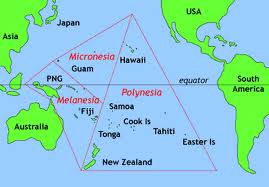
France fumed, but the soi-disant “minister of foreign affairs” of a shadow monarchist government on the Hawaiian Islands called the Hawaii Kingdom told media this past week that he and his fellow Polynesian separatists were among those buoyed by the United Nations’ recent reinstatement of French Polynesia (which includes Tahiti) on its finger-wagging list of “Non-Self-Governing Territories” (i.e. colonies).  The minister, Leon Siu, called the move “a huge boost to our efforts” of establishing Hawaii as an independent kingdom—or rather, since they believe it still is one, of garnering international recognition and the opportunity to govern.


The Hawaii Kingdom is one of a whole raft of Hawaiian independence movements, many of them monarchists loyal to either the House of Kamehameha or the House of Kalākaua, and many operating self-styled governments-in-exile of one sort or another.  But while Siu and other idealists pursue that dream, Democratic Party politicians in Washington and Honolulu are contemplating another form of sovereignty for Native Hawaiians, and the monarchist sovereigntists are rejecting it out of hand.

Sen. Daniel Akaka
Sen. Daniel Kahikina Akaka, the first Native Hawaiian in the United States Senate, had long sponsored a bill, the Akaka Bill, which would offer Native Hawaiians a form of sovereignty akin to that of American Indians and Alaska Natives in the other 49 states.  But Akaka retired this year after 23 years’ service and his efforts got nowhere.  The new push, by Sen. Brian Schatz (a non-Native Hawaiian, born in Michigan to a Canadian father), calls for a direct executive—i.e., presidential—intervention to extend some sort of tribal recognition.  As Schatz put it earlier this year, “The president is being asked to consider a number of potential executive actions.  That could take many forms, including something by the Department of the Interior [which includes the Bureau of Indian Affairs], or at the secretary level or something at the presidential level.”

Some indigenous Hawaiian separatists use this flag.
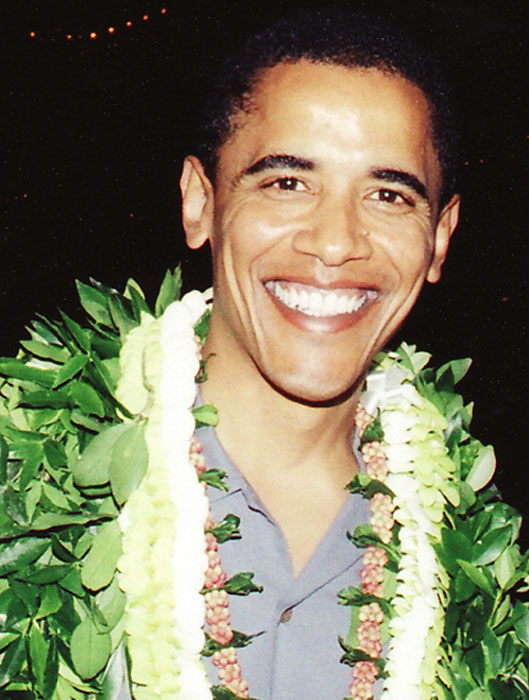
President Barack Obama, who was born in Hawaii and is of mixed African and European-American ancestry, has not taken a position on the matter yet.  But Hawaiian monarchist separatists are already speaking out.  Kekane Pa, the self-styled Speaker of the House of the Reinstated Hawaiian Government, says that the “true intent” of the new legislative push “is to have the Hawaii people give up their claim to their native lands to the U.S. government.”  An August 27th petition on the White House website’s “We the People” petition page, titled “We Petition the Obama Administration to Not Bypass Congress by Signing an Executive Order for Federal Recognition of Native Hawaiian,” opposes “tribal recognition” because it seems to attempt to formalize U.S. sovereignty over Hawaii and create a subordinate status for Native Hawaiians.

Barack Obama, a Hawaii native if not a Hawaiian Native,
is being asked to grant “tribal sovereignty” to indigenous Hawaiians.
Hawaii was an independent kingdom until the mid 19th century, until annexation by the United Kingdom in the 1840s.  The U.S., still a military and economic rival to the U.K., replaced the colonial government with a restored kingdom hemmed in by treaties allowing U.S. corporations access to the archipelago’s resources.  An example was the Bayonet Treaty of 1875, which King David Kalākaua was forced to sign at gunpoint, stripping the monarchy of many of its powers.  David’s sister, Lili‘uokalani, succeeded him in 1891 and attempted to restore the monarchy to its former preeminence, and this prompted an invasion by U.S. Marines in 1893.  After a brief time as a U.S. puppet state called the Republic of Hawaii, the territory was formally annexed in 1898.  Ever since, monarchists have argued that, even though Queen Lili‘uokalani surrendered the throne, she did so under duress and that the kingdom’s legitimacy was never extinguished.  The State of Hawaii, created in 1959, is, by this reasoning, illegitimate.

Early contact
It is not clear if the Obama administration will entertain tribal recognition.  In surveys, the majority of Hawaiian residents, including three-quarters of Native Hawaiians (who are imperfectly counted but probably number between 10% and 20% of the state’s population), support some form of federally recognized sovereign status.  Meanwhile, supporters of full independence for the state reached only, for example, the 27% mark in 1995.  It is not clear that the monarchist sovereigntists have the people on their side either.  Their online petition has been taken down, but at last count it had only 53 signatures.

A protest organized by the group Hawaiian Kingdom
[Also, for those who are wondering, yes, this blog is tied in with a forthcoming book, a sort of encyclopedic atlas to be published by Auslander and Fox under the title Let’s Split! A Complete Guide to Separatist Movements, Independence Struggles, Breakaway Republics, Rebel Provinces, Pseudostates, Puppet States, Tribal Fiefdoms, Micronations, and Do-It-Yourself Countries, from Chiapas to Chechnya and Tibet to Texas.  Look for it some time in 2013.  I will be keeping readers posted of further publication news.]

Wednesday, November 14, 2012

The Tea Party Discovers Secessionism


When George W. Bush stole the election from Al Gore in 2000, and then again when Bush was, unbelievably, reelected in 2004, liberals and progressives in the United States talked a lot about moving to Canada, though very few did.  Mostly this was just a rhetorical way of venting steam.  It had a logic to it, though: Canada is a country where no one becomes homeless because of unpaid medical bills, where no one dies of a treatable disease because of an inability to get health insurance, where the government acknowledges the existence of anthropogenic global warming, where gays and lesbians are allowed to marry (this was not fully true until 2005, of course), where politicians who believe the story of Noah’s Ark is literally true are laughed out of office, and where, more to the point, the government did not operate a gulag of extrajudicial prison camps and torture chambers and where trillions of dollars and thousands of young lives were not being dumped contemptuously down the black hole of a war against an invented enemy in Iraq.


But when Barack Obama was reelected last week and conservative and right-wing Americans were equally baffled and outraged, Canada was not really an option for them.  Canada was, after all, more or less what America would look like if the folks who voted for Obama had their way completely.  No; if right-wing Republicans wanted to move to a country where religion played a central role in formulating laws and where traditional family values were upheld and where gays and lesbians were treated as second-class citizens and enemies of the state were thrown into torture chambers without due process, they would have to move to ... um ... Saudi Arabia or, um, Iran or Syria or the Taliban-controlled areas of Afghanistan.  And that would run counter to one of the core values of the Republican Party’s right wing, which is Islamophobic bigotry.  What a quandary for the poor fellas!


But the right-wing extremists who had buffeted Bush into power and who organized against the advent of a black president with the Tea Party movement shortly after Obama’s election have finally hit on another solution.  If they can’t leave the U.S. as individuals, they can take whole chunks of the U.S. with them as they leave.  Yes, the Tea Party has discovered secessionism.

Starting the day after the election on November 6th, the White House’s website began to receive petitions from state residents wanting to secede from the United States.  According to the rules for the website’s “We the People” online petition program, any petition gathering 25,000 signatures in the space of a month will “require a response” from the Obama administration.

The petition page from Whitehouse.gov
So far, 46 states have also been represented in secession petitions on the website, starting with Louisiana and Texas within 24 hours of Obama’s win.

The former Confederate States of America were among the first to launch petitions, and some of these have the highest numbers (these numbers are as of the morning of November 14th and will be higher by the time you read this): Georgia with 43,306 (though split among three separate petitions, one of them calling the state “georgia” and only one reaching the 25,000 mark), South Carolina with 33,008 (split between two petitions), Louisiana (32,927), Florida (28,706), Alabama (26,365), Tennessee (26,268), North Carolina (25,639), Arkansas (25,190, but split between two petitions, neither reaching 25,000), and Mississippi (15,343).  (Virginia, which has over the past decade become an Obama-supporting swing state, has gotten 9,714 secession signatures, split between three petitions.)

The proud rebel flag
Texas, of course, which has a vigorous (if usually only rhetorical and symbolic) separatist movement (discussed in a recent article in this blog), has the highest number of signatures: 95,838.  Other states with high numbers of signatures include the hard-core red states Missouri (29,166, split between two petitions), Oklahoma (22,660; two petitions), Arizona (17,783), Indiana (17,088), Kentucky (15,611), Montana (11,487), and North Dakota (10,075).  Some swing states have also gathered lots of signatures, notably Colorado (18,108), Pennsylvania (17,078), and Ohio (15,368—split between two petitions, one of which calls it the Republic of Ohio).  New Hampshire, a red state with one of the country’s few fully active, though small, separatist parties (the individual-sovereigntist, Tea Party–affiliated New Hampshire Liberty Party, discussed earlier in this blog), has garnered only 3,475.


The only states not represented in the petitions are Hawaii, Connecticut, Vermont, and Massachusetts—four of the most Democratic-dominated states.  In fact, these may be the four bluest states on the list.  (Ironically, Vermont has its own left-wing separatist movement (see a recent blog post on this) and Hawaii has decidedly-not-politically-conservative indigenous separatists, but they are not participating in the petition process.  Hawaii is, of course, Obama’s home state.)  But there are some true-blue states that are petitioning for secession this week: Delaware with 12,782 signatures (two petitions), New Jersey with 12,000, and Maine with 1,430.  This makes little sense.  If Delawarean Republicans, for example, feel they have little voice in national politics, they would have even less if Delaware were independent.  New York’s 19,659 signatures seem like a lot until you realize that one of the two New York secession petitions originated in North Dakota.

Flag of the “Second Vermont Republic” movement
Nor are there petitions to secede from the District of Columbia (the most Democratic jurisdiction in the U.S.), the Northern Marianas, Guam, American Samoa, the U.S. Virgin Islands, or, of course, Puerto Rico—which in fact just voted on November 6th in favor of full statehood (as discussed in a recent article in this blog).  If all the folks with the petitions, of course, get their way, then Puerto Rico can join Hawaii, Connecticut, Vermont, and Massachusetts in designing a five-starred U.S. flag.

There are also petitions in reaction to the secession petitions: 3,187 have signed a petitioned to allow the secessionist states to secede, while only 1,029 signed a petition to “keep the United States united”—confirming the “don’t let the screen door hit your ass on the way out” attitude that many blue-staters have towards Southern and other Bible Belt separatists.  A petition with 1,504 signatures asks that states pay their share of the national debt before being allowed to secede.  A paltry 224 North Carolinians signed a petition to stay in the U.S.  But 14,170 Americans signed to urge that signers of secession petitions be deported, and 8,410 signed another urging that such signators be stripped of their citizenship and “exiled.”


And in Texas, 3,802 citizens signed a petition asking that Austin, an ultraliberal university town, be allowed to stay in the U.S. if Texas secedes.  This would be tricky, since Austin is landlocked and the state capital.


So far, only eight states have reached the 25,000 mark: Alabama, Georgia, Florida, Louisiana, North Carolina, South Carolina, Tennessee, and Texas.  Minus the comparatively unpopulous Mississippi—which may well reach 25,000 before the month is out—and the newly branded swing state of Virginia (see above), this is essentially the heartland of the old slave-holding South.  Of course, that’s just a complete coincidence.

[You can read more about state secession in the U.S. and many other separatist and new-nation movements, both famous and obscure, in my new book, a sort of encyclopedic atlas just published by Litwin Books under the title Let’s Split! A Complete Guide to Separatist Movements and Aspirant Nations, from Abkhazia to Zanzibar.  The book, which contains 46 maps and 554 flags (or, more accurately, 554 flag images), is available for order now on Amazon.  Meanwhile, please “like” the book (even if you haven’t read it yet) on Facebook and see this interview for more information on the book.]


[Thanks to Amy P. and Mike B. for, independently of each other, bringing to my attention the image used at the top of this article.]

Saturday, November 10, 2012

Puerto Rico Votes for Statehood—or at Least for Some Kind of Change


While the world’s eyes on November 6th were on the United States’ election and the reelection of Barack Obama as president, very quietly, to the south of the U.S. mainland, the Commonwealth of Puerto Rico held, on election day, an historic plebiscite on the very nature of its relationship to the U.S. which may well be putting Puerto Rico on the road to statehood.

First, some history ...
Puerto Rico was a possession of the Spanish Empire until 1898, when the United States stripped Spain of many of its colonies in an unmitigated act of aggression, an unapologetic war of conquest.  Other war booty from the Spanish-American War included the Philippines, Guam, and (de facto, briefly) Cuba.  Puerto Rico is still very much a U.S. colony.  It has its own legislature, but Puerto Ricans, though U.S. citizens, have to move to one of the 50 states or D.C. if they want to have a say in who is president.  They have one non-voting delegate to the U.S. House of Representatives and send no senators to Washington.


Puerto Rico got its own constitution and commonwealth status in 1952, which made it less dependent, but there was still agitation for Puerto Rican independence, a cause which had been born in the days of Spanish rule and developed alongside the Cuban independence movement in the late 19th century.  During the 1950s and ’60s, Puerto Rican nationalists became more militant and nationalist, and the U.S. responded in kind, using subversion and counterintelligence to suppress the separatist threat.

A 1967 referendum on the status of Puerto Rico presented three choices on the ballot: independence, statehood, or a continuation of Commonwealth status.  The vote came out with only 0.6% for independence, 39% for statehood, and 60.4% to maintain the status quo.  Though the small turnout for independence seemed almost inconceivable, and bolsters credible contentions that the Central Intelligence Agency (C.I.A.) interfered with the plebiscite, the results took the wind out of the sails of both the statehood and independence movements, which then, despite significant popular support, stalled for years.


Another vote, in 1991, was more modest in its aims, merely asking voters to approve a new constitution which guaranteed citizenship and language rights and pointed the way to a move away from colonialism, with a guarantee of the right to choose statehood or independence.  Almost incredibly, this constitution was defeated 53% to 44.9%.  This seems odd, since on the face of it the proposed constitution offered only guarantees and no losses or tradeoffs.  One explanation is that many Puerto Ricans were confused by the overly complicated proposal and worried that their citizenship status would be degraded.  Others, more reasonably, worried about language in the proposal calling for a choice between three alternatives, which raised the possibility that a choice between independence, statehood, and the status quo would split the dissatisfied-with-colonialism vote and actually postpone or eliminate the chances for statehood.

Sure enough, a three-choice referendum held anyway in 1993—drafted with the heavy participation of the U.S. Congress—created just such a split.  A minority, 48.6%, wanted the status quo, while those wanting more autonomy found their votes split between those supporting statehood (46.3%) and those supporting independence (4.4%).  Those most people wanting change were in the majority, the status quo was deemed the winner.


In 1998 there was a five-choice referendum, in which statehood proponents, again, fell just short of a majority, with 46.6%.  Independence got 2.6%, while only 0.29% voted for “free association” (like what the former U.S. possessions in the western Pacific have: the Republic of the Marshall Islands, the Federated States of Micronesia, and the Republic of Palau).  Commonwealth status, the status quo, got only 993 votes, not enough to be counted as above 0.0%.  However, a whopping 50.5% chose “none of the above”—an expression of discontent, surely, but hardly a mandate for anything.

So this year Puerto Ricans were given a two-phase ballot.  The first question was whether the voter was happy with the current territorial commonwealth status.  Then, voters were asked to choose among statehood, independence, and Micronesian-style sovereign free association.  Though the “no” votes for question one constituted a surprisingly small majority, 51.70% (to 44.04% who were satisfied), the second question, which voters could answer no matter how they replied to question one, was a clearer message: 61.13% for statehood, 33.33% for free association, and 5.54% for independence.


With such a mandate, does this mean Puerto Rico will now become the 51st state?  Not really.  States can join the union only with the approval of Congress.  And since our two-party system favors parties moving to the political center and thus creating narrowly divided legislatures, this means that any admissions to the union will need to be negotiated between the two parties.  This is an old pattern, going all the way back to the wrangling between slave states and free states as territories became states in the antebellum period.  Similar considerations plagued the contentious admissions of Arizona and New Mexico, and in 1959 the admissions of Alaska and Hawaii were carried out more or less in tandem so that reliably-Democratic Hawaii and reliably-Republican Alaska would not disturb the balance of power in the Senate.

Something similar will be in play should Puerto Rican statehood come before the U.S. Congress.  But the question is: which party dominates Puerto Rico, or, more to the point, which will dominate it in the future?  If Puerto Rico is to be regarded as bringing the promise of two Republican senators, then Democrats would insist on, say, the overwhelmingly Democratic District of Columbia being admitted simultaneously.  Puerto Rico, for the moment, is a “red” (Republican) territory.  Its governor is a conservative Republican and the center-right, pro-statehood, New Progressive Party (P.N.P.) overwhelmingly dominates both chambers of Puerto Rico’s territorial legislature.  But does it need to be? And why is Puerto Rico Republican?
There are a few reasons for this.  Although Puerto Rico has a strong and vigorous tradition of radical leftism, most Puerto Ricans also are Catholic and tend to be anti-abortion, many find Republican invocations of “family values” appealing, they are overrepresented in the military and thus find Republic rhetoric of patriotism and Republican-led foreign adventurism appealing, and, perhaps just as crucially, Puerto Ricans, like Cuban-Americans in Florida, identify strongly with the Cuban people’s resistance to the single-party dictatorship of Fidel Castro—an issue on which the Bay of Pigs and the Cuban Missile Crisis lead many to regard John F. Kennedy as having failed Cuba (though that is less true of Cuban-Americans as time goes on).

But how strongly Republican is Puerto Rico likely to remain?  Certainly it is not as certain to stay in the Republican column as D.C. is likely to stay in the Democratic one.  This is connected to the larger question, plaguing the Republican Party currently, of whether American Latinos in the U.S. are likely to become more Democratic or more Republican, which demographics indicate will be a deciding factor in the future balance of power in the U.S., with Hispanics being decisive populations in swing states like Florida, New Mexico, Nevada, and even North Carolina, Virginia, and Wisconsin—with Texas and Arizona even possibly headed for swing-state status as Latino populations grow.

Puerto Ricans do not have everything in common with the Mexican-American and other Latin American groups that dominate the Hispanic population in the 50 states.  For one thing, immigration is not as dominant issue for Puerto Ricans, since they are Americans, not immigrants.  But a shared culture makes for many shared concerns.  George W. Bush made inroads into the Latino vote in the 2000s, but these Republican gains were more or less erased (along with Republican appeal to American Indians) with the advent of Barack Obama in 2008.  But is the Democratic surge for Obama an artifact of the appeal and romance of seeing a candidate of color?  If the 2016 election features an Anglo for president on the Democratic ticket, and even possibly an Hispanic Republican such as Mark Rubio, could things flip again?  This is what is at stake for the two parties as they contemplate, as they may soon do, Puerto Rican statehood.


Certainly, the 2012 election campaign does not bode well for Republican fortunes in Puerto Rico.  For one thing, the long, drawn-out Republican primary campaign, where candidates struggled to appeal to the overwhelmingly-white right-wing base of the party, racist and xenophobic rhetoric surged.  Newt Gingrich and Rick Santorum condescendingly lectured “black people” (or “blah people,” as Santorum later claimed he actually said) to get off welfare and work for a change.  Candidates tried to outdo each other in how draconian they would be on undocumented immigrants—and Puerto Ricans, though this does not apply to them directly, could certainly detect the whiff of racism in many of those pronouncements.  Santorum himself famously told Puerto Ricans that he would support their ambitions for statehood but only if they dropped Spanish as an official language—which Puerto Ricans found deeply offensive.  Rick Perry (himself a sympathizer with independence for Texas) seconded that opinion.


Oh.  My.  God.  Think how close we came to having the Addams Family in the White House.
When the primary campaign ended, and Mitt Romney shifted his rhetoric to try to appeal to Latinos as well, he seemed to hope that Latinos have a memory depth of about two weeks.  They don’t, and Obama this year claimed one of the largest shares of the Latino vote ever.


More news about idiot gringos.
If one feels that Puerto Rico is headed for being a Democratic constituency, then Congress may decide that Puerto Rico must be admitted in tandem with a 52nd state that would be reliably Republican, such as Guam, with its heavily military population, or American Samoa possibly (but not necessarily), or maybe even one of the proposals for a red state created through partition, like South California (the southern and inland Republican areas of what is otherwise solidly Democratic California) (as discussed in an article in this blog), or the State of Superior, which would hive off the Republican-dominated Upper Peninsula of currently-Democratic Michigan, and possibly the northern part of the swing state of Wisconsin as well.  (Another possibility, of course, would be to keep the number at 50 by jettisoning a state of the appropriate political orientation.  Texas is the candidate I proffer, and many Texans agree (with apologies to all the Texas I love: tell you what, we can attach Austin to Louisiana, with a narrow corridor connecting the two—or something like that).


But those partition movements are non-starters, for various reasons.  And the Guamanian statehood movement is not nearly as strong as the Puerto Rican one.  More likely, then, mainland politicians will all say they support statehood for Puerto Rico, but Congress will do everything to avoid voting on it.  This will, undoubtedly, lead to more bitterness and resentment in Puerto Rico, and may even in the longer term strengthen the independence movement.  That’s my prediction anyway.  I could be wrong.

More to the point, though: if Puerto Rico becomes the 51st state, what will that do to our flag?  Huffington Post ran a piece on this question the other day, offering some proposals.  Some of them look a bit silly ...


... or a lot silly ...


... as does this proposal, from another source, ...


... and some of them, though they make a certain amount of sense, for some reason make my eyes hurt ...

But this question has been tackled before.  In fact, in an article earlier this year about proposals to make the constituent territories and republics of Siberia new U.S. states, I provided a link to the mathematician Skip Garibaldi’s attempt to come up with a formula for forming new star grids as new states join the union, and to a delightful online widget for generating flags for each number of states up to 100, keeping to a strict rule for more-or-less-nicely-shaped grids and sticking to either rows of equal length or rows of alternating lengths differing only by one star.  Though, unfortunately, that link is now dead.  However, this is the proposal that would probably prevail:


For the time being, though, Puerto Rico is likely to remain in a disenfranchised limbo.  Puerto Rico has never gotten a good deal from the U.S.  It deserves better.

[For those who are wondering, yes, this blog is tied in with my forthcoming book, a sort of encyclopedic atlas to be published by Auslander and Fox under the title Let’s Split! A Complete Guide to Separatist Movements, Independence Struggles, Breakaway Republics, Rebel Provinces, Pseudostates, Puppet States, Tribal Fiefdoms, Micronations, and Do-It-Yourself Countries, from Chiapas to Chechnya and Tibet to Texas.  The book is now in the layout phase and should be on shelves, and available on Amazon, by early fall 2014.  I will be keeping readers posted of further publication news.  Meanwhile, please “like” the book (even though you haven’t read it yet) on Facebook.]

Subscribe Now: Feed Icon