Showing posts with label India. Show all posts

Wednesday, October 30, 2013

Israel to Let In Hundreds from Ethnic Group in India Claiming Jewish Descent


The State of Israel this month agreed to allow 899 members of a small ethnic group on India’s border with Burma (Myanmar) to immigrate under the constitutional provision for the “right of return” for any Jews.  The Indians, who call themselves the Bnei Menashe, are a few thousand members of a larger ethnolinguistic group called the Kuki, from around the far-eastern state of Manipur, who are related to the Mizo people of neighboring Mizoram state and the Chin people just over the border in Burma.

One flag used by Kuki nationalists in India
Also called the Lushai or Hmar, the Kuki–Chin–Mizo speak a language related to Burmese and Tibetan and are East Asian in their ethnic appearance, but Kuki oral traditions tell of descent from the Tribe of Manasseh, one of the Lost Tribes of Israel.  Scholars investigating the claims find some of the preserved stories and rituals to be too similar to ancient Judaism to be coincidental.  Genomic data have been inconclusive, as opposed to the well-documented diasporas among the Lemba of the South AfricaZimbabwe border region or the Falashas of Ethiopia.  (See an earlier article from this blog on Jewish diaspora theories in the Americas.)  Also, researchers point out that meriting the migration tale does not necessarily mean that all Kukis are of Jewish descent.  A migration of Manasseh tribespeople centuries or millennia ago to what is now eastern India could have deposited cultural traditions which took hold, with their descendants in the group remaining more limited in number.


However, that is good enough for the Shevai Israel organization, which advocates for immigration of far-flung branches of the Jewish family, and clearly also for the Israeli government.  Indeed, there are already about 2,000 Bnei Menashe Indians in Israel.  But controversy plagues state relations at both ends of this migratory path.  In India, delegations from Israel have run afoul of Indian laws banning the conversion of populations of people from one faith to another (a legacy of India’s delicate relations between Hindus and Muslims, dating to partition and earlier).  Meanwhile, in Israel, the government has been accused of exploiting Kuki–Chin–Mizo migrants by settling them en masse in occupied parts of the West Bank and (formerly) Gaza Strip, in territories nearly two-thirds of the world’s countries recognize as a sovereign State of Palestine.  At one point, they were even the largest immigrant population in Gaza (though Menasseh’s territory, according to the Old Testament, is farther north, incluiding Tel Aviv, the Golan Heights, and parts of the west and east banks of the Jordan River).  To add insult to injury, some Kuki–Chin–Mizo Israelis in occupied territories had their homes dismantled by Prime Minister Ariel Sharon’s government in 2005.


Back in Asia, most Kuki–Chin–Mizo consider themselves distinct, and oppressed, even though far from all identify as Jewish (most are Presbyterian, a few Muslim or Hindu, while some follow local religions).  Kukis want to carve out about half of Manipur state as a separate Kukiland state; this campaign has reignited in recent months after New Delhi’s decision in July to allow the Telugu nationality to split from Andhra Pradesh state as a separate state within India called Telangana (as discussed at the time in this blog).  Some Kukis even hanker for an independent “Greater Kukiland” called Zale’n-gam.  Rebels from the Mizo, who, as their name suggests, form a majority in Mizoram state, have been fighting for secession since the 1960s.  And the Chin are among several nationalities that have been fighting for autonomy and independence from Burma since the country’s founding dictatorship, in the 1940s, reneged on promises of federalism (as discussed in an earlier article in this blog).


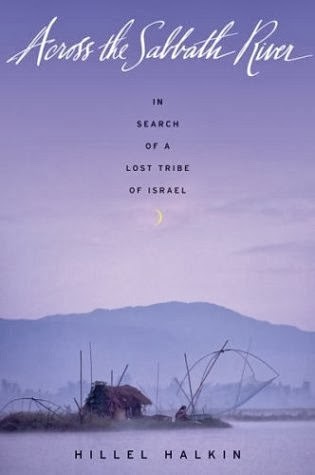
Note: Those wishing to learn more about the Kuki–Chin–Mizo and their relationship to Judaism could do worse than to read Hillel Halkin’s excellent 2002 book Across the Sabbath River: In Search of a Lost Tribe of Israel.


[Also, for those who are wondering, yes, this blog is tied in with a forthcoming book, a sort of encyclopedic atlas to be published by Auslander and Fox under the title Let’s Split! A Complete Guide to Separatist Movements, Independence Struggles, Breakaway Republics, Rebel Provinces, Pseudostates, Puppet States, Tribal Fiefdoms, Micronations, and Do-It-Yourself Countries, from Chiapas to Chechnya and Tibet to Texas.  Look for it some time in 2014.  I will be keeping readers posted of further publication news.]

Friday, August 2, 2013

As Dream of Telugu Statehood Nears, Bodos and Gurkhas Sharpen Their Swords


On July 31st, the decades-long dream of a separate state within India for the Telugu nationality came close to reality, as a committee of the country’s ruling Congress Party made a unanimous recommendation to the central government that the state of Andhra Pradesh be partitioned, so as to create a new ethnically defined state called Telangana.


But now some fear that this concession has opened a Pandora’s Box.  The Telengana-statehood movement is only one of many throughout India, including a dense thicket of tribal groups pining for the creation of new federal subdivisions in the far-northeastern “Seven Sisters” region by the border with Burma.

Over 1,000 Telugus since 2009 have preferred to die consumed in flames
than consent to being part of Andhra Pradesh.
Already, in Maharashtra state, proponents of creating a new state called Vidarbha have put the Congress Party on notice that their case for statehood is “older and stronger” than Telangana’s. Vidarbhans are committed to pursuing their cause peacefully.  But that is far less true of many advocates of the creation of separate states in the northeast for the Bodo, Gorkha, and Kuki people.

The districts in Maharashtra which wish to split away
as the state of Vidarbha are shown shaded in this map.
The leader of the Gorkha Janmukti Morcha (G.J.M.) movement, Roshan Giri, and Sansuma Khunggur Bwiswmuthiary of the Bodoland People’s Front have both said that it is time to intensify their struggles for separation.  Bodo activists have disrupted rail service in Assam state, essentially cutting off the near-exclave from the rest of India.  The associated vandalism and mob violence has turned lethal.  In the Gorkha region, a bandh (general strike) has now been going on for several days.

Bodo protesters have shut down rail service in Assam state.
The Bodo people are a tribal group making up 5% or so of the population of Assam who have been at the center of sometimes bloody conflict in recent years.  An influx of Muslim migrants spilling over from nearby Bangladesh and other areas has made Bodos a minority even in their own Bodo Territorial Autonomous District (B.A.T.D.), a jurisdiction that had been finally set up amid much fanfare in 2003 after decades of armed struggle.  Gorkhas (sometimes called Gurkhas) are an ethnically-Nepali minority who migrated to what are now West Bengal and neighboring states in British colonial times, when the Gurkhas formed part of the colonists’ large mercenary force.  A Gorkhaland Territorial Administration (G.T.A.) now governs the Darjeeling hills of West Bengal as an autonomous district, but the G.J.M. continues to press for full statehood.  During open conflict in the 1980s, thousands of Gorkhas were expelled into West Bengal from Meghalaya state, and militant Gorkha nationalists responded with demands for a fully independent Greater Gorkhaland which would also take in parts of Assam, the quasi-independent former kingdom of Sikkim, and even the fully independent Kingdom of Bhutan.


Meanwhile, a long violent insurgency by members of the related Kuki and Mizo ethnic groups envisions a Kukiland state carved out of their homeland, which spreads across six of India’s northeastern states.  The Kuki and Mizo, who are related to the Chin people just over the border in Burma (Myanmar), regard themselves as descendants of one of the Lost Tribes of Israel, the Tribe of Menasseh.  Anthropologists, folklorists, and geneticists have found their claims credible, though by appearance they resemble fellow speakers of Tibeto-Burman languages.  Many expect that Kuki nationalists, some of whom demand a fully independent state, may be the next to follow the Telugu example and throw their hats in the ring.


However, it is the Telangana movement that has some of the fiercest nationalist emotions behind it.  Hyderabad, including much of the Telugu homeland, was the largest of the literally scores of autonomous “princely states” that co-existed under the period of British suzerainty over the subcontinent.  When British India was divided into predominantly-Hindu India and predominantly-Muslim Pakistan at independence in 1947, Hyderabad’s Muslim monarch, Osman Ali Khan, who ruled over millions of Hindus, declared independence from both the United Kingdom and the new Indian nation of which he did not want to be a part.  But Hyderabad was forcibly absorbed into the new country.  In 1956, when the Indian government reorganized its internal borders, pains were taken to make sure that Hyderabadi nationalist feeling was not strengthened.  Hyderabad state was abolished, with some of its territories going to Karnataka state and some going to Bombay state (which later subdivided into Gujarat and Maharashtra), while Telugu areas were attached to Andhra Pradesh.  For Telugus, this is not a minor issue: more than 1,000 Telugu protesters have died from self-immolation since 2009 in protests over the statehood question.

Osman Ali Khan, Hyderabad’s last monarch,
wanted Telangana and other parts of his dominions out of India entirely.
Now that Telangana is likely to be established, those in the rest of Andhra Pradesh, including areas that would like to split away as Rayalaseema and those that do not want to be stranded in a rump state which may end up being called Seemandhra, have reacted angrily.  A raft of legislators have resigned, and violence is spilling into the streets.

This is how many people in Andhra Pradesh feel about the idea of Telangana state.
Telugu nationalism is part of the larger phenomenon of Dravidian nationalism—Dravidian being the language family that dominates southern India, as opposed to Hindu, Punjabi, and other Indo-European languages which dominate in the more politically central north of the country.  Some Dravidian nationalists in the post-independence period called for an independent Dravidistan, Dravida Nadu, or Deccan Federation, and this movement helped spawn separatist movements in India’s Tamil Nadu state and across the straits in Sri Lanka’s Tamil-dominated north—where 50,000 people died in one of the modern era’s bloodiest civil wars, which ended with a Tamil defeat in 2009.  There also remains the possibility that the latest Telugu victory will reignite demands for a separate state among the Dravidian-speaking Tulu people of Karnataka and Kerala states.

Areas where Dravidian languages are spoken
Few doubt that Telangana will become India’s 29th state in short order.  But managing the separatist aspirations of some of the vast multi-ethnic country’s other minorities will be harder.

Proposed new states within India: how much subdivision is too much?
[Also, for those who are wondering, yes, this blog is tied in with a forthcoming book, a sort of encyclopedic atlas to be published by Auslander and Fox under the title Let’s Split! A Complete Guide to Separatist Movements, Independence Struggles, Breakaway Republics, Rebel Provinces, Pseudostates, Puppet States, Tribal Fiefdoms, Micronations, and Do-It-Yourself Countries, from Chiapas to Chechnya and Tibet to Texas.  Look for it some time in 2013.  I will be keeping readers posted of further publication news.]

Friday, October 5, 2012

Breaking News: Papua New Guinea Becomes 93rd Nation to Recognize Kosovo


On October 3rd, the Independent State of Papua New Guinea became the 93rd nation (out of 193 or so, depending on how one counts them) to extend diplomatic recognition to the Republic of Kosovo.  [See special note at the end of this article as to whether Papua New Guinea or Burundi is no. 93.]

Kosovo is not a United Nations member state and is still claimed by the Republic of Serbia as part of its territory.  It declared independence unilaterally in 2008 under North Atlantic Treaty Organization (NATO) protection.


In addition to the 93 fully recognized states, Kosovo is also recognized by the Republic of China (Taiwan) and the Central Tibetan Administration (government-in-exile in India) (but not by the People’s Republic of China), the Chechen Republic of Ichkeria (government-in-exile in London) (but not by the Russian Federation), the Jammu Kashmir Liberation Front (but not by India), and the Mejlis of the Crimean Tatar People (but not by Ukraine).

States which recognize the Republic of Kosovo are shown in green.
U.N. Security Council permanent-member veto powers wielded by Russia and China prevent Kosovo’s admission to the General Assembly. 


[Special note (written Oct. 29, 2012): As of October 16, 2012, when the Republic of Burundi extended diplomatic recognition to Kosovo (as reported in this blog), it, too, was announced as the “93rd” nation to do so.  Though I cannot at this point go back and find my precise source, with a count, for calling Papua New Guinea the 93rd, I conjecture that the discrepancy arose because the Republic of Nigeria was for a time presumed to have recognized Kosovo until issuing a denial in September 2012.]

[Also, for those who are wondering, yes, this blog is tied in with a forthcoming book, a sort of encyclopedic atlas to be published by Auslander and Fox under the title Let’s Split! A Complete Guide to Separatist Movements, Independence Struggles, Breakaway Republics, Rebel Provinces, Pseudostates, Puppet States, Tribal Fiefdoms, Micronations, and Do-It-Yourself Countries, from Chiapas to Chechnya and Tibet to Texas.  Look for it in spring 2013.  I will be keeping readers posted of further publication news.]

Friday, August 3, 2012

Olympic Update: Femen Protest, Bigoted Judokas, Sudanese Defectors


UPDATE ON THE LATEST SEPARATIST, ETHNONATIONALIST, AND SILLY-NATIONALIST MOMENTS AT THE LONDON OLYMPICS


Olympic Rules Indulge Arab Refusal to Practice Next to, Let Alone Compete with, Israelis.  Olympics organizers continue to indulge some Muslim countries’ refusal to allow their teams to compete against athletes from Israel.  Iran is one such country, but the only Iranian athlete in a sport in which Israel is also competing, Javad Mahjoub, a judo competitor, stayed home with a stomach problem (a very convincing alibi).  Meanwhile, Lebanon’s judo team (what is it with the Middle East and judo?) even refused to practice on the same mat as Israelis, so organizers provided a screen—presumably so that the Lebanese would not have to look at any Jews.  (One Israeli official quipped, “What?  They can’t see us, but they will smell us.”)  You would think that having members of an ethnic group that one despises within one’s field of vision would help one chop cinder blocks or skulls or whatever it is they do in judo more aggressively and energetically—but then what do I know.  In this blogger’s opinion, the Lebanese team should have been sent home and then banned from the next Olympics.  This sort of thing goes part of the way toward explaining why no predominantly Muslim country has yet hosted an Olympics.  (Lebanon’s one of the more progressive ones!)  Though if Kurdistan becomes independent, it will probably be the most sexually egalitarian, comfortably secular, and Israel-friendly state in the Muslim world.  Istanbul, Madrid, and Tokyo are the three candidates for the 2020 Summer Games.  I say give it to Diyarbakir.

Israel’s judo team—honestly, they’re not that bad to look at.

Meanwhile, Fabien Gilot, a Jewish member of France’s gold-medal-winning swim team, offered a riposte to the I.O.C.’s controversial decision to disallow a moment of silence during the opening ceremonies for the Israeli athletes killed by Palestinian terrorists at the 1972 Munich games.  He showed his arm tattoo, which (Leviticus 19:28 notwithstanding) featured the words, “I am nothing without them”—a tribute, he explained, to his step-grandfather Max Goldschmidt, a survivor of Auschwitz.


Ukrainian Feminist Activists Protest Islamic Misogyny on Tower Bridge.  Members of Ukraine’s guerilla-activist feminist collective Femen—who made news July 26th when a member accosted Patriarch Kirill I, head of the Russian Orthodox Church, at Kyiv’s airport to call attention to Russia’s fem-punk-rockers turned political prisoners, Pussy Riot—have now invaded the Olympic Games in London.  The target of their protest August 2nd was the International Olympic Committee’s perceived coddling of misogynistic Islamist regimes such as those of Saudi Arabia (which, until the kingdom loosened up this year, the I.O.C. indulged in its ban on female athletes) and Iran.  (See above article for another example.)


Femen argues (for example, on its Facebook page) that regimes which oppress women should be banned from the Games.


At an earlier protest in France, Femen activists made a related point.

Femen activists marched along London’s Tower Bridge topless with words like “Shame” written on their bodies, until policemen, failing to cover them up with coats, hustled them into paddywagons and took them away.  And now we can breathe a sigh of relief because the United Kingdom is safe once again, the Queen is on her throne, and all’s right with the world.

Bobbies versus boobies.  No, it’s not an episode of The Benny Hill Show.

Nor is this Femen’s first foray into the Olympic arena.  Last year, nude Femen activists demonstrated in front of Kyiv’s Olympic Stadium during the Euro 2012 championships to protest the advocacy of the decriminalization of prostitution in Ukraine by the Union of European Football Associations (UEFA).


3 Sudanese Runners Defect in England after Failing to Qualify for Olympics.  The Republic of Sudan’s Olympic Mission in London announced July 31st that three of its athletes, all of them runners, have applied for political asylum in the United Kingdom.  The three traveled to the North Yorkshire town of Middlesbrough, England, on June 15th for training but did not qualify for the Games.  The athletes are Al-Nazeer Abdul GadirSadam Hussein, and Osman Yahya Omar.  (As he moves forward toward U.K. citizenship, someone might want to recommend a name change for Sadam Hussein.)  Elfatih Abelaal, head of the Sudanese Olympic mission, Darfuri rebels and “communists” for influencing the athletes’ decision.  It couldn’t possibly be the fact that their own government is currently mowing down protesters with sniper fire and sentencing adulteresses to death by stoning.  No, it must be communist brainwashing.

The Sudanese Olympic team is shrinking almost as fast as Sudanese territory.

Kashmiri Separatists Bring Message to London Games.  Members of the Jammu and Kashmir Liberation Front (J.K.L.F.), a group seeking independence for the Republic of India’s only predominantly-Muslim territory, on August 2nd launched a month-long “Torch of Peace” publicity campaign at the London Olympics, with banners and other demonstrations. The J.K.L.F.’s leader, Yasin Malik, said in Srinagar, Kashmir’s capital, “The statistics about the martyred and disappeared persons will travel throughout the Olympic valley highlighting the Kashmir issue and human rights violations being committed on the Kashmiri people by the Indian army and forces.”  Unlike some other Kashmiri separatists, which want to reattach Kashmir to Pakistan, the J.K.L.F. seeks independence for all of Jammu and Kashmir from its two occupying forces, India and Pakistan.  

Kashmiris bring their message to London.

[Also, for those who are wondering, yes, this blog is tied in with a forthcoming book, a sort of encyclopedic atlas to be published by Auslander and Fox under the title Let’s Split! A Complete Guide to Separatist Movements, Independence Struggles, Breakaway Republics, Rebel Provinces, Pseudostates, Puppet States, Tribal Fiefdoms, Micronations, and Do-It-Yourself Countries, from Chiapas to Chechnya and Tibet to Texas.  Look for it in spring 2013.  I will be keeping readers posted of further publication news.]

Saturday, March 3, 2012

China, Tibet, and the Politics of Reincarnation

I was planning or working on upcoming articles on Balochistan, on Syria, and on Kosovo, but those will have to wait while I take the opportunity to alert readers to the latest—and most bizarre yet—twist in the strange saga of the struggle for Tibet.  The State Administration for Religious Affairs for the People’s Republic of China (P.R.C.) has decreed that Buddhist monks in China are not permitted to reincarnate without permission from the government.


This is not the first time that the Chinese government has involved itself in the process of rebirth, or transmigration of souls—which is part of Tibetan and other forms of Buddhism as well as a non-institutionalized folk belief in much of East Asia.  Spiritual leaders in the Tibetan Buddhist tradition pass on their authority by being reincarnated.  After a lama dies, his followers go about the business of searching communities to find the child in whose body he has reincarnated.  Since in the Tibetan tradition spiritual leaders are also political leaders, and since Tibet is claimed by both the People’s Republic of China and by the Tibetan government-in-exile in Dharamsala, India, reincarnation is a very serious matter of politics.  (Tibet was independent from 1912 until 1950, when the new revolutionary Communist government in Beijing retook the territory.  The Dalai Lama and his government were expelled in 1959.)  And with unrest on the rise in Tibet and in Tibetan areas of Sichuan and other provinces, including mass protests, arrests, and self-immolation by monks, this is an unusually tense season.

Self-immolations by Tibetan monks in China are on the rise

A digression is necessary here, since reincarnation beliefs are found in various parts of the world—most notably in East Asia, South Asia, Southeast Asia, parts of Turkey and Lebanon, scattered parts of sub-Saharan Africa, and among indigenous people of northern North America.  This set of beliefs happens to be something that I have researched and investigated, specifically in Native American communities.  In some spiritual traditions, such as those of the Inuit of the Canadian Arctic, the soul is considered part and parcel of a name that is given to a child.  Inuit babies are not always named right at birth, and giving the name of a deceased relative to a child is considered to be the very process of that person’s soul entering a new body.  Among some indigenous peoples of the Northwest Coast, in Alaska and British Columbia, a person always reincarnates within the same family and nearly always from the maternal side of the family.  This means that there is usually a necessary delay of months or years as the soul of a deceased person waits for a new body to become available in the form of a relative becoming pregnant.

Things are quite different in South Asia, in the Hindu tradition, where reincarnation is often believed to be instantaneous.  (I am painting in broad geographical strokes here; this is the general pattern.)  This means that in India one almost never reincarnates in one’s own family, and one almost never figures out who one was in a past life, since finding a deceased relative in his or her new incarnation would mean finding someone born at the exact moment one’s loved one died—which could be hundreds of miles away.  Hindu anecdotes of discovering who one was in a last life often take the form of a child on a family trip to a distant city suddenly recognizing as home a house that neither she nor anyone in the family had seen before.  On the Northwest Coast, a more likely scenario is a family waiting to see if spontaneous memories or birthmarks or personality traits emerge in a young person which will make the connection with someone that died either recently or longer ago.  In both Asian and American traditions, dreams and other spiritual messages can help guide the search for a match.  When modern Europeans and European-Americans believe in reincarnation, they are more likely to be follow the South Asian model, since those beliefs have spread to the New World via intellectual fashions such as Theosophy and yoga.  (See works by my colleagues Gananath Obeyesekere, Antonia Mills, and the late Ian Stevenson for more information on the global phenomenon of reincarnation beliefs.)


As in much else, Tibetan Buddhism offers a far more disciplined and complex and even bureaucratized version of this search for a reincarnated person—a process that is a casual or peripheral, rather than imperative, feature of many other social systems.  In the Tibetan tradition there are established protocols for the search which make use of a sophisticated body of knowledge and doctrine and highly trained individuals purported to have extraordinary powers.  In the Tibetan version of reincarnation, there is more variation than in some other systems, and more control by adepts over the amount of time spent in the bardo—the limbo between lives—and over one’s destination as one re-enters the physical world through rebirth.  There is a sense that Tibetan lamas are able to step in and engineer, or at least master the intricacies of, a cycle of reincarnation which others just ride along on unwittingly.  This makes possible the carrying out of a form of political succession—inheritance is not quite the word for it—that is unlike anything found anywhere else in the world.


In the 1990s a controversy erupted over who would be the new Panchen Lama.  The Panchen Lama is the second-highest ranking lama in the Tibetan tradition, after the Dalai Lama.  After the 10th Panchen Lama, Lobsang Trinley Lhündrub Chökyi Gyaltsen, died in 1989, his followers set about to find his successor, who would be a boy born somewhere in a Tibetan community some time soon after the old Panchen Lama’s death.  In 1995, at the age of six, Gedhun Chökyi Nyima was named by the current, 14th Dalai Lama (Tenzin Gyatso), to be the reincarnation of Chökyi Gyaltsen and therefore the 11th Panchen Lama.  At that point, the go-between sent by the P.R.C. government to negotiate with the Dalai Lama on a candidate acceptable to both Beijing and Dharamsala was arrested.  Chinese authorities detained the young Chökyi Nyima as well, and he has not been seen dead or alive since May 17, 1995.  A new liaison established, without Dharamsala’s participation or approval, a new process for “selecting” or “finding” the new Panchen Lama.  Beijing drew up a list of candidates, including the missing Chökyi Nyima, and had them drawn from a large golden urn.  This is quite a departure from the usual process, used to find Chökyi Nyima and others, which was to present young children with possessions belonging to the deceased lama and see if they can recognize them (a process familiar to researchers studying “cases of the reincarnation type” around the world).  The results were about as difficult to predict as the average election in Communist China, and Beijing anointed its preferred candidate, Gyaincain Norbu, also six years old, as the next Panchen Lama.  And there the stand-off has been ever since.

A protestor’s sign shows the missing Panchen Lama

Clearly, Beijing is also gearing up to pull a similar scam whenever the current Dalai Lama, who is seventy-two years old, dies—and the Dalai Lama is very clearly preparing for his own succession as well.  If Beijing can co-opt Tibet’s spiritual leadership—can essentially select, groom, and train its next generation of leaders—then they can undermine traditionalists who claim (correctly) that the installed Communist regime in Tibet is opposed to the will of the Tibetan people.  This will close the gap (if it works and the Tibetan people buy it, which they won’t).

The 14th Dalai Lama

Like classical (e.g. Soviet) Marxism–Leninism, Maoism, from 1949 on, portrayed religion as a feudal relic, in conflict with scientific socialism.  China’s 1966-1976 Cultural Revolution, in Mao Zedong’s later years, involved violent and brutal pogroms against Buddhism in Tibet and elsewhere, amounting to a campaign of cultural genocide.  After Mao’s death in 1976, and especially after the rise of Deng Xiaoping in 1982, religion became more tolerated.  This is quite different from the repression of religion that prevailed throughout the Communist period in the Soviet Union and even today in, say, Cuba and North Korea.  China’s political system today is only nominally Marxist or Maoist, retaining only its Party dictatorship amidst a liberalizing economy and a strictly circumscribed cultural and religious pluralism.  It was never Buddhism itself that was a threat to China ideologically.  In fact, perhaps a quarter of the non-Tibetan population of China is Buddhist, and today Buddhist practice in its many variations is allowed to flourish alongside official ideology and Party rule.

Buddhism, one could argue, is not even a religion in the Western sense, in the way that Hinduism and Islam are.  It is a system of mental discipline and a cosmological doctrine that does not feature a Deity of any kind, as we would think of it from the Judaeo-Christian tradition.  It began millennia ago as an atheist heresy within Hinduism.  The Tibetan tradition in particular sees Buddhism as an all-encompassing natural philosophy, in some ways more like science than like religion.  Confucianism, which also is sometimes called a religion, is likewise a system of social philosophy which can exist alongside Buddhism or any other ideological system; in fact it is quite congenial to Communist bureaucracy and also does not require belief in a Deity.  It is possible to be a Confucianist and a Buddhist and a Communist and to follow the spiritual, ancestor-worshiping practices of one’s particular region or community.  As to this last, there is a vast substrate of uninstitutionalized local folk religion in China, analogous in some ways to Shintoism in Japan.  Much of it involves reincarnation-type beliefs, and Mao never thought he could stamp it out.  China has also always had what Westerners would call a blurring of the line between “faiths” and a blurring between science and religion, as any American who has been to an acupuncturist can attest.  When scientific advances in medicine became available in China, this did not become the occasion, as it did in some parts of the world, for the jettisoning of ways of thinking about health and the body that were tied to older philosophical and religious systems.  The Asian approach to intellectual traditions is not as all-or-nothing as the European approach.  And post-Deng “communism” has become a protean beast that takes whatever ideological forms it needs to in order to stay in power, including, for example, racist jingoistic nationalism (technically incompatible with scientific socialism) or even, today, free-market capitalism.  It won’t be the Chinese Communist Party’s internal contradictions that bring it down as happened with Communism in Russia.

Because of all this, the idea of a modern national government constructing a transmigration-of-souls bureaucracy may not strike the average Chinese person as unusual in the way that it strikes Westerners.  But one never knows: in a totalitarian society, it is always hard for outsiders to get a handle on what individual people actually believe and how much of the official line they buy into, as I found when I lived in China for much of last year.  At times, too, the Party seems to be lording absurdities over the populace knowing they dare not challenge them.  I well recall headlines in the Party’s English-language China Daily such as (and I am working from memory here, so if anyone finds the actual headline, please correct me), “Representatives of China’s Five Permitted Religious Groups Report That There Is Complete Freedom of Religion in China.”  Reading China Daily can be like reading a parody of China Daily produced by the editors of the Onion.  Do Chinese read such headlines and see them for the Orwellian nonsense that they are?  Clearly, some don’t, and clearly many who do are careful not to admit it.  Then again, some may find it perfectly natural that a Buddhist monk should get the proper paperwork stamped before attempting to be reborn in a new body.  (To the average Chinese, the idea that even in the bardo one might be beset by petty bureaucrats is probably quite chilling.)

The new law, which takes effect in China next month, is one that we do not have full information on yet.  I will be reporting on it in this space as I learn more, and I would appreciate any readers alerting me to sources or information on it as this story develops.

My big question, for the time being, is: how ever will this law be enforced?

Subscribe Now: Feed Icon