Showing posts with label Kukiland. Show all posts

Wednesday, October 30, 2013

Israel to Let In Hundreds from Ethnic Group in India Claiming Jewish Descent


The State of Israel this month agreed to allow 899 members of a small ethnic group on India’s border with Burma (Myanmar) to immigrate under the constitutional provision for the “right of return” for any Jews.  The Indians, who call themselves the Bnei Menashe, are a few thousand members of a larger ethnolinguistic group called the Kuki, from around the far-eastern state of Manipur, who are related to the Mizo people of neighboring Mizoram state and the Chin people just over the border in Burma.

One flag used by Kuki nationalists in India
Also called the Lushai or Hmar, the Kuki–Chin–Mizo speak a language related to Burmese and Tibetan and are East Asian in their ethnic appearance, but Kuki oral traditions tell of descent from the Tribe of Manasseh, one of the Lost Tribes of Israel.  Scholars investigating the claims find some of the preserved stories and rituals to be too similar to ancient Judaism to be coincidental.  Genomic data have been inconclusive, as opposed to the well-documented diasporas among the Lemba of the South AfricaZimbabwe border region or the Falashas of Ethiopia.  (See an earlier article from this blog on Jewish diaspora theories in the Americas.)  Also, researchers point out that meriting the migration tale does not necessarily mean that all Kukis are of Jewish descent.  A migration of Manasseh tribespeople centuries or millennia ago to what is now eastern India could have deposited cultural traditions which took hold, with their descendants in the group remaining more limited in number.


However, that is good enough for the Shevai Israel organization, which advocates for immigration of far-flung branches of the Jewish family, and clearly also for the Israeli government.  Indeed, there are already about 2,000 Bnei Menashe Indians in Israel.  But controversy plagues state relations at both ends of this migratory path.  In India, delegations from Israel have run afoul of Indian laws banning the conversion of populations of people from one faith to another (a legacy of India’s delicate relations between Hindus and Muslims, dating to partition and earlier).  Meanwhile, in Israel, the government has been accused of exploiting Kuki–Chin–Mizo migrants by settling them en masse in occupied parts of the West Bank and (formerly) Gaza Strip, in territories nearly two-thirds of the world’s countries recognize as a sovereign State of Palestine.  At one point, they were even the largest immigrant population in Gaza (though Menasseh’s territory, according to the Old Testament, is farther north, incluiding Tel Aviv, the Golan Heights, and parts of the west and east banks of the Jordan River).  To add insult to injury, some Kuki–Chin–Mizo Israelis in occupied territories had their homes dismantled by Prime Minister Ariel Sharon’s government in 2005.


Back in Asia, most Kuki–Chin–Mizo consider themselves distinct, and oppressed, even though far from all identify as Jewish (most are Presbyterian, a few Muslim or Hindu, while some follow local religions).  Kukis want to carve out about half of Manipur state as a separate Kukiland state; this campaign has reignited in recent months after New Delhi’s decision in July to allow the Telugu nationality to split from Andhra Pradesh state as a separate state within India called Telangana (as discussed at the time in this blog).  Some Kukis even hanker for an independent “Greater Kukiland” called Zale’n-gam.  Rebels from the Mizo, who, as their name suggests, form a majority in Mizoram state, have been fighting for secession since the 1960s.  And the Chin are among several nationalities that have been fighting for autonomy and independence from Burma since the country’s founding dictatorship, in the 1940s, reneged on promises of federalism (as discussed in an earlier article in this blog).


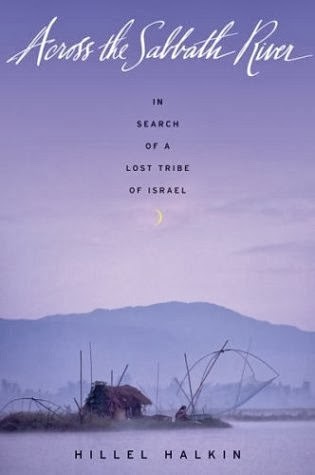
Note: Those wishing to learn more about the Kuki–Chin–Mizo and their relationship to Judaism could do worse than to read Hillel Halkin’s excellent 2002 book Across the Sabbath River: In Search of a Lost Tribe of Israel.


[Also, for those who are wondering, yes, this blog is tied in with a forthcoming book, a sort of encyclopedic atlas to be published by Auslander and Fox under the title Let’s Split! A Complete Guide to Separatist Movements, Independence Struggles, Breakaway Republics, Rebel Provinces, Pseudostates, Puppet States, Tribal Fiefdoms, Micronations, and Do-It-Yourself Countries, from Chiapas to Chechnya and Tibet to Texas.  Look for it some time in 2014.  I will be keeping readers posted of further publication news.]

Friday, August 2, 2013

As Dream of Telugu Statehood Nears, Bodos and Gurkhas Sharpen Their Swords


On July 31st, the decades-long dream of a separate state within India for the Telugu nationality came close to reality, as a committee of the country’s ruling Congress Party made a unanimous recommendation to the central government that the state of Andhra Pradesh be partitioned, so as to create a new ethnically defined state called Telangana.


But now some fear that this concession has opened a Pandora’s Box.  The Telengana-statehood movement is only one of many throughout India, including a dense thicket of tribal groups pining for the creation of new federal subdivisions in the far-northeastern “Seven Sisters” region by the border with Burma.

Over 1,000 Telugus since 2009 have preferred to die consumed in flames
than consent to being part of Andhra Pradesh.
Already, in Maharashtra state, proponents of creating a new state called Vidarbha have put the Congress Party on notice that their case for statehood is “older and stronger” than Telangana’s. Vidarbhans are committed to pursuing their cause peacefully.  But that is far less true of many advocates of the creation of separate states in the northeast for the Bodo, Gorkha, and Kuki people.

The districts in Maharashtra which wish to split away
as the state of Vidarbha are shown shaded in this map.
The leader of the Gorkha Janmukti Morcha (G.J.M.) movement, Roshan Giri, and Sansuma Khunggur Bwiswmuthiary of the Bodoland People’s Front have both said that it is time to intensify their struggles for separation.  Bodo activists have disrupted rail service in Assam state, essentially cutting off the near-exclave from the rest of India.  The associated vandalism and mob violence has turned lethal.  In the Gorkha region, a bandh (general strike) has now been going on for several days.

Bodo protesters have shut down rail service in Assam state.
The Bodo people are a tribal group making up 5% or so of the population of Assam who have been at the center of sometimes bloody conflict in recent years.  An influx of Muslim migrants spilling over from nearby Bangladesh and other areas has made Bodos a minority even in their own Bodo Territorial Autonomous District (B.A.T.D.), a jurisdiction that had been finally set up amid much fanfare in 2003 after decades of armed struggle.  Gorkhas (sometimes called Gurkhas) are an ethnically-Nepali minority who migrated to what are now West Bengal and neighboring states in British colonial times, when the Gurkhas formed part of the colonists’ large mercenary force.  A Gorkhaland Territorial Administration (G.T.A.) now governs the Darjeeling hills of West Bengal as an autonomous district, but the G.J.M. continues to press for full statehood.  During open conflict in the 1980s, thousands of Gorkhas were expelled into West Bengal from Meghalaya state, and militant Gorkha nationalists responded with demands for a fully independent Greater Gorkhaland which would also take in parts of Assam, the quasi-independent former kingdom of Sikkim, and even the fully independent Kingdom of Bhutan.


Meanwhile, a long violent insurgency by members of the related Kuki and Mizo ethnic groups envisions a Kukiland state carved out of their homeland, which spreads across six of India’s northeastern states.  The Kuki and Mizo, who are related to the Chin people just over the border in Burma (Myanmar), regard themselves as descendants of one of the Lost Tribes of Israel, the Tribe of Menasseh.  Anthropologists, folklorists, and geneticists have found their claims credible, though by appearance they resemble fellow speakers of Tibeto-Burman languages.  Many expect that Kuki nationalists, some of whom demand a fully independent state, may be the next to follow the Telugu example and throw their hats in the ring.


However, it is the Telangana movement that has some of the fiercest nationalist emotions behind it.  Hyderabad, including much of the Telugu homeland, was the largest of the literally scores of autonomous “princely states” that co-existed under the period of British suzerainty over the subcontinent.  When British India was divided into predominantly-Hindu India and predominantly-Muslim Pakistan at independence in 1947, Hyderabad’s Muslim monarch, Osman Ali Khan, who ruled over millions of Hindus, declared independence from both the United Kingdom and the new Indian nation of which he did not want to be a part.  But Hyderabad was forcibly absorbed into the new country.  In 1956, when the Indian government reorganized its internal borders, pains were taken to make sure that Hyderabadi nationalist feeling was not strengthened.  Hyderabad state was abolished, with some of its territories going to Karnataka state and some going to Bombay state (which later subdivided into Gujarat and Maharashtra), while Telugu areas were attached to Andhra Pradesh.  For Telugus, this is not a minor issue: more than 1,000 Telugu protesters have died from self-immolation since 2009 in protests over the statehood question.

Osman Ali Khan, Hyderabad’s last monarch,
wanted Telangana and other parts of his dominions out of India entirely.
Now that Telangana is likely to be established, those in the rest of Andhra Pradesh, including areas that would like to split away as Rayalaseema and those that do not want to be stranded in a rump state which may end up being called Seemandhra, have reacted angrily.  A raft of legislators have resigned, and violence is spilling into the streets.

This is how many people in Andhra Pradesh feel about the idea of Telangana state.
Telugu nationalism is part of the larger phenomenon of Dravidian nationalism—Dravidian being the language family that dominates southern India, as opposed to Hindu, Punjabi, and other Indo-European languages which dominate in the more politically central north of the country.  Some Dravidian nationalists in the post-independence period called for an independent Dravidistan, Dravida Nadu, or Deccan Federation, and this movement helped spawn separatist movements in India’s Tamil Nadu state and across the straits in Sri Lanka’s Tamil-dominated north—where 50,000 people died in one of the modern era’s bloodiest civil wars, which ended with a Tamil defeat in 2009.  There also remains the possibility that the latest Telugu victory will reignite demands for a separate state among the Dravidian-speaking Tulu people of Karnataka and Kerala states.

Areas where Dravidian languages are spoken
Few doubt that Telangana will become India’s 29th state in short order.  But managing the separatist aspirations of some of the vast multi-ethnic country’s other minorities will be harder.

Proposed new states within India: how much subdivision is too much?
[Also, for those who are wondering, yes, this blog is tied in with a forthcoming book, a sort of encyclopedic atlas to be published by Auslander and Fox under the title Let’s Split! A Complete Guide to Separatist Movements, Independence Struggles, Breakaway Republics, Rebel Provinces, Pseudostates, Puppet States, Tribal Fiefdoms, Micronations, and Do-It-Yourself Countries, from Chiapas to Chechnya and Tibet to Texas.  Look for it some time in 2013.  I will be keeping readers posted of further publication news.]

Saturday, December 15, 2012

Catalans, Basques Organize Themselves for Secession; Also Bashkortostan, Oromia, Casamance, Mahalla Republic, Corsica, Kukiland, Kabardino-Balkaria, South California: The Week in Separatist News, 9-15 December 2012


TOP STORY:
CATALONIA PLANS 2014 REFERENDUM WITH NEW COALITION DEAL;
SEPARATISTS LIKELY TO HOLD BALANCE OF POWER IN BASQUE COUNTRY TOO


Catalan Separatist Parties Form Coalition, Plan Referendum for 2014.  Reports emerged this week of a meeting between Artur Mas i Gavarró’s independence-minded ruling party in the CataloniaConvergència i Unió (CiU, or Convergence and Union), and the autonomous region’s second-place party from last month’s regional election (reported on at the time in this blog), Esquerra Republicana de Catalunya (E.R.C., or Republican Left of Catalonia) about forming a government.  Part of the agreement is that a referendum on independence from Spain will probably be held in 2014, the same year Scotland decides whether to remain in the United Kingdom.  Mas had only promised to hold a vote by 2017, but the E.R.C. pushed for an earlier date.

Gradualist Named Basque Premier, Will Need Radical Separatists to Rule in Coalition.  In Spain’s Basque CountryIñigo Urkullu was appointed the autonomous region’s prime minister on December 13th after an election in October in which his Basque Nationalist Party (E.A.J.) came out with a plurality of 21 out of 75 seats (as reported at the time in this blog), but, although the E.A.J. are gradualists on the question of independence, they will need to govern with the help of the more stridently separatist Euskal Herria Bildu (E.H.B.) coalition.


AFRICA


Mali’s Civilian Prime Minister Nabbed, Forced to Resign by Sanogo Coup Plotters.  The interim prime minister of the Republic of Mali, Cheick Modibo Diarra, who took office in a negotiated handover after a military coup d’état in March, was arrested by members of the military as he was trying to flee the country on December 11th and hours later announced his resignation on state television.  The soldiers who apprehended him were loyalists of Capt. Amadou Haya Sanogo, who led the original coup and who never really let go of the reins of power.  The new prime minister is Diango Cissoko, who had been minister of justice in the 1980s.  The rough transition calls into question the legitimacy of the civilian government, as well as prospects for an international intervention to root Islamists out of the self-declared Independent State of Azawad that prevails over the northern two-thirds of Mali.

Diango Cissoko, Mali’s new prime minister;
the implications for the retaking of Azawad are as yet unclear.
New Somali President Vows to Retake Puntland and Somaliland Ports.  The newly elected president of a supposedly newly post-transitional Federal Republic of Somalia, Hassan Sheikh Mohamud, vowed this week in a media interview to retake the harbor cities of Berbera and Bosaso, using words that sounded like a threat to undermine or even dismantle the de facto independent governments of Somaliland and Puntland, which have flourished in the northern half of Somalia as islands of stability, economic growth, and democracy during more than two decades of chaos and civil war.  Speaking confidently of the recent ejection of Islamist armies from Kismayo, the main port in southern Somalia, Mohamud said the next step will be Somaliland’s main port, Berbera, and Bosaso, in Puntland.  “The country has four main ports,” Mohamud said, “namely Mogadishu, Kismayo, Berbera, and Bosaso, which we intend to take-over soonest,” adding, “Once we seize full control of all the four ports, the federal government in Mogadishu shall apportion regional governments a minor share of the earnings”—the “regional governments” referring perhaps to Puntland, which is nominally a state within  Somalia, or perhaps to the at-this-point utterly fictional “provinces” of “Somalia” which overlay the political realities in the region.  Mogadishu’s refusal to recognize Somaliland’s independence is not new, but the Mohamud’s threats to Puntland’s autonomous status are.

3 Killed, 7 Injured in Somaliland over Election Results.  Violence accompanied the announcement of results from last month’s violence-plagued elections (reported on at the time in this blog) in the independent but unrecognized Republic of Somaliland.  In Hargeisa, the capital, three people were killed and seven injured during protests on December 6th by supporters of the Haqsoor political coalition.  The protests and unrest continued into the next day.  Later, on December 8th in Erigavo, scene of some of last week’s worst unrest and capital of the disputed Sanaag region, the offices of the electoral commission were raked with machine-gun fire.  No one was injured. ...

Post-election unrest in Hargeisa this week
... Somaliland Troops Retake Sool Town from Khaatumo Loyalists.  Meanwhile, in the nearby Sool region—also administered by Somaliland and claimed by Puntland—Somaliland national troops have retaken the town of Widwidh from loyalists of the officially-dismantled but surprisingly resurgent Khaatumo State, which tried to establish itself earlier this year in the Sool, Sanaag, and Cayn regions in the Puntland–Somaliland border zone.  The town was retaken without a shot being fired, and the Khaatumo loyalists are believed to have fled into Puntland-controlled areas.

Puntland Commandos Raid al-Shabaab Camp in Mountains, Inflict Heavy Casualties.  In the de facto independent Puntland State of Somalia, government commandos raided an Islamist militant camp in the remote Golis Mountains, inflicting heavy casualties, including deaths, though no exact figures were available.  The camp was operated by al-Shabaab, a jihadist army affiliated with al-Qaeda which has recently expanded into Puntland.

4 Homes Hit by Mortars in Somali City Divided between Puntland, Galmudug States.  Civilian homes were hit by mortar shells on December 7th in Galkayo, a city whose northern half is administered by the de facto independent Puntland State of Somalia but whose southern half is capital of the similarly self-governing Galmudug State—both of them nominally parts of the dysfunctional, barely existent Federal Republic of Somalia.  The mortars came from the direction of Galmudug territory and landed on the Puntland side of the border.  Four homes were damaged.

Kenyan Police Kill 3 Mombasa Separatist Militants, Disrupting Attack Plot.  In Kenya on December 9th, police shot and killed three suspected members of the Mombasa Republic Council (M.R.C.) who authorities the next day claimed had been plotting an attack on a police station.  There were also arrested of four other members of the M.R.C., an organization which seeks to form an independent state out of Kenya’s predominantly-Muslim south-coastal region.

Nigerian Military, Police Clash with Boko Haram in Potiskum; 14 Dead.  Suspected members of northern Nigeria’s Islamist militia Boko Haram attacked police in the streets of Potiskum, in Yobe State in the northeast, on December 11th.  The military was called in to repel the attack, and after a shootout one police officer and 13 of the jihadists were dead.  There was also looting and arson in the city blamed on Boko Haram.

Ethiopian Court Hands Long Prison Terms to 9 Oromo Separatist Activists.  A federal court in Ethiopia handed down prison sentences of eight and 13 years to two members of the Oromo Federalist Democratic Movement on charges of inciting a separatist rebellion, supposedly as members of the banned Oromo Liberation Front (O.L.F.), which seeks independence for the vast, sprawling southern region of Oromia.  Seven other Oromo activists were given long sentences for receiving paramilitary training in Kenya and for skirmishes with Ethiopian troops.


Police Round Up 15 Biafran Separatists in Enugu State.  Police in Nigeria’s Enugu State reported this week that 15 members of the Movement for the Actualisation of the Sovereign State of Biafra (MASSOB) were arrested when authorities busted up a planning meeting in Ogwofia Owa.  Charges have yet to be brought.

Casamance Rebels Release 8 Captured Senegalese Troops in Gambia.  Eight Senegalese soldiers were released this week by rebels from a militia which seeks independence for the region of Casamance, in southern Senegal.  The Movement for the Democratic Forces of Casamance delivered the prisoners to the International Committee of the Red Cross (I.C.R.C.) in a handover in the nearby Republic of the Gambia.


Alexandria, Other Egyptian Towns Declare Semi-Serious “Independence” from Morsi.  Separatism, if only of the tongue-in-cheek sort, has become a feature in the ongoing civil unrest and street politics in the Arab Republic of Egypt, where the new Islamist president, Mohamed Morsi, is facing what is increasingly resembling an Arab Spring revolution redux for his latest power grabs.  Alexandria and El-Mahalla El-Kubra, in the Nile Delta, are among the several municipalities across the country where local activists are declaring independence—in the case of Mahalla, one of the birthplaces of last year’s revolution and a major port with nearly a half-million people, a Republic of Mahalla.


Mahalla was one of the cradles of last year’s revolt against Hosni Mubarak.
This week, residents are talking (not seriously?) about independence from Mubarak’s successor regime.
EUROPE

2 Border Crossings Linking Serbia to Serb-Dominated North Kosovo Formally Open.  After protests and political wrangling, two border crossings operated jointly by the de facto independent Republic of Kosovo and the country that still claims it as its territory, the Republic of Serbia, opened on December 10th amid little fanfare.  The two crossings, Jarinje and Medarje, join Serbia proper with the region of North Kosovo, a Serb-dominated area lying out of Kosovo’s de facto control.  Four other crossings are to be in operation by the end of the year.

With Dominica on Board, Now More than Half of U.N. Member States Recognize Kosovo.  Following last month’s establishments of diplomatic relations by the Republic of Fiji (as reported at the time in this blog) and, the following week, the Federation of St. Kitts and Nevis, another Caribbean island nation, the Commonwealth of Dominica this week became the 97th independent state to recognize the Republic of Kosovo.  This officially tips the balance, so that now just over one-half of the United Nations’ 193 member states now recognize Kosovo.  See this week’s full article on this development.
Separatists Burn 24 French Vacation Homes on Eve of Corsican National Holiday.  The Corsican National Liberation Front (F.L.N.C.) is claiming responsibility for the destruction of 24 vacation homes by arson and explosives on December 7th on Corsica, the large Mediterranean island which was transferred from Italy (the Republic of Genoa, actually) to France in 1769 following a brief period of independence.  No one was injured in the violence, which targeted vacated or partially completed homes.  A few hours before the blasts, a man believed linked to the F.L.N.C. was arrested in possession of explosives.  On the same day, the eve of the Feast of the Immaculate Conception, which is also Corsica’s unofficial independence day, a nightclub owner was gunned down and killed in what is probably an organized-crime hit rather than something related to the wave of arson.

One of 24 vacation homes in Corsica destroyed by separatists this week
Renzo Bossi, Son of Northern League Founder, Probed for Misuse of Public Funds.  The young son of Umberto Bossi, the founder and disgraced former leader of Italy’s now-marginalized separatist Northern League, emerged December 14th as the target of a new corruption investigation focusing on right-wing parties.  The son, Renzo Bossi, who is suspected of misusing public funds, was discussed in this blog earlier this year as no. 10 in a list of “The World’s 21 Sexiest Separatists.”  Ironically, the press this week are referring to his being nicknamed “the Trout,” “because of his looks”—but it’s not clear if that is a compliment or not.  Certainly, the bee-stung lips and just general Mick Jagger look does not prevent another of the dozens of politicians newly under investigation—Nicole Minetti, a former regional councillor for Lombardy for the former prime minister Silvio Berlusconi’s Popolo della Libertà (P.d.L., or People of Freedom) party—from being considered a sex symbol.  Minetti, who is being investigated for spending €800 of public money on food and drink at a five-star hotel in Milan, is also still not free of charges that she procured underaged prostitutes for Berlusconi’s orgy-like  parties.  She began her political career as Berlusconi’s—ahem!—oral hygienist.  Yeah, that explains all the spit sinks at those bunga bunga parties.


Renzo Bossi and Nicole Minetti
Russian Troops Fail to Find “Bashkortostan Mujahideen” Training Camp in Urals.  The Caucasus Emirate separatist organization in the Russian Federation’s Muslim regions confirmed this week on their website an earlier report in the media from the Russian military that a militant Islamist training camp had been reported in the Urals region, run by the Bashkortostan Mujahideen, but that the feared Federal Security Service (F.S.B., successor to the Soviet-era K.G.B.) was unable to find it.  The website, the often-unreliable and propagandistic Kavkaz Center, which refers to the area in question, in Russia’s Republic of Bashkortostan, as part of the “Russian invader”–occupied “Idel-Ural,” links the Bashkortostan Mujahideen to a 2010 terrorist attack on traffic police in the city of Perm (which the site calls the “Russian-occupied Finnic country of Permia”).  The Idel-Ural State flourished briefly during the Russian Civil War as a multi-ethnic, predominantly-Muslim Menshevik state centered on modern Tatarstan, until it was crushed by Vladimir Lenin’s Bolsheviks in 1920.  Bashkortostan, where native Bashkirs and Tatars just barely together outnumber ethnic Russians, declared independence briefly in 1992 before being cajoled by President Boris Yeltsin into joining the Russian Federation.

A new trouble spot?
A map showing the location of the Republic of Bashkortostan within the Russian Federation.
Dagestani Police Colonel Assassinated by Masked Housebreakers; 3 Militants Killed.  A police colonel was killed in southwestern Russia’s predominantly-Muslim Republic of Dagestan on December 9th when masked intruders broke into his home in the Dagestani capital, Makhachkala.  The victim, Khizri Dzhabatyrov, was involved in investigations into corruption and white-collar crime.  Later, on December 13th three militants were killed in a shootout with police at a checkpoint in Makhachkala.

2 Militants, Including Suicide Bomber, Die in Police Siege in Ingushetia.  In Nazran, capital of southwestern Russia’s Republic of Ingushetia, in the North Caucasus region, a police siege of militants barricaded in a house ended this week with the two rebels dead in a hail of gunfire.  One of the dead men, according to Russia’s Federal Security Service (F.S.B.), had been commander of a “suicide battalion.”

7 Dead as Russian Forces Clash with Rebels in North Caucasus.  In Tyrnyauz, in the Kabardino-Balkar Republic, in the predominantly-Muslim North Caucasus region, Russian Federation forces clashed for two days with militants starting December 11th, in skirmishes that left six rebels and one police officer dead.  Three of the rebels were on terrorism wanted lists.


Suspect Nabbed in Killing of T.V. Anchor in Kabardino-Balkaria.  Russian federal security forces this week arrested a suspect in last week’s assassination (reported last week in this blog) of Kazbek Gekkiyev, a television news anchorman in southwestern Russia’s Kabardino-Balkar Republic, in Circassia.  The suspect is Zeytun Boziyev, age 30.

Plotters in Deadly Dagestani Suicide-Bombing Targeting Sufi Imam Arrested.  Meanwhile, in the Republic of Dagestan to the east, Russian federal security forces arrested three suspects for playing a role in planning a mass killing on August 28th, in which a female break-dancing suicide-bomber (though she was not break-dancing at the time of the bombing) killed seven people, including an 11-year-old boy and a prominent Sufi imam (as reported at the time in this blog).  The three suspects are said to be members of the Caucasus Emirate movement, which aims to create an independent state out of predominantly-Muslim areas along Russia’s southern rim.

Caucasus Emirate Claims Military Atrocities against Civilians in Dagestan, Chechnya.  The often-unreliable Jihadist website Kavkaz Center, run by the separatist Caucasus Emirate movement, reported this week on a series of violent “pogroms” against against civilians in the Russian Federation’s predominantly-Muslim North Caucasus region that were not reported in other media.  In one incident, on December 5th, troops from the Russian ministry of the interior, along with allied paramilitaries, removed two men from their homes in villages in the Chechen Republic on suspicion of being associated with the Mujahideen.  Their fates are unknown.  In the other alleged incident, on December 8th, Russian troops raided the village of Chontaul in the Republic of Dagestan, breaking into homes, smashing furniture, and getting as far as pouring kerosene over two captured young girls and a young man with the intention of immolating them, before villagers intervened.  The website also reported the “abduction” by police of two female terrorism suspects in Chechnya.

BITS OF ASIA THAT LIKE TO PRETEND THEY’RE PART OF EUROPE

Russian Chopper Carrying Border Guards Crashes in Abkhazia; 7 Hurt.  A helicopter operated by the Russian Federation’s Federal Security Bureau (F.S.B.), successor to the dreaded K.G.B., crashed in the de facto independent but only partially recognized Republic of Abkhazia on December 10th.  Seven passengers were injured.  The craft was bringing border guards to the line between Abkhazia and the country that still regards it as its territory, Georgia.


ASIA—MIDDLE EAST

Southern Movement Motorcyclists Kill 2 Yemeni Soldiers in Drive-By Shooting.  Two soldiers were killed in a motorcycle drive-by shooting on December 11th in southern Yemen’s Ad-Dali’ province.  The perpetrators are suspected of being members of the Southern Movement, which would like to restore the independence of South Yemen.

ASIA—SOUTH ASIA

Mizoram Chief Minister Backs Creation of Kuki State in Northeast India.  In India’s far northeast, the Kuki State Demand Committee (K.S.D.C.) claimed this week that high-ranking officials in the region, including the chief minister of Mizoram state, support the creation of a State of Kukiland for the Kuki ethnic minority.  Speaking of the Mizoram chief minister, Lalthanhawla (who has only one name), a K.S.D.C. spokesman said, “He had told us that he was not just the Chief Minister of Mizoram but of all the Chin/Kuki/Mizo/Zomi brethren in India and the adjoining Myanmar” (i.e. Burma).  Meanwhile, the K.S.D.C. were carrying out more blockades this week to get their message across.


One proposal for the boundaries of Kukiland
ASIA—EAST ASIA

Dozens of Burmese Troops Dead amid Upsurge in Fighting with Kachin Rebels.  Rebels from eastern Burma’s Kachin ethnic group reported this week that dozens of Burmese soldiers were killed—out of at least 60 casualties—in a recent upsurge in fighting on December 9th and 10th.  “Fighting seems like nothing new now; it occurs everyday,” said a spokesman for the Kachin Independence Organization (K.I.O.).  Skirmishes were reported the morning of December 14th in the Lajayang region of Kachin State.

3 Uyghurs Given Death Sentences in Fishy “Foiled Hijacking” of Chinese Airliner.  A court in the People’s Republic of China—a one-party dictatorship with no independent judiciary—on December 11th sentenced three Uyghur men to death and one to life in prison for supposedly attempting to hijack a domestic airplane flight in late June (as reported in this blog), although it seems just as likely (as also discussed in this blog) that it was a scuffle between passengers over seating arrangements that the authorities are linking to Uyghur separatist terrorism for political purposes.  The court, in western China’s vast Xinjiang Uyghur Autonomous Region, said the men were guilty of a hijacking plot that included a plan to blow up the plane.

A cellphone-camera image of the scuffle aboard a Chinese passenger plane in June
which Beijing called an attempted Uyghur terrorist hijacking
3 Self-Immolations Include 17-Year-Old Girl as Grisly Tibetan Protests Show No Let-Up.  The wave of self-immolations by Tibetans protesting the People’s Republic of China’s brutal rule in their country continued this week, with two such burnings in a single day.  Kunchok Phelgye, a 24-year-old Tibetan Buddhist monk, died December 8th after setting himself on fire in front of the Taktsang Lhamo Kirti monastery in the Ngaba “Tibetan Autonomous Prefecture” in western China’s Sichuan province.  After his death, monks and other worshippers carried his charred body into the monastery to offer prayers.  Later in the same day, Pema Dorjee, age 23, set himself ablaze in front of a monastery in the Luchu region in the east of China’s “Tibet Autonomous Region,” in full view of worshippers.  He shouted slogans calling for Tibetan independence and the return of the 14th Dalai Lama from exile as he perished.  The following day, a 17-year-old girl named Wangchen Kyi, burned herself to death in a Tibetan region of Qinghai province, making her the eighth minor to take the step in the several-years-long wave of self-immolations.

Pema Dorjee, age 23, immolating himself to protest Chinese rule in Tibet
China Sentences 8 Tibetan Student Demonstrators to Harsh Prison Terms.  Eight Tibetan students were given five-year prison sentences on December 5th (but it was only announced several days later) for their role in a November 26th demonstration in western China’s Qinghai province over language rights.  Many students were injured by police and hospitalized in the course of the unrest, which was centered on the Sirig Lobling Medical School in Chabcha, Qinghai.

NORTH AMERICA

Confederate War College Sets Southern “Secession Clock” Forward 1 Hour.  On analogy with the “Doomsday Clock,” maintained by the Bulletin of the Atomic Scientists to represent how close we as a global community are to nuclear annihilation, there is also, it turns out, a “Secession Clock,” maintained by the Confederate War College (C.W.C.) website, based in Gilmer, Texas, to indicate how close we are to the reestablishment of the Confederate States of America.  This week, the C.W.C. moved it ahead one hour to 7 p.m., citing the wave of online secession petitions after President Barack Obama’s reelection last month (discussed recently in articles on this blog here and here), a Huffington Post poll showing 22% of Americans favoring their respective home states leaving the Union, and other separatist chatter.  Officially, however, the C.W.C. “does not have a position concerning secession at this time, though it does defend the Constitutional right of the sovereign states which formed the United States to divorce as was originally intended when the Constitution was approved by the respective states.”


Garry Trudeau chimed in recently on red-state America’s secession fever.
Maryland Catholic Anti-Gay Hate Groups’ Ties to Racist Dixie Separatists Exposed.  Not only did the Maryland Catholic Conference and the Catholic fraternal order Knights of Columbus fail in their attempt last month to defeat a Maryland state referendum recognizing same-sex marriage.  But now the two groups are trying to contain the damage from revelations from the Human Rights Campaign (H.R.C.), a gay-rights organization, that Michael Peroutka, the third-largest donor to their ad hoc pressure group the Maryland Marriage Alliance is a member of the League of the South.  The Alliance raised nearly a half-million dollars to defeat the ballot measure.  The League of South, which advocates secession of the southern states from the United States, is classified by the Southern Poverty Law Center (S.P.L.C.) as a racist hate-group.  The League opposes interracial marriage, calls slavery “God-ordained,” and believes society should be governed by an “Anglo-Celtic” élite.  Anglo-Celtic?  Oopsie, sounds like that southern European Untermensch Cristóbal Colón himself—you know, as in “Knights of”—wouldn’t clear that bar.  Ah, well, details, details.  It’s inspiring that hate groups are able to set such minor doctrinal differences aside, especially when there are minority groups to gang up on.

Inland Empire Politician Envisions 51st State of “South California” by 2016.  The supervisor of Republican-dominated Riverside County, east of Los Angeles, California, acknowledged to media this week that his “Rebellion 2012” campaign (reported on in detail earlier in this blog) to break 13 counties away to form a separate state of “South California” has slowed, but he still sees 2016 as a target date for the partition.  Though last month’s national elections detracted attention from his cause, the supervisor, Jeff Stone, says that a rally is planned for March or April for Temecula, in Riverside County, while another rally in Kern County will be held later in the year.  He says six attorneys are at work drafting a constitution for the proposed 51st state of the United States.  South California is merely one possible name for the new entity; other suggestions include Southern California, Western Nevada, and Free State.  Also suggested has been an annexation of the region by Arizona.  Ironically, Temecula and nearby Murrieta, in the very southwest of the vast Riverside County, are at the center of a new movement to secede to form California’s 59th county.


CENTRAL AMERICA & CARIBBEAN

Puerto Rico Governor Calls Special Session on Statehood before Giving Reins to Opponent.  The recently defeated, outgoing governor of the Commonwealth of Puerto Rico, Luis Fortuño, who helped usher the territory to a referendum win for his pro-statehood initiative last month, said on December 8th that he was calling for a special legislative session on how to advance the cause of becoming the 51st state of the United States.  The new governor, Alejandro García Padilla, of the Popular Democratic Party (P.D.P.), favors an enhanced, more autonomous version of the current commonwealth status, rather than statehood.

Alejandro García Padilla, Puerto Rico’s governor elect, is not a fan of statehood,
but it’s on the legislative agenda anyway.
PRACTICALLY BLOODY ANTARCTICA

Falkland Islands to Hold Referendum on Status in March 2013.  The government of the Falkland Islands has chosen March 10th and 11th, 2013, as the dates for a referendum on the future status of the archipelago, which is an overseas territory of the United Kingdom threatened as of late by the saber-rattling of an expansionist Argentine Republic.  The question is to read, “Do you wish to remain a self-governing British Overseas Territory?”

[Also, for those who are wondering, yes, this blog is tied in with a forthcoming book, a sort of encyclopedic atlas to be published by Auslander and Fox under the title Let’s Split! A Complete Guide to Separatist Movements, Independence Struggles, Breakaway Republics, Rebel Provinces, Pseudostates, Puppet States, Tribal Fiefdoms, Micronations, and Do-It-Yourself Countries, from Chiapas to Chechnya and Tibet to Texas.  Look for it in spring 2013.  I will be keeping readers posted of further publication news.]

Saturday, July 28, 2012

Kurds, Alawites, Iraqis Itch to Carve Up Syria; Olympics Update; Bodoland; Gorno-Badakhshan: The Week in Separatist News, 22-28 July 2012


Photo of the week:  The head of Russia’s Orthodox Church, Kirill I, Patriarch of Moscow, arrived in Kyiv, Ukraine, July 26th to be met on the tarmac by a bare-breasted activist with “KILL KIRILL” painted on her body, shouting “Begone!” (using a phrase from Orthodox exorcisms).  The woman, Yana Zhdanova, a member of the Ukrainian feminist activist guerilla-theater collective Femen, which specializes in topless protests, had worked her way into the greeting ceremony by posing as a journalist.  Femen said that Zhdanova was partly protesting the by now five months’ imprisonment in Moscow of three members of the Russian activist punk-rock band Pussy Riot, for holding a protest against Russia’s president, Vladimir Putin, which included a “punk prayer” to the Virgin Mary.  However, Kirill (the name is the equivalent of Cyril) is also a controversial figure in Ukraine, since many Ukrainian Christians belong to a secessionist Orthodox rite which does not recognize the Moscow-based patriarchate.  Zhdanova was led away from the runway by security guards.

TOP STORY
SYRIAN CIVIL WAR APPEARS HEADED TO ENDGAME;
KURDS, ALAWITES, SALAFISTS MULL HOW TO CARVE SYRIA UP


[Note: See these earlier articles from this blog on related topics, especially with respect to the Kurds and the Arab Spring: “And Now Civil War ... Could Syria Break Up?” (Nov. 2011), “The Iraq War Is Over, but Is Iraq’s Partition Just Beginning?” (Dec. 2011), “Ten Separatist Movements to Watch in 2012” (Dec. 2011); “Get Ready for a Kurdish Spring” (March 28, 2012); “Shifting Alliances in the Kurdish Struggles” (April 1, 2012); “Turkish Delights Hide Ugly History” (April 4, 2012); and, on a pretty much weekly basis, installments of my “Week in Separatist News” columns—and see especially my very recent article on this topic: “Syria’s Kurds Are Setting Up a Quasi-State—How Long Can It Last?”]


All the world’s eyes are on Syria this week, as a July 18th suicide-bombing that gutted the dictator Bashar al-Assad’s defense cabinet seems to have tipped the balance in favor of those trying to overthrow the government.  The battle now is for the two largest cities: Aleppo, and the capital Damascus.  The main rebel group, the Free Syrian Army (F.S.A.), and its internationally supported political arm, the Syrian National Council (S.N.C.), are dominated by Sunni Arab nationalists, many of them sympathetic to, or outright allied with, the Muslim Brotherhood.  This makes sense, since about 58% of Syria’s population are Sunni Arabs, and Sunnis as a whole (who also include Kurds and Turkmens) make up a total of about 75%, whereas the Assad regime, its inner circle, and its feared storm troopers known as the Shabiha (“ghosts”) belong to the minority Alawite sect, which is a local offshoot of Shi’a Islam.  But Alawites make up a full 12% of the population, Christians (mostly Arab and Eastern Orthodox, but with some (Catholic) Maronites) make up 10%, and the Druze (a separate religious group, which some do not even categorize as Muslim) make up 3%.  More to the point, the 9% of the population that is Kurdish and the 6% that is Turkmen tend to mistrust the Arab nationalists who dominate the opposition.  Neither Turkmens nor Christians have a coherent enough territorial base to seriously entertain aspirations even to an autonomous region, let alone a separate state.  The Druze, too, have learned in the long civil war in Lebanon and in the deadly proximity of their communities in Syria to northern Israel and the Israeli-occupied Golan Heights, to keep their heads down rather than seek autonomous status; they are well aware that their small population size and their lack of strong ties to other communities make them vulnerable.  Our attention here is on two groups: the Alawites and the Kurds.  The Alawites had their own quasi-independent state during colonization by France as the French Mandate for Syria and the Lebanon between the world wars, whereas the history of the Kurdish people over the past century and a half has been one tragic attempt after another to establish a stable and independent Kurdistan.  (See my various articles on Kurdistan for details of this.)  First, let us look at the Alawite situation ...


Could an Alawite State Be Revived to Shelter a Deposed Assad Regime?  Alawite Arabs dominate one region in Syria only: Syria’s one coastal strip, stretching from the border with Lebanon to that with Turkey, including the cities of Latakia and Tartus.  At Tartus is an air-force base operated by the Russian Federation (formerly operated by the U.S.S.R.), Syria’s one ally.  This is Russia’s only permanent (sic) military presence in the Middle East.  Assad wants to stay in power, and Russia wants to stay in the Alawite region.  This makes a strong argument that both would work hard to establish a state or quasi- or de facto state in this coastal strip.  There are reports this week not only of large numbers of Alawite Arabs (who naturally fear reprisals by Sunnis after an Assad defeat) fleeing conflict zones and moving to the coastal area, but also of them forcing Sunnis out of the majority-Alawite area.  Mass killings by the regime in the town of Houla in May and in Qubeir in June led to speculation that these two Sunni villages, both of them surrounded by Alawite settlements on roads leading to the Alawite region, were being cleansed in preparation for a possible relocation of the Assad headquarters to Latakia and the coast.  Assad was even rumored to have relocated to Latakia after the July 18th bombing.  One Kurdish newspaper, the Kurdish Globe, ran an article, by one Behrooz Shojai, welcoming the possibility that Assad’s regime might secede as a Republic of Latakia (named for its largest town), in a revival of the quasi-independent Alawite State that flourished between the wars.  Dr. Mahmoud Arabo of the Kurdish Freedom Party also chimed in, predicting that Assad would try to establish an Alawite State.


Flag of the former Alawite State

But Shashank Joshi, of the London-based defense think-tank RUSI, says “we’ve not seen any movement of big heavy artillery, or big armored units,” to the Alawite region.  He also said, “Turkey would be very much against forming an Alawite state.  It has been concerned about Alawite grievances on its own territory.”  And Joshua Landis, director of the University of Oklahoma’s Center for Middle East Studies and a widely read blogger on Syria, pooh-poohed this week the idea that Assad and his circle could retreat to the coastal region west of the mountains and set up a quasi-state, saying, “If Sunni rebels take Damascus, resistance in an Alawite enclave could not hold out.  Assad has done nothing to lay the groundwork for an Alawite state.  There is no national infrastructure in the coastal region to sustain a state: no international airport, no electric power plants, no industry of importance, and nothing on which to build a national economy.  Whoever owns Damascus and the central state will own the rest of Syria in short order.”


We shall see, however.  Remember, Assad still has chemical weapons.  And a desperate regime will do anything to preserve itself.  

Kurdish Factions, United, Declare Western Kurdistan Autonomous Region.  Rarely has the Kurdish people’s long, tragic quest for statehood advanced so quickly as it has in the past few days.  As I reported in a special report in this blog on July 23rd, almost immediately after the July 18th bombing, Kurdish forces started securing small parts of Kurdish-dominated towns and villages in the northern mountains along the border with Turkey.  On July 19th, Kobane, in Aleppo province, was liberated by the Kurds’ “Popular Protection Units,” and the following day Amude and Efrin fell to the rebels with little bloodshed.  The next day, Derki, a major center of Syria’s oil industry, was liberated.  The Cidêris district was also liberated around this time.  By July 25th, the town of Sari Kani had been liberated, as well as Tirba Spi.  By the 27th, Girke Lege and Dirbesiye were in the hands of Kurds as well.  The struggle now is for Qamishli, the largest Kurdish town in Syria and the notional capital of Syrian Kurdistan, which Kurdish nationalists call Western Kurdistan.  By the time of this writing, the Assad regime is reported to be still in charge of the city, but parts of it must have come at least temporarily under Kurdish control, since on July 24th in the city, the Kurdish Supreme Committee convened what it billed as its first post-liberation session in Qamishli.  The Committee is a new entity, consisting of a coalition of the Kurdish National Council (K.N.C.) and the People’s Council of Western Kurdistan (i.e., apparently, Syria’s pro-Kurdish Democratic Union Party, or P.Y.D.), the two groups who had pledged a unified front in a meeting presided over in Arbil, Iraq, by Massoud Barzani, president of Iraq’s northern autonomous Kurdistan Regional Government (K.R.G.) on June 11th.  It is these two groups that formed the “Popular Protection Units” which, under the June 11th agreement, moved in and became the governing authority in the newly liberated areas.  By the 25th, the P.Y.D. controlled the border town of al-Hasakah, Turkey was responding with alarm to the newly declared Western Kurdistan Autonomous Region.  Kurdish flags now fly over all of the above mentioned cities except, perhaps, for Qamishli.

Syria’s Kurds are finished with Assad

How the Kurdish militias came into control of these territories is in dispute.  The Kurds claim that the smaller towns fell without bloodshed as they advanced, and that a battle for Qamishli was looming.  The P.Y.D.’s Hussein Kochar explained, “The Kurdish forces rejected a request by the F.S.A. and told them that they [Kurds] can control their own areas.”  But on July 23rd, Abdulbasid Seyda, the (ethnically Kurdish) president of the mostly-Arab-nationalist S.N.C., said, “The areas where these Kurdish factions have raised those flags are those Bashar al-Assad gave to them.”  He claimed that the P.Y.D. was informed beforehand by the regime which areas would be vacated so that the Kurds specifically could move in.  Seyda also tried to reassure Turkey’s foreign minister that “The Kurdish people are not on the side of these two groups”—meaning Turkey’s banned Kurdistan Workers’ Party (P.K.K.) and their P.Y.D. allies—“but on the side of the revolution”—by which he means the Sunni Arab revolution.  But the facts on the ground dispute this.  Seyda also responded to reports of P.K.K. flags being raised in Syrian Kurdistan that only S.N.C. flags were allowed to be raised.  But “allowed” by whom?  Kurds run these towns now.  The S.N.C. has no presence there.  Nuri Brimo, of the Democratic Kurdish Party of Syria, for his part says that the F.S.A. and the Kurds had already had an agreement to stay out of each other’s territories, but he admitted that the regime was committed to not attempting to retake Syrian Kurdistan.


Ankara Vows Military Action, If Necessary, to Prevent Kurdish Quasi-State.  The Turkish government, for its part, is livid.  Ankara accuses Assad of willfully turning the region over to the P.K.K., but also tried to minimize the situation, with one source saying, “We are closely following developments, but they [the Kurds] only control three districts.  The situation should not be presented as if they control all of northern Syria.”  This source also said, “Damascus left the region to the P.Y.D. both to deploy its troops in the center of the country for its clashes with the Free Syrian Army and to intimidate Turkey.”


Kurds in Qamishli

Turkey’s prime minister, Recep Tayyip Erdoğan, made it clear on the 26th that he would not tolerate any kind of Kurdish entity in Syria.  He warned the P.K.K. and P.Y.D. against working together, adding, “It would not be possible for us to tolerate and watch this.”  Saying, “We will not allow a terrorist group to establish camps in northern Syria and threaten Turkey,” he refused to rule out the kind of intervention Turkey has long mulled, if it became necessary to prevent a Kurdish stronghold: “A safe zone, a buffer zone, refugee camps—all of these are possible alternatives.”

In reality, it’s not entirely clear yet how closely the P.Y.D., the K.N.C., and the P.K.K. are collaborating, or to what extent it is provisional.  Although the P.K.K. had reportedly, by the 20th, sent 2,000 fighters over the border from Turkey into Syria, there was a flap over whether to fly the Kurdish national flag or the P.K.K. one in the liberated areas.  (See my recent article for more details on these political maneuverings.)


F.S.A. and Kurds Now on Different Teams, but the K.R.G. Is a Firm Ally.  Also, as I reported earlier this week, the F.S.A. has accused Syrian Kurds of allowing Kurdish fighters from northern Iraq to join the fight in Syrian Kurdistan.  That was the claim of Kamal al-Labwani of the S.N.C.  But Kurds reject those claims, calling them divisive Arab propaganda.  Yilmaz Saeed, of the Kurdish Youth Movement in Syria, said that the Kurds flowing from Iraq into Syria were “Syrian Kurdish soldiers who defected from the Syrian army and resorted to Iraqi Kurdistan where they received military training and got organized.”  That is echoed by Barzani himself, who admitted July 23rd for the first time that he was training Syrian Kurds on K.R.G. territory.  Not everyone in Iraq is happy about this, needless to say.  A Shiite Arab member of Iraq’s parliament, Hussein al-Assidi, a member of the same parliamentary bloc as Iraq’s increasingly authoritarian Shiite Arab prime minister, Nouri al-Maliki, was reported on the 26th to be seeking a probe into the training camps, saying that they were “unconstitutional and contrary to international norms,” as well as being “interference in Syria’s internal affairs.”  Iraq’s Shiite-dominated central government has been, along with Russia and Iran, among Syria’s few allies in the international community.

Meanwhile, refugees are streaming across the border into Iraq.  Duhuk province in Iraq reported on the 25th that 11,000 refugees had arrived.


Kurdish and Alawite Stridency Means Some Sunnis Too Crave New State Entity.  Far more troublingly, the New York Times reported on July 24th on the increasing self-insinuation of al-Qaeda fighters from Iraq and elsewhere lending their support to Syria’s Arab nationalist, and often Muslim-Brotherhood-allied, opposition—in particular, apparently, on the Syrian side of Turkish-Syrian border checkpoints (though Kurds now seem to control Syrian towns just south of the border).  One al-Qaeda operative from Kirkuk, Iraq (a Kurdish-dominated town where Arabs also live), using the nom de guerre Abu Thuha, told the Times, “We have experience now fighting the Americans. ... Our big hope is to form a Syrian–Iraqi Islamic state for all Muslims, and then announce our war against Iran and Israel, and free Palestine.”  Since al-Qaeda, along with Salafists and Wahhabists of other stripes, tend to regard Shiites as heretics and barely even Muslim (hence the demonization of Iran alongside Israel), Abu Thuha probably means a Sunni Muslim state embracing Syria and Iraq but excluding the Shiite-dominated coastal areas of both countries—echoing long-standing yearnings among Iraq’s Arabs for an eventual partition along sectarian lines.  The Times indicates that Abu Thuha’s statements, though he is only a foot-soldier, echo those of the al-Nusra Front for the People of the Levant, the largest of three al-Qaeda offshoots operating in Syria.


Rumors Fly of Foreign Fighters, Terrorist Plots.  Meanwhile, the pro-Israel, right-wing military-intelligence-oriented news website DEBKAfile claimed July 22nd that Assad was arming P.K.K. fighters at bases in Syrian Kurdistan and sending them off to do evil in Turkey—which, though such accusations were the gist of the 1998 near-war between Turkey and Syria, seems vanishingly unlikely to be going on now.  Amateur footage purporting to show a Free Syrian Army takeover of the Bar al-Salam border crossing north of Aleppo, at the Turkish frontier, not from the Kurdish-controlled town of Afrin, has been cited to bolster reports of possibly al-Qaeda-linked militants from Algeria, Saudi Arabia, Egypt, and Chechnya fighting alongside the F.S.A.  Ramzan Kadyrov, the authoritarian president who runs the Republic of Chechnya like an Islamic state within the Russian Federationdeclared almost immediately that there were no Chechen fighters in Syria.

OTHER NEWS FROM KURDISTAN

Kurdish Lawmakers in Turkey Demand Öcalan’s Release before Negotiations.  While just to the south, Syria’s Kurds were setting up the basis of an independent state along the Turkish border (as reported in full in a recent article in this blog), some Kurdish members of the Republic of Turkey’s parliament told media in Istanbul on July 21st that they insist their government release Abdullah Öcalan, the imprisoned founder and spiritual leader of Turkey’s banned separatist Kurdistan Workers’ Party (P.K.K.), saying that peace with the Kurds was impossible while he is behind bars.  They pointed out that Öcalan had not been allowed to see his family or his legal representation for a year.  Emine Ayna, a legislator from the pro-Kurdistan Peace and Democracy Party (B.D.P.) who is of the Zaza ethnic group (a subgrouping of Anatolian Kurds), said, “A negotiating table in which one side holds the key to the handcuffs of the other party won’t yield any results.”

Kurdish Civil War in Southeast Turkey Claims 22 Lives.  At least 20 people were killed and one presumed abducted in this week’s violence in southeastern Turkey’s Kurdish region.  One villager was injured when a tractor in Siirt province hit a landmine on July 21st.  The next day, a pick-up truck at a construction site in Hakkari province was set ablaze.  The driver is missing and is presumed kidnapped.  Both attacks are being blamed on the banned separatist Kurdistan Workers’ Party (P.K.K.)  Also on July 22nd, four soldiers were killed and eight wounded when a military helicopter crashed in Hakkari, near the border with Iraq.  The military insists the incident was not combat-related, but it occurred in the same area as a raid the next day by security forces on a P.K.K. position, in which 17 rebels were killed.  A militant was shot dead by police after attacking with their vehicle with an assault rifle in Van province on July 26th, and the military on July 27th announced that two Turkish soldiers were killed and a third injured by a suspected P.K.K. remote-controlled roadside bomb in Diyarbakir province.  One civilian was also injured.  A border station on the edge of Iraq and a nearby battalion headquarters in Hakkari province were attacked by mortar fire, but there were no casualties.

To Punish Kurds for Unilateral Deals, Baghdad Bans Chevron from Iraqi Contracts.  The Republic of Iraq on July 24th barred the United States oil firm the Chevron Corporation from any contracts or agreements with the Iraqi central government, in retaliation for Chevron’s new contract with Iraq’s northern autonomous Kurdistan Regional Government (K.R.G.).  Baghdad and the K.R.G. have been feuding for months, with the K.R.G. insisting it can make oil deals with foreign firms unilaterally, without seeking permission from, or sharing revenues with, the central government.  Baghdad disagrees.  Earlier this year, the Iraqi government imposed a similar ban, for similar reasons, on the Exxon Mobil Corporation (as reported at the time in this blog).

6 Kurdish Spies Killed in Twin Bombs near Iraqi Air Base.  Two coordinated explosions in Tuz Khurmatu, in Iraq’s Salahuddin province, killed six members of the northern autonomous Kurdistan Regional Government’s intelligence service, the Asayish, it was reported July 24th.  Three others were wounded in the explosions.  The site of the bombing lies outside the K.R.G.’s jurisdiction, but in an area considered historically and culturally Kurdish, also the site of an air-force base operated by the central government.

French Police Hand Suspected P.K.K. Regional Officer to German Prosecutors.  Authorities in France picked up a citizen of the Republic of Turkey near Paris on July 10th on a German arrest warrant and sent him to Germany on July 25th, where prosecutors say he is charged with membership in Turkey’s banned separatist Kurdistan Workers’ Party (P.K.K.), which Germany, with the rest of the European Union (E.U.) lists as a terrorist organization.  The man, identified only as Sedat K., aged 29, is said to have been a high-ranking P.K.K. officially for Germany and Switzerland from 2009 to 2011, with duties that include fundraising.

AFRICA

Ganda-Koy, 5 Other Mali Militias Unite to Eject Jihadists from Azawad.  A new coalition calling itself the Patriotic Forces of Resistance (F.P.R., in its French acronym) has formed from six disparate militias in the Republic of Mali, with the purpose of dislodging Ansar al-Dine and other al-Qaeda linked Islamists who rule the northern two-thirds of the country in what some call the Independent State of Azawad.  An F.P.R. spokesman said, in a July 21st press conference, that the organization’s thousands of troops were undergoing training in Sévaré, in the ethnically diverse province of Mopti, which in some maps is part of the separate Azawad state.  Amadou Abdoulaye Cissé, leader of the Forces for the Liberation of the North (F.L.N.), one of the six groups, said, “We will go with or without the Malian army.  We will defend our territory, and our besieged relatives.”  The other five groups in the coalition are: Circle of Reflection and Action (C.R.A.), Ganda Izo, the Alliance of Communities of the Region of Timbuktu (A.C.R.T.), Armed Forces against the Occupation (FACO), and the Ganda-Koy Movement, whose leader, Me Harouna Toureh, is president of the F.P.R.  Ganda Koy is a formerly pro-government militia (meaning in favor of the current military junta in southern Mali, which took power in March) which seems to be dominated by Mopti’s Songhai nationality (as discussed in a recent article in this blog on the future of Azawad) and, oddly enough, just last week, with much fanfare, announced that it had defected to support the Islamists.  The F.P.R. seems to be filling a vacuum left by the July 15th declaration by the secular Tuareg-dominated National Movement for the Liberation of Azawad (M.N.L.A.), whose secession in April was later hijacked by the Islamists, that it had given up on the goal of a sovereign Azawad, opting instead for autonomy.  The M.N.L.A. has been pushed out of power in every corner of Azawad by Ansar al-Dine and its allies.  Meanwhile, Mali’s mostly powerless caretaker civilian president, who is beholden to the military junta, returned to Bamako, the capital, on July 27th.  The president, Dioncounda Traoré, had been receiving medical treatment in Paris for two months after a savage beating by a mob that stormed his own presidential headquarters on May 21st (as reported at the time in this blog).  [Related articles: “Mali Becomes the Latest African Country to Split along North–South Lines” (Feb. 2012), “A New Country in Africa: Islamic Republic of Azawad” (April 2012), “Why It Matters What You Call Your Country: Cyprus vs. Northern Cyprus, Azawad vs. the Azawad” (April 2012).]


Me Harouna Toureh

U.S. Cuts Aid to Rwanda, Warns Kagame on War Crimes; Ugandan Troops in Kivu.  Though the Republic of Rwanda continues to reject accusations from the Democratic Republic of Congo (D.R.C.), the United Nations (U.N.), and others that it is secretly backing the rebellion in the D.R.C.’s eastern North Kivu province led by a mutinous Tutsi militia called M23, the United States’ Department of State said July 21st that it found sufficient evidence of such backing and will be cutting military aid to Rwanda, whose government is dominated by Tutsis.  The funds in question are $200,000 for an officers’ academy in Rwanda.  The U.S. said further actions were possible, and on July 25th Rwanda’s president, Paul Kagame, received warnings from the U.S. that he could face war-crimes charges in the International Criminal Court (I.C.C.).  Kagame replied, “This problem has not been caused by Rwanda and it has not been abetted by Rwanda.  Actually, the problem of D.R.C. came from outside.  It was created by the international community, our partners, because they don’t listen ... and in the end they don’t actually provide a solution.”  The Kingdom of the Netherlands will be suspending its 5-million aid package to Rwanda as well, it was announced July 26th, and the United Kingdom is delaying some of its payments too.  Meanwhile, the United Nations’ Office for the Coordination of Humanitarian Affairs (O.C.H.A.) said this week that at least a quarter-million people had been displaced by the fighting in North Kivu, and a “civil society coordinator” for North Kivu told a reporter that regular army units from both Rwanda and Uganda had entered the D.R.C. on July 21st and were joining the battle, the Ugandan role being something the U.N. Organization Stabilization Mission in the D.R.C. (MONUSCO) could not confirm.  As of July 26th, fighting was continuing between M23 on the one hand and the U.N. and the D.R.C. on the other, near the town of Rutshuru, in North Kivu.  M23 is led by Bosco “the Terminator” Ntaganda, who is wanted by the I.C.C. on war-crimes charges.


M23 forces in Karambi, North Kivu

Sudan, South Sudan Trade Accusations over Bombings, Aid to Darfur Rebels.  The Republic of South Sudan on July 21st filed a complaint with the African Union and with the United Nations Security Council accusing the Republic of Sudan—from which South Sudan seceded just over a year ago with a still-undefined border—of an aerial bombing the day before of the village of Rumaker in South Sudan’s northwestern state of Bhar el Ghazal.  The (northern) Sudanese government, for its part, replies that it was merely bombing a convoy carrying arms on behalf of the Justice and Equality Movement (J.E.M.), one of several anti-government armies operating in (north) Sudan’s Darfur region, just north of Bhar el Ghazal.  Sudan said that South Sudan is secretly supporting J.E.M. rebels, and on July 24th upped the ante by accusing South Sudan of treating Darfuri rebels wounded in fighting in (north) Sudan—referring to a recent battle between the Sudanese military and the J.E.M. in (north) Sudan’s disputed, and mostly southern-allied, South Kordofan state, near Darfur, in which 50 J.E.M. fighters were killed and many more wounded.  The J.E.M., for its part, says it seized 36 Sudanese military vehicles and took control of a territory that included the Tabaldi oilfield.  [Related articles: “Ten Separatist Movements to Watch in 2012,” “Remembering Odumegwu Ojukwu: On Biafra and on an African Continent Riven by European Borders” (Nov. 2011).]

Tanzanian Police Round Up 43 Zanzibar Separatists.  Police in Tanzania announced July 22nd they had arrested 43 suspects in a massive street riot waged July 20th between police and an Islamist group called Uamsho.  The riot began when members of UAMSHO (the Swahili acronym for Association for Islamic Mobilization and Propaganda, though it is also the word for “Awakening”), who are fighting for a separate state in the predominantly-Muslim Zanzibar archipelago, staged a prayer service in Zanzibar for victims of a July 18th ferry disaster which quickly devolved into a skirmish with police.


Middle Belt Youths Will Fight Fire with Fire if Boko Haram Attacks Persist.  Over the July 21-22 weekend, a youth organization in Nigeria’s central Middle Belt region—where Muslims and Christians live side by side more than in the Muslim-dominated north or the Christian south—threatened to match the level of violence of the Islamist terrorist group Boko Haram if the violence did not cease.  Alhaji Abdulazeez Bello, president of the youth group, Middle Belt Youths Focus, said, “Should the situation degenerate to a dangerous dimension, the good people of Middle Belt will have no other option than to defend themselves, even with the last blood in them.”  The Middle Belt has been the new focus of Boko Haram terror attacks recently.  [Related articles: “Ten Separatist Movements to Watch in 2012,” “Remembering Odumegwu Ojukwu: On Biafra and on an African Continent Riven by European Borders” (Nov. 2011), “Jihadists Imperil Nigerian Unity” (June 2011).]

Boko Haram Violence in Nigeria Kills 18, Including 4 Children; 40 Prisoners Freed.  Eighteen people, including four children, were killed in violence related to the jihadist militia Boko Haram in northern Nigeria this week, while at least 12 were injured and 40 inmates were freed in a prison break.  What follows is a rundown of the various incidents.  Two children were killed and at least 10 other people injured on July 22nd in Bauchi when a bomb planted in a wheelbarrow next to a tavern exploded.  Serving beer is forbidden under the Islamic law (shari’a) under which Nigeria’s northern states, including Bauchi State, are governed.  Islamists are suspected in the attack, and also in another attack the day before in nearby Yobe State’s capital, Damaturu, in which two 15-year-old twin brothers, both Muslim, were murdered, almost simultaneously with their élite boarding school being burned to the ground.  Also, on July 23rd, two people were killed in crossfire during a shootout at a Maiduguri customs office.  On July 23rd, also in Yobe State, bomb-tossing Boko Haram fighters shot their way into a prison to free 40 prisoners.  The same day, Boko Haram announced the martyrdom of Habibu Bama, a supposed mastermind of the Christmas 2011 massacre in several towns in northern Nigeria which left scores dead.  The State Security Service (S.S.S.) announced last week it had captured Bama.  The circumstances of his death were left unclear.  In Kano, four police officers were killed on July 25th when suspected Boko Haram fighters, on motorcycles and dressed as police themselves, opened fire on them near the home of the town’s inspector-general of police.  Also that day, suspected Boko Haram fighters bombed and set ablaze a police station in Borno State, killing two security officers.  A civilian was hit by a stray bullet in that incident.  The same day, two businessmen from the Republic of India were killed and a third injured when suspected Boko Haram members attacked a gum-arabic factory in Maiduguri, according to the military.  The Joint Task Force (J.T.F.) rounded up 26 suspects in Maiduguri on July 26th and 27th, including suspected masterminds of the factory attack. On the 27th, gunfire and bomb blasts were reported in and around Maiduguri.  In Bauchi State, three state police officers were killed on July 26th by gunmen believed to belong to Boko Haram.  [Related articles: “Ten Separatist Movements to Watch in 2012,” “Remembering Odumegwu Ojukwu: On Biafra and on an African Continent Riven by European Borders” (Nov. 2011), “Jihadists Imperil Nigerian Unity” (June 2011).]

Kenyan Court Lifts Ban on Mombasa Republican Council.  The High Court of the Republic of Kenya this week lifted the national government’s ban on the Mombasa Republican Council (M.R.C.), which wishes the predominantly-Muslim Coast Province to form a separate country, on the grounds that the ban was unconstitutional.  But a three-judge panel in Mombasa itself warned the M.R.C. to cease its separatist activities.  Kenya’s deputy solicitor general, Muthoni Kimani, said July 26th that his office would appeal the ruling, adding, “Any group or organisation challenging the constitutional authority and territorial integrity of the Republic of Kenya cannot enjoy protection by the constitution.”

Matabeleland Rejects Draft Zimbabwe Constitution, Urging More Devolution.  In the Republic of Zimbabwe, the Matabeleland Civic Society Forum (M.C.S.F.) has rejected a draft national constitution for not offering enough decentralization.  The M.C.S.F., which represents 36 civil-society organizations in the three provinces that constitute the homeland of the Ndebele ethnic group, wants provincial legislatures and devolution of some taxing powers to the provinces, plus more local control over natural resources.  Dumisani Nkomo, an M.C.S.F. spokesman, said that six out of the 10 provinces were in favor of more devolution.

Barotse Separatist Leader Calls Off Rally over Insults to King.  The prime minister of the separatist Barotse National Council (B.R.C.), Wainyae Clement Sinyinda, asked members of the Lozi (Barotse) nationality, in western Zambia, to cancel a mass demonstration planned for July 25th in Mongu, capital of Western Province, and historically the capital of Barotseland.  The Barotse community has been in turmoil since Zambia’s president, Michael Sata, called the Barotse king, Lubosi Imwiko II, a powerless “nobody” (as reported at the time in this blog).  Insulting the king is especially grave in Barotse culture because kings are not allowed to speak publicly and so cannot verbally defend themselves.  But Sinyinda let hang the implication that the government had reason to fear Barotse people’s ire: “We don’t want to respond because it will be an earthquake.”

Khaatumo State No Longer Exists? Tell That to Somaliland Troops Fighting It.  Just weeks after the self-declared Khaatumo State, also known as the Sool, Sanaag, and Cayn (S.S.C.) State, seemed to have buried the hatchet with its enemy, the de facto independent Republic of Somaliland, and dissolved itself, fighting broke out again, first on July 22nd (reports seem to indicate) and again a few days later, between Somaliland forces and those described as “loyal to” Khaatumo State—whether or not Khaatumo State even exists anymore.  The new fighting was around the border town of Buhoodle, in the (formerly?) disputed Cayn state on the frontier between the Federal Democratic Republic of Ethiopia and the part of the Somali Republic that has been operating as an independent Republic of Somaliland since 1991.  The Puntland State of Somalia also sometimes claims the area, but it is generally administered by Somaliland.  Reports indicate seven deaths and 15 wounded, primarily civilians.  [Related articles: “Remembering Odumegwu Ojukwu: On Biafra and on an African Continent Riven by European Borders” (Nov. 2011), “Somalia the ‘Failed State’—So What Are Somaliland and Puntland? Chopped Liver?” (Feb. 2012), “Introducing the Republic of Wadiya” (May 2012).]


... or not.

Mogadishu and Garowe Iron Out Last Constitutional Differences.  A spokesman for the self-governing Puntland State of Somalia, Ahmed Omar Hirsi, told media this week that President Abdirahman Mohamed Farole met in Puntland’s capital, Garowe, July 24th with a visiting delegation from the Somali Republic’s internationally recognized but largely ineffective Transitional Federal Government (T.F.G.) in Mogadishu and ironed out differences between the two governments over a new Somali constitution that will no longer be “transitional.”  Puntland’s objections had included how representatives in the Somali parliament, the National Constituent Assembly (N.C.A.), would be chosen.  Puntland had unilaterally appointed 102 Puntland representatives on July 18th, whereas previous agreements had been to allow traditional elders to name all 825 N.C.A. members.  In the new compromise, brokered by the the T.F.G.’s deputy prime minister, Abdiwahab Ugas Hussein, 75 delegates will be appointed by Farole’s government and the rest by elders in Mogadishu.  Now, according to Hirsi, “there are no other issues” dividing Puntland and the T.F.G., and the entire Puntland delegation will attend the N.C.A.’s inaugural session next month to ratify the new constitution.  In general, Puntland—which is expected to remain de facto independent although formally it is a constituent state of the Somali Republic—has demanded a more loosely federal constitution than what the leadership in Mogadishu and its allies in capitals abroad have been trying to push through.  [Related articles: “Remembering Odumegwu Ojukwu: On Biafra and on an African Continent Riven by European Borders” (Nov. 2011), “Somalia the ‘Failed State’—So What Are Somaliland and Puntland? Chopped Liver?” (Feb. 2012), “Introducing the Republic of Wadiya” (May 2012).]

Puntland Forces Push to Purge Galkayo of Pirates.  Somali media reported July 24th that the self-governing Puntland State of Somalia had launched a “security operation” to clear the city of Galkayo of sea pirates who use various lawless towns on the Somali coast for their bases.  On the first day, three suspects were arrested.  Part of the focus of the operation is to track down three aid workers from Kenya abducted near Galkayo on July 11th (as reported at the time in this blog).  The northern part of Galkayo is Puntland territory, while the southern portion serves as capital of another quasi-independent entity, the Galmudug State of Somalia.  The operation is being coordinated with the Mudug State police, an entity technically coming under the more-or-less fictional Somali Republic.  The old Somali Mudug State is partly under Puntland, partly under Galmudug jurisdiction.  (The name Galmudug is a blend of the names of two Somali Republic states, Galguduud and Mudug.)  The Puntland initiative follows a July 22nd incident in which a pirate-owned vehicle collided into a police checkpoint, resulting in one death on each side and three arrests.  [Related articles: “Remembering Odumegwu Ojukwu: On Biafra and on an African Continent Riven by European Borders” (Nov. 2011), “Somalia the ‘Failed State’—So What Are Somaliland and Puntland? Chopped Liver?” (Feb. 2012), “Introducing the Republic of Wadiya” (May 2012).]

Al-Shabaab Executes 4 Members for Treason in Somaliland, Spying.  The al-Qaeda-affiliated Islamist militia which governs much of southern Somalia and has expanded into parts of the north on July 22nd executed three of its own members in the port city of Merca in the area some al-Shabaab call the Islamic Emirate of Somalia.  The al-Shabaab “judge” who presided said that one of the suspects, who apparently admitted to working for MI6, the United Kingdom’s foreign-intelligence service, and for turning Muslims in to the authorities in the de facto independent Republic of Somaliland in what used to be the far northwest of Somalia.  The other two, according to the judge, planted transponders in vehicles to allow them to be destroyed by United States drone aircraft.  The executions were announced on a website associated with al-Shabaab.  [Related articles: “Remembering Odumegwu Ojukwu: On Biafra and on an African Continent Riven by European Borders” (Nov. 2011), “Somalia the ‘Failed State’—So What Are Somaliland and Puntland? Chopped Liver?” (Feb. 2012), “Introducing the Republic of Wadiya” (May 2012).]

Boer May Get Life in Mandela Assassination Plot.  A guilty verdict that may bring a life sentence was handed down July 26th in Pretoria, South Africa, to Mike du Toit, convicted now of treason in a 2002 white-supremacist plot to assassinate Nelson Mandela, the former president, overthrow the African National Congress (A.N.C.), and chase all blacks out of the country.  Du Toit is only the first of 22 members of a militia called the Boeremag (literally, “Boer Army”) to face such charges.  He was also convicted in a 2002 bombing in Soweto which killed one person.  His is the first treason conviction since the end of apartheid in 1994.


Mike du Toit

EUROPE

Hearing Scheduled for 4 Suspects in Tatar Mufti Attacks; Other Arrests Made.  In Kazan, capital of the Russian Federation’s Republic of Tatarstan, a district court has scheduled a July 27th hearing for four suspects held in the July 19th assassination of one local moderate Muslim leader and the nearly simultaneous attempted killing of another (reported last week in this blog).  A federal investigator said that he would request at least two months of custody for all four suspects, adding that there were other suspects that were may be arrested soon, some “in other cities and districts of the republic.”  The suspects are: Rustem Gataullin, chairman of the board of Idel-Hajj, a firm that runs pilgrimages to Mecca, Saudi Arabia; Murat Galyayev, head of Vakf parish; Airat Shakirov; and Azat Gaintudinov.  Gataullin’s arrest has led some to speculate on motivations that have more to do with corporate corruption or financial disagreements than politics or theology.  Both the murdered deputy mufti, Valiulia Yakupov, and the head mufti, Ildus Faizov, who survived a car bomb, were moderates and vocal critics of radical Islam.  Also detained is Abdunazim Ataboyev, a citizen of the Republic of Uzbekistan.  On July 23rd, it was announced that another suspect had been arrested, and another arrest was announced on the 27th, bringing the total to six.  The sixth was Marat Kudakayev, former police and security-forces liaison for the Tatarstan Muslim Board.  Faizov had headed the same organization’s department of education.

19 Killed in Rebel Violence in Ingushetia, Dagestan, Kabardino-Balkaria.  Nineteen people died in violence connected to Islamist separatism over the past week in various republics of the Russian Federation’s North Caucasus region.  In the Republic of Ingushetia, rebels attacked a military convoy with grenades and machine guns on July 21st, killing two soldiers and injuring three others, according to Russia’s ministry of the interior.  The same day, in the nearby Republic of Dagestan, police cornered and killed two rebels in an apartment building in Makhachkala, the Dagestani capital.  On July 24th, police killed three members of the “Kyzylyurt gang”—the same gang to which the July 21st suspects had supposedly belonged—in Novy Kostek, village in Dagestan, in an incident that injured one police officer.  Russia’s federal anti-terrorism agency reported a July 6th incident in the Circassian-majority Kabardino-Balkar Republic, to the west, in which two rebels were killed.  On July 27th, officials reported that a prolonged siege and hostage situation overnight in a suburb of the Dagestani capital, Makhachkala, had ended with hostages freed, including children, and eight militants dead—some of them wanted figures in arms-trafficking and organizing terrorist attacks.  One of the dead was a female suicide-bomber whose explosive belt killed her but not the nearby special-forces officers.  Also on July 27th in Makhachkala, three people died in a car bombing blamed on Islamist extremists.  Russian media reported the same day that police had raided and shut down two gun-smuggling and gun-modification workshops in the Bryansk region, at the borders with Ukraine and Belarus, and seven gun-runners, all from either Chechnya or Ingushetia, were arrested.  Both republics, along with Chechnya and others, are plagued by a long-standing insurgency, growing out of the Chechen Wars that followed the fall of Communism, which aims to set up a radical Islamist state called the Caucasus Emirate in the Muslim areas of Russia’s southwest.

Spanish Civil Guard Hijacks Gibraltar Boat in U.K. Waters, Prompting Outcry.  The United Kingdom’s Foreign Office’s Minister for Europe, David Lidington, expressed “shock” over the “disgraceful behaviour” of the Kingdom of Spain’s Civil Guard in a July 20th hijacking of a Gibraltar-registered vessel in U.K. waters.  In the incident, guardsmen boarded and took over a Gibraltarian sport-fishing boat in the territorial waters of Gibraltar, a self-governing U.K. territory attached to the Spanish mainland which Spain continually reiterates its desire to reclaim—a territorial dispute that has been exacerbated by disputes between the two nations over fishing grounds.  The guardsmen then arrested and, according to an official complaint from Her Majesty’s Government of Gibraltar, “forcibly conveyed” the ship “and its occupants to Algeciras at high speed and without navigational lights.  They subsequently confiscated perfectly legal equipment aboard the vessel.  The individuals aboard the vessel were not suspected of being involved in any illicit activity of any kind.”  Gibraltar’s government pointed out that this was part of a pattern of illegal incursions by Spain on Gibraltarian territory since 2009.  Gibraltar is a two-and-a-half-square-mile peninsular rock which was captured by the British Navy in 1704 during the War of Spanish Succession and formally ceded to Britain by Spain at the Treaty of Utrecht in 1713.  In 2002, its 29,000 residents, who are ethnically mixed, voted by 98% to reject a proposal for shared Spanish and U.K. jurisdiction over the territory, preferring the status quo; the U.K. has consistently said it will respect Gibraltarians’ own choice, whether it be U.K. rule, Spanish rule, shared rule, or independence.  The large rock is a constant source of friction between the two national governments.  Earlier this year, Spain’s Queen Sofía boycotted Queen Elizabeth II’s diamond jubilee in London over the question of Gibraltar (as reported at the time in this blog).  [Related articles: “Prince William Lands in the Middle of a New Cold War over the Falklands” (Feb. 2012), “What Is a Colony? The United Nations’ Definition Needs an Overhaul” (June 2012).]


The flag of Gibraltar

Austrian State Bans Infant Circumcision, Provoking Jews and Muslims.  Mere days after Germany’s parliament (as reported last week in this blog) worked quickly to restore religious minorities’ rights to infant penile circumcision in the wake of a Cologne judge’s ruling banning the practice as mutilation, the Republic of Austria has begun moving in the opposite direction.  Vorarlberg, Austria’s smallest state, nestled between Bavaria, Switzerland, and Liechtenstein in the Alps, this week ordered all hospitals in the state to cease performing the procedure.  The state’s governor, Markus Wallner, said he had taken the measure in order to wait until Austria adopted a uniform approach to the matter.  Infant circumcision is a religious duty for observant Jewish and Muslim boys.  Austria has in general been the least contrite and introspective of all the former pieces of the Nazi empire, even though Austria and Bavaria were the cradle of Nazi theology and ideology.  (Adolf Hitler was born in Austria.)  The former United Nations secretary-general Kurt Waldheim was elected President of Austria in 1986, not long after his gruesome war crimes in the Nazi Wehrmacht were revealed—creating the unusual situation, for six years, of the head of state of a modern Western industrial democracy with whom no other world leader was willing to be photographed or shake hands.  And members of extremist right-wing parties that are openly nostalgic for Nazism are routinely elected to high office in Austria.


Wherever former Austrian president Kurt Waldheim (center) is now—and I have my theories—
his Aryan foreskin is probably quivering with delight over the renewal of anti-Semitic politics in Vorarlberg this week.

BITS OF ASIA THAT LIKE TO PRETEND THEY’RE PART OF EUROPE

Tajikistan Battles Kill 42 after Warlord Blamed for Beating Spy Chief to Death.  Twelve members of the Republic of Tajikistan’s military, along with 30 rebels, died July 24th in a wide-ranging battle in the vast, mountainous Gorno-Badakhshan Autonomous Oblast (G.B.A.O.), though one source says 20 civilians died (it is not clear if that includes rebels), and unconfirmed reports put the civilian death toll at almost 100.  The fighting was sparked by the July 21st beating death of Maj.-Gen. Abdullo Nazarov, local head of Tajikistan’s secret police agency.  By July 25th, a cease-fire was announced, and the Tajik government had sent its minister of defense to the G.B.A.O. to demand the handover of four men accused of killing Nazarov, including Tolib Ayombekov, a former warlord.  Forty rebel fighters have also been arrested, including eight Afghans. The G.B.A.O. covers nearly half of Tajikistan’s territory but its mountainous terrain has only 3% of the country’s population.  The region is dominated by the Pamir ethnic group.  It was the center of anti-government forces during the civil war which raged for five years after the collapse of the Union of Soviet Socialist Republics (U.S.S.R.) in 1991-92.  The G.B.A.O. declared independence during the war but was brought back into Tajikistan in the deal that ended the conflict.  That deal also included a government job for Ayombekov, a rebel leader, who nonetheless is suspected of continuing to run armed drug-smuggling gangs.  The G.B.A.O. is bordered on the east by the People’s Republic of China, on the south by Afghanistan, on the north by Kyrgyzstan, and on the west by two other subdivisions of Tajikistan: Kahtion Province and—here’s the big finish, look it up if you don’t believe it’s really called this—the Districts of Republican Subordination (or, in Tajik, Ноҳияҳои тобеи ҷумҳурӣ).  It sounds like a warren of secret back rooms at a Washington, D.C., sex club.


Azeri, Armenian Reports Conflict in Soldier’s Defection or Capture or Wounding.  Both sides along the tense border between the Republic of Azerbaijan and the Armenian puppet state called the Nagorno-Karabakh Republic (N.K.R.) gave conflicting stories this week about a possible shooting incident which later sounded like either a defection or a capture.  Firuz Faradzhov, a 19-year-old conscript in the Azerbaijani army, was shot July 25th (later reports said the morning of the 26th) in or near the Gedabek district, at the border with the N.K.R., according to Azerbaijan’s ministry of defense.  The next day, Armenia’s ministry of defense denied the report, saying that Armenia was still honoring the cease-fire.  Azerbaijan’s version is that the soldier had lost his way and was shot, but Armenia claims that Faradzhov deliberately crossed the border carrying a white flag and surrendered to Armenian forces in the early afternoon of the 26th.  Apparently no longer claiming there had been a shooting, the Azerbaijani foreign ministry responded by saying that Faradzhov had been captured by Armenian troops.  Azerbaijan claims Armenia has violated the cease-fire 11,000 times this year so far.  [Related article: “The Armenian Genocide Debate: Turkey, Nagorno-Karabakh, and the Politics of Memory” (April 2012).]

Tanzania Angers Azerbaijan by Recognizing Nagorno-Karabakh—Probably by Accident.  The Republic of Azerbaijan’s foreign ministry has sent a stern message to the United Republic of Tanzania over a listing of the de facto independent Nagorno-Karabakh Republic (N.K.R.) as a separate country on the Tanzanian foreign ministry’s website, in a list of countries whose citizens required a visa to visit Tanzania.  The message, according to a foreign-ministry spokesman who announced the situation this week, had to be conveyed via the Azerbaijani embassy in Egypt, since Azerbaijan does not have a diplomatic mission in Tanzania.  The N.K.R., which is predominantly ethnically Armenian, was created out of territory conquered from Azerbaijan by the armies of Armenia and Russia after the fall of Communism.  No state in the world formally recognizes the N.K.R., not even its patron and sponsor, Armenia.  [Related article: “The Armenian Genocide Debate: Turkey, Nagorno-Karabakh, and the Politics of Memory” (April 2012).]

Chechen Politician Says Tbilisi behind Terrorism in Ossetia, Ingushetia.  A former member of Chechnya’s now-exiled separatist government accused the Republic of Georgia’s president, Mikheil Saakashvili, of directing terrorist attacks within the Russian Federation.  The accuser, Khizri Aldamov, who held the position of General Representative in the Chechen Republic of Ichkeria during the Chechen Wars, told television interviewers on July 26th that bombings in the Republics of North Ossetia–Alania and Ingushetia, both part of Russia, had been the work of Zemlikhan Khangoshvili, a Chechen from Georgia whose gang “was formed with active government help from Tbilisi”—and thus, in his reasoning, from Georgia’s closest Western ally, the United States.  He also accused the Georgian government of trying to poison him in 2004.  Aldamov, according to the deputy chairman of the Georgian parliament’s foreign-relations committee, is, like Khangoshvili, a Chechen with Georgian ties and was “an ambiguous character” who had had a working relationship with Georgia’s former president, Eduard Shevardnadze—who, Aldamov said this week, also trained terrorists.  Aldamov lives in Georgia but last month met in Grozny, the Chechen capital, with that republic’s authoritarian Moscow-appointed president, Ramzan Kadyrov, lamenting to him “wasting all those years” in Georgia.  Accusations of the type Aldamov is leveling normally come from Russia’s Federal Security Service (F.S.B.), successor to the Soviet K.G.B.  [Related article: “The World’s 21 Sexiest Separatists,” featuring a profile of Akhmed Zakayev.]


Khizri Aldamov

Abkhaz Pagan Priests Decry Decision against Declaring Paganism State Religion.  A council of pagan priests in the Republic of Abkhazia, a de facto independent state which most of the world regards as part of the Republic of Georgia, is reacting angrily to last week’s decision not to include paganism, referred to as “the ancient Abkhazian religion,” among Abkhazia’s state religions (as reported last week in this blog).  Speaking out on Facebook, an Abkhaz pagan named Khadzhara Khvartskia, wrote that the Abkhaz government has forgotten the “power of Abyzhnykh,” which has “for centuries kept out land from dark internal and external forces, that they should not cross the line beyond which starts universal confusion and excitement of people.”  Last week, the head of the newly separated Abkhaz Orthodox Church, Vissarion Apliaa, had said that Abkhaz paganism was dead and that all peoples on earth should take Christianity as a starting point.  In 2003, however, 8% of Abkhazia’s residence, and a higher percentage of ethnic Abkhaz, claimed Abkhaz paganism as their religious affiliation.


The Lashkendar Shrine, a pagan pilgrimage site in Abkhazia

ASIA—MIDDLE EAST

Morsi Loosens Gaza Border, Meets Hamas, in Shift in Policy toward Islamists.  After squeaking into office last month as the Arab Republic of Egypt’s president in its first truly free election, Mohamed Morsi shifted his policy this week toward the Islamists who govern the quasi-independent Gaza Strip territory to its east by loosening the border and by sitting down with Ismail Haniyeh, Gaza’s de facto prime minister and a leader in the terrorist Islamic Resistance Movement, or Hamas.  Morsi’s new Muslim Brotherhood government announced July 23rd that it would be significantly easing travel restrictions between Egypt and the Gaza Strip portion of the Palestinian Territories.  And on July 26th, Morsi met with Haniyeh in Cairo.  They discussed allowing more Qatari oil to flow into Gaza via Egypt and more Palestinians to travel between their shared border, but Morsi stopped well short of opening the border completely.  During the days of dictatorship, Egyptian authorities had tended to take a hard line against Palestine, in order to preserve peace with Israel and to avoid the spread of jihadist ideology into Egypt.  The new moves are especially significant in light of Israel’s illegal blockade of Gaza, put in place after the 2006 elections in which Hamas took control of the tiny territory’s government, turning it into a terrorist fiefdom out of the control even of the Palestinian National Authority government in Ramallah, in the West Bank.  The Gaza Strip was Egyptian territory from the Ottoman Empire all through and including the 1949 United Nations plan which established the State of Israel.  Israel conquered the Strip in 1967, and in 1979 Egypt relinquished its claims to it, paving the way for its establishment as part of the self-governing Palestinian Territories in the 1994 Oslo Accords.  [Related article: “Ten Separatist Movements to Watch in 2012.”]


Hamas flags

ASIA—SOUTH ASIA


50 Killed in Assam as Bengali Muslims Clash with Bodos.  In India’s remote, ethnically diverse far-northeastern state of AssamBengali Muslim settlers (mostly descended from those displaced by Bangladesh’s 1971 war for independence from Pakistan) and indigenous people from the Bodo ethnic group clashed over the July 21-22 weekend, leaving at least 50 dead.  The violence began on July 20th when the All Assam Minority Students’ Union (A.A.M.S.U.) called a 12-hour bandh, or general strike, in Dhubri district as a protest over attacks on minorities in the state—in particular in the Bodoland Territorial Administered Districts (B.T.A.D.), where Bodos themselves have become a one-third minority as the result of an influx of Muslims seeking land.  Other versions of events say the murder of four Bodos by unidentified Muslim men on that day sparked reprisals.  Supporters of the strike tried to forcibly close shops and other venues in the towns, bringing them into conflict with riot police.  The offices of the Bodoland People’s Front, in Gauripur, were also ransacked.  Most dramatically, on July 24th, a Rajdhani Express train bound for Delhi was stopped in its tracks in the B.T.A.D., in Assam’s Kokhajar district, near the borders with Bhutan and Bangladesh, by villagers armed with spears and clubs, angry about damage done to their homes during their stay in relief camps.  Police opened fire on 400 rioters on July 24th, killing five under a shoot-to-kill order and also injuring several others through gunshot or trampling.  Also, a local magistrate was injured in an ambush en route to visit a relief camp.  In the violence so far, 41 have been killed and scores injured, 200,000 have fled their homes, and an estimated 500 villages have been burned to the ground.  Police have discovered some bodies dumped in the jungle, hacked to pieces with machetes.  Meanwhile, to the south of Assam in the state of Meghalaya, the Hynniewtrep National Liberation Council (H.N.L.C.), who are fighting for an independent homeland for the predominantly-Christian Khasi ethnic group, has threatened “stern action”—which in past statements of theirs has meant the death penalty—against women who dress immodestly, anyone who drinks alcohol or carouses, and against supposed anti-Khasi spies for the police.


Refugees in Assam

Kukis Demand Separate State in Manipur, Despite Cease-Fire with India.  The Kuki National Organisation (K.N.O.), which has a formal cease-fire with the Republic of India, reiterated on July 25th its assertion that “if Kukis do not have a separate land for proper administration they would not enjoy and exercise their rights.”  The K.N.O.’s home secretary, named (what else?) Anton Kuki, made the comments at the village of Chehlep, in the Kuki homeland in Manipur state, in India’s ethnically diverse far-northeast, during the marking of Martyrs’ Day.  Meanwhile, the Kuki National Front, which is also party to the cease-fire, has designated more than half of Manipur’s land as a future Kuki state.

After Kashmiri Youth Killed, Separatist Leaders under House Arrest to Avoid Unrest.  Senior separatist leaders in India’s northern, predominantly-Muslim Jammu and Kashmir state were placed under house arrest on July 27th, ostensibly to head off unrest stemming from the shooting of a young man by Indian soldiers.  Those under house arrest include Syed Ali Shah Geelani, spiritual leader of the hardline faction of the Hurriyat Conference, Kashmir’s separatist umbrella group, as well as Mirwaiz Umer Farooq, his moderate counterpart.  After the young man, Hilal Ahmad Dar, was shot by the military in the village of Aloosa, in far northern Kashmir, on July 24th, Farooq and Geelani both condemned the shooting, and Yasin Malik, from the Jammu and Kashmir Liberation Front (J.K.L.F.), called for a march on the headquarters of the United Nations Military Observer Group in Indian and Pakistan (UNMOGIP), in Kashmir’s capital, Srinagar.  Hilal Dar was killed, according to his family, as he was emerging from a mosque, unarmed, but the military called him an “armed militant” and claim they recovered a weapon from him.  Geelani has called for a general strike throughout Kashmir for July 28th to protest the killing.  Meanwhile, on July 28th, two tourists were killed in a hand-grenade attack in Bijbehara, in Kashmir.  Four were wounded in the incident.


Yasin Malik

Baloch Separatists Kill 8 in Raid on Pakistan Coast Guard Checkpoint.  The Pakistan Coast Guards (P.C.G.) lost eight men to ethnonationalist violence on July 21st when about a dozen rebels on motorcycles and in pick-up trucks and armed with Kalashnikov rifles and rocket-launchers raided a coast-guard checkpoint in Gwadar, in the far southwest of Pakistan, near the border with Iran, killing eight.  The Baloch Liberation Front (B.L.F.), which would like the surrounding Balochistan province to form a separate state, claimed responsibility, claiming 15 guardsmen had actually been killed.  Last week, a P.C.G. tanker near Gwadar was damaged in a grenade attack, and then, days later, 18 people, including 6 P.C.G. guardsmen, were hurt when a military vehicle transporting suspects arrested for the tanker attack overturned.  Earlier in the month, 19 civilians were killed when a presumed B.L.F. branch called the Baloch Liberation Tigers opened fire on Punjabis and Pashtuns trying to escape across the border to Iran.  [Related article: “Ten Separatist Movements to Watch in 2012.”]


ASIA—SOUTH ASIA

Taliban Vow Revenge Unless Pakistan Cuts Ties with Burma over Rohingyas.  In Indonesia, Malaysia, Iran, and around the world, Muslim heads of state have been condemning Burma’s military junta (which calls the country the Republic of the Union of Myanmar) for its treatment of the disenfranchised Rohingya people of its Rakhine province, a Muslim minority which bore the brunt of ethnic clashes with members of Burma’s Buddhist majority last month.  The United Nations’ human-rights commissioner, Navi Pillay, too, is calling for an independent investigation.  But the Pakistani branch of the Taliban, the radical Salafist militia which thrives in the warlord-ruled hinterlands of Afghanistan and Pakistan, upped the ante on July 26th by putting the Islamic Republic of Pakistan on notice: unless Pakistan shuts down the “Myanma” embassy in Islamabad and cuts off all diplomatic relations, then “we will not only attack Burmese interests anywhere but will also attack the Pakistani fellows of Burma one by one.”  The warning came from Ehsanullah Ehsan, spokesman for Tehrik-i-Taliban Pakistan (T.T.P.), or, literally, “Student Movement of Pakistan,” the militia that rules much of Pakistan’s lawless Federally Administered Tribal Areas (FATA).  Meanwhile, 23 Rohingya asylum-seekers fleeing the violence in Burma escaped from a detention facility in Bogor, on the island of Java in Indonesia, on July 25th.  [Related article: “The Moment Burma’s Separatist Minorities Have Been Waiting for” (Jan. 2012).]

Suu Kyi’s First Parliamentary Address Backs Minority Rights; Still Mum on Rohingyas.  The Nobel peace laureate and globally revered opposition leader in Burma, Aung San Suu Kyi, gave her first address to Parliament as a newly elected member on July 25th, championing the rights of ethnic minorities, who she insisted should be treated equally.  But she did not mention the most dramatic interethnic violence in Burma recently, that of the hundreds of thousands of disenfranchised Rohingyas—predominantly Muslim “Bengalis” in a Buddhist-majority nation—in Rakhine state.  She has faced criticism for her silence on the subject.  Asked last month whether the Rohingya ought to be treated as Burmese citizens, she said, “I do not know.”  Peace between minorities and the majority is a keystone of the reforms being showcased by the rapidly reforming military junta that rules Burma as the Republic of the Union of Myanmar.  [Related article: “The Moment Burma’s Separatist Minorities Have Been Waiting for” (Jan. 2012).]


Aung San Suu Kyi, addressing parliament for the first time

Kachin, Short on Food, Continue Fighting Burmese Army; 4 Killed.  Fighting continued in Burma’s Kachin State between the Kachin Independence Army (K.I.A.) and the Burmese military, with battles between Bum Sawn hill and Daw Hpum on July 20th and at Ban Kawng and near Laja Yang on July 21st.  Near Gang Dau on July 22nd, three Burmese soldiers and one K.I.A. fighter were killed in a battle.  Meanwhile, Kachin people are running short of food and are in dire need of aid.  [Related article: “The Moment Burma’s Separatist Minorities Have Been Waiting for” (Jan. 2012).]

4 Killed, 7 Injured in Southern Thailand Separatist Violence.  In southern Thailand’s separatist Pattani region, a car bomb in Sungai Kolok, in Narathiwat province, demolished a pick-up truck parked on a busy shopping street, but only three were injured, none seriously.  In Pattani province, about 20 rebels in pick-up trucks shot and killed four soldiers and injured two on July 28th.  That attack was captured by surveillance cameras.  Narathiwat, Patti, and Yala provinces are predominantly Muslim and ethnically Malay in an overwhelmingly Buddhist kingdom.


The July 28th Pattani ambush

NORTH AMERICA

Despite Dissident Group, Most Gitxsan Chiefs Support Treaty Society.  After a three-day conclave, the majority of the chiefs of the 64 sovereign “house groups” (territory-holding matrilineal extended families) of the Gitxsan Nation in northwestern British Columbia, Canada, renewed their support for the Gitxsan Treaty Society, which negotiates with the provincial and federal governments on behalf of the nation, according to the Chief Negotiator, Beverley Clifton Percival, as reported July 20th.  But 15 house-groups have split away from the Treaty Society and formed the Gitxsan Unity Movement.  Divisive issues within the nation have included whether or not to support a controversial pipeline project (as reported earlier in this blog).  The Gitxsan have been the most aggressive and pro-sovereignty First Nation in B.C., a province in which a lack of any treaties for most of its land area casts a legal cloud over Canada’s very jurisdiction over the territory.

SPORT (MOSTLY OLYMPICS)

Argentine President Boycotts Olympic Opening Ceremonies.  The Argentine Republic’s embassy in the United Kingdom confirmed July 25th that President Cristina Fernández de Kirchner would not attend the opening ceremonies of the Olympic Games in London this week, nor would she attend any other events.  Argentina and the U.K. have had soured diplomatic relations in recent months as Argentina has provocatively reiterated its claim on the Falkland Islands, which the U.K. successfully defended from an Argentine invasion in 1982.  [Related articles: “Prince William Lands in the Middle of a New Cold War over the Falklands” (Feb. 2012), “What Is a Colony? The United Nations’ Definition Needs an Overhaul” (June 2012), “10 Ethnonationalist Causes That Might Disrupt the Olympics” (July 2012).]

London Organizers Slammed for Listing Georgian-Born Olympians as Native Russians.  The first of the conflicts over unrecognized states at this year’s Olympic Games in London flared this week, over two wrestlers, one from South Ossetia and one from Abkhazia, whose birthplaces are officially listed by the Olympic Committee as Russia.  Besik Kudukhov, the native South Ossetian, and Denis Tsargush, born in “Gudauta (RUS)” (Gudauta is in Abkhazia), are both on the Russian Federation’s Olympic team.  The two regions are regarded by most of the world as part of the Republic of Georgia, but they are de facto independent republics, and a handful of countries, including Russia, recognize them diplomatically.  An overwhelming majority in both republics hold Russian passports.  So the wrestlers are probably “dual citizens,” or maybe even simply Russian citizens, but the listing of their birthplaces (and birthplaces are inconsequential as far as the Olympics are concerned) is the source of the controversy.  Georgia’s Olympic committee has filed a formal protest.  Later, it emerged that several athletes representing former pieces of the Union of Soviet Socialist Republics (U.S.S.R.) whose current independence is not in dispute, such as Kazakhstan and Azerbaijan, were also erroneously listed with their non-Russian birthplaces as “(RUS).”  [Related articles: “South Ossetia Update: ‘Independent’ Elections in an ‘Independent’ State—Russian Style” (Dec. 2011), “What Is a Colony? The United Nations’ Definition Needs an Overhaul” (June 2012), “10 Ethnonationalist Causes That Might Disrupt the Olympics” (July 2012).]

Poor Scottish Eyesight Blamed in Korean Flag Error.  On the first day of Olympic competition, on July 25th, the first diplomatic row of the games occurred when a giant video monitor accidentally (or not?) displayed South Korea’s flag instead of North Korea’s as North Korea faced Colombia in tennis in a game in Glasgow, Scotland.  A Scottish optometrist’s firm was quick to seize on the snafu as the theme in its new ad campaign.  [Related articles: “The Pyongyang Giant: North Korea’s Photoshop Mystery” (January 2012)“10 Ethnonationalist Causes That Might Disrupt the Olympics” (July 2012).]


Circassians, with an Eye to Sochi 2014, Bring Grievances to London.  Protests have begun in London over the timing and setting of the next Olympic Games—the winter games to be held in Sochi, Russia, in 2014.  Circassian protesters, who include eight from the vast global Circassian diaspora visiting from New Jersey, in the United States, are focusing on the Olympics because the Sochi games will be held in the town where the Ubykh people, a sub-group of Circassians, were to all intents and purposes exterminated exactly 150 years earlier.  Circassian people still struggle for equal rights in the region in southwest Russia where, in the 1860s and ’70s, the Russian Empire launched a series of brutal pogroms in its southward expansion.  Circassian grievances also include tens of thousands of Circassians trapped in Syria’s civil war whom Russian authorities will not allow to return to the relative safety of their homeland.  [Related article: “10 Ethnonationalist Causes That Might Disrupt the Olympics” (July 2012).]


New Jersey Circassians, taking their message to London

[You can read more about Kurdistan, the Alawite State, Bodoland, Gorno-Badakhshan, Circassia, and many other separatist and new-nation movements, both famous and obscure, in my new book, a sort of encyclopedic atlas just published by Litwin Books under the title Let’s Split! A Complete Guide to Separatist Movements and Aspirant Nations, from Abkhazia to Zanzibar.  The book, which contains 46 maps and 554 flags (or, more accurately, 554 flag images), is available for order now on Amazon.  Meanwhile, please “like” the book (even if you haven’t read it yet) on Facebook and see this interview for more information on the book.]


Subscribe Now: Feed Icon