Showing posts with label South Yemen. Show all posts

Saturday, December 20, 2014

10 Separatist Movements to Watch in 2015


Last year, in my annual look forward at what the coming twelvemonth promises in the way of ethnonationalist struggles and new-state movements, my predictions were sadly accurate when it came to a few movements in particular that came to dominate the headlines in 2014.

ISIS comes to town ...
No. 3 a year ago was what I referred to then as “Al-Sham”—the territory of “Greater Syria” referred to in Islamic State’s erstwhile, and still colloquially widely used, name ISIS, standing for the Islamic State in Iraq and al-Sham.  (Al-Sham can also be translated as “the Levant,” hence its other English acronym, ISIL.)  At that time, December 2013, ISIS was confined to Syria, but I alluded to announced plans (not widely reported at the time) to annex Iraq’s vast, adjacent Anbar province, which they then proceeded to do.  I also wrote, at the time, “ISIS has no particular quarrel with Kurds, who are after all fellow Sunnis—not like the ‘heretical’ Druze and ruling Alawite Shiites—but that could change, since when it comes to the areas they are finding it easier to assemble into a coherent territory, Kurds are—I can’t believe I’m typing this—Kurds are in their whey.”  And how.  I did not predict such a colossal battle as the siege of Kobanê—nor the barbaric slaughter and enslavement of the Yezidi minority.  Syria’s embattled ruling Alawites were no. 8 on my list two years ago, but the advent of ISIS has pushed them far down the list and out of sight.  As might be expected, ISIS is on the 2015 list too, at no. 2 (see below), and the Kurds—who have had a roller-coaster of a year and were no. 4 on last year’s list, no. 1 the year before, and no. 3 for 2012—are this year’s no. 1 (see below).

In Ukraine in 2014, the patients took over the mental hospital.
In Ukraine, too (“West and East Ukraine” were no. 8 last year), I wish I had not been as prescient as I was.  “There have been pro-Moscow counter-demonstrations,” I wrote, referring to the Euro-Maidan movement then, a year ago, in its first weeks, “but so far no open demands for a partitioning of the country along linguistic lines or for re-annexation of the east to Russia.   But Lvov and other ethnic-Ukrainian-dominated western oblasts are declaring themselves no longer subject to the Ukrainian central government’s authority, moves which [Ukraine’s president at the time, Viktor] Yanukovych angrily decries as ‘separatism,’ so perhaps the seeds have already been planted.”  Indeed, in the months since Yanukovych’s replacement by a pro-Western government, Donetsk and Luhansk oblasts in eastern Ukraine—or shifting territories therein—have become de facto rebel states amidst a war that has already killed almost 5,000.  It all started, of course, with Crimea, which I was presciently flagging as a trouble spot shortly thereafter during the Winter Olympics in Sochi, when no one thought Vladimir Putin would dare an outright invasion and annexation.  But in December 2013, I was more naïve, writing, “A drive to split Ukraine would also run right through Crimea, where Russians outnumber Ukrainians but where the Mejlis of the Crimean Tatar Nation openly sides with the E.U. proponents.”  Alas, I underestimated the Islamophobia of the Putin regime and his readiness to roll right over and marginalize the indigenous Tatar minority.  Novorossiya—or “New Russia,” as the “people’s republics” in Donetsk and Luhansk call themselves collectively—is no. 5 on this year’s list (see below).

Slavering Serb “Chetniks” in Crimea, returning the favor after Cossacks
lent their cutlasses to the Serb side in the Bosnian and Kosovo wars.
Of the three movements it took no great insight to add to the list, Scotland (no. 1 last year), Catalonia (no. 2 last year), and northern California’s State of Jefferson (or at least three counties of it) (no. 7 last year) (or counties of it) already had votes scheduled.  The Jefferson results in June disappointed statehood proponents, and that cause has fizzled quite a bit.  But Scotland and Catalonia, though unionists mock their referenda as failures, are showing quite a bit of life in them yet, and they remain on the list, at nos. 10 and 9, respectively (see below).

2014 saw the rise and fall of a movement to create a separate state
for people who never take their prole caps off, even at city-council meetings.
A few movements from last year’s list petered out rather unexpectedly.  In French Polynesia (no. 6 last year), things looked evenly divided politically a year ago, but in July the colonial government in France pressed a prosecution for charges of corruption against Gaston Flosse, the pro-French president of the territory.  By September, his party, Tahoera’a Huiraatira, had replaced him with his son-in-law, Édouard Fritch.  Flosse’s party is unpopular and Fritch thus at a political disadvantage, but the party has gone behind his back in pressing a compensation claim against Paris for the effects of nuclear testing in the 1960s, ’70s, and ’80s.  Initially, Flosse had planned on calling an early referendum on independence, which, the hope was, would result in a “no,” thus inoculating the territory against separatism for another generation.  (Unionists in another French Pacific territory, New Caledonia, are taking a similar approach.)  But after Flosse’s judicial take-down, that plan, if implemented, could, unionists feared, backfire and end French rule, so the nuclear-compensation bid is a new effort to woo anti-colonialists and peel nationalists away from the independence cause.  It seems to be working.  Separatists are a minority still, and they have unable to make any political hay out of Tahoera’a Huiraatira’s troubles.

French Polynesia’s roller-coaster politics in 2014: President Gaston Flosse was garlanded with leis—
and then with subpoenas and court orders.
A year ago, Libya (no. 10 on the list back then) seemed to be coming apart at the seams: the Berber minority, as well as traditional leaders and trade-unionists in the formerly independent eastern region, Cyrenaica, were holding Libyan oil facilities hostage demanding more autonomy, and Cyrenaica and the southern, formerly French region of Fezzan both unilaterally declared autonomy and formed governments.  But a year later the tables have turned—in an almost absurdly unexpected way.  Cyrenaican nationalism has declined as a factor in the still fissiparous politics of Libya, and armed militias left over from the 2011-12 civil war, whose grievances are rarely openly regionalist, have become the real threat, along with Ansar al-Shari’a and other jihadist groups, which operate, again, mostly in the east.  Most grievously in 2014, the mishandling of a militia skirmish originally related to the Cyrenaican separatist cause was mishandled so badly that a coup d’état turfed the sitting government out of the capital, Tripoli, forcing it to relocate—wait for it—to Cyrenaica, where the president now runs a parallel government.  The oil is flowing, though, so the international community is willing to treat this odd state of affairs as business as usual.  The upshot is that Cyrenaica is now home base for the original unionists, and the rebel government in the capital is pursuing an agenda that has little do with partition or autonomy.  (However, a new faultline might be the radical Islamists, including some Tuaregs, who are decamping to Fezzan in ever larger numbers as Nigeria and Mali claw back Islamist-rebel-claimed regions.)  I do not predict Libya will move toward subdivision in 2015, but once the current crisis has resolved itself—maybe with another civil war—expect the Cyrenaican regionalist agenda to reemerge.  After all, that’s where all the oil is.


And in the heady run-up to the Winter Olympics in Sochi, Russia, I listed the Caucasus Emirate movement as no. 5, fearing that they—more so than the more moderate Circassian activists, with their far more legitimate grievances—would disrupt the Games, perhaps in a spectacular way reminiscent of Munich in 1972.  But the F.S.B. (né K.G.B.) and hordes of Cossacks (yes, it is 2014, not 1814) worked mightily, and successfully, to tamp down both jihadists and ethnic autonomists in the Black Sea and North Caucasus region.  Perhaps only temporarily, though: the latest news (reported on recently in this blog) is that one faction of the now divided Caucasus Emirate group is aligning itself with Islamic State (a.k.a. ISIS).

Circassian and Caucasus Emirate unrest were mostly no-shows at Sochi in 2014.
But now that the Emirate has fallen in love with ISIS, they at least will be back.
Without further ado, then, here is this year’s list: the ten separatist movements to watch in 2015.

10. Scotland


But, wait, wasn’t that all settled in September?  Why is Scotland (which was no. 1 last year and no. 4 the year before) on the list again?  Well, in a way it was settled, with the stay-in-the-United-Kingdom vote beating the independence vote by 55%-45%, and this in a vote that on election eve was polling too close to call.  Unionists interpret this as Scots deciding, once push came to shove, that the status quo was not too bad.  But, in another sense, as the U.K.’s prime minister, David Cameron, pointed out in his “Better Together” campaign for the no side, there was no vote for the status quo.  This is because Westminister threw wavering voters so many promises of perks of autonomy and quasi-independence in the weeks leading up to the vote that once these are implemented, the Union will be a different one, with less power in the center.  One thing that everyone agrees on now—and, say what you will, we have Scotland’s pro-independence former premier Alex Salmond to thank for that—is that the structure of the Union will be completely rethought.  For Scots, even though their geographically proportionate share of North Sea oil revenues is not going to be on offer, that can still mean goodies like better environmental protection, more public funding, and in general the chance to build a more Scandinavian-style social democracy north of the border, as befits the Nordic-inflected culture of Scotland.  For Wales and Northern Ireland, it will mean longer leashes too—and, what luck!, they didn’t even have to advocate for it themselves (in fact, Northern Ireland Protestants have fought the idea of Scottish independence tooth and nail, since it calls their own identity as Britons into question).  And for England, coming changes should mean fixing a situation where there is almost no level of governance to speak of between Westminster and the municipalities—county boundaries nowadays are as quaint and meaningless as hedgerows—and where Scottish parliamentarians can vote on, for example, both Scottish and English education policy, while English M.P.s can vote only on their own.  In short, we might see England getting a parliament as well, which means that it would take over many of the functions now served by the House of Commons and the House of Lords.  (Watch also for regional-autonomy movements in Cornwall, Yorkshire, Wessex, and elsewhere to pick up steam.)  Then we might find a situation in which all the U.K. government is involved in is monetary and foreign policy.  As I argued in an editorial in this blog on election eve, Cameron’s fear-mongering about ejection from the European Union (E.U.) and inability to use the pound were largely invented, as he more or less admitted as soon as the voting was over—and “independence” could have meant all sorts of things for Scotland, including the very comfortable, very self-governing status enjoyed by the Isle of Man, Jersey, and Guernsey, “Crown Dominions” which are really independent Commonwealth realms (in the way Canada, Australia, and Jamaica are), but in “free association” with the U.K.  Thus, I argued, the referendum was not about whether massive changes were coming, but about whether Scots would have an equal, rather than a subservient and petitioning, voice in the way those changes were chosen and implemented.  Sadly, not enough of them really understood the question.  But, even if there isn’t another referendum soon—not this year, certainly, but within five years is possible—Scotland is set to receive a lot more self-government in the months and years to come, and Wales, Northern Ireland, and, yes, England, will get a lot too.  Oh, and there might still be another referendum anyway: membership in the Scottish National Party (S.N.P.) more than tripled in the weeks after the vote, and polls show that if the same ballot were presented today, Scots would secede by a hefty margin.  So the idea of Scottish independence is not going away at all.

Don’t look behind you, Cameron.

9. Catalonia


This one was supposedly settled too but, of course, wasn’t really.  About 91% of the votes cast in Spain’s wealthiest subdivision, the Autonomous Community (i.e., republic) of Catalonia, on November 9th said yes to the question, “Do you want Catalonia to become a State?” and about 81% voted yes to the second question, “Do you want this State to be independent?”  (No explanation was given what the difference was—for example, in what sense Catalonia is not already a “State” if being a state does not entail independence.)  But, despite all the hype and the months of building public interest and passion, turn-out was only somewhere between 37% and 41%, inviting the Spanish prime minister, Mariano Rajoy, to deride the whole hullaballoo as a “deep failure.”  But indeed the reason for the low turnout was surely that the central government in Madrid had declared the looming vote illegal and unconstitutional and promised to stop it.  As soon as Catalonia’s president, Artur Mas, tried to climb down and cancel it, though, the crucial junior partner in his ruling coalition, the radically separatist Republican Left of Catalonia (Esquerra Republicana de Catalunya, or E.R.C.), threatened to quit in protest and knock Mas’s separatist coalition out of power.  So Mas had to do a careful diplomatic dance in order to both stay in power locally and keep Madrid from sending in the tanks.  The compromise was spinning it a non-binding “participation process,” or opinion poll, on “self-determination” rather than independence.  Luckily, the weasel usage of the undefined term State (see above) had left some wiggle room.  But compromise has its risks: Catalan voters were disgusted by Mas’s waffling.  If anything, this may strengthen the hand of the E.R.C. against the currently more numerous moderate, gradualist independentists.  The “street” in Spain does seem to be shifting leftward these days: for example, not only is public opinion in the Basque Country, the second most independent-minded of Spain’s autonomous regions, becoming more separatist, but radical leftist Basque separatists are forming informal political ties with some of Vladimir Putin’s nominally-socialist puppet states, the Armenian-populated Nagorno-Karabakh Republic in Azerbaijan, and Ukraine’s pro-Russian Donetsk People’s Republic and Luhansk People’s Republic (which are not people’s republics at all in the way that Basque radicals are used to thinking of) (see below under “Novorossiya”)—all just to stick a thumb in the eye of Madrid, and of NATO and the E.U.  That’s more anti-establishment than Mas would like things to be drifting, but then again he’s had his chance to exercise real leadership and blew it.  Don’t let last month’s anticlimactic referendum fool you: Spain is fragmenting, and disappointment over what happened—and especially what didn’t—in November will only deepen the cracks.  Catalans (who were no. 2 on last year’s list and no. 6 the year before) are just looking for the next vehicle for their frustration and impatience.


8. East Turkestan


For decades, Tibet (no. 7 on this list two years ago) and Taiwan had dominated the large area of the Chinese Communist Party’s collective brain labeled “paranoid fantasies.”  But now the most serious threat to the unity of the Chinese state is the tiny Uyghur national minority, who form only a slight majority in the vast far-western Xinjiang Uyghur Autonomous Region, the People’s Republic of China’s largest province-level jurisdiction, known by nationalists as East Turkestan (which was no. 9 on last year’s list).  Uyghurs are different: their land is an arid swath of Central Asia, they are Muslim, and they speak a Turkic language related to those of formerly Soviet republics like Azerbaijan and nearby Kazakhstan and Uzbekistan.  In the early 20th century, Xinjiang (called Sinkiang, in English) was a far-flung, thinly governed part of the old Chinese Empire, then a Soviet satellite of sorts for a while, till Josef Stalin, at Yalta, negotiated it away to the Nationalists who were running China as the Second World War ended.  The Nationalist Kuomintang (KMT) promised, and to some extent granted, Xinjiang some autonomy, but once Mao Zedong seized the territory in 1950, ruthless central control was imposed and it became a Glorious Worker’s Paradise where all were treated equally—actually, I’m just kidding about that last part.  During the Cultural Revolution in Xinjiang, Maoists, in a frenzy similar to what was happening in the rest of the country, embarked on an orgy of destruction, much of it focused on obliterating the Muslim religion.  Alas, little has changed.  Muslim holidays, prayers, and dress are criminalized as part of the official ideology of denouncing all religion as superstition.  In the old Maoist China, worship of Mao was the only worship permitted; today, Chinese—and their smaller captive nations as well—are really only allowed to worship money.  (Buddhism of the type practiced half-heartedly by the ethnic Han majority gets a pass.)  For several years now, a sporadic Uyghur uprising has been claiming lives on a regular—recently almost weekly—basis.  Most unrest takes the form of crude knife or hatchet attacks by Uyghurs on civilian targets like marketplaces.  According to Beijing, that is: as with much else in this closed, totalitarian society, no one knows what is really happening in these incidents—whether Uyghurs are being provoked, whether agents provocateurs are staging the attacks in “false flag” operations to discredit Muslims, or whether, indeed, some of these events are even happening at all.  And some of the alleged Uyghur terrorist attacks have happened far afield—in Kunming, even Beijing.  This is a far cry from the peaceful approach taken by proponents of Tibet’s autonomy or independence, and Beijing is making much of supposed links to Islamic radicals in places like Pakistan, Central Asia, even—implausibly—Turkey.  But Beijing had better be careful what it wishes for: after seeing what has been going on in Hong Kong this fall, Uyghurs may be awakening to the fact that—even though Han Chinese are threatening to soon outnumber them in their own region, as part of Beijing’s internal-migration program to dilute the local culture—there is still some strength in numbers.  Uyghurs do, if they play it right, have the capacity to make Xinjiang ungovernable.  It’s possible a truly general uprising would result in a bloodbath that would make the Tiananmen Square massacre look like nothing.  But if it happens in the context of a general unraveling of Chinese unity—with separatist sentiment on the rise in Taiwan, Hong Kong, and Tibet as well—then anything can happen.  I predict that, if nothing else, there will be more and greater interethnic carnage in China’s wild west in 2015, and a further official crackdown on Uyghur religion and culture—which, of course, will only create more radicals.


7. Republika Srpska


One of the many odd side-effects around the world of Russia’s invasion and annexation of Ukraine’s Republic of Crimea this spring has been the stirring of similar irredentist feelings among the Serb ethnic group in Bosnia and Herzegovina.  Back in the 1990s, when the West was demonizing Serbia and the Serbs in adjacent republics as the villains of the Wars of Yugoslav Succession, Russia responded with a warming of relations with Serbia, especially as Belgrade with its bitter, foam-flecked nationalism became diplomatically isolated in the years that followed.  The secession of Serbia’s Kosovo province, under North Atlantic Treaty Organization (NATO) cover, exacerbated the matter, with Russia’s president, Vladimir Putin, starkly opposed to Kosovo’s independence and asking President Bill Clinton, at one point, why in God’s name he wanted to help along “the Islamization of Europe.”  And Putin has made much of the Kosovo precedent in justifying the Crimean land-grab and in pointing fingers at Western hypocrisy on the subject.  Nationalist Serbs that now find themselves outside Serbia, in places like Croatia, Bosnia, Macedonia, and Kosovo, have remained more fiercely nationalistic and more enamored of the idea of a “Greater Serbia” than the more cosmopolitan and pragmatic Serbs in Serbia itself, who are groping for a face-saving way to make peace with the reality of Kosovo so that everyone can be in the European Union (E.U.) together.  And no Serbs are more passionate than the Serbs of Bosnia, whose designated half of the two-part federation, Republika Srpska (translatable as “(Ethnic) Serb Republic,” as opposed to the “Republic of Serbia” called Republika Srbija) is more or less completely self-governing and separate from the other half, shared by Croats and (Muslim) Bosniaks.  So when the Russian–Ukrainian conflict erupted a year ago, it pushed Bosnian Serbs’ nationalist emotional buttons: reclaiming lost lands (Bosnia, analogous to Ukraine) and reattaching them to the motherland (Serbia, analogous to Russia), and of course ruthlessly rolling right over any Muslims that stand in their way (Bosniaks or Kosovars, analogous to the disenfranchised Crimean Tatars).  Just as Russian irregulars, including Cossacks, fought on the Serb side in the Bosnian and Kosovo wars, so have Serb mercenaries been joining battle in Ukraine on the side of ethnic Russians.  Bosnian Serbs don’t seem to care much whether they ever join the E.U. or not; they’d rather be part of an expanded Serbia that—in this emerging Second Cold War—joins the new anti-NATO axis of Russia, Armenia, Belarus, Kazakhstan, Syria, and Iran in thumbing its nose at the West.  Mind you, Serbia itself would never ignite another war by offering to annex half of Bosnia, and the international community would never accept the logic of two Serb republics, so it is a non-starter.  But life is economically rough in Bosnia, and Serbian political culture, like its Russian counterpart, is dominated by a persecution complex.  The Srpska president, Milorad Dodik, says, with probably only a little bit of exaggeration, that 99% of his subjects crave independence.  The eastern half of Bosnia (“half” not being the best word for the meandering gerrymander that is Srpska) could be the site of a hasty, ill-thought-through declaration of independence, and a messy, murky guerrilla war (à la eastern Ukraine, but in miniature) during 2015.  Stranger things have happened.

President Milorad Dodik kisses a Serbian flag at his inauguration in 2010.

6. South Yemen


As much as Iraq and Syria, Yemen is arguably the emerging front in the Sunni vs. Shiite war within Islam that has always been a subtext of the 2011 Arab Spring uprisings and their ongoing aftermath.  (South Yemen was no. 4 on this blog’s first of these lists, for 2012.)  North Yemen (on a map it looks more like West Yemen, but its capital is almost due north of the Southern one) was the mountainous, Shiite-dominated portion that became an independent kingdom during the Arab Revolt in the 1910s.  South Yemen was the United Kingdom’s former Aden Protectorate, which became independent in 1967.  Through the latter part of the Cold War, this divide was less a sectarian one than a geopolitical one, with the People’s Democratic Republic of Yemen, in the south, being a Communist client state of the Soviet Union and the north a pro-Western bulwark.  But when the Cold War ended, the two reunified, almost simultaneous with Germany’s unification and for similar reasons.  Since then, the northern, Shiite Arab tribes, including a powerful one called the Houthis, and the southern, Sunni Arab tribes have chafed at sharing a country.  The southern separatist insurgency, called the al-Hirak movement, was reawakened when the Arab Spring toppled Yemen’s post-unification Shiite dictator Ali Abdullah Saleh in 2012, but it bumbled along with no real way to get traction for a while—hindered mostly by the necessity of acquiescing to the central government in order to let them fight the Sunni extremists of al-Qaeda in the Arab Peninsula (A.Q.A.P.), who were also searching for a South Yemeni foothold.  But the sudden shift of al-Qaeda resources and attention to Iraq and Syria in 2014 (see below under no. 2, “Islamic State”), combined with a Shiite-led invasion of the capital, Sana’a, by Houthi militias over the past few months, have changed the whole political landscape.  The Houthis may or may not be backed by Iran or by Lebanon’s Shiite-dominated Hezbollah militia or both, as detractors claim, and al-Hirak may or may not be in league with al-Qaeda or Saudi Arabia or both, as its enemies say, but both groups have been able to make enough headway that the central government has capitulated to the Houthis and more and more southerners are feeling that there is no unified, pluralist alternative to secession.  Yemen is breaking up in spite of itself.  In 2015 this may become permanent.


5. Novorossiya


When the Russian Empire and the Austro-Hungarian Empire conspired, two centuries ago, to dismember and divvy up Poland and Ukraine, Catherine the Great ended up with the southeastern portion, the Donbas (Donetsk basin) and Crimea, an area plastered on Czarist maps with names like “Little Russia” (Malorossiya) and “New Russia” (Novorossiya), while regions like Transcarpathia, Galicia, Bukovina, Silesia, and Bessarabia became Habsburg lands centered on vigorously multi-cultural cosmopolitan cities like Lvov and Odessa.  In reality, this cultural and geopolitical divide in Ukraine is long-standing.  When Russian Bolsheviks in the Russian Civil War consolidated their control over the entire area, pushing out the more multi-ethnic and progressive Mensheviks of western Ukraine, these differences rapidly declined in significance: everyone was ruled directly from Moscow anyway, under a Russophilic hegemony thinly disguised as a petty-nationalism-transcending Red internationalism.  Thus, there were no real administrative implications when Nikita Khrushchev (during a vodka bender, according to popular belief) swapped Crimea from the Russian Soviet Federative Socialist Republic (R.S.F.S.R.) over to the Ukrainian Soviet Socialist Republic.  But when the Soviet Union unravelled in 1990 and internal administrative boundaries became international frontiers, it suddenly mattered quite a bit.  Crimea, dominated by ethnic Russians, including many rootless military families, resisted inclusion in independent Ukraine, but Boris Yeltsin, Russia’s first post-Communist leader, did not press the matter.  Russian-speakers who dominated the southeastern oblasts were willing to reclassify themselves as Ukrainian nationals.  But when, in late 2013 (Ukraine’s divisions premiered on last year’s list at no. 8), Ukrainian nationalists began to push back against diplomatic bullying from Russia’s president, Vladimir Putin, over the question of ties to the European Union (E.U.), and when the Ukrainian parliament removed the pro-Russian president under popular pressure, Novorossiya boiled over.  After Putin’s sotto voce Blitzkrieg and Anschluß of Crimea, to which the stunned West to all practical purposes acquiesced, Novorossiyans wanted a similar deal.  With heavy covert (but only half-heartedly denied) backing from Russia, two of the several oblast rebellions gelled over the summer as the Donetsk People ’s Republic and Luhansk People’s Republic (loosely federated as the Federal State of Novorossiya).  Slow to react, the central government in Ukraine eventually moved in, and the resulting grinding war has so far cost nearly 5,000 lives, with pro-Kremlin rebels still in control of big parts of those two oblasts.  For whatever reason, Putin has declined to recognize the republics, let alone annex them, but he has also not called off his dogs.  His strategy now seems to be to permanently destabilize the rump Ukraine, so as to make it an unappealing morsel for NATO or the E.U. to ever want to swallow up.  It has worked.  Putin has won.  No one thinks Ukraine’s central government can ever fully reassimilate the rebel areas.  In 2015, we will learn if the situation will drift into a “frozen conflict”—like Transnistria (no. 3 below), Armenia’s client state the Nagorno-Karabakh Republic (N.K.R.), or Georgia’s Abkhazia and South Ossetia (no. 4 below)—or if more oblasts will declare their own “people’s republics”—Transcarpathia, Odessa, and Kharkiv seem ripe for it—or if Putin will pull his support and allow the Kyiv government to move back in, perhaps as a way of easing sanctions against Russia.


4. Abkhazia and South Ossetia


As with Novorossiya, so with the Republic of Abkhazia and the Republic of South Ossetia, two Russian puppet states in what nearly the whole rest of the world regards as the Republic of Georgia’s territory.  These territories were only very quietly backed by Russia when they rebelled, mostly of their own accord, after the fall of Communism, fearful of Georgian hegemony—and expressing that fear by ruthlessly ethnically cleansing ethnic Georgians from these lands.  But in 2008 when Georgia finally decided to bust a move and reclaim these rebellious, unrecognized de facto states for good, Russia stepped up its game, gave Georgia a bloody nose in a five-day war, and formally recognized the two republics as independent.  (Venezuela and Nicaragua have followed suit, mainly just to piss off the United States, along with Nauru, the world’s third-smallest country.)  Abkhazia and South Ossetia—Abkhazia more stridently—have openly asked to be annexed by Russia, and a brand-new Russo-Abkhaz treaty seems like a preliminary step toward just that.  But there is tension too: Belarus and Kazakhstan, two countries traditionally reliable as Russian vassal states, are balking at the idea of Abkhazia and South Ossetia joining Putin’s new eastern Eurasian Union trade bloc; they fear that an extension of Putin’s irredentist agenda might mean their countries, or the large ethnic-Russian dominated parts of them, getting swallowed up too.  How far will Putin push things?  In 2015 we may find out.  The same can be said for Transnistria (see below).


3. Transnistria


Like Abkhazia and South Ossetia (see above), the area east of the Dniester River in the newly minted Republic of Moldova consisted, in the early 1990s, of ethnic minorities—mostly Russians and Ukrainians—who feared being finding themselves marginalized in a country dominated by possibly nationalistic and chauvinistic ethnic Romanians (Moldova, or Moldavia, being merely a subdivision of traditional Romania).  The newly sovereign Russian Federation exploited those tensions by carving this slender splinter of a nation out of Moldova using Russian tanks and Russian cash, but it never went as far as recognizing its self-declared independence.  However, Transnistria (or the Pridnestrovian Moldavian Republic, as it is formally known) has—again, like Abkhazia and South Ossetia—has become impatient watching Crimea rapidly go, in the spring of 2014, from being solidly part of Ukraine to being solidly part of Russia in a matter of weeks.  Transnistria wants an end to its ambiguous status and isolation and not just be a place-holding chess piece that prevents Moldova from joining NATO.  Last month, Moldovan elections narrowly returned anti-Kremlin parties to power, which has irked Transnistrians.  Ukraine has fortified its border, and Russia is sending “humanitarian convoys” to the pseudo-republic—eerily similar to how it ships arms into southeastern Ukraine (see above).  Moreover, if Russia does ever attempt to ignite more oblast-level uprisings in ethnic-Russian-dominated areas of Ukraine, Odessa Oblast is a likely candidate—and that could help create a geographically continuous arm of Russia stretching from Donetsk to Crimea all the way to Odessa and Transnistria.  This would bring Russia closer to Catherine the Great’s dream of turning the Black Sea into more or less a Russian lake.  If Vladimir Putin truly isn’t done expanding his geographical reach—and why should we assume he is?—this seems like his next project.  I modestly predict that Odessa Oblast and Transnistria will erupt in Ukraine-like violence in 2015.

Nina Shtanski, foreign minister of Transnistria

2. Islamic State

The short game ...
Not to say, “I told you so,” but this blog was covering the Islamic State in Iraq and al-Sham (ISIS) with alarm way back in September 2013 when they had captured one little town in Syria.  It was clear they were looney-tunes.  But even when, over the course of 2013, they expanded their hold in the chaos of the civil war in northern and northeastern Syria, I did not fully predict (though al-Sham was no. 3 on last year’s list) that during 2014 this radical reincarnation of al-Qaeda in Iraq (A.Q.I.) would capture most of Iraq’s far west, push boldly toward Iraqi Kurdistan, and create a massive quasi-state in the Syrian–Iraqi borderlands that would impose a reign of terror, committing ethnic cleansing, slavery, and outright genocide against Shiites, Kurds, resistant Sunnis, and, most grievously, Iraq’s ancient—older than Islam—Assyrian (Christian) and Yezidi religious minorities.  In 2014, President Barack Obama, who had just rather belatedly finished extricating the United States from George W. Bush’s disastrous and illegal Iraq War, went back into Iraq with a bombing campaign designed to at least contain and maybe defeat ISIS (now renamed simply Islamic State).  (Let’s never forget that Bush’s lies and crimes created the very power vacuum that ISIS is now filling in the first place.)  But the reality is that it will take far more than bombing to do the job.  And on the Syrian side U.S. and NATO policy is further complicated by the fact that anything done against ISIS benefits the brutal anti-Western Alawite Shiite regime in Damascus—and vice versa.  No wonder millions of average Iraqis and Syrians are so confused that they seem convinced that ISIS is actually, in some convoluted way, working for the U.S.  It would be kind of like Obama to decide to merely kick this can down the road until it becomes his successor’s problem, but along the way, during 2015, something might just have to give.  And that brings us to ...

... and the long game
1. Kurdistan


... because (see above), just about the only way that Islamic State can be contained on the ground is with the central help of Kurds (whose aspirations to statehood were no. 4 on last year’s list and no. 1 the year before).  When ISIS first started expanding northward, in 2014, from Fallujah to Mosul and Nineveh, the Kurds dug in their heels and slowed them, even stopped them, while the official (Shiite-dominated) army of Iraq dropped its guns and ran screaming.  The West took due note of this, and strengthening the Kurds is becoming another question—along with opposition to ISIS in general—on which the West and Iran agree.  Kurdistan is a perennial entry on my annual “separatist movements to watch” lists, but that is not because I am wrong again and again about their imminent independence.  In fact, the necessary conditions for Kurdish independence have been steadily falling into place for years—first the no-fly zone over northern Iraq in the 1990s that allowed them to build real autonomy outside the killing range of Saddam Hussein; then the 2003 war which overthrew Hussein and granted Kurds a constitutionally enshrined autonomous region; then growing economic cooperation between Iraqi Kurdistan and Turkey; then the civil war in Syria, which prompted the regime there to withdraw from the far north and allow the creation of a de facto Kurdish buffer state called Rojava along the border with Turkey; then the peace deal between Turkey and the Kurdistan Workers’ Party (P.K.K.) which ended decades of strife and opened the space for some sort of autonomy there; and now the rise of Islamic State, which is gradually revealing to the world that the only way to keep Sunni radicalism at bay is by creating an independent pro-Western state straddling the deeply strategic Asia Minor–Arabian Peninsula divide, defended by the region’s most committed and fierce military (the Peshmerga), and with a constitution crafted by the most liberal, progressive, and egalitarian society in the Muslim world.  That country would be the Republic of Kurdistan, and it would include Iraq’s Kurdistan Region and some already-Kurd-governed areas to the south provisionally, possibly adding Syria’s Rojava, and maybe eventually (probably not soon) parts of Turkey or (perhaps never?) Iran as well.  Kurds are the world’s largest stateless people.  They’ve had shit thrown at them from every possible direction, going back centuries.  They’re ready, and the world needs them.  No one deserves it more.


[For those who are wondering, yes, this blog is tied in with my new book, a sort of encyclopedic atlas just published by Litwin Books under the title Let’s Split! A Complete Guide to Separatist Movements and Aspirant Nations, from Abkhazia to Zanzibar.  (That is shorter than the previous working title.)  The book, which contains 46 maps and 554 flags (or, more accurately, 554 flag images), is available for order now on Amazon.  Meanwhile, please “like” the book (even if you haven’t read it yet) on Facebook and see this special announcement for more information on the book.]


Monday, February 17, 2014

Yemeni Interim Government’s 6-Region Federation Plan Is Too Little, Too Late for Southern, Houthi, and al-Qaeda Separatists


A six-way split is popular not only among Silicon Valley dreamers who (as discussed yesterday in this blog) would like to partition their state.  It is also the magic number that the government of Yemen is banking on as it decides how to allocate power to the regions in a way that will mollify those who want to split the country up for good.

Yemen’s president Abd-Rabbu Mansour Hadi.
Hm, this doesn’t look quite like a rally for an interim president.
On February 9th, the caretaker interim president of the Republic of Yemen, Abd-Rabbu Mansour Hadi, announced a plan to divide the formerly partitioned Arab country into six autonomous regions—two making up what used to be the People’s Democratic Republic of Yemen (a.k.a. South Yemen) and four making up the smaller, more mountainous Arab Republic of Yemen.  The country will, under the new Constitution if implemented, be called the Federal Republic of Yemen.  The two were pawns of opposite sides in the Cold War until the abrupt end of Soviet communism in 1990 brought about reunification.  But the old border mapped tribal and sectarian loyalties as well, and since then there has been an insurgency seeking to revive an independent South Yemen.  Things had calmed down somewhat after a failed Southern secessionist revolt in 1994, but the Arab Spring revolutions which started in 2011 turfed Yemen’s autocratic ruler, Ali Abdullah Saleh, out of office the following year, and since then the Southern Separatist Movement, also called al-Hirak, has been fighting tooth and nail to split away.

The partition until 1990
Like much else in the Arab Spring, the violence is often sectarian in basis, with Shiites more dominant in the old North Yemen and Sunnis more dominant in the South.  This has given the northern-dominated government the opportunity to cast Southern secessionism as Wahhabist and Islamist in origin, and indeed Ansar al-Shari’a, also known as al-Qaeda in the Arabian Peninsula (A.Q.A.P.) operates mostly in Yemen, and mostly in the south (but increasingly in the north).  But al-Hirak are hardly radical Islamists; they command wide and deep loyalty in the former South Yemen.


But it is not just Southerners who want to split away.  The Houthi minority in the mountainous north of the country, along the border with Saudi Arabia, also have militias and also control territory.  The Houthis are the group that ruled North Yemen when it was the Mutawakelite Kingdom of Yemen, an Arab Revolt successor to the Ottoman Empire.  The Mutawakelites were turfed out of power in an Egyptian-led coup d’état in 1962 in a wave of movements that brought Nasserists, Ba’athists and other Arab nationalists to power in the wake of the Suez Canal crisis.

Apparently some Yemenis wouldn’t mind too much if the South seceded.
To look at the new map of territories unveiled this week (see map at the top of this article), the Yemeni regime seems more worried about the Houthi insurgency, which is closer to the capital, Sana’a, than the Southern one.  The four current Yemeni provinces where Houthis have the strongest presence—’Amran, al-Jawf, Hajjah, and their heartland, Sa’ada—are allocated among three different regions in the new plan: Tahman, Azal, and Sheba.  The former South Yemen, on the other hand, would become two large regions, Aden, around their eponymous former capital, and Hadramaut.

The situation in Yemen early on in the Arab Spring, when the current conflict began ...
Indeed, Houthis have made great gains recently.  It was reported recently that scores were killed in fighting in the northern mountains as Houthis have been disloding rival tribes from their lands.  Houthis now the core territory of the Hashid tribe, in Amran province.  The deposed dictator, Saleh, was a Hashid.

... and the state of play a little later on.
(Both maps are from the excellent and worthwhile Political Geography Now website.)
In some ways, the plan seems to be an attempt to hand a large degree of united autonomy to the South, mainly to try to bring the major Southern secessionist players back to the negotiating table.  Most Southern leaders withdrew from the negotiations for the new Constitution late last year.  The United States has been working quietly behind the scenes to help ensure the South does not split away, though the semi-secret American drone-aircraft war on A.Q.A.P. has not so far been extended to al-Hirak.  As far as the West is concerned, two Yemens would mean double the chance that one of them—most likely the South—would fall under the sway of al-Qaeda.  We have already seen the disastrous effects of al-Qaeda-linked groups piggybacking their cause onto separatist movements in northern Mali and southern Somalia.  Northern Nigeria’s Islamist insurgency could be put in this category as well.  Al-Qaeda also takes advantage of power vacuums in secessionist regions like eastern Libya and Syria’s Kurdistan region.  And, indeed, in 2011 and 2012, Ansar al-Shari’a established two towns, Jaar and Zinjibar, as sovereign Islamist enclaves (Jaar was the “Emirate of Waqar”); those were shut down by the Yemeni military (as reported at the time in this blog), but al-Qaeda will try again if they can.  After all, makeshift city-states is the new al-Qaeda strategy in both Syria (Azaz) and Iraq (Fallujah).

The Emirate of Waqar was short-lived.
President Hadi is now in the unenviable position of proposing a plan to end the violence which does not even have the backing of the major insurgent group in the country.  (At least the Houthis were at the table, but al-Qaeda certainly isn’t—and Houthi rebels naturally reject the six-region proposal.)  Part of the new plan is that after five years the borders and divisions can be reexamined and, possibly, renegotiated.  But that is not necessarily welcome news to Southerners who want independence now.  If nothing else, this means the Southern insurgency will not end any time soon, and may even intensify.

Southern separatists with their flag


[You can read more about South Yemen and other separatist movements, from the well known to the bizarre and obscure, in my new book, a sort of encyclopedic atlas just published by Litwin Books under the title Let’s Split! A Complete Guide to Separatist Movements and Aspirant Nations, from Abkhazia to Zanzibar.  The book, which contains 46 maps and 554 flags (or, more accurately, 554 flag images), is available for order now on Amazon.  Meanwhile, please “like” the book (even if you haven’t read it yet) on Facebook and see this special announcement for more information on the book.]


Saturday, October 6, 2012

Venice Declares Independence—via Gondola; Gibraltar, Kosovo Jostle for Football Independence; Musqueam Win Vancouver Condo Battle; Nuwaubians in Georgia; Mauritius Rallies Africans to Take Chagos Isles Back from U.K.: The Week in Separatist News, 30 September - 6 October 2012


TOP STORY:
VENICE JOINS CATALONIA AND SCOTLAND IN PUSHING SECESSION,
TAKING ADVANTAGE OF LEGA NORD POWER VACUUM;
RALLY WILL DELIVER DECLARATION OF INDEPENDENCE, VIA GONDOLA


Civil engineers may say that Venice is sinking, but politically it seems to be rising.  A newly formed group, Indipendenza Veneta, has organized a rally for October 6th in Venice (just getting underway as this blog entry “goes to press”), with the aim of calling for the city and region to secede from the Italian Republic, including a declaration of independence to be delivered to the regional government offices—via gondola.  Recent polls put the share of Venetians hankering for independence at 70-80%.


The group’s aim is to found a Repubblica Veneta out of the region (i.e. autonomous macro-province) of Veneto and parts of the neighboring regions of Lombardy, Trentino–Alto Adige/Südtirol, and Friuli–Venezia Giulia.  This approximates the area ruled by the Most Serene Republic of Venice (whose striking embroidered red and gold lion flag is pictured at the top of this page), which was a major cultural, political, and naval power in the Mediterranean for nearly a millennium until it was divvied up between the French and the Hapsburgs in 1797 during France’s First Republic.  The territory was the focus of a Franco-Austrian tug of war until the mid 19th century, and many Venetian nationalists claim that the 1866 referendum which brought Venice and environs into the Kingdom of Italy was fishy.


A declaration of independence puts Venice on a collision course, however, with the Northern League (in Italian, Lega Nord, or Lega Nord per l’Indipendenza della Padania), a major political party which has taken a lot of hits lately (last year’s collapse of Silvio Berlusconi’s coalition government, in which it was junior partner, followed by a party corruption scandal) but which began in Lombardy, still the Padanian separatist heartland, in the 1980s and envisions Venice as the capital of a future Padania that would cover the northern third-or-so of Italy.  (See a separate article on the aims of the Padania movement.)  Venetism, as Venice-based separatism is known, is also anathema to the 35% of Trentino–Alto Adige/Südtirol residents who speak Austrian German and the one-fifth of the formerly independent city of Trieste, on the border with the old Yugoslavia, who speak Slovenian.  Though the movement was founded only a few months ago, in May, Lodovico Pizzati, Indipendenza Veneta’s founder, says, “We have gained a lot of momentum from what is happening in Scotland and Catalonia and things are moving fast.”  Fasten your seatbelts.  Scotland and Catalonia look rather straightforward compared to the can of vermicelli the Venetians are about to open up.

The regions of northern Italy.  In purple and green are the regions that the Lega Nord (Northern League) call Padania.
Some envision Tuscany, Umbria, and Marche in an independent Padania as well.
AFRICA

[For updates on separatism in Nigeria, including Boko Haram, the Middle Belt, Bakassi and Ambazonia, Biafra, and Ogoniland, see a separate update article here.]

U.S. Urges Malian Leaders to Allow Ecowas to Invade Azawad.  The United States assistant secretary for African affairs, Johnnie Carson (no relation), said this week that the Republic of Mali should allow the Economic Community of West African States (Ecowas) to send in the military intervention force it has readied in order to liberate the northern two-thirds, which has been run for much of this year as an Islamist-governed Independent State of Azawad.  Some Malian leaders object to the suggestion of bringing foreign troops in.  “We do not need to see a Mali,” Carson said, “which has a caliphate in the north.”  Meanwhile, the U.S. secretary of state, Hillary Rodham Clinton, blamed last month’s attack on the U.S. consulate in Benghazi, Libya, which killed the American ambassador, on the “powder keg” of terrorist-ruled northern Mali.  An ideologically similar but mostly unrelated group, Ansar al-Sharia, based in Benghazi, is generally considered responsible for the consulate attack.


Azawadi Islamists Demolish Another Sufi Tomb; More Whippings, Executions.  Members of one of the Islamist militias which co-govern the northern two-thirds of the Republic of Mali as the Independent State of Azawad on September 29th demolished another ancient Sufi tomb, according to witnesses.  The destroyed structure, the Tomb of Askia, burial place of the Songhai imperial ruler Almirou Mahamane Assidiki, in the town of Goundam, north of Timbuktu, was built in 1485.  In defiance of alarm bells from the United Nations Educational, Social, and Cultural Organization (UNESCO), the Islamists—Salafists who regard Sufism as heretical and the erection of structures atop burial sites sinful—have taken sledgehammers to numerous ancient structures in Azawad, especially around Timbuktu.  Then, on October 2nd in Timbuktu itself, an Islamist firing squad publicly executed a murder suspect in front of a municipal building and before a crowd of 100.  The suspect was a member of the National Movement for the Liberation of Azawad (M.N.L.A.), the Tuareg separatist army that inaugurated this spring’s secession before Islamists moved in and took over.  The same day, witnesses told media that officers from one of the two Islamist militias, the Movement for Unity and Jihad in West Africa (MUJAO), gave forty lashes to four local men in Douentza, in the partially Azawadi-controlled Mopti province, after they had been rounded up in a raid on a Christian-run underground tavern.


The Tomb of Askia, another cultural treasure fallen to the sledgehammers of religious fundamentalism
Turkish Development Officer Wounded in Shoot-Out at Checkpoint in Puntland.  A visiting official from Turkey was shot and wounded on October 2nd in the self-governing Puntland State of Somalia.  The official, Mustafa Hashimi Pulat, who is in charge of East Africa operations for the Turkish International Cooperation and Development Agency (TIKA), was injured when his security detail and unspecified armed men skirmished at a checkpoint near Galkayo, a town divided between zones controlled by Puntland and by a neighboring de facto independent republic, the Galmudug State.  Pulat was taken to Galkayo for treatment.

Puntland Electoral Commission Greeted with Bullets, Boycotts, Fury in Karkaar.  Ambitions for a tour of the Puntland State of Somalia by the de facto independent state’s electoral commission had to be scaled back this week after the commission’s chairman, Dr. Mohamed Hassan Barre, was met with a hail of gunfire from a local militia upon his delegation’s arrival in Rako in the Karkaar region.  The commission’s security detail returned fire but there were no injuries.  Later, at the Rako police station, the promised delegation of local officials did not show up to meet Barre.  Earlier, in  Bander Bayla, also in Karkaar, a group of elders had dressed Barre down for his government’s plan to unilaterally extend the president’s term of office.  Last week, the electoral commission had met with a full-on riot over the presidential-term issue, while visiting Qardho, the Karkaar capital (as reported last week in this blog).


South African Mercenary Firm Loses Contracts with Puntland Government.  The self-governing Puntland State of Somalia has cancelled its contract with a private “security” firm—i.e. a mercenary militia—based in South Africa called Sterling Corporate Services (S.C.S.) (formerly Saracen International) after international criticism of its human-rights abuses.  The United Nations’ Monitoring Group on Somalia and Eritrea (S.E.M.G.) had taken Puntland to task in August (as reported on at the time in this blog) for letting S.C.S. to function as the “private army” of President Abdirahman Mohamed Farole and referred to the C.I.A.-linked firm as the “most egregious threat” to peace and stability in the Horn of Africa, with offenses such as torture of recruits and violations of international sanctions.  Officially, S.C.S. had been aiding the Puntland Maritime Police Force in combatting sea piracy.  S.C.S. will be replaced by Bancroft Global Development, which already works with the U.N. in Somalia and which also employs a number of South Africans—a nationality which tends to dominate the mercenary profession.  (See an excellent article in the New York Times this week on mercenaries in Puntland.)

Somaliland Army Repels Militia Attack in Recently Pacified Buhoodle Region.  The military of the de facto independent Republic of Somaliland on September 29th successfully repelled an attack by a local militia during a peace conference in Kalshaale in Somaliland’s disputed Buhoodle region.  The meeting was to bring together different clan leaders and was sponsored by Suleiman Isse Ahmed Kara (nom de guerre: “Hagaltosie”), the former supreme warlord of the now-disbanded Khaatumo State (a.k.a. Sool, Sanaag, and Cayn (S.S.C.) State), which used to control the Buhoodle area, in a region claimed by both Somaliland and the Puntland State of Somalia.  No casualties were reported.  Meanwhile, the lower house of Somaliland’s parliament expelled four members on September 29th for dereliction of duty after they had missed too many sessions.

Ethiopian Police Beat 100 Oromo Celebrants at Cultural Festival; 1 Killed.  Police publicly beat over 100 members of the Oromo ethnic group in Bishoftu, in Ethiopia’s Oromia Region, and arrested hundreds during the annual celebration of the main Oromo annual cultural event, Irreecha, on September 30th, according to a statement released by the Oromo Liberation Front (O.L.F.).  At least 55 of those arrested were taken to a prison notorious for its use of torture, the O.L.F. said, and media reported that one person was killed.


Irreecha celebrants with Oromian flags
Kenyan Police Blame Mombasa Separatists for Machete Attack on Fisheries Minister.  Police in Kenya are blaming the Muslim separatist Mombasa Republican Council (M.R.C.) for an attack on a public meeting on October 4th by “youths brandishing machetes,” who attacked the country’s minister of fisheries, Amason Kingi—he was unharmed—and killed one of his bodyguards.  A crowd then beat three of the youths to death.  An M.R.C. spokesman denies involvement.  Meanwhile, a man arrested October 1st in Likoni is being charged with “incitement to violence” for passing out leaflets bearing the M.R.C.’s banned slogan, “Pwani Si Kenya,” meaning, “Coast Province is Not Kenya.”

Vast Majority of Kenyans Oppose Secession of Coast Province in New Poll.  A poll released September 30th indicates that 83.2% of Kenyans oppose the agenda of the Mombasa Republican Council (M.R.C.), which seeks to hive off Kenya’s Coast Province, and thus nearly all the country’s coast, as a separate, predominantly-Muslim country.  Supporters were 13.6% of the Kenyan population, according to the poll, but 19% of residents of Coast Province.  Only 11.6% of Kenyans support the recent court ruling which lifts the ban on the M.R.C., while 85.6% opposed the lifting of the ban.


Guyana Grants Sahrawi Arab Democratic Republic Diplomatic Recognition.  At the United Nations General Assembly meeting this past week in New York, the Co-operative Republic of Guyana, a Caribbean nation on the north coast of South America, joined 83 other independent states (and one quasi-independent one, the Republic of South Ossetia)—just under half the countries in the world—in extending diplomatic recognition to the Sahrawi Arab Democratic Republic (S.A.D.R.) (a.k.a. Western Sahara), a non-U.N.-member which controls only an eastern sliver of its territory in what is otherwise the former colony of Spanish Sahara, the rest of it illegally occupied by the Kingdom of Morocco.  Guyana also established formal diplomatic relations for the first time with Tuvalu, which is a fully recognized sovereign state.

17 Barotse Go on Trial in Zambia for Tearing Up Constitution Drafts.  In Lusaka, capital of the Republic of Zambia, 17 Barotse (Lozi) agitators for independence for Western Province as the Kingdom of Barotseland went on trial this week for their role in demonstrations last month (reported on at the time in this blog) in which copies of Zambia’s new draft constitution were ceremonially torn up.  They are being charged with threatening the peace and damaging government property.  They have pleaded not guilty.

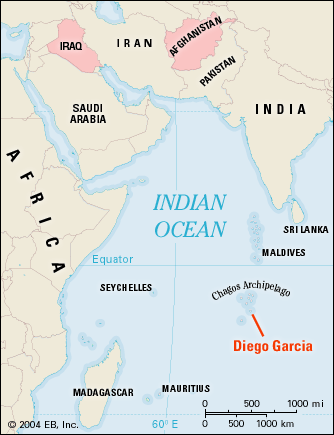
Mauritius Rails at U.N., Urges African Unity over Chagos Islands Sovereignty Issue.  The minister of foreign affairs for the tiny Indian Ocean island nation of the Republic of Mauritius told the United Nations General Assembly on October 1st that the United Kingdom’s squatting on the Chagos Islands, which rightfully belong to Mauritius, are an example of a cause in which small nations must push for the decolonization of the last remaining corners of Africa.  The U.K. unilaterally separated the Chagos Islands off of the colonial Dominion of Mauritius shortly before independence in 1968, but Mauritius still claims it as part of its territory under its understanding of the negotiations for independence.  The U.K. leases out the largest Chagos island, Diego Garcia, to the United States for a military base used heavily in the “War on Terror” (it is conveniently close to the Middle East) and claims it will consider other arrangements when the base is no longer needed militarily.  (That’s reassuring.  Because I’m sure things are going to calm down in the Middle East any day now.)


EUROPE


European Commission’s No. 2 Says Independent Scotland, Catalonia Would Stay in E.U.  The Luxembourger vice-president of the European Commission, Viviane Reding, chimed in this week on what many legal scholars say is the open question of whether regions that secede from European Union (E.U.) member states automatically become member states themselves by saying that there is no legal reason why Catalonia should have to leave the E.U. if it succeeds in seceding from Spain.  This brought an immediate reaction from one Scottish National Party (S.N.P.) parliamentarian, Roderick Campbell, who said, “Scotland is part of the territory of the European Union and the people of Scotland are citizens of the E.U.; there is no procedure for either of these circumstances to change upon independence” from the United Kingdom.  Meanwhile, Alfons López Tena, head of Catalan Solidarity for Independence, told media that he predicted Catalonia would be independent within two years.


Unionist Catalan M.E.P. Says Madrid Should Send in Civil Guard to Prevent Secession.  A Catalan but pro-unionist member of (and vice-president in) the European Parliament, Alejo Vidal-Quadras Roca, raised the stakes in the heated discussions of Catalonia’s promised upcoming referendum on independence from the Kingdom of Spain by saying that if Catalonia persisted in planning a referendum in the face of Madrid’s insistence on its illegality, then the Civil Guard should be sent in.  Vidal-Quadras, who is a member of Spain’s ruling People’s Party (P.P.), told a Spanish television interviewer, “They should be briefing a general of the Civil Guard.  The government should think of intervening in the rebellious region if they persist.”  A fellow M.E.P., Martina Anderson, who represents Londonderry, Northern Ireland, for Sinn Féin, the Irish nationalist party, responded, saying, “The ghost of General [Francisco] Franco haunts the European Parliament in the form of Vice President Alejo Vidal-Quadras.”


Arturo Mas, president of Catalonia
French Mob Drives Gypsies out of Marseilles, Torches Camp.  A mob of vigilantes in Marseille, in southern France, forced 35 Roma (Gypsy) people out of their encampment on September 27th and then burned it down.  The attack was motivated by suspicions of Roma responsibility for a string of burglaries in the area.

Papua New Guinea Becomes 93rd Nation to Recognize Kosovo.  On October 3rd the Independent State of Papua New Guinea became the 93rd nation to extend diplomatic recognition to the Republic of Kosovo.  See this blog’s separate article on this development.


[For the latest news from the North Caucasus (including Dagestan, Chechnya, and Ingushetia), see this week’s Caucasus Update.]

BITS OF ASIA THAT LIKE TO PRETEND THEY’RE PART OF EUROPE


[For the latest news from the South Caucasus (Georgia, Armenia, Azerbaijan), see this week’s Caucasus Update.]

[For the latest news from Turkey and Turkish Kurdistan, see this week’s Kurdistan update.]

ASIA—MIDDLE EAST

[For the latest news from Syria, Iraq, and Kurdistan, see this week’s Kurdistan update.]


Former Yemen Vice-President, Now Separatist Leader, Boycotts Secession Conference.  A conference by Yemen’s secessionist Southern Movement began on September 30th in Aden, the former capital of South Yemen, but without a prominent separatist leader, Ali Salim al-Beidh, who was the first vice-president of the reunified Republic of Yemen in the early 1990s.  Beidh, who lives in Beirut, Lebanon, and plans (as reported recently in this blog) to return from exile, claims the conference was not well prepared.  The conference was hosted by Hassan Baoum, a leader who is less hard-line than Beidh and promotes a nonviolent struggle to secede.  During the conference, independence rallies were held in Aden, at one of which, on October 1st, five people were arrested.  A police station was also attacked with live fire and hand-tossed bombs in a drive-by incident.  At the conclusion of the conference, a joint announcement by the participant groups stated that the Southern Movement refused to take part in a planned summit on the separatist crisis proposed by the central government.

Yemeni President Accuses Iran of Backing Southern Separatists.  The president of the Republic of Yemen, Abd Rabbu Mansur Hadi, told media this week that the Islamic Republic of Iran was backing the Southern Movement, which aims to restore the separate South Yemen that was dissolved at reunification in 1990.  Hadi’s claim is more or less incoherent: although South Yemen, during the late Cold War period, was, like Iran, an enemy of the West, it is northern, not southern Yemen, that is predominantly Shiite, like Iran, and in fact it is the smaller Houthi autonomy movement in the north, with its militias, that has traditionally been backed by Iran.  It is Shiites of the Zaidi sect who broke free from the Ottoman Empire during the First World War’s Arab revolts and established the Mutawakelite Kingdom of Yemen, which became the Arab Republic of Yemen (i.e., North Yemen) in 1962.  Hadi himself is a former South Yemeni, from Abyan province.


2 Dead, 5 Injured in Clashes between Police and Separatists in Southern Yemen.  In Aden, the former capital of the formerly independent South Yemen, police fired tear gas and bullets on a separatist rally on September 28th, injuring at least three people.  Some of the injured were arrested and prevented from getting medical care.  About 300 people participated in the demonstration, which followed Friday prayers.  In 1990, the People’s Democratic Republic of Yemen (South Yemen) was absorbed into the Yemen Arab Republic (North Yemen), forming the Republic of Yemen.  Later in the week, on October 5th, a clash in Aden between police and separatists that attacked a checkpoint left two dead and two others injured, while another group of separatists attacked security officers with homemade bombs the same day, with no reported casualties. 

ASIA—SOUTH ASIA

Balochistan Rebels Take Credit for Assassinations of Politician, Paramilitary Leader.  Rebels fighting for an independent Balochistan in southwest Pakistan took credit for several attacks this week.  First, a district leader from a Pakistani opposition party was killed in a drive-by shooting in Hub, a town in Balochistan.  The victim, Qadir Zehri, belonged to P.M.L.–N, the faction of the Pakistan Muslim League, which forms Pakistan’s main opposition, headed by the former prime minister, Nawaz Sharif.  Two companions were killed in the incident and another was injured.  A spokesman of the Baloch Liberation Army (B.L.A.) accepted responsibility for the killing, citing Zehri’s close association with Shafeeq Mengal, head of the Musallah Deffa Tanzeem (“Armed Defense Organization”), an independent militia which targets Baloch political activists.  But the B.L.A. spokesman denied responsibility for another killing, the previous day, of a journalist in Khuzdar.  Later in the week, the Baloch Liberation Front (B.L.F.) said it was behind the killing of an official from Pakistan’s paramilitary Frontier Corps (F.C.) in Awaran and attacks on trucks carrying precious stones.  Also, the brother of the head of the Baloch Students Association (Pajjar) was gunned down and killed in Chamrok, in Balochistan.


Balochistan makes up 44% of Pakistan’s territory
Separatist Grenade Wounds 4 Indian Federal Police in Kashmir Hotel.  Four troopers from India’s federal Central Reserves Police Force (C.R.P.F.) were injured on October 4th in Sopore, in northern Jammu and Kashmir, when a grenade was thrown into a hotel.  Separatist guerillas are suspected.

President Zardari Invites Kashmiri Moderate Separatist to Visit Pakistan.  The president of Pakistan, Asif Ali Zardari, has invited a separatist leader from India’s main majority-Muslim state, Kashmir, to visit Pakistan.  The invitation was extended to Mirwaiz Umer Farooq, leader of moderates within the Kashmiri separatists’ umbrella group the Hurriyat Conference, while both were attending the United Nations General Assembly on September 28th. A Pakistani government spokesman said that in the brief meeting “Zardari reiterated his call to the international community to focus its attention toward the plight of the Kashmiri people who have been waging a legitimate struggle for their right to self-determination over six decades despite suffering huge losses and massive human-rights violations.”


In India, 2 Assamese Separatists Arrested, 1 Killed; 3 Karbi Rebels Also Nabbed.  In Guwahati, the largest city in India’s far-northeastern strife-torn tribal areas, security forces arrested five rebels on October 3rd, two from the United Liberation Front of Asom (ULFA)—which seeks independence for Assam state, where Guwahati is situated—and three from the Karbi People’s Liberation Tigers (K.P.L.T.).  The Karbi militants—who belong to an ethnic group from the hills of Assam—were intercepted by authorities when they were on their way to collect a ransom as part of an extortion plot.  The following day, security forces killed a member of ULFA’s hardline faction in a shootout in Assam’s Tinsukia district.

Retired Indian General, 78, Fights Off “Pro-Khalistan” Thugs in London Street.  A retired general in India’s military was attacked in the street in London on September 30th by four unknown assailants.  The victim, Lt.-Gen. Kuldeep Singh Brar, who is 78 years old, fought the attackers off but had his throat cut with a knife, requiring hospitalization.  Brar said later that it was an attempt on his life by “pro-Khalistan elements” because of his role in Operation Bluestar, the Indian Army’s brutal attack on the Golden Temple in Amritsar, Punjab, in 1984, as part of a crackdown on Sikh rebels who sought an independent state called Khalistan.  London police have arrested 15 suspects in the case but are unwilling to speculate on a motive.


Gen. K. S. Brar, after his attack
Indian Police Arrest 2 Sikh Terrorists, Including One Thought Killed in 1992.  A Sikh separatist militant in India who was once believed killed by police in 1992, was arrested last week in Rajasthan.  The militant, Sukhwinder Singh, aged 45, came to the notice of Delhi police during a drug-trade investigation.  Meanwhile, in Jalandhar, in Punjab state, the Sikh homeland, police arrested a suspected terrorist, Jaswant Singh Ajad, who has been linked to the Sikh separatist groups Babbar Khalsa International (B.K.I.), the Khalistan Zindabad Force (K.Z.F.), and the Khalistan Tiger Force (K.T.F.).

25 Police Hurt in Clash with Hyderabad Mob of 100,000 Demanding Telangana State.  In Hyderabad, India, police clashed with a mob of nearly 100,000 protesters on October 1st demanding a separate state for the Telugu-speaking Telangana region of Andhra Pradesh.  Demonstrators threw stones at police, and police responded with tear-gas and water-cannons.  At least 25 police were injured, and perhaps many more civilians, but apparently no casualties.  It should be clarified that these demonstrations, organized by the Telangana Joint Action Committee, are not demanding a separate nation but merely a separate state within India.


A proponent of a separate Telangana state in Andhra Pradesh this week
ASIA—EAST ASIA


Fighting Erupts Again between Burmese Troops and Kachin in Shan State.  There were reports on October 3rd of renewed combat between the Kachin Independence Army (K.I.A.) and the Burmese military in northern Burma’s Shan State.  The allied Taaung National Liberation Army also reported fighting in the area on October 1st.  No casualties were reported.

Wave of Muslim Attacks in Southern Thailand Kills 6, Injure 27.  Despite a recent high-profile cease-fire in the southern Thailand insurgency, six  people were killed and 27 injured in a series of attacks by ethnically-Malay Muslim separatists over the September 29-30 weekend.  In Pattani province, the dead included a Muslim police officer, a 74-year-old Buddhist, and a Muslim security volunteer.  A shooting in Yala province killed a Buddhist woman and injured her husband.  Another couple, on their way to a security-volunteer training session, were attacked in Narathiwat province, killing the wife and injuring her husband.  A grenade attack on a public market in Narathiwat injured 23 people.  On the morning of September 31st, a Muslim teenager was shot dead by unknown persons.


Taiwanese Separatist Presidential Aspirant Angers Party Members with Mainland Visit.  A former presidential candidate from the Republic of China (a.k.a. Taiwan), Frank Hsieh, who promotes formal independence from mainland China, arrived in the mainland this week for a five-day trip.  He will be meeting academicians but no government representatives during his trip.  Some Hsieh’s party, the Democratic Progressive Party (D.P.P.), on whose ticket he ran in the 2008 Taiwanese elections, have scorned the trip, which they see as an implicit sell-out to the People’s Republic of China (P.R.C.).  Both Taiwan and the P.R.C. claim the entirety of China.

Tibetan Writer Self-Immolates in Public Market near Lhasa.  Yet another Tibetan activist has died from self-immolation, this time a 43-year-old writer who set himself afire in a public market in Nagchu County, near Lhasa, capital of the People’s Republic of China’s misnamed Tibet Autonomous Region.  The writer, Driru Gudup, called out, as he died, “for the return of His Holiness the Dalai Lama to Tibet and freedom in Tibet and shouted that there was no freedom in Tibet,” according to an exiled Tibetan familiar with the events.  “Chinese authorities have not handed over his dead body to his family members.”


Driru Gudup
Hunger-Striking Tibetan Youth Congress Leader Hospitalized in India.  In Dharamsala, India, the seat of Tibet’s government-in-exile, the vice-president of the Tibetan Youth Congress (T.Y.C.), Dhundup Lhadar, was readmitted to a hospital because of complications from his ongoing hunger strike to protest the People’s Republic of China’s brutal occupation of Tibet.  He and two other activists, who are doing comparatively fine, have been fasting since early September.

OCEANIA

Rights Group Says 7 West Papuans Arrested for Bomb Plot Were Framed.  Police in Indonesia’s rebellious far-eastern province of West Papua arrested seven members of the West Papua National Committee (K.N.P.B.) on September 30th for a supposed bombing plot.  One of the arrested told police that he had been instructed to blow up a police station, a military station, a bridge, and other targets.  But the Institute for Human Rights Study and Advocacy (a.k.a. Elsham), an Indonesian rights-monitoring group, called the evidence and confessions fabricated.


Aboriginal Tent “Embassy” in Queensland Destroyed by Fire.  An Australian Aboriginal “embassy” tent encampment in Brisbane, Queensland, was found partially destroyed by fire on the morning of October 2nd.  Five tents were wiped out in the encampment in Musgrave Park, which has been the focus of lengthy demonstrations and stand-offs with police.  Police are treating the fire as “suspicious.”


Aboriginal Activist Asks U.N. to Bar Australia from Security Council.  An Aboriginal activist in Australia wrote to Ban Ki-Moon, secretary-general of the United Nations, on September 28th, urging him to reject, on human-rights grounds, Australia’s bid for a temporary seat on the U.N. Security Council, citing colonial policies toward the aboriginal population and treatment of refugees.  The gesture, by Michael Anderson, is merely symbolic, since brutal colonialism seems not to be a disqualifier for Security Council membership but seems at times even to be a prerequisite.  Permanent members of the council are the United States, the United Kingdom, the French Republic, the Russian Federation, and the People’s Republic of China.


NORTH AMERICA


Musqueam Hail Court Kibosh of Vancouver Condo Project on Burial Ground.  Members of the Musqueam First Nation in southwestern British Columbia, Canada, claimed victory this week after a court handed down two rulings on the Marpole Midden, a Musqueam burial site which was slated to be destroyed to make way for condominiums in the middle of downtown Vancouver—a cause which has been the focus of months of sit-ins, demonstrations, marches, and legal battles.  One of the new rulings finds that no further alterations to the site can occur; regarding another permit, more time is allowed to reinter remains that were recovered from the site during excavation.  The province has sided with the Musqueam in the case.  With a jaw-dropping lack of a sense of irony or history, a spokesman for the Century Group, the condominium developer involved, brayed that in effect the B.C. government “have expropriated the property without compensation and basically said you can’t do anything with that property and we are not doing anything to compensate you for that.”  Expropriation without compensation?!  I refuse to believe it!!  Who ever heard of stuff like that happening in North America?


Flag of the Musqueam nation
U.S. Judge Tosses Out Oglala Sioux Lawsuit against Liquor Stores.  A United States federal judge in Lincoln, Nebraska, threw out on October 1st a class-action lawsuit by the Oglala Sioux Tribe against four massive beer retail outlets in Whiteclay, Nebraska, on the edge of the Pine Ridge Indian Reservation, blaming them for alcoholism-related poverty and social problems on one of the poorest and most socially dysfunctional communities in North America.  The judge wrote, “There is, in fact, little question that alcohol sold in Whiteclay contributes significantly to tragic conditions on the reservations.  And it may well be that the defendants could, or should, do more to try to improve those conditions for members of the tribe.  But that is not the same as saying that a federal court has jurisdiction to order them to do so.”  But he dismissed the case without prejudice, rejecting its suitability for his court, not for its own merits, so the way is clear for further suits in different jurisdictions.


Sobering graffiti on the Pine Ridge reservation
“Nuwaupian Embassy” Spams Georgia Officials with Legal Notices.  County law-enforcers, court officers, and other public officials throughout central Georgia, in the United States, received more than two dozen certified letters October 1st from the so-called embassy of the “United Nuwaupian Nation,” but their full contents have not been disclosed.  All of the recipients were involved one way or another in the legal actions in the 2000s against the Nuwaubian (sic; the spelling with a p is new) Nation of Moors, a self-proclaimed African-American monarchy set up on a 500-acre compound called Tama Re in Putnam County, Georgia, in the 1990s.  Eventually, their leader, Dwight Malachi York (a.k.a. Dr. Malachi Z. York, a.k.a. Amar Utu, a.k.a. Rabboni Y’shua Bar El Haady, a.k.a. Bawaba Bassa Afriqa, a.k.a. Melki Sedec, a.k.a. Issa al-Haadi al-Mahdi, a.k.a. the Angel Michael, a.k.a. Paa Munzul Nazdur Amun Nub Reakh Ptah Shil Paa Hanutu (personally, I think he should have stuck with the last one—much more pithy)), was convicted, in 2004, to a 135-year sentence for child molestation and racketeering and in 2005 Tama Re was demolished.  One recipient, Georgia Smith, who had been a vocal opponent of the Nuwaubians during their struggle with authorities over land-use rules and other issues, said that the letters were titled “Citizen’s Notice of Violation of the Law and Intent to Act,” on Nuwaupian letterhead, and in content are, according to Putnam County’s sheriff, Howard Sills, “nonsensical.”  The Nation—classified as a racist hate-group by the Southern Poverty Law Center (S.P.L.C.)—has shifted its identity over time, at various times resembling a Black Muslim movement, once calling itself the Yamassee Native American Moors of the Creek Nation, and also espousing beliefs in extraterrestrials.  We will be keeping you posted of further developments and are happy to see the Nuwaubians back in the news.


The Nuwaubian (now, apparently Nuwaupian) Nation’s Dwight Malachi York
“President” of Parallel U.S. Appears in Alabama Court for Detention Hearing. The man who calls himself the “president” of the “Republic for the united States of America” (R.u.S.A.) (sic, including the lower-case u), James Timothy “Tim” Turner, appeared in a United States federal court in Montgomery, Alabama, October 1st for a detention hearing as part of multiple indictments against him for tax fraud (as reported earlier in this blog).  Turner, who was arrested September 18th, is the 56-year-old self-styled leader of the R.u.S.A., a “sovereign citizens” movement (see an earlier article from this blog on events in Iowa connected to the group) which borrows ideas from the pro-slavery, anti-women’s-suffrage “organic Constitutionalist” school of thought and is on the Southern Poverty Law Center’s hate-groups watch list.  The R.u.S.A. released a statement about the case, stating, “The unchartered Municipal Corporation (UNITED STATES) has taken a desperate action through their corporate policies which are clearly outside constitutional governance.  This dishonorable act will reveal to Americans that the United States must return to the Constitution and the rule of law.”


Aryan Nations Returns to Idaho with Recruitment Drive, Plans for Headquarters.  The white-supremacist group Aryan Nations has returned to Idaho, the heartland of militant white-supremacism in the United States, with plans to establish a world headquarters.  Aryan Nations and other racist hate groups declined in popularity, becoming mostly a prison-gang phenomenon, after a federal crackdown in the 1980s but have had a boom in recruitment, as they point out, after the election of Barack Obama to the presidency in 2008.  The new effort is headed by Jerald O’Brien, who has a swastika tattooed on his forehead and calls Obama “the greatest recruiting tool ever.”  The group started by distributing fliers to residents in Coeur d’Alene, ground zero of Idahoan white-supremacism, showing a girl asking her father, “Why did those dark men take mommy away?”

SPORT

Spain Fumes, Kosovo Bitter as Gibraltar Clears Hurdle for Entry to Football League.  The Union of European Football Associations (UEFA), in a meeting in St. Petersburg, Russia, on October 1st, has referred the Gibraltar Football Association’s application for the inhabited peninsular rock to become the football (soccer) governing body’s 54th competing member state to a final committee decision in London in May.  Reactions to the decision were varied and widespread, given the obscurity and minusculity of the territory.  (If admitted, Gibraltar, an overseas territory of the United Kingdom, will be the smallest UEFA member-state, overtaking the current smallest, the Most Serene Republic of San Marino.)  The Kingdom of Spain, which still occasionally presses spurious territorial claims on Gibraltar, told the media that it would fight Gibraltar’s admission to UEFA “with all legal means possible.”  The Bailiwick of Jersey, on the other hand, in the English Channel, was the site of raised hopes.  Jersey’s football association has been angling for full UEFA membership for years, and Gibraltar’s accession would make it harder to keep out.  Jersey, a Crown dependency of the U.K. rather than an overseas territory like Gibraltar, is in many ways more independent: for example, unlike Gibraltar, Jersey (along with Guernsey and the Isle of Man) is not in the European Union (E.U.).  The Faroe Islands, a self-governing overseas territory of the Kingdom of Denmark, is also a full UEFA member; Gibraltar’s success this week merely augments the precedent.  The head of the Football Federation of Kosovo (F.F.K.), however, said that, since it still awaited a promised decision on Kosovo’s eligibility, the UEFA is exhibiting a double standard, pointing out that Gibraltar doesn’t even pretend to be independent and that its football tradition is “embryonic.”  Later, the F.F.K. head, Fadil Vokrri, retracted some of his comments, clarifying, “UEFA has not broken its statutes to make Gibraltar a provisional member.  When this state made the request to join UEFA, its statues were different.  The statutes to not admit countries that are not members of the United Nations did not apply at that time.”


Gibraltar
[You can read more about Venice, Kosovo, and many other separatist and new-nation movements, both famous and obscure, in my new book, a sort of encyclopedic atlas just published by Litwin Books under the title Let’s Split! A Complete Guide to Separatist Movements and Aspirant Nations, from Abkhazia to Zanzibar.  The book, which contains 46 maps and 554 flags (or, more accurately, 554 flag images), is available for order now on Amazon.  Meanwhile, please “like” the book (even if you haven’t read it yet) on Facebook and see this interview for more information on the book.]


Subscribe Now: Feed Icon