Showing posts with label Latvia. Show all posts

Sunday, September 15, 2013

Catalans Link Arms for Independence While Their President Pulls Back from Separatist Precipice


Hundreds of thousands of Catalans, perhaps more than a million according to some accounts, linked arms in a dramatic human chain across their small nation on September 11th to notify the world that they crave independence from the Kingdom of Spain.  But the stunt proved to be less of a momentum-building event to carry the message through to a referendum next year on secession and more of an awkward backdrop to the newest statement by Catalonia’s president and the ruling separatist party’s leader, Artur Mas i Govarró, who seems suddenly to be climbing down from his previous confrontational stance toward Madrid.

Artur Mas, greeting a separatist rally last year.  He might not get such a warm reception today.
Initially, Mas’s Democratic Convergence of Catalonia party (Convergència Democràtica de Catalunya, or C.D.C.) had defiantly said it would hold a referendum on independence whether the Spanish government approved or not, and it would be binding.  But Madrid made it perfectly clear that any such referendum would be constitutionally impermissible.  Now, on September 14th, Mas came right out and said that no referendum would be held against the wishes of the central government.  Since the central government’s implacable position is well known, this is tantamount to Mas canceling the referendum.  He said that instead the 2016 elections would be interpreted as a symbolic plebiscite on the future direction of Catalonia’s status—a rather weak substitute indeed.


The human chain stretched over 400 kilometers, from the French border in the north to the internal border with Spain’s autonomous Valencia region to the south.  It ran mostly along the coast, including some of Catalonia’s nude beaches (see photo above).  It took place on la Diada, Catalonia’s national holiday, which commemorates this year the 299th anniversary of the reabsorption of Catalonia into Spain after Spain’s defeat by the United Kingdom (whom the Catalans backed) in the Wars of Spanish Succession.

The route of last week’s human chain
The stunt was directly modeled on the Baltic Way, a similar human chain in 1989 which snaked through Estonia, Latvia, and Lithuania in a mass demand for independence from the Soviet Union.  (Recognizing this, a Catalan reporter asked Latvia’s prime minister, Valdis Dombrovskis, whether he would recognize an independent Catalonia.  “Provided there is legitimacy of the process, I would say, theoretically, why not?” he replied, leading to a formal protest from Madrid and the recalling of Spain’s ambassador in Riga.)

Only a little over half of all Catalans support independence, actually, but more than 80% tell pollsters they want a referendum.  This, one would think, is enough of a mandate for Mas to take a less conciliatory tone.  But Mas’s climbdown is a political gamble in more immediate ways.  The coalition that C.D.C. dominates, Convergence and Union (Convergència i Unió, or CiU) coalition, does not have enough seats to rule on its own and relies on the support of the Democratic Left of Catalonia (Esquerra Republicana de Catalunya, or E.R.C.), which typically takes more controversial hard-line stands, such as recognizing the legitimacy of British rule in the disputed colony of Gibraltar (as reported recently in this blog) and calling for unification with the much smaller Catalan region just over the border in southeastern France.  The E.R.C. has always been more committed to a referendum than C.D.C., so now the ruling coalition may collapse.  That would put secession even farther out of reach.


The human chain across Catalonia might simply mark the end of the line for the small nation’s dream of independence.

[Also, for those who are wondering, yes, this blog is tied in with a forthcoming book, a sort of encyclopedic atlas to be published by Auslander and Fox under the title Let’s Split! A Complete Guide to Separatist Movements, Independence Struggles, Breakaway Republics, Rebel Provinces, Pseudostates, Puppet States, Tribal Fiefdoms, Micronations, and Do-It-Yourself Countries, from Chiapas to Chechnya and Tibet to Texas.  Look for it some time in 2013.  I will be keeping readers posted of further publication news.]

Saturday, February 25, 2012

Caucasus Presidents Attacked, Darfur Erupts, Trailer Park Mata Hari, Newt on the Moon: The Week in Separatist News, Feb. 19-25, 2012

AFRICA


Somaliland Brings Independence Message to London Conference.  The president of the Republic of SomalilandH. E. Ahmed Mahmoud Silanyomade his case in the United Kingdom on Feb. 23rd for international recognition of his country’s independence from the Republic of Somalia.  His attendance at the 23rd international conference on Somalia at Lancaster House near Buckingham Palace in London marks the first time delegates from Somaliland and the Horn of Africa’s other de facto independent unrecognized state, Puntland (which, unlike Somaliland, does not seek outright independence), have attended the annual conference, which tends to focus on how to bolster the failed transitional government in Mogadishu.  The U.K.’s prime minister, David Cameron, said at the opening of the talks that the focus would be strengthening the barely-functioning Transitional Federal Government in Mogadishu and in combatting piracy and terrorism, but he declined an opportunity to speak against Somaliland’s sovereignty.  Meanwhile, Godfrey Bloom, a Member of European Parliament for Yorkshire on the anti-Brussels, right-wing U.K. Independence Party ticket, called on Cameron to recognize Somaliland.  No United Nations member states formally recognize Somaliland or Puntland.  (See a spot-on New York Times opinion piece on the subject by Alex de Waal of the World Peace Foundation.)

David Cameron at the Somalia conference in London

Mali Elections a Go Despite Uprising.  The president of Mali, Amadou Toumani Toure, has said that the national elections planned for April 29th will go ahead, despite the Tuareg separatist uprising in the country’s northern Azawad region.  “We are already used to holding elections during war,” he said.  The United Nations says at least 60,000 people have been displaced in the recent fighting.  (See my recent blog post on the new Malian civil war.)

South Sudan Asks Kenya to Mediate Border Dispute.  The government of the seven-month old Republic of South Sudan has asked the leadership of Kenya to mediate a dispute with the Republic of Sudan—from which South Sudan seceded in July 2011—over the disputed district of Abyei and provinces of Blue Nile and South Kordofan, which together stretch out along more than half of their shared border.  When South Sudan voted to secede in early 2011, separate referenda were to be held later in the disputed areas, but fighting there between forces loyal to the two governments has made that impossible.  Many fear the Sudans are on the brink of all-out war.  (Read here and here recent reports by the New York Times columnist Nicholas Kristof from the Nuba Mountains in South Kordofan.)

Rebels Attack in Darfur.  In the Darfur region in the western part of (north) Sudan, both rebels and the government are reporting on a new clash, where as many as twelve soldiers were killed and government heavy weapons were captured.  The attack, on the town of Alawni, was claimed by the Darfur-based Sudan Liberation Army.  In 2003-04, a Darfur uprising was brutally put down by the Sudanese government, killing as many as 300,000, resulting in the convicion of the Sudanese president, Omar al-Bashir, for crimes against humanity.


Trial of Caprivi Strip Separatists in Namibia Nears End.  In Grootfontein, Namibia, the prosecution rested today in a trial of 112 separatists that has been going on since 2003.  The accusations include 275 charges of murder, sedition, and treason.  In 1999, members of the Caprivi Liberation Army attacked civilian targets in Katima Mulilo, in the Caprivi Strip, killing eleven.  Their ringleader, Mishake Muyongo, is in exile in Denmark.  The Caprivi Strip, also called Itenge, is a shard of the Republic of Namibia which juts east between Botswana and Zambia and is home to the Lozi ethnic group that also inhabits the neighboring Zambian secessionist region of Barotseland. Germany bought the land from the United Kingdom in 1890 to form a supply route between the German colonies of Südwest-Afrika (now Namibia) and Tanganyika (now part of Tanzania).  South Africa assumed control of the strip after Germany’s defeat in the First World War and used it to run guns to white Rhodesian militants resisting Zimbabwe’s independence in the 1970s.  As a reward, South Africa, which administered Namibia, made it a Lozi “homeland” (autonomous tribal reservation), but when Namibia became independent in 1990, they revoked the autonomous status of the “traitor” region.  Meanwhile, four ethnic groups in Namibia—the Ovahimba, Ovatwa, Ovatjimba, and Ovazemba—have banded together to protest the building of a dam in the Kunene region.

The Caprivi Strip

EUROPE


Latvian Voters Reject Russian Language.  Latvians—and minority citizens in Latviavoted in a national referendum Feb. 18th to reject the idea of making Russian a second official language alongside Latvian.  The votes were approximately 75% against the proposal and 25% for it.  Latvia has just over 2 million people, and a third of them—about 600,000—is ethnically Russian.  This makes Russians in Latvia one of the largest linguistic minorities in the world, proportionally speaking, and the highest percentage of Russians in any Soviet successor state outside the Russian Federation itself.  Still, 750,000 votes were needed to pass the proposal, so no one expected anything other than a resounding “no” at the polls.  A spokesman for the Russian foreign ministry in Moscow said that the results showed that a quarter of Latvia’s population “do not agree with the course of building a mono-ethnic society.”   (I discussed the referendum in detail in a blog article last week.)

A defaced sign in Latvia

Serbs in Prague March against Kosovo.  In Prague, capital of the Czech Republic, the organization Friends of Serbs in Kosovo rallied and marched to protest the 1999 secession, under United States and North Atlantic Treaty Organization protection, of Kosovo from what is now the Republic of Serbia.  A Feb. 14-15 referendum in which Serbs in Kosovo’s border area rejected Kosovar authority over them (discussed by me in a recent blog post) revived the divisive issue in Serbian communities.  Jaroslav Foldyna, a Social Democratic Czech politician of Serbian descent, likened Kosovo’s secession to Nazi Germany’s annexation of Czechoslovakia’s Sudetenland in 1938.  Both leading candidates to become the next Czech prime minister support Kosovo’s independence, but it is opposed by both Social Democrats and the current president, Václav Klaus.  Eighty-eight nations recognize Kosovo, but China and Russia stand in the way of its admission to the United Nations.  Meanwhile, Serbian and Kosovar representatives began meeting on Feb. 21st under European Union auspices to try to settle differences—a precondition for Serbia’s application for E.U. membership.  So far they have agreed only on how to refer to Kosovo on nameplates placed before delegates at such meetings, which is being hailed as a great leap forward in reconciliation.

Spain Arrests Two Basques.  Spanish authorities on Feb. 21st arrested two militants from the banned Basque separatist organization E.T.A., using information passed along by judicial authorities in France.  E.T.A. laid down its arms in October 2011 after a decades-long struggle to establish an independent homeland in the Basque Country of northern Spain and southeastern France.

The flag of the Basque Country

Murdoch Backs Independent Scotland.  The corrupt and embattled media tycoon Rupert Murdoch announced on Twitter on Feb. 21st that he supports Scottish Independence. “Let Scotland go and compete. Everyone would win,” he tweeted, while in London to promote the launch of his tabloid Sun on Sunday. He had earlier called Scotland’s separatist First Minister, Alex Salmond, the most brilliant politician in the United Kingdom.  (See my recent blog article on Scottish independence.)

More Dead in North Caucasus Militia Battles.  Russian forces trying to wipe out militant gangs in a days-long quasi-military operation in the separatist, predominantly-Muslim northern Caucasus mountains are reporting more deaths, including those of seventeen policemen.  The skirmishes are occurring along the mountainous border dividing the Republic of Chechnya—the formerly autonomous region now being ruled directly from Moscow after brutal suppression of an independence movement—from the Republic of Dagestan, a multi-ethnic, warlord-ruled no-man’s-land where the government of the Russian Federation is barely able to operate.


BITS OF ASIA WHICH LIKE TO PRETEND THEY’RE PART OF EUROPE


Abkhaz President Escapes Assassination Attempt.  The president of Abkhazia, Alexandr Ankvab, survived a sixth assassination attempt on Feb. 22nd when his motorcade hit a land mine and then was attacked with a grenade-launcher and a machine gun.  One or two of his bodyguards were killed (reports differ) and another injured in the ambush, in the town of Gudauta, on the Black Sea.  Ankvab’s spokesman said that police were still searching for the assassins—the republic has been sealed off—but rejected the idea that the Republic of Georgia, which claims the de facto independent republic as part of its territory, was responsible.  Meanwhile, Nugzar Tsiklauri, a legislator for Georgia’s ruling party, suspects Russia of being behind the attacks, pointing out that Ankvab bristles at Russia’s implicit policy of eventually absorbing Abkhazia into the Russian Federation.  Ankvab himself the next day blamed “mafia, criminal groups” and “political circles close” to these groups, adding, “There are forces, which want Abkhazia to have controllable President and weak-willed, dependent supreme leadership.”

Pres. Alexandr Ankvab, in front of his nation’s flag

South Ossetia Sealed Off; Hospitalized President Boycotting Election.  The Internet has been extinguished throughout South Ossetia as public anger crests over the police beating earlier this month of the pseudo-state’s de facto but disputed president, Alla Dzhioyeva.  Soldiers with AK-47s are turning away anyone other than family trying to visit the 62-year-old Dzhioyeva’s intensive-care hospital room in the capital, Tskhinvali, and relatives are guarding her hospital bed in shifts, fearing an abduction.  Dzhioyeva also says she is boycotting next month’s presidential elections as a sham.  Meanwhile, mysterious elements to the Dzhioyeva story are confounding observers: journalists began being turned away from the border before the alleged beating, and on the day of the incident Russia’s Ministry for Emergency Situations announced that snowslides had forced the closure of the tunnel that is the one link between South Ossetia and the outside world.  Late last year, Dzhioyeva won a presidential election (see my blog article on those elections), but the results were annulled by a judge.  However, she continued to serve in her post until the beating.  Forces loyal to Russia, or the military of Russia itself, are obvious suspects in all this intrigue; Dzhioyeva is not pro-Moscow and was never expected to win.  The official line from Moscow is that she was hospitalized for hypertension, but she has reiterated her version of events to several journalists over the phone.  As she described it recently, “The militants tore my body apart, threw me on the floor.  I felt their guns sticking into my body the moment before I lost consciousness.  They acted as if they were my [executioners].”  The Daily Beast, in a report on the situation, quotes an historian, Fatima Margiyeva, as saying, “By stealing the very last right our people had, the right to vote, by isolating us here like cucumbers in a bottle, Moscow is pushing South Ossetia to the verge of a civil war.”


Caucasus Diplomat Accuses West of “Blackmail” over Recognition.  A member of Abkhazia’s diplomatic corps has told the media that “the West” routinely puts pressure on countries to discourage them from granting diplomatic recognition of Abkhazia and South Ossetia.  In particular, the ambassador, Juris Gulbis, said that countries like NauruTuvalu, and Vanuatu pay a price in economic sanctions and denial of development projects for being among the few nations recognizing the two South Caucasus republics, which were fully separated from the Republic of Georgia by Russia’s military in a brief 2008 war.  Gulbis called this Western tactic “blackmail.”  Pravda, also is reporting on the financial payoffs from Moscow that prompted the Republic of Kiribati to recognize Abkhazia.  Kiribati is a mini-state composed of 32 tiny atolls spread out over more than a million square miles of the Pacific in Micronesia.

Abkhazia Home to Record-Breaking Cave Insect.  Also in Abkhazia, Russian scientists are reporting their discovery, in a cave considered the world’s deepest (more than 7,000 feet / 2,000 meters deep), a species of eyeless springtail insect which is believed to be the deepest-dwelling land animal known to science.  The creature, Plutomurus ortobalaganensis, found in the Krubera–Voronja Cave, feeds on decomposing organic matter.  The tiny mountain republic also holds putative world records for human longevity.

Abkhazia’s newest celebrity, Plutomurus ortobalaganensis

English M.E.P. Fumes over Northern Cyprus’s Anti-Gay Laws.  A Member of European Parliament for the United Kingdom has pressed the Turkish Republic of Northern Cyprus to repeal its laws against homosexual acts.  The M.E.P., Marina Yannakoudakis, cited a recent case of two men, one a citizen of Nigeria, arrested in the Turkish-ruled half of Cyprus’s divided capital city, Nicosia, for sexual acts “against the order of nature.”  Yannakoudakis, an Englishwoman married to a Greek-born U.K. citizen, is a member of the European Union legislature’s diplomatic “contact group” with Northern Cyprus.  She has received personal assurances from the Northern Cypriot president, Derviş Eroğlu, that the ban would be repealed, but it has not yet happened.  The Republic of Cyprus was admitted to the E.U. in 2004, but the northern third-or-so of the island has been administered since a 1974 war by the de facto independent Turkish Republic of Northern Cyprus, a client state of the Republic of Turkey.  Yannakoudakis has referred to Northern Cyprus as the last place in Europe where it is illegal to be gay—though of course the island is geographically part of Asia, being just offshore of Turkey, the land-mass for which the name Asia was in fact first used (but don’t get me started on that).

Hearings Open in North Cypriot Soldier’s Torture Death.  On Feb. 17th a military court in the unrecognized Turkish Republic of Northern Cyprus convened a third inquiry into the death of a soldier, Uğur Kantar, who was apparently tortured to death amidst disciplinary action taken by the military.  The judge turned down a request from the Kantar family’s lawyer to shift the hearings to a civilian court.  The only officer among the defendants, Sgt. Ayhan Şentürk, was never arrested but appeared in court on opening day.


15,000 Kurds March in Strasbourg for Öcalan’s Rights.   A crowd of Kurds and their supporters estimated at 15,000 demonstrated in Strasbourg, France, home to the European Parliament, to protest the ongoing imprisonment in Turkey of the Kurdish leader Abdullah Öcalan, founder of the militant separatist Kurdistan Workers’ Party (PKK).  Fearing that Öcalan was being poisoned, the demonstrators demanded that Öcalan be given a medical examination, in conformity with international norms.  Eighteen Kurds have been on hunger strike for 32 days in Strasbourg in support of the cause.  Öcalan founded the PKK, which in 1984 launched a war to establish an independent Kurdistan in what is now southeastern Turkey.  In 1999 he was captured in Kenya, where he was being harbored by the Greek consul.  He was initially sentenced to death, but in 2002 Turkey abolished the death penalty as part of its bid to reform their abysmal third-world-calibre justice system and become a candidate for membership in the European Union.  In 2005, the European Court of Justice found that the defendant’s rights had not been observed and urged that Öcalan be retried—an idea Turkey rejects.  Öcalan now resides in the notorious prison on the island of İmralı in the Sea of Marmara, the gulf that separates the European from the Asian part of Turkey. (The prison was once home to the American writer Billy Hayes, whose brutal treatment in Turkey’s prison system was described in his book—later a film—Midnight Express.)  (I listed Kurdistan in a recent blog post as one of “Ten Separatist Movements to Watch in 2012.”)

Zhirinovsky Sees Looming World War Focused on Caucasus.  The neo-fascist hypernationalist firebrand and head of Russia’s misnamed Liberal Democratic Party, Vladimir Zhirinovsky, predicts that the escalating Western rhetoric against Iran over its nuclear program presages a coming world war, one in which the micro-geopolitics of the southern Caucasus will figure.  “The third world war over Iran may start this summer,” Zhirinovsky said.  “After Syria is rolled over, Iran will be attacked.  Azerbaijan will use [the opportunity] to seize Nagorno–Karabakh.  Armenia will oppose, Turkey will support Azerbaijan.  It is how Russia may be involved in war this summer.”  Russia has tended to side with Armenia, Syria, and Iran in the post-Communist period.

Vladimir Zhirinovsky

Shots Fired across Nagorno-Karabakh Border.  Media in Armenia are reporting that during the week of Feb. 12th to 18th, Azerbaijan’s military violated a cease-fire 250 times by firing rounds across its border with the de facto independent ethnic-Armenian enclave of the Nagorno-Karabakh Republic.  The Armenian report adds, “NKR forces refrained from retaliatory measures.”  Meanwhile, the United States secretary of state, Hillary Rodham Clinton, reiterated her support for resolving the Nagorno-Karabakh conflict through the Organization for Security and Co-operation in Europe (even though the conflict is taking place just over the Caucasus ridge in Asia—but don’t get me started).

ASIA

English Baroness Escapes Separatist Attack in Yemen “Election” Violence.  An alliance of clans and militias pressing for the reestablishment of a separate state in southern Yemen called for its followers to disrupt this week’s sham presidential “elections,” in which only one candidate was on offer.  The Higher Council of the Peaceful Movement for the Liberation of the South, as it is known, asked for “civil disobedience” to prevent “voters” from casting “ballots.”  But not all separatists kept it civil.  On Feb. 18th, secessionist gunmen injured two policemen during an attack on a “polling station” in Aden, the former South Yemeni capital.  And on “election” day, Feb. 21st, similar attacks in the south killed four and injured nineteen.  One of the Aden attacks narrowly avoided killing a British life peeress and former Member of European Parliament visiting to observe the “elections”—the Baroness Nicholson of Winterbourne, a gin-distillery heiress and Liberal Democrat (who had also, ironically, survived an Irish Republican Army bombing attempt on Margaret Thatcher’s life in Brighton, England, in 1984—back when Lady Nicholson was a Conservative).  Yemen’s Higher Council opposed the Feb. 21st “vote” because it did not provide an opportunity for southerners to decide whether to stay in Yemen.  In fact, it did not allow “voters” to choose anything: there was only one presidential candidate on the “ballot” (hence all the scare quotes): Abdu Rabu Mansour Hadi, vice-president to the outgoing authoritarian leader, Ali Abdullah Saleh, who eventually relented to a months-long Arab Spring street movement to unseat him.  To no one’s surprise, Hadi received 99.8% of votes cast.  The entire transfer of power was orchestrated in a United States–backed agreement to end the country’s civil war, which it probably still will not do.  The elections were also being boycotted by Shabab al-Mu’mineen, a militant group representing Yemen’s minority Zaidiyyah Shiites, who would like to impose Islamic law in the country.  (I listed South Yemen in a recent blog post as one of “Ten Separatist Movements to Watch in 2012.”)

Baroness Nicholson of Winterbourne, survivor of two ethnonationalist bombings

Pakistan Accuses U.S. of Stoking Baloch Rebellion.  The prime minister of PakistanYusuf Raza Gilanihas condemned a recent resolution in the United States House of Representatives in support of Baloch self-determination as an attack on Pakistan’s sovereignty.  It comes after a year of lethal U.S. drone attacks and a unilateral U.S. raid last year to kill Osama bin Laden in Pakistani territory.  The U.S. has traditionally supported any government in power in Pakistan, for reasons of stability and nuclear security, but after ongoing revelations of the role of Pakistan’s secret police in supporting terrorism, as well as other divisive issues, U.S. foreign policy is turning away from Pakistan.  Separatists in the southwestern Pakistani province of Balochistan have stepped up activities in recent months, and the Pakistani government has cracked down brutally, with hundreds of activists “disappeared.”  Some U.S. policymakers’ shifts may be related to another Baloch insurgency just over the border in Iran.  Many observers predict a coming war by the U.S. and Israel against Iran, and there has already been documented C.I.A. and Mossad support for separatists in southwestern Iran’s Arab Sunni Khuzestan region, bordering Iraq.  (I listed Balochistan in a recent blog post as one of “Ten Separatist Movements to Watch in 2012.”)

Malaysia Backs Thailand against Rebels; 4 Killed.  The prime minister of Malaysia, Datuk Seri Najib Razak, pledged to the visiting Thai prime minister, Yingluck Shinawatra, her cooperation with Thai effort to suppress separatism in southern Thailand, by the Malaysian border.  But on Feb. 21st, Thai forces killed three insurgents from the Runda Kumpulan Kecil (R.K.K.) militia in the separatist Pattani region, and a fourth, a member of the dormant Pattani United Liberation Organisation (PULO), was found murdered, probably killed by R.K.K. forces. The Pattani region in southern Thailand is predominantly Muslim and ethnically Malay in a mostly Buddhist nation.  Yingluck’s older brother, the former prime minister, Thaksin Shinawatra, tried in 2005 to put down a rebellion there by imposing emergency powers on the country, a decision which eventually led to his downfall.  In the wake also of a foiled Iranian assassination plot against Israeli diplomats in Bangkok, both Thailand and Malaysia now preach “moderation” instead of “extremism,” embodied in Najib’s new Global Movement of Moderates initiative.

U.S. Backs Accountability for Sri Lankan War.  Human-rights groups welcomed the United States government’s support for a coming resolution in the United Nations Human Rights Council that will push both the government of Sri Lanka and Tamil separatists to come to a final settlement, including agreeing on how war crimes on both sides will be accounted for.  A U.S. Under-Secretary of State, Maria Otero, stated the U.S. position in a press conference in Colombo, Sri Lanka, at the end of a three-day visit to the Buddhist-majority island nation, where the government succeeded in 2009 in putting down a separatist rebellion by nationalist Tamils after a bloody fifteen-year-long civil war.  Tamils, who are mostly Hindu, hoped to establish a separate state in the north of the island, to be called Tamil Eelam.


Filipino Muslim Separatists Deny Role in Prison Break.  A representative of the Moro Islamic Liberation Front, a group fighting for a separate Muslim state in the southern Philippines, has denied involvement in a recent failed prison break attempt.  The prison, in Kidapawan in Cotabato province on the island of Mindanao, was attacked by fifty militants on Feb. 19th.  Prison guards repelled the attack, but not before the militants, armed with rocket-propelled grenades, killed two civilians in a karaoke bar and a third, a Red Cross driver, in the mêlée.

India Orders Crackdown on Bodoland Rebels, Claims International Maoist Conspiracy.  The Republic of India’s Minister for Home Affairs, P. Chindabaram, has directed the state government of Assam, in the country’s tribal-dominated far east, to intensify its operations against rebel factions that are still refusing to hold talks after the general cease-fire agreed to last year by separatist militias.  In particular, New Delhi is concerned about the National Democratic Front of Bodoland, a group representing the separatist faction of an ethnic group making up about 5% of Assam’s population.  In October 2011, the Indian government signed a treaty with the United Liberation Front of Asom, an umbrella group seeking independence for the state, agreeing to an end to hostility.  But not all separatist groups support the document.  Now Chindabaram’s ministry claims to have evidence of a vast conspiracy to set up a Maoist confederation of tribal peoples taking in separatist movements in India, Burma, and Bangladesh.  Meanwhile, in New Delhi, four members of the banned and mostly dormant Sikh separatist group Babbar Khalsa International were sentenced to time served on Feb. 22nd after pleading guilty to a 2008 plot to attack religious figures in Punjab.

The flag of Bodoland

Xi Seeks Turkey’s Reassurance on Uighurs.  On a state visit to Istanbul on Feb. 21st, the Chinese government’s rising star, Vice-President Xi Jinping, pleaded with the government of Turkey to refrain from supporting separatists in western China seeking to establish an independent East Turkestan.  The Turkish prime minister, Recep Tayyip Erdogan, reiterated his country’s commitment to China’s integrity and recognition of the People’s Republic of China as the sole legitimate Chinese government.  In the past decade, there has been increasing violence in China’s far west as members of the predominantly-Muslim Uighur minority seek more autonomy and, even, independence.  Although Uighurs, like other Central Asian nationalities (Azeris, Uzbeks, Kazakhs, etc.), speak a Turkic language related to Turkish, the Turkish government has never supported pan-Turkic irredentism or Uighur separatism.

Burmese Refugee Camp in Thailand Burns.  Initial reports describe a fire sweeping through a refugee camp in Thailand near the border with Burma (Myanmar) on Feb. 23rd.  The Umpiem Mai refugee camp is home to about 17,000 members of the Karen ethnic minority seeking refuge from fighting between Myanmar’s junta and Karen rebels seeking an independent homeland to be called Kawthoolei.  Arson is not suspected.  (See my recent blog article on ethnic separatism in Burma.)

NORTH AMERICA

Ex-Stripper “Trailer Park Mata Hari” Shook Booty to Snare White-Power Bombers.  Just before the federal terrorism trial of Dennis and Daniel Mahon, two 61-year-old White-supremacist identical twins, was handed to the jury for a verdict, their lawyers were decrying as entrapment the methods of the federal informant who snared them.  Dubbed by the media the “Trailer Park Mata Hari,” Rebecca “Becca” Williams is an ex-stripper who worked for the Bureau of Alcohol, Tobacco, and Firearms for five years (for $45,000 per year, plus promise of a $100,000 conviction bonus) by moving into the Mahons’ Catossa, Oklahoma, campground, bonding with them by using racial slurs and White-separatist rhetoric, and flirting with them by, for example, sending them photos of herself from behind in a bikini bottom with a Confederate-flag design, as well as other photos showing her posing with pick-up trucks and swastikas.  The Mahons, members of the White Aryan Resistance, were tried for sending a near-fatal package bomb to the African-American diversity director for the city of Scottsdale, Arizona, in 2004.  The federal prosecutor in the case points out that Williams never actually resorted to sexual acts to extract information.  In the verdict Feb. 25th, Dennis Mahon was found guilty and Daniel not guilty.  Dennis has yet to be sentenced.

Your tax dollars at work

Parti Québécois Surges as Election Looms.  In Quebec, the separatist Parti Québécois has gained nine percentage points in popularity since last month, according to a new poll, and is now more popular than the province’s ruling Liberal Party, which polls only 29% to the P.Q.’s 30%.  Quebec’s Liberal premier, Jean Charest, is allowed another year before calling an election, but he may choose an earlier date to avoid an ongoing corruption investigation into his awarding of defense contracts.  In 1995, the P.Q. held a referendum on independence from Canada, which lost by a narrow margin.

New York’s Iroquois Tribes Profit from Tobacco Loophole.  The New York Times is reporting that the Oneida Indian Nation, along with others of the eight federally recognized American Indian tribes in upper New York State, has increased its investment in the tobacco trade, despite controversy, including manufacturing its own cigarettes using tobacco shipped from the Carolinas.  This exploits a loophole in a law, only inadequatelly enforced, which prevents tribes from selling name-brand cigarettes to non-Indians on reservation land without charging New York’s exorbitant $4.35-per-pack sin tax on the product.  The Oneida are one of six members of the centuries-old Haudenosaunee, or League of the Iroquois, who interacted with arriving Europeans in the colonial period as a sovereign confederation that even partly inspired the United States federal system of government.  They are still recognized as a sovereign nation within U.S. territory and issue their own driver’s licenses and even passports.

Flag of the Iroquois Confederacy

SOUTH AMERICA

Remote Chilean Town Begs to Be Annexed to Argentina.  Citizens of Puerto Aysén, in the isolated, glacier-pocked mountains of southern Chile’s Patagonia region, added a new demand to their month-old campaign to attract more assistance from the federal government.  Now they say they want neighboring Argentina to annex their district.  Marchers, including students, environmentalists, and trade unions, chanted, “Argentina adopt us!” and lit bonfires.  The rhetorical ploy attracted more attention in Buenos Aires, Argentina’s capital than in Santiago, 800 miles to the north.  Argentine news websites featured references to Chileans as “dirty traitors” and remarks such as, “Why don’t you ask England to adopt you?  They are your best friends and allies!” Chile has maintained the closest ties to the United Kingdom of any South American nation amid rival Argentine and British claims to the Falkland Islands.  During the Falklands War of 1982, Chile’s dictator, Augusto Pinochet, a personal friend of Margaret Thatcher’s, sided with the U.K.


Ecuadorian Calls for Decolonization.  The United Nations’ newly seated chairman of the Select Committee on Decolonization, Diego Morejón Pazmino, who is from Ecuador, has called for the “final disappearance of the archaic concept of colonialism.”  He listed sixteen remaining “non-self-governing territories,” with a combined population of over 2 million.  The list includes ten overseas territories of the United Kingdom (Anguilla, Bermuda, the British Virgin Islands, the Cayman Islands, the Falkland Islands, St. Helena, the Turks and Caicos Islands, Gibraltar, Pitcairn, and Tokelau), three United States ones (the U.S. Virgin Islands, American Samoa, and Guam), two belonging to France (New Caledonia and Montserrat), and Western Sahara, the former Spanish Sahara, which is currently divided between a majority of the territory ruled by the Kingdom of Morocco and a landlocked sliver administered as the unrecognized Sahrawi Arab Democratic Republic.

PRACTICALLY BLOODY ANTARCTICA


Argentines May Court Scottish Nationalists on Falklands Issue.  The government of Argentina is considering seeking support for their claims on the Falkland Islands from a possible eventual independent Scotland.  Argentina has few military or diplomatic options in pressing its goal of wresting the archipelago, which it calls the Islas Malvinas, from the United Kingdom, which has administered it for virtually its entire history of permanent settlement.  But Argentina’s president, Cristina Fernández de Kirchner, says she is “analyzing the possibility of sending a delegation” to the government of Alex Salmond, Scotland’s separatist First Minister.  The idea seems doomed: although both Scots and Argentines have railed lately against “English colonialism,” there is no reason to think there is any more sympathy in Scotland than in England for Argentina’s position.  Argentina attacked the Falklands in 1982 and was easily defeated by the U.K. in the brief war that followed.  Meanwhile, Buenos Aires’s claims on the Falklands is being criticized by an ad hoc alliance of Argentina’s leading intellectuals.  (See my recent blog article on the Falklands dispute.)

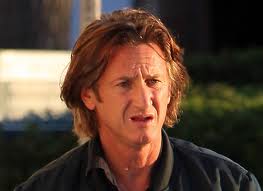
In other Falklands-related developments, the American actor Sean Penn is still a moron and has as of press time not yet been fed to crocodiles.

Sean Penn, still a moron

OUTER SPACE

Gingrich Proposes Making Moon 51st State.  The former Speaker of the United States House of Representatives, Newt Gingrich, promised while campaigning in the Florida Republican primary that by the end of his second term as President there would be an American colony on the Moon.  He also promised regular flights to Mars by 2020.  Further, Gingrich reminded the crowd in Coco Beach, Florida (setting for the 1960s television situation comedy I Dream of Jeannie), that while he was a U.S. representative he sponsored a bill allowing any lunar colony with a population of 13,000 or more to apply for statehood.  (The U.S., however, is signatory to international agreements barring the claiming of national territory on other planets or moons.)  Gingrich relished accusations that he is “grandiose,” adding, “I accept the charge that I am American and Americans are instinctively grandiose because we believe in a bigger future.”  At other times, Gingrich has proposed that public schools hire children as janitors and that a giant mirror be placed in Earth orbit to light highways and catch criminals.


Tuesday, February 14, 2012

Language Referendum Pits Latvians against Russians


This week, eastern Europe faces two well publicized referenda, both of them pushed by ethnic minorities in new states who wish to turn back the clock to when their peoples—now minorities in recently liberated territories—had the privileges of empire.

Kosovo
First, in the Republic of Kosovo, the Serbian minority in the sliver of land abutting Serbia itself are initiating a referendum for February 14th and 15th on the question of whether they as a community recognize the Kosovar government’s authority over them and their land.  They are expected to say, resoundingly, that they reject it.  Kosovo declared independence from the Federal Republic of Yugoslavia (later renamed Serbia and Montenegro) in 2008 under the protection of the United States and the North Atlantic Treaty Organization (NATO).  Today it is recognized by only 87 of the world’s 193 recognized independent states, only 22 out of 27 European Union member states, and even only 24 of NATO’s 28 member states.  Its neighbors Serbia, Croatia, Greece, and Romania refuse to recognize it, as does Spain, which is always wary of anything that might encourage its own separatist movements.  Opposition to Kosovo’s secession by Russia and China guarantees that it will not be admitted to the United Nations in the foreseeable future.  Still, there is little enthusiasm outside Kosovo for the referendum or its implications, not even in the Republic of Serbia itself.  Serbia is trying to groom itself for eventual candidacy for E.U. membership, which requires a peaceful resolution of the Kosovo issue (though note that Cyprus was admitted despite its de facto partition).  Like the separatist Serbs in Croatia and Bosnia & Herzegovina, Kosovar Serbs have been thrown under the bus by Belgrade under western pressure.  (Don’t get me wrong; I’m not precisely saying they don’t belong under the bus.)  For Serbia, the referendum is an embarrassment.  But they can take heart from the fact that it will have no effect on anything, except to heighten interethnic animosity in the region.

Latvia
This article will focus more on the second, more consequential of this week’s referenda in the former Communist east.  In the Republic of Latvia, which along with its neighboring Baltic states Estonia and Lithuania broke free in 1990 from the collapsing Soviet Union, the Russian minority has managed to put to the public a poll on whether or not to make Russian an official language alongside Latvian.  This has brought out the nationalist in many a Latvian, and it has opened many of the region’s wounds from the totalitarian era.


The Soviet Union was supposedly an internationalist workers’ paradise which transcended the idea of nation, but everyone knew that it was in fact another name for the Russian Empire.  No one knew this better than Latvians.  Part of the agenda of the government in Moscow was the Russification of regions that had the greatest potential for unrest and separatism.  Latvians, Lithuanians, and Estonians never regarded the Soviets as liberators when the Nazis were pushed west at the close of the Second World War, and the United Nations and the West never recognized the Soviet annexation of the republics in 1945.  The resettlement of large numbers of ethnic Russians in the Baltic States was part of an explicit internal-colonial project.


As Soviet citizens, Latvians were taught Russian as a second language during the years of Soviet rule, and Russians who lived in Latvia were able to function as citizens without learning Latvian.  Moreover, when members of other ethnic groups, such as Ukrainians and Belarussians, moved there they could use Russia as a lingua franca with Russians, Latvians, and anyone else.

Map showing the Russian share of the population in different parts of the Baltic States

In 1989, Russians made up over a third of Latvia’s population.  Today the figure is around 27.9%, out of a population of just over two million.  (Some returned to Russia, or emigrated elsewhere.)  But they tend to be more urban and blue-collar than the average Latvian.  Russians make up 42% of the population of the capital, Riga.  (The dancer Mikhail Baryshnikov and the director Sergei Eisenstein were both Russians born in Riga, which was a strategic Soviet port.)  By contrast, Russians make up a quarter of Estonia’s population and only just over 5% of Lithuania’s.  Latvia has by far the largest Russian minority population in the Soviet Successor States (not counting unrecognized Transnistria).  Because of this, Latvia, after after the Baltic States regained their independence in 1991 (the West had never recognized their annexation by the Soviets), imposed stricter laws than other successor states about the use of Russian.  Families that arrived after 1940 had to reapply for citizenship (a provision directed mainly at Russians), and knowledge of Latvian was a hurdle erected to naturalization.  (These laws have been watered down since then, but there are still a lot of non-citizen Russian residents in Latvia, alongside the naturalized ones.)  Along with laws declaring Russian an official “foreign language,” these measures were designed to keep Russians out of public life, maybe even encourage some of them to go home.


Sergei Eisenstein, who was ethnically Russian but born in Riga, Latvia

On Thursday Latvia’s parliament issued a (non-binding) statement that Latvian was the country’s only official language, adding, “Latvia is the only place on the globe where the Latvian culture and language can exist and develop.  The Latvian language is the common language of all people inhabiting the country and is important to their participation in democratic processes and to the rallying of society.”


One political party, Par Cilvēka Tiesībām Vienotā Latvijā (PCTVL), meaning “For Human Rights in United Latvia,” claims to represent not only ethnic Russians but also the Latgalian minority.  Latgalia is one of the four constitutionally recognized cultural regions of Latvia, though it does not correspond to a political entity.  Unlike other regional dialects, Latgalian has its own spelling system and its speakers think of it as a separate language.  Latgalia also borders Russia, and it has the highest proportion of ethnic Russians, while also being Latvia’s most impoverished region.  Its cultural center, Dagauvpils, Latvia’s second largest city, has a Russian majority.


Latvia’s four cultural regions.  Russians dominate in Latgalia, in the east.

Latgalians can hardly claim to be an oppressed minority today, though they would like some devolution, as well as provincial boundaries that correspond more closely to cultural boundaries.  The alliance between some Latgallians and some ethnic Russians in the PCTVL is an oddity.  But, for one thing, Latgalians and Russians share a status as religious minorities in Latvia.  Latgalians are mostly Roman Catholic, and Russians are mostly either Eastern Orthodox or unchurched, in this predominantly Lutheran country.  In any case, most Latgalians vote similarly to most other ethnic-Latvian communities.  For Russians, at least, the alliance with Latgalians in the PCTVL makes some strategic sense.  Much Latvian resentment of Russians boils down to accusing Russians of being un-Latvian and of not respecting Latvian culture.  So, as the voice of ethnic Russians, PCTVL can blunt some of that criticism through an association with one of Latvia’s ancient folk cultures.  PCTVL has no seats in Latvia’s parliament, but it holds one of Latvia’s nine seats in the European Parliament and is a representative (officially, of Latvia’s Russians and Latgalians) in the European Free Alliance, a continent-wide talking club for Europe’s aspirant nations and other minorities.


Much more critical here is the Harmony Center party, a socialist–social-democratic alliance supported by ethnic Russians and, it is said, by Moscow itself.  Harmony Center has nearly a third of Latvia’s parliamentary seats and two of its nine European Parliament seats.  It is the largest party in Latvia but, with only a plurality instead of a majority, most of the rest of the political spectrum formed a coalition specifically to exclude it from executive power.  In real terms, then, a third of Latvia’s representative political spectrum is committed to ethnic-Russian interests.


It is also not irrelevant that Russian firms control nearly all of the Baltic States’ energy supplies, including 100% of Latvia’s oil and natural gas.  In the long term, many Kremlin strategists would like to see Moscow reassert control over its former empire, now politely called the “near abroad.”  The Baltics have always been important to this kind of agenda.  Though it is the largest country in the world, Russia has always had a precarious toehold on warm-water ports.  Far-flung Vladivostok, Murmansk on the Arctic, isolated Kaliningrad, and St. Petersburg’s narrow finger to the sea can only take an aspirant world naval and mercantile leader so far.  Latvians can be forgiven if they see this week’s referendum as the first salvo in a long-term bid to retake the Baltics.  The twentieth century in the Baltics was a succession of hideous, bloody invasions, and Kremlin support for ethnic Russians in Transnistria and Crimea, for Transcarpathian Ruthenians in western Ukraine, and for Abkhaz and South Ossetians in Georgia are quite explicitly proxy battles for an irredentist project.  Russia wouldn’t dare invade a NATO country, but it will probably try to push things as far as they can without rolling out tanks.  (Read here an interesting article on Moscow’s economic, political, military, and electoral agenda in the Baltics.)


Russian tanks rolling into South Ossetia in 2008.
Some Latvians see a grim analogy.

With such a large share of the population, it was only a matter of time before Russians in Latvia began asserting language rights.   To pass, the referendum needs 750,000 votes, and no one expects that threshold to be reached.  Still, battle lines have now been drawn.  Within the memory of most Latvians, they were a subject people, and it is hard for them to think of themselves as having a culture and language that are secure instead of threatened.  Ethnic and linguistic tensions have always lurked in Latvian society, but as of this week, no one can be neutral on the question anymore, and Latvia, including its Russians, will have to decide what kind of pluralist society it wishes to have.


Latgalia’s flag

Sunday, February 12, 2012

The Week in Separatist News, Feb. 12-18, 2012

AFRICA


100 Tuaregs Executed in Mali.  Media are quoting France’s Minister of French Cooperation, Henri de Raincourt, as reporting that over a hundred Tuareg separatists were executed by Mali’s military in Aguelhok, in the northern Azawad region, which is trying to establish a separate Tuareg republic.  “We’re talking about 100 people who were captured and executed in cold blood,” Raincourt said after returning from a fact-finding mission in Mali.  “The execution method was similar to those used by al-Qaeda.  Some had their throats cut, others were killed by shots to the head—barbaric methods.”  (See my recent blog post on the Tuareg rebellion.)


President Wade Campaigns in Casamance.  The octogenarian president of SenegalAbdoulaye Wade—who has been dogged by legal disputes and a popular uprising over his plans to run for a third term this year—took his re-election campaign to the secessionist Casamance region this week.  He offered the southern separatists a new three-point peace plan he calls DDP: “disarmament, demining, and projects.”  Casamance’s decades-old civil war erupted into violence again late last year, and four soldiers were killed by rebels there on Feb. 13.  Before his election in 2000, Wade promised to end the conflict within a hundred days.  (Casamance and other north–south splits in Africa’s larger Sahel region were discussed earlier this month in this blog.)


President Abdoulaye Wade with Paris Hilton

Kenyan Leader Reaches Out to Mombasa Rebels.  The president of KenyaRaila Odinga, visited Kwale in Coast province on Feb. 12th to try to reach out to the banned Mombasa Republican Council (MRC), which wants the province to secede from Kenya.  The MRC argues that the provincial capital, Mombasa—where Muslim and Arab influences are stronger than elsewhere in the country—was originally part of the Sultanate of Zanzibar and was attached to Kenya illegitimately.  (Zanzibar, to the south, was one of two colonies, the other being Tanganyika, that merged after independence as the United Republic of Tanzania, in 1964.)  Previously, the Kenyan government had tried to link the MRC to Al-Qaeda.

Ethopia’s Ogaden Turn to International Court.  The Ogaden Somali Community in Ethiopia filed a complaint against the Ethiopian government with the International Criminal Court (I.C.C.) at its offices in South Africa.  The complaint sites displacement of communities, confiscation of livestock, and unlawful imprisonment and torture of civilians.  The Somali-speaking Ogaden people inhabit a large desert area including part of the Somalia–Ethiopia border.  Somalia, which included Ogaden while it was a colony of Italy, tried to retake the territory in the late 1970s but lost to an Ethiopian military backed by the Soviet Union and Cuba.  Today the Ogaden National Liberation Front is trying to secure independence for the territory or attach it to the Republic of Somalia.  Ethiopia is not a signatory to the I.C.C., so the Ogaden complaint, even if taken up, may have little effect.  (See my recent blog post on Ethiopia’s separatist divisions.)


South Sudan Accuses North of Bombing Border Town.  The two Sudans seemed to inch closer to open war, with peace talks breaking down and, on Feb. 14th, the Republic of South Sudan accusing the Republic of Sudan of bombing Jau, a town in the disputed border region of South Kordofan and site of a massacre in December 2011.  The Republic of South Sudan seceded from the Republic of Sudan in July 2011, with international blessing, but with the status of several border provinces left undefined.

Bodies Wash Ashore in Somaliland.  Twenty-four badly decomposed corpses and seven miserable apparent shipwreck survivors washed ashore on a beach in the Sanaag region of Somaliland this week, apparently after trying to seek refuge in Yemen, across the Gulf of Aden.  The Republic of Somaliland is a de facto independent parliamentary democracy administering what the rest of the world calls the northwestern arm of the “failed state” of the Republic of Somalia.  The beach where the bodies washed ashore is in a self-governing but ideologically pro-Somalia-unionist clan fiefdom called the Sool, Sanaag, and Cyn State of Somalia, comprising parts of eastern Somaliland and parts of western Puntland, another de facto independent republic.  The discovery of the bodies came as Somaliland delegates began departing for a London conference on the decades-old Somalia crisis.  The delegates’ claim that their unrecognized state is a model of stability amidst the Horn of Africa’s chaos may be complicated by the apparent willingness of some of its citizens to flee in makeshift boats through pirate-infested, storm-tossed seas for better opportunities in a war-torn dictatorship.  Initial Somaliland reports say the dead were “Somali”—possibly meaning from Somalia proper rather than Somaliland—but this has not been clarified.


Puntland’s President Pledges Unity.  First reports of a meeting in Puntland of leaders from different parts of the formerly unified Republic of Somalia are quoting the president of the de facto independent Puntland State of Somalia, Abdirahman Mohamud Farole, as saying that Somalis need to set aside differences and work toward establishing a strong and democratic Somalia.  This represents a note of optimism, ahead of Thursday’s conference on Somalia in London, that Puntland may try to reenter the fold of a Mogadishu-based government.

Ghanaians Threaten Secession over Gas Project.  The Bonyere Citizens Association, representing a town in extreme southwestern Ghana, have reacted to news that a planned gas processing plant, Ghana’s first, may be built not in Bonyere but in a nearby town by threatening to secede from Ghana and join nearby Côte d’Ivoire (a.k.a. Ivory Coast).  Both Bonyere and the other town, Atuabo, are dominated by the Nzema ethnic group.

EUROPE


Cameron Pleads with Separatist Scots in Edinburgh.  The prime minister of the United Kingdom, David Cameron, visited Scotland this week to meet with Alex Salmond, head of the Scottish National Party and Scotland’s First Minister and call for unity.  A referendum for separation is planned for 2014, but Cameron would like for it to be held earlier, so that the S.N.P. has less time to try to raise the current level of support for secession, which is currently at about a third of the Scottish public.  Meanwhile, Scottish diplomats have taken up the issue of remaining in the European Union with bureaucrats in Brussels, but legal experts there have said that there is no precedent and no guarantee.

David Cameron and Alex Salmond this week

Minority Serbs Reject Kosovo’s Rule in Referendum.  Serbs in a border region of the partially recognized Republic of Kosovo voted overwhelmingly in a non-binding referendum held Feb. 14-15 to reject Kosovar rule.  The no votes were a stunning 99.7%.  Europe and much of the world are split over recognition of the 1999 United States– and NATO-sponsored secession of Serbia’s Kosovo region.  (Uganda this week became the 88th country to recognize Kosovo.)  The 35,000 Serbs, a minority in a nation dominated by ethnic Albanians, prefer to remain part of the Republic of Serbia.   The Serbian government opposed the referendum, since its hopes for eventual membership in the European Union depend on peaceful resolution of the Kosovo issue.  (See a recent blog post discussing this week’s Kosovar and Latvian referenda.)

The flags of Albania and Kosovo

Russian an E.U. language?  In Latvia, on the eve of a Feb. 18th referendum, underway as this blog is being written, on whether to make Russian—spoken by a third of Latvia’s population—an official language of the country, an ethnically-Russian member of European Parliament for Latvia has raised the possibility that, if the referendum passes, Russian could also become an official language of the European Union.  The legislator, Tatjana Zdanoka, of the Green Party, points out that in addition to Latvia’s more than a half million Russians, there are 9 million native Russian-speakers scattered throughout the E.U.  Currently the E.U. recognizes 23 official languages—into which all E.U. business must be translated—including some, like Irish Gaelic and Maltese, that have vanishingly few monolingual speakers.  Some languages which have significant numbers of monolingual speakers, like Welsh and Catalan, are only “semi-official languages,” and others, such as Flemish (the Germanic variety spoken by half of Belgium, which the E.U. classifies as a dialect of Dutch) and Romany (the language of millions of Roma or “Gypsy” people), have no official status at all.  (And of course any attempt to make Turkish an official language in Cyprus would send Greece into a screaming hissy-fit that would make its tantrum over Macedonia’s name look like a brief pout.)  Russian would be the first official E.U. language whose eponymous home nation is not an E.U. member-state.  But a European Commission spokesman said that no country’s request to make one of its official languages an E.U. language has ever been turned down.  However, Latvian nationalists and Russophobes can take heart: with the voting already underway, even the Latvian electoral commission predicts that the referendum, which requires more yes votes than there are even Russians in Latvia, was doomed to fail.  (See a recent blog post discussing this week’s Kosovar and Latvian referenda.)

The flag of Latvia

Chechens Ask Hilary Swank to Show Them the Money.  The U.S. actress Hilary Swank’s embarrassment over attending an event hosted by Chechnya’s authoritarian, anti-separatist, Moscow-appointed ruler surfaced again this week.  Swank had had to apologize to the world after Human Rights Watch and others criticized her attendance (and that of the Belgian actor Jean-Claude Van Damme), in October 2011, of a 35th-birthday celebration and concert in Grozny for Ramzan Kadyrov, who is accused of using torture, abductions, and executions to suppress Chechen aspirations for an independent homeland free from Russia.  After initially praising Kadyrov’s “passion to make peace and to make something beautiful,” she later said she “deeply regretted” attending and promised to compensate by donating to a charity that serves the Chechen people.  But now Chechnya’s separatist leader, Akhmed Zakayev, who lives in exile in London, has said that Swank never donated the money.  He says that he is in touch with the heads of the charities he recommended, and that they have persisted in asking him when the money will show up.  Swank’s spokeswoman said that Swank had fulfilled the pledge, but declined to specify the recipients or amount.  Zakayev also reiterated doubts that Swank could have been as ignorant as claimed about who Kadyrov was and what he had done.  Elsewhere in the Caucasus, Kadyrov reported that 20 members of a criminal had been killed by his forces in the mountains between Chechnya and the lawless, warlord-run Republic of Dagestan—Dagestani sources also said 11 police were killed—and three separatist militants were reported killed in the Kabardino-Balkar Republic in the northwestern Caucasus.


Ramzan Kadyrov (left) and Hilary Swank (right) in Grozny in October 2011

BITS OF ASIA THAT LIKE TO PRETEND THEY’RE PART OF EUROPE

Turks Round Up Kurds.  Police in Turkey arrested 100 activists hoping to establish an independent Kurdistan, in coordinated raids in six cities on Feb. 13th, including Istanbul and Ankara, as well as Diyarbakyr, the Kurdish capital.  The dragnet targeted both the militant separatist Kurdistan Workers Party (PKK) and its political wing, the Union of Communities in Kurdistan (KCK).  Meanwhile, Turkish bombers attacked alleged PKK positions in the mountains of northern Iraq.  This comes as Turkish political world continues to reel from revelations that the central government had been secretly negotiating with Kurdish separatists.

South Ossetian President Describes Police Raid, May Quit Politics.  The de facto president of the de-facto-independent Republic of South Ossetia, Alla Dzhioyeva, continued to recover from a “hypertensive episode”—apparently, a stroke—which she suffered during a police raid on her headquarters last week, and says she will soon decide whether to leave politics.  In her first interview since the incident, she told a Russian reporter, “People with guns and in masks barged in, destroying the doors, furniture, and tried to take me away by force.  One grabbed me by the hands, others by the feet.  They picked me up and dragged me like an old, overripe watermelon.”  She also said she was hit on the hid with a rifle butt, then lost consciousness.  The police dispute her version of events.  Dzhioyeva won a presidential election in November, but the South Ossetian supreme court invalidated the results.  She had been serving her term nonetheless, till the raid.  In other developments, the Russian forces occupying South Ossetia have for the first time begun forming army units that include Ossetian recruits.  Nearly all the world’s nations, except for Russia and a handful of others, regard South Ossetia as an autonomous region within the Republic of Georgia, but the Georgian government has not administered the territory since losing to Russia in the 2008 South Ossetia War.  (See my blog post on the South Ossetian election crisis.)

Allia Dzhioyeva

Kidnappers Release Georgian Cleric in Abkhazia.  The Republic of Georgia’s Ministry of the Interior announced on Feb. 11th that it had negotiated the release of Mamuka Maisuradze, a.k.a. Father Iona, a Georgian Orthodox “priest-monk” who had been kidnapped in Georgia’s de facto independent Abkhazia region while visiting holy sites 25 days earlier.  The Georgian government is keeping mum about further details of the mysterious case.  Abkhazia denies that he was arrested by Abkhaz authorities for political activities, though it also seems no ransom was paid.  Georgia has also confirmed Abkhaz assertions that Maisuradze had been expelled from Russia in 2009 on charges of spying for Georgia and that he joined the Georgian Orthodox Church only two years ago.  Abkhazia, like South Ossetia, is recognized by most of the world as part of Georgia but has been functioning as an independent state since Russia expelled Georgian forces from the region in a 2008 war.

Terror suspect arrested after Abkhazia visit.  Meanwhile, just days after a foiled Feb. 13th assassination plot in Tbilisi against Israel’s ambassador to Georgia, the Georgian interior ministry announced that it had arrested a suspected terrorist in an unrelated incident.  The man, Bezhan Shakia, was arrested in Zugdidi, in Georgia’s Mingrelia region, after returning from a visit to Abkhazia.  Police later said the man had been planning a terror attack against a market in Zugdidi and accused him of being a Russian agent.

Georgia Cuts Ties to Tuvalu.  The Republic of Georgia has severed diplomatic relations with the fourth-smallest country in the world, a handful of Polynesian atolls called Tuvalu.  The cause was Tuvalu late last year becoming the sixth United Nations member state—and the third South Pacific island mini-state—to formally recognize Abkhazia and South Ossetia.  The two republics are recognized only by Russia, Venezuela, Nicaragua, Vanuatu, Nauru, and, now, Tuvalu.  They are also recognized by each other and by the similarly unrecognized Pridnestrovian Moldavian Republic (a.k.a. Transnistria) and Nagorno-Karabakh Republic.  The two Caucasian republics’ relations with the South Pacific are similar to that of the Republic of China (a.k.a. Taiwan): Taiwan and the People’s Republic of China will each not recognize states that recognize the other, but Taiwan has wooed small, impoverished Pacific nations with development aid in exchange for recognition, just as Russia has been doing on behalf of its client states South Ossetia and Abkhazia.  Taiwan has diplomatic relations with just 23 countries, nearly all of them island mini-states, including six in the South Pacific (Tuvalu and Nauru among them), São Tomé and Príncipe off the coast of West Africa, and ten nations in the Caribbean region.

Tuvalu

ASIA


Iraqi Sunnis Funnel Arms to Syrian Rebels.  The New York Times reports on a new wrinkle in Syria’s civil war: rebels in this predominantly Sunni Muslim country, trying to depose an Alawite Shi’a ruling family, are receiving arms and other assistance from the Sunni minority just over the border in Iraq.  During the height of Iraq’s sectarian civil war several years ago, some of these same Sunnis were receiving weapons from their co-religionists in Syria.  Syria’s looming Sunni takeover after the eventual fall of Bashar al-Assad, whenever it comes, will be an odd reversal: the 2003 fall of Iraq’s Saddam Hussein after a United States–led invasion removed a Sunni dictator from a country with a Shiite majority.  All of this is part of a widening Sunni–Shi’a conflict that has driven Arab Spring conflicts in Saudi Arabia, Yemen, and Bahrain, to say nothing of the Sunni Arab uprising in Iran’s Khuzestan region, by the Iraq border.  As I discussed in an earlier blog post on sectarian and regional dimensions to the Syrian conflict, as well as a more recent one on Iraq’s separatist tensions, Iran initially regarded Iraq’s shift to Shi’a rule as the potential key link a chain of Shiite Iranian client states stretching from Iran to the Hezbollah-controlled parts of Lebanon.  Iran’s frustration at seeing its ally Syria falling to a Sunni-led uprising is one of the reasons, the Times points out, that the Iraqi government has been so slow to join the West and its American allies in criticizing the Syrian regime: Iraq doesn’t want to be an Iranian client state, or part of its Shi’a crescent stretching to the Mediterranean, but it cannot afford to alienate its powerful neighbor.  The Syrian conflict’s geopolitical implications are beginning to become apparent as the international community cracks down on the Assad regime.


U.N. Rejects Kashmiri N.G.O. as Pakistani Front.  The United Nations’ Committee on Non-Governmental Organizations has denied a long-in-the-works application for observer status from the Kashmir America Council, reportedly on the grounds that it was receiving money from Pakistan’s brutal Inter-Services Intelligence (I.S.I.) spy agency.  The organization, founded in 1990 by Ghulab Nabi Fai, is one of many organizations lobbying for more autonomy and respect for human rights in the parts of Kashmir administered by the Republic of India.  The application had long been contested by the Indian government, while the organization itself has been investigated by United States federal authorities for its ties to I.S.I.  Meanwhile, riots erupted in Kashmir itself after a young man was either “gunned down without provocation” by an Indian soldier or killed by an accidentally firing weapon.  Within Kashmir there are militant pro-independence movements as well as movements to attach the territory to Pakistan.  Kashmir has been a territory in dispute among Pakistan, India, and China since British India was partitioned in 1947.

Reporter Found Dead in Aceh.  The same week as a journalist from the Czech Republic was arrested for covering a pro-independence march in Indonesia’s sealed-off West Papua region (see last week), an Indonesian reporter has been found dead in another separatist region, Aceh, on the northwestern tip of the island of Sumatra.  He was found in a ditch with face wounds and signs of lethal blows with a blunt object.  The reporter’s wife believes he was murdered for his investigatory work.

Flag of Aceh

Pakistani bombing blamed on Baloch Separatists.  Three people, including boys aged about 12, were killed and eight injured by a remote-control bomb planted near a police vehicle in a crowded goat market on Feb. 13th in southwestern Pakistan.  The Baluch Republican Army, which is trying to establish independence for Balochistan province have claimed responsibility.  Two days earlier, Pakistan’s military had told media that arms for the Baloch separatist struggle were flowing not only from India but from Afghanistan.  (See a blog post in which I listed Balochistan as one of ten separatist movements to watch in 2012.)

South Yemen Separatists Set Fire to Protest Camp.  Activists in the Republic of Yemen hoping to re-establish South Yemen as an independent country set fire on February 12th to a tent housing anti-government protesters in Aden, the port city that was the Marxist state’s capital before the two Yemens reunified in 1990.  Meanwhile, also in Aden, a man killed by his bomb while trying to plant it in a polling station was suspected of being a Southern separatist.  Elections are to be held on February 21st to replace President Abdullah Ali Saleh, but many southerners feel they would be better off as a separate country.

The flag of South Yemen

Tibetan Exiles Hint at Mass Action; Hundreds Arrested upon Return.  At an open forum hosted by several Tibetan human-rights groups at the nation’s exile headquarters in Dharamsala, India, speakers aired frustration over an inability to help Tibetans within the People’s Republic of China, where a recent wave of self-immolations by monks, as well as other protests, have led to a new crackdown.  A pro-independence activist is quoted as saying, “Although I don’t know in specific details, ... a big and effective campaign is in the schedule, possibly this month.”  Another said, “I am tired of candlelight vigils.”  A few days later, Chinese authorities have rounded up hundreds of returning Tibetan P.R.C. citizens returning home from Dharamsala, where they had attended religious events hosted by the Dalai Lama, according to Human Rights Watch.

The Dalai Lama

China Appoints Top Cop to Rule Area of Tibetan Unrest.  The Chinese government has appointed Liu Zuoming, a career law-enforcement bureaucrat, as Communist Party secretary for Aba prefecture, an ethnically-Tibetan area in Sichuan province that has been the site of many of the recent self-immolations and other actions protesting Chinese rule of Tibet.

OCEANIA

Maori Militants Tried in New Zealand.  In Auckland, trial proceedings began on Feb. 13th against four Maoris arrested after police in 2007 raided a military-style training camp in the hilly Te Urewere region of New Zealand’s North Island, a separatist hotbed.  The four are accused of plotting a violent separatist campaign against the New Zealand government, using Molotov cocktails, AK-47s, and other weapons.  The defendants reject all charges.

Accused Maori separatist Tame Iti arriving in court

NORTH AMERICA


Trudeau’s Son Backtracks from Pro-Separatist Comments.  Justin Trudeau, a Liberal member of Canada’s parliament and son of the revered former prime minister Pierre Elliott Trudeau, had to backpedal after public reaction to an interview in which he seemed to support Quebec’s independence.  He had said, in a French-language interview that was not immediately reported in the English press, that if the current conservative government in Ottawa were to reverse national policy on social issues such as abortion and same-sex marriage, then “maybe I would consider wanting to make Quebec a separate country.”  In a subsequent interview, he clarified his position, saying he would fight for Canada to his “last breath” and that it was the current prime minister, Stephen Harper, that was sowing division.

Justin Trudeau

Southern Mayor Retracts Week Honoring Black Separatists.  The mayor of Fayetteville, North Carolina, is scrambling to retract his town’s declaration of the week of January 8th as “Moorish American Week in Fayetteville” after realizing that the “Moorish-American” cause was associated with Black nationalists who reject the legitimacy of the United States government and refuse to pay taxes.  The mayor, Tony Chavonne, apologized and said he’d never heard of the group when he signed the proclamation.  The Moorish Science Temple of America was founded in the early twentieth century—in the same milieu that generated the Nation of Islam and similar groups—by Noble Drew Ali, an African-American (born January 8, 1886, in North Carolina—hence the choice of date) who claimed that an Egyptian magician declared him the reincarnation of Buddha, Jesus, and Mohammed and who subsequently composed his own version of the Quran, heavily influenced by Freemasonry, Rosicrucianism, and crackpot anthropology.  The Moorish Science Temple believes that the Americas were originally inhabited by “paleo-Negroid” races that predated American Indians and that therefore African-Americans are the true owners of the continent.  The Southern Poverty Law Center, which tracks hate groups such as the Ku Klux Klan and the Aryan Nations, derides the Moorish American movement as “Sovereigns in Black”—a reference to the extremist right-wing, anarcho-libertarian, and nearly all-white “sovereign citizen” movement.  Many cities have proclaimed Moorish American Weeks, including Chicago.

A Moorish Science Temple conclave in Chicago, 1928.


PRACTICALLY BLOODY ANTARCTICA

Falklanders Ask for Special Passports; MPs Plan Visit.  The government of the Falkland Islands has requested from its parent government in London for special passports that state “Falkland Islands” on the front.  Prompted by the recent escalation of Argentina’s claims on the South Atlantic territory, the new passports would indicate pride in being Falklanders while still emphasizing their status as part of the United Kingdom.  The move is being treated by the government in Buenos Aires as a further provocation, as is the planned arrival in the islands next month of the British parliament’s defense committee and of the H.M.S. Dauntless, an air-defense destroyer, to replace an older vessel.  (See my recent blog article on the Falklands conflict.)

Chilean Falklanders March against Embargo.  Members of the Falkland Islands’ Chilean community, joined by some native British Falklanders, held a demonstration in Stanley, the capital, to protest plans by the government of Chile to cancel the archipelago’s last regular air service to the South American mainland.  Most other Latin American and Caribbean states fall in behind the Argentine air-travel embargo on the colony, but Britain’s relations with Chile have tended to be warmer than with other South American states—a relationship dating back to Margaret Thatcher’s close personal friendship with the mass-murderer dictator Augusto Pinochet.

Chileans demonstrate in Stanley

Argentine Dockworks to Boycott English “Pirates.”  In Buenos Aires, the Argentine Confederation of Transport Workers, a longshoremen’s union, announced that, in response to U.K. “militaristic pretensions,” it will “boycott any vessel with the English flag, with the invented Falklands flag, or registered under any of the convenience flags from the English pirates (Bermuda, Cayman Islands, Gibraltar, Panama, Malta, etc.).”  The reference to the Falklands flag as “invented” suggests that the transport union believes that other flags, such as the Argentine national flag, either are naturally occurring or were created by God, or were generated automatically during mediumistic trances.  (The first vessel to defy the ban was the British Ruby, a British Petroleum natural-gas tanker which docked in Bahía Blanca, Argentina, under a flag from the Isle of Man.)


Sean Penn Sides with Argentines.  The U.S. actor Sean Penn has spoken out against what he calls the U.K.’s “colonialist, ludicrous, and archaic” claims to the Falkland Islands, which he calls the Islas Malvinas.  He spoke Feb. 13th while meeting with Argentina’s president, Cristina Fernández de Kirchner, on a visit to Uruguay.  The television personality Ben Fogle, a friend of Prince William and his new wife the Duchess of Cambridge, suggested that Penn should be fed to crocodiles for his comments.  In 2010, Penn called Venezuela’s authoritarian president, Hugo Chávez, a “model democrat” and suggested that journalists who called him a dictator should be imprisoned.

Separated at birth?  Sean Penn meeting on Feb. 13th with Uruguay’s president José Mujica

Subscribe Now: Feed Icon