Showing posts with label Jews. Show all posts

Wednesday, October 30, 2013

Israel to Let In Hundreds from Ethnic Group in India Claiming Jewish Descent


The State of Israel this month agreed to allow 899 members of a small ethnic group on India’s border with Burma (Myanmar) to immigrate under the constitutional provision for the “right of return” for any Jews.  The Indians, who call themselves the Bnei Menashe, are a few thousand members of a larger ethnolinguistic group called the Kuki, from around the far-eastern state of Manipur, who are related to the Mizo people of neighboring Mizoram state and the Chin people just over the border in Burma.

One flag used by Kuki nationalists in India
Also called the Lushai or Hmar, the Kuki–Chin–Mizo speak a language related to Burmese and Tibetan and are East Asian in their ethnic appearance, but Kuki oral traditions tell of descent from the Tribe of Manasseh, one of the Lost Tribes of Israel.  Scholars investigating the claims find some of the preserved stories and rituals to be too similar to ancient Judaism to be coincidental.  Genomic data have been inconclusive, as opposed to the well-documented diasporas among the Lemba of the South AfricaZimbabwe border region or the Falashas of Ethiopia.  (See an earlier article from this blog on Jewish diaspora theories in the Americas.)  Also, researchers point out that meriting the migration tale does not necessarily mean that all Kukis are of Jewish descent.  A migration of Manasseh tribespeople centuries or millennia ago to what is now eastern India could have deposited cultural traditions which took hold, with their descendants in the group remaining more limited in number.


However, that is good enough for the Shevai Israel organization, which advocates for immigration of far-flung branches of the Jewish family, and clearly also for the Israeli government.  Indeed, there are already about 2,000 Bnei Menashe Indians in Israel.  But controversy plagues state relations at both ends of this migratory path.  In India, delegations from Israel have run afoul of Indian laws banning the conversion of populations of people from one faith to another (a legacy of India’s delicate relations between Hindus and Muslims, dating to partition and earlier).  Meanwhile, in Israel, the government has been accused of exploiting Kuki–Chin–Mizo migrants by settling them en masse in occupied parts of the West Bank and (formerly) Gaza Strip, in territories nearly two-thirds of the world’s countries recognize as a sovereign State of Palestine.  At one point, they were even the largest immigrant population in Gaza (though Menasseh’s territory, according to the Old Testament, is farther north, incluiding Tel Aviv, the Golan Heights, and parts of the west and east banks of the Jordan River).  To add insult to injury, some Kuki–Chin–Mizo Israelis in occupied territories had their homes dismantled by Prime Minister Ariel Sharon’s government in 2005.


Back in Asia, most Kuki–Chin–Mizo consider themselves distinct, and oppressed, even though far from all identify as Jewish (most are Presbyterian, a few Muslim or Hindu, while some follow local religions).  Kukis want to carve out about half of Manipur state as a separate Kukiland state; this campaign has reignited in recent months after New Delhi’s decision in July to allow the Telugu nationality to split from Andhra Pradesh state as a separate state within India called Telangana (as discussed at the time in this blog).  Some Kukis even hanker for an independent “Greater Kukiland” called Zale’n-gam.  Rebels from the Mizo, who, as their name suggests, form a majority in Mizoram state, have been fighting for secession since the 1960s.  And the Chin are among several nationalities that have been fighting for autonomy and independence from Burma since the country’s founding dictatorship, in the 1940s, reneged on promises of federalism (as discussed in an earlier article in this blog).


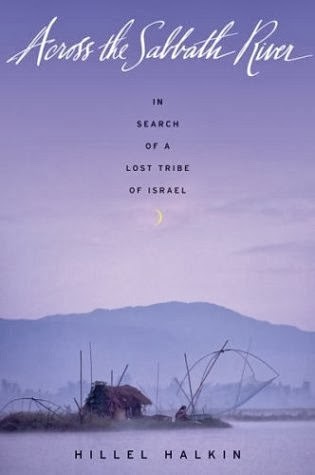
Note: Those wishing to learn more about the Kuki–Chin–Mizo and their relationship to Judaism could do worse than to read Hillel Halkin’s excellent 2002 book Across the Sabbath River: In Search of a Lost Tribe of Israel.


[Also, for those who are wondering, yes, this blog is tied in with a forthcoming book, a sort of encyclopedic atlas to be published by Auslander and Fox under the title Let’s Split! A Complete Guide to Separatist Movements, Independence Struggles, Breakaway Republics, Rebel Provinces, Pseudostates, Puppet States, Tribal Fiefdoms, Micronations, and Do-It-Yourself Countries, from Chiapas to Chechnya and Tibet to Texas.  Look for it some time in 2014.  I will be keeping readers posted of further publication news.]

Saturday, September 14, 2013

Quebec Separatists Challenge Canadian Tolerance with Proposed Islamic-Headscarf Ban


It is a common self-deprecating joke of Canadians that their country had the opportunity to enjoy French cuisine, American industry, and British traditions, but unfortunately got stuck with American traditions, French industry, and British cuisine.  Like many such jokes, there’s some truth to it.  But now at least one corner of Canada is amending that list by indulging in a particularly French form of religious bigotry as well.  On September 10th, timed for the eve of the anniversary of the 9/11 terrorist attacks, lawmakers from Quebec’s ruling separatist party, the Parti Québécois (P.Q.), announced a push for a law banning Islamic religious garb—following a trend in many parts of Europe, most notoriously France.

Quebec
The proposed law, as part of the party’s so-called “Charter of Quebec Values,” would forbid any specifically religious clothing to be worn by public servants while on the job.  (Elected officials would be exempt.)  Religious symbols that could no longer be worn include Muslim headscarves, Sikh turbans, Jewish yarmulkes, and “large” Christian crucifixes.  (How large is not defined—Jews do not seem to be able to sneak past the law with really really small yarmulkes—but this follows the language in similar French legislation.)  Though the law has no chance of passing, the proposal offers a taste of what kind of place Quebec would be to live in if it ever really separated from Canada.

Nor is it only Muslims who would be affected ...
Similar legislation is already in play in France, where, as in the rest of Europe, there are fewer constitutional protections of free expression than in Canada (where such a law, if passed, will surely be knocked down the first time it is tested in court).  Though it is ostensibly neutral—it pertains to all such religious symbols—everyone understands that such policies are designed to target Muslims.  Before 2001 and the cresting of anti-Muslim prejudice, no one was seriously worried about the disruptive societal effects of wearing large crosses (which few French do anyway); nor was there any kind of a widespread panic over nuns’ habits.  Last year, the French president at the time, Nicolas Sarkozy—who rose to power on a campaign promise to “powerhose the scum out of the ghettoes”—suddenly decided in the 2012 election season (as reported in this blog at the time) that it was necessary to crack down on animal cruelty among halal butchers (halal being the Islamic equivalent of Jewish kosher dietary rules).  Sarkozy was even such an animal sentimentalist that he took time away from his busy schedule of authorizing baton-swinging police raids on Gypsy encampments to tour halal butcheries and tut-tut over the nastiness of it all.  He did everything but pose for the camera with a quivering lamb in his arms and whisper in its ear that he would protect it from the big bad mullahs.  Everyone, of course, understood that he was playing to the Marine Le Pen vote, not the Brigitte Bardot one.  (He lost, thankfully.)

Nicolas Sarkozy, born-again animal-rights champion
The P.Q. is doing the same thing.  Such laws will never pass Canadian constitutional muster—and the P.Q. does not have enough of a majority in the provincial assembly to push through laws on its own—but the separatist party’s leader, Pauline Marois, is pandering to ignorant xenophobes and preying on fears of terrorism to revive sagging poll numbers in the face of apathy on the question of secession from Canada, the party’s raison d’être.  (See an earlier article from this blog on language politics in Quebec.)

As one might expect, civil-rights groups and Muslim organizations in Quebec are up in arms.  Jewish groups are not happy either.  (Jews and Muslims each make up between 1% and 2% of the population of Quebec, which is about 84% Roman Catholic and about 6% non-religious.)

Pauline Marois looks down her nose at minorities.
Earlier this year, Marois backed a rule barring Sikhs from wearing turbans while playing soccer, on so-called safety grounds.  The International Federation of Association Football (FIFA) promptly struck down the rule—not the only time that Québécois cultural chauvinism has run afoul of more tolerant international bodies.  (Sikhs, though numerous on Canada’s on West Coast, barely register demographically in Quebec, numbering only about 8,000.)  Marois’s government has also been accused of intentionally scheduling 2016 elections to coincide with Rosh Hashanah, and thus suppress Montreal’s mostly anti-separatist Jewish vote.

Proudly Sikh, proudly Québécois, proudly Canadian—something Pauline Marois can’t get her head around
Opposition parties have reacted angrily to the P.Q.’s moves.  Thomas Mulcair, leader of the New Democratic Party (N.D.P.), said, “We’re categorical in rejecting this,” adding that such discrimination is “intolerable in our society.”  But this is part of the plan.  The P.Q.’s narrow-minded electoral base already scorns Anglophone liberals as contemptibly tolerant of minorities.

Within the separatist camp, there has been discord over the P.Q. proposal.  One federal Bloc Québécois member of parliament, Maria Mourani, spoke out strongly against the religious-garb ban.  But within days she was ejected from her party because of so-called irreconcilable ideological differences with the party line.  Mourani, a Lebanese-Canadian born in Côte d’Ivoire (Ivory Coast), who has in the past been outspoken on such issues as Tibet (as reported in this blog), will now sit as an independent.

Maria Mourani (left), excommunicated for her tolerance
But how much of a danger to society, and to the ruling party, are Muslims really?  Ironically, at her victory rally after winning office almost exactly a year ago, Marois survived a probable assassination attempt (as reported at the time in this blog) when a gun-toting lunatic was arrested after killing one person and wounding another; police think he may have been gunning for Marois next.  Who was this killer?  Was he an immigrant jihadist?  A turban-wearing Sikh terrorist?  Nope—the gunman, Richard Henry Bain, an Anglophone fishing-lodge owner from northern Quebec, is a born-again Christian who (as reported here) told media after his arrest, “I’m a Christian soldier, and we will never surrender to fight the evil separatists.  I fight for freedom, democracy, justice, and to speak one’s mother tongue.”  He said Jesus Christ had told him to embark on his shooting spree.  Gee, and he wasn’t even wearing a “large crucifix” to warn people that he was a nut.  You just never can tell who the problem people will be, can you?

Richard Henry Bain, who murders for Jesus (not covered by pending legislation)

[For those who are wondering, yes, this blog is tied in with my forthcoming book, a sort of encyclopedic atlas to be published by Auslander and Fox under the title Let’s Split! A Complete Guide to Separatist Movements, Independence Struggles, Breakaway Republics, Rebel Provinces, Pseudostates, Puppet States, Tribal Fiefdoms, Micronations, and Do-It-Yourself Countries, from Chiapas to Chechnya and Tibet to Texas.  The book, which contains dozens of maps and over 500 flags, is now in the layout phase and should be on shelves, and available on Amazon, by early fall 2014.  I will be keeping readers posted of further publication news.  Meanwhile, please “like” the book (even though you haven’t read it yet) on Facebook.]

Tuesday, August 27, 2013

Putin Wants to Revive Stalin’s Old “Jewish Region” in Siberia; Israel Not Amused

Shalom! and welcome to remotest Siberia!
Vladimir Putin has had some crazy ideas in his time.  Shooting Siberian tigers.  Supporting the dictatorship in Syria.  Hang-gliding with migrating cranes.  Putting the Olympics on the site of a Russian genocide of Muslims just as he is trying to tamp down Islamist terrorism in that very region (discussed extensively last year in this blog (also in this article)).  And, um, you know, stuff like systematically dismantling Russia’s fragile democratic structures and its civil society to replace it with a corrupt and intolerant oligarchy.  But at least he’s put the Stalin era behind him.  Well, not quite.

The conveniently located Jewish Autonomous Oblast
The Russian Federation surprised the world this month with an announcement that it would like to revive the Jewish Autonomous Oblast (J.A.O.), a remote scrap of Siberian tundra on the border with China which Josef Stalin had used as a dumping ground for Jews in the 1930s.  Actually, it wasn’t quite as bad as that sounds.  The creation of the region was not at first punitive in the same way as, say, the removal of Chechens, Crimean Tatars, and other peoples eastward later on after the Second World War.  It was part of a Bolshevik plan to keep various internal nationalisms in check by granting autonomous regions for some minorities while also discouraging them from ideologically incorrect ideas such as ethnic chauvinism and religion—and, in the case of the J.A.O., Zionism.  Some of the territorial entities created in this era survive today, such as the Republic of Tatarstan.  Others, like the Volga German Autonomous Soviet Socialist Republic just west of Kazakhstan, or various Cossack autonomous districts, have gone the way of happy-Proletariat posters and scratchy toilet paper.

Downtown Birobidzhan, J.A.O.
The J.A.O. was, by Stalinist standards, an enlightened project.  Yiddish was the official language and throve there, as did other aspects of Jewish culture (except for the Judaism part).  Later, Stalin eyed the oblast as a place to put troublesome dissidents, especially Jewish ones, but after Nikita Khrushchev took power in 1953 he eased up a tad on minorities and dissidents and brought home many of the groups Stalin had exiled eastward (without, however, creating a more conveniently located J.A.O. farther west).  When Leonid Brezhnev opened the floodgates of Jewish emigration in the 1970s, the J.A.O.’s remaining Jewish population was depleted, most leaving for Israel.  Today, the Oblast still has Jewish newspapers and radio stations but by the time the Soviet Union collapsed in 1991 only 2% of the population was Jewish, and by 2010 it had dropped below 1%.  It is a Jewish homeland mostly without Jews.

Jewish culture in the Jewish Autonomous Oblast is not exactly thriving.
The new plan, as enunciated by Dmitry Medvedev, Putin’s prime minister, is to offer financial incentives—the equivalent of $8,000 U.S.—for about 2,000 Russian Jews living elsewhere in the Federation, or even in the rest of the former Soviet Union and farther abroad, to settle in the J.A.O.  The problem is that while many Russians might consider the Jews who fled Russia in the 1970s as Russian emigrants whose departure constituted a regrettable brain drain, many of those emigrants today consider themselves more Jewish and Israeli (or American or whatever, depending on where they settled) than Russian.  It remains to be seen how many Jews in non-Siberian parts of Russia would relish relocating.

Monsoon season in the J.A.O.
And, to be honest, the name Siberia does not focus-group all that well for descendants of Soviet Jews.  The J.A.O. is a little bit bigger than Belgium, but with only 175,000 people—mostly Eastern Orthodox ethnic Russians.  It is one of the fartheast east of the Russian Federation’s constituent units, it is landlocked, and its climate is deathly cold and windswept in winter, while in summer it is rocked by monsoons, which this season caused the worst flooding in a century.  Its economy is agricultural but increasingly dominated by mining operations run by Chinese corporations.

Whose numbers are dwindling faster?  Siberian tigers or Siberian Jews?
Alexander Levin, president of the World Forum of Russian-Speaking Jewry, probably spoke for many when he said, in response to the Medvedev plan, “We do not think that today, for the Jews, this initiative is relevant or realistic, as the Jews in Russia and Ukraine and other post-Soviet countries live in big cities and are economically successful for the most part. ... Jews have a strong and developed State of Israel and it is specifically there that they should to go to in order to express their Jewish national identity.”

The unlikely founder of the first modern Jewish homeland
Well said.  But here’s another reason Putin might want to just leave the Jewish Autonomous Oblast idea be.  Right now, a wave of bigoted anti-gay legislation in Russia is making the country into even more of a pariah state.  There are calls for a boycott of next year’s Winter Olympics in the Russian city of Sochi, on the Black Sea, and fears in Moscow that the Olympics will become a staging ground for gay-rights protests that will embarrass the regime.  Putin doesn’t want a whole bunch of Olympic athletes pulling out flags like this—


—but if they do, they can get around the laws by saying they’re just flying the flag of the Jewish Autonomous Oblast, which, I swear to God, looks like this:


[You can read more about these and many other separatist and new-nation movements, both famous and obscure, in my new book, a sort of encyclopedic atlas just published by Litwin Books under the title Let’s Split! A Complete Guide to Separatist Movements and Aspirant Nations, from Abkhazia to Zanzibar.  The book, which contains 46 maps and 554 flags (or, more accurately, 554 flag images), is available for order now on Amazon.  Meanwhile, please “like” the book (even if you haven’t read it yet) on Facebook and see this interview for more information on the book.]


Sunday, June 3, 2012

Maybe They Could Call Themselves Jutes—Oh, Wait, That Name’s Already Taken

Geneticists from Israel’s Sheba Medical Center have found a genetic marker associated with the well-mapped Ashkenazic—or Eastern European Jewish—genetic profile in a population of a Colorado Indian tribe.

The tribe was not specified, but Colorado has only two federally recognized indigenous communities: the Southern Ute Tribe, and the Ute Mountain Tribe.  The Utes migrated to what is now Colorado from Mexico before statehood but after European settlement of North America began.

The marker is a “harmful modification in the BRCA1 gene,” linked to a higher risk of breast and ovarian cancer.  The shared ancestry is likely to be linked to Spanish colonialism in Mexico—Spain being a country which had a large Jewish population until the expulsions of 1492 (the same year Christopher Columbus sailed—and, heck, some people think he may have been part Jewish), but where much Jewish genetic residue presumably remained.  Historians are only just beginning to appreciate how many Jewish families maintained their traditions and identity discreetly or secretly in the Wild West and under Spanish colonialism.


However, crackpot anthropological theories, such as that put forth in the Book of Mormon (which also claims that God punished some human populations for their laziness by making them dark-skinned, and that Jesus Christ visited the cities of Mesoamerica), are likely to seize on the study as evidence for the supposed origins of Native Americans in the Lost Tribes of Israel.  Many Native Americans find these Mormon theories deeply offensive—not out of anti-Semitism, but in reaction to the implication that anything culturally sophisticated or commendable among indigenous people needs to be explained through some Old World connection, which is a common thread in crackpot theories of the peopling of the Americas.  (I could do a search for Mormon websites responding to the news, but I don’t really have the patience for it right now.)  Meanwhile, on this side of the sanity–insanity divide, there may also be attempts to identify the Utes as a genuinely remnant genetically-and-culturally Jewish population, like the Lemba of Zimbabwe and South Africa, who abstain from pork, circumcise, use the Star of David, and maintained Old Testament stories in their oral traditions long before they learned, in the modern period, that there were other populations that shared those traits.

Members of the Lemba ethnic group in Zimbabwe—almost certain descendants of emigrants from the Holy Land

Many early anthropologists, missionaries, and settlers noted similarities between some indigenous North American cultural practices and beliefs and those found readily in the Old Testament and in Jewish tradition.  Examples include occasional arguable monotheism, the levirate (the practice of a man, for example, marrying his deceased brother’s wife), organization into tribes and clans, matrilineal descent (a post-diaspora adaptation in Jewish kinship, still persistent), animal sacrifice, food taboos, oral traditions of a Great Flood, even very sparsely distributed instances of circumcision.  But these, it is now clear, are more attributable to the global widespread nature of some cultural traits—traits which many European settlers of the era likely had not known of at all except through reading the Bible.

The flag of the Southern Ute Tribe.  As flag designs go, it’s a bit ... busy, isn’t it?

If nothing else, these new genetic discoveries may explain some unusual moments from the history of the Wild West.


[Also, for those who are wondering, yes, this blog is tied in with a forthcoming book, a sort of encyclopedic atlas to be published by Auslander and Fox under the title Let’s Split! A Complete Guide to Separatist Movements, Independence Struggles, Breakaway Republics, Rebel Provinces, Pseudostates, Puppet States, Tribal Fiefdoms, Micronations, and Do-It-Yourself Countries, from Chiapas to Chechnya and Tibet to Texas.  Look for it in spring 2013.  I will be keeping readers posted of further publication news.]

Subscribe Now: Feed Icon