On July 31st, the decades-long dream of a separate state within
India for the Telugu nationality came close to reality, as a committee of the country’s ruling
Congress Party made a unanimous recommendation to the central government that the state of
Andhra Pradesh be partitioned, so as to create a new ethnically defined state called
Telangana.
But now some fear that this concession has opened a Pandora’s Box. The Telengana-statehood movement is only one of many throughout India, including a dense thicket of tribal groups pining for the creation of new federal subdivisions in the far-northeastern “Seven Sisters” region by the border with
Burma.
 |
Over 1,000 Telugus since 2009 have preferred to die consumed in flames
than consent to being part of Andhra Pradesh. |
Already, in
Maharashtra state, proponents of creating a new state called
Vidarbha have put the Congress Party on notice that their case for statehood is “older and stronger” than Telangana’s. Vidarbhans are committed to pursuing their cause peacefully. But that is far less true of many advocates of the creation of separate states in the northeast for the Bodo, Gorkha, and
Kuki people.
 |
The districts in Maharashtra which wish to split away
as the state of Vidarbha are shown shaded in this map. |
The leader of the
Gorkha Janmukti Morcha (G.J.M.) movement,
Roshan Giri, and
Sansuma Khunggur Bwiswmuthiary of the
Bodoland People’s Front have both said that it is time to intensify their struggles for separation. Bodo activists have disrupted rail service in
Assam state, essentially cutting off the near-exclave from the rest of India. The associated vandalism and mob violence has turned lethal. In the Gorkha region, a
bandh (general strike) has now been going on for several days.
 |
| Bodo protesters have shut down rail service in Assam state. |
The Bodo people are a tribal group making up 5% or so of the population of Assam who have been at the center of sometimes bloody conflict in recent years. An influx of Muslim migrants spilling over from nearby
Bangladesh and other areas has made Bodos a minority even in their own
Bodo Territorial Autonomous District (
B.A.T.D.), a jurisdiction that had been finally set up amid much fanfare in 2003 after decades of armed struggle. Gorkhas (sometimes called Gurkhas) are an ethnically-
Nepali minority who migrated to what are now
West Bengal and neighboring states in British colonial times, when the Gurkhas formed part of the colonists’ large mercenary force. A
Gorkhaland Territorial Administration (
G.T.A.) now governs the
Darjeeling hills of West Bengal as an autonomous district, but the G.J.M. continues to press for full statehood. During open conflict in the 1980s, thousands of Gorkhas were expelled into West Bengal from
Meghalaya state, and militant Gorkha nationalists responded with demands for a fully independent
Greater Gorkhaland which would also take in parts of Assam, the quasi-independent former kingdom of
Sikkim, and even the fully independent
Kingdom of Bhutan.
Meanwhile, a long violent insurgency by members of the related Kuki and
Mizo ethnic groups envisions a
Kukiland state carved out of their homeland, which spreads across six of India’s northeastern states. The Kuki and Mizo, who are related to the
Chin people just over the border in Burma (
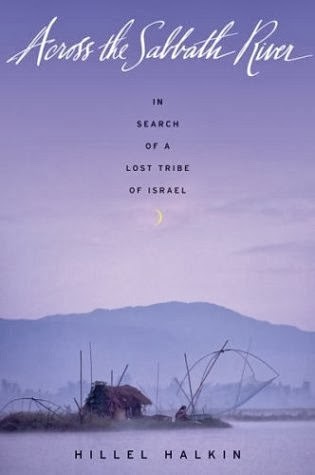
Myanmar), regard themselves as descendants of one of the Lost Tribes of
Israel, the
Tribe of Menasseh. Anthropologists, folklorists, and geneticists have found their claims credible, though by appearance they resemble fellow speakers of Tibeto-Burman languages. Many expect that Kuki nationalists, some of whom demand a fully independent state, may be the next to follow the Telugu example and throw their hats in the ring.
However, it is the Telangana movement that has some of the fiercest nationalist emotions behind it.
Hyderabad, including much of the Telugu homeland, was the largest of the literally scores of autonomous “princely states” that co-existed under the period of British suzerainty over the subcontinent. When
British India was divided into predominantly-Hindu India and predominantly-Muslim
Pakistan at independence in 1947, Hyderabad’s Muslim monarch,
Osman Ali Khan, who ruled over millions of Hindus, declared independence from both the
United Kingdom and the new Indian nation of which he did not want to be a part. But Hyderabad was forcibly absorbed into the new country. In 1956, when the Indian government reorganized its internal borders, pains were taken to make sure that Hyderabadi nationalist feeling was not strengthened. Hyderabad state was abolished, with some of its territories going to
Karnataka state and some going to
Bombay state (which later subdivided into
Gujarat and Maharashtra), while Telugu areas were attached to Andhra Pradesh. For Telugus, this is not a minor issue: more than 1,000 Telugu protesters have died from self-immolation since 2009 in protests over the statehood question.
 |
Osman Ali Khan, Hyderabad’s last monarch,
wanted Telangana and other parts of his dominions out of India entirely. |
Now that Telangana is likely to be established, those in the rest of Andhra Pradesh, including areas that would like to split away as
Rayalaseema and those that do not want to be stranded in a rump state which may end up being called
Seemandhra, have reacted angrily. A raft of legislators have resigned, and violence is spilling into the streets.
 |
| This is how many people in Andhra Pradesh feel about the idea of Telangana state. |
Telugu nationalism is part of the larger phenomenon of Dravidian nationalism—Dravidian being the language family that dominates southern India, as opposed to Hindu, Punjabi, and other Indo-European languages which dominate in the more politically central north of the country. Some Dravidian nationalists in the post-independence period called for an independent
Dravidistan,
Dravida Nadu, or
Deccan Federation, and this movement helped spawn separatist movements in India’s
Tamil Nadu state and across the straits in
Sri Lanka’s Tamil-dominated north—where 50,000 people died in one of the modern era’s bloodiest civil wars, which ended with a Tamil defeat in 2009. There also remains the possibility that the latest Telugu victory will reignite demands for a separate state among the Dravidian-speaking
Tulu people of Karnataka and
Kerala states.
 |
| Areas where Dravidian languages are spoken |
Few doubt that Telangana will become India’s 29th state in short order. But managing the separatist aspirations of some of the vast multi-ethnic country’s other minorities will be harder.
 |
| Proposed new states within India: how much subdivision is too much? |
[Also, for those who are wondering, yes, this blog is tied in with a forthcoming book, a sort of encyclopedic atlas to be published by Auslander and Fox under the title Let’s Split! A Complete Guide to Separatist Movements, Independence Struggles, Breakaway Republics, Rebel Provinces, Pseudostates, Puppet States, Tribal Fiefdoms, Micronations, and Do-It-Yourself Countries, from Chiapas to Chechnya and Tibet to Texas. Look for it some time in 2013. I will be keeping readers posted of further publication news.]