Showing posts with label Barzani. Show all posts

Saturday, October 6, 2012

Turkey and Syria Edge toward War, Baghdad Expels Turkish Bases from North: Kurdistan Update, 30 September - 6 October 2012

That red line runs right through Kurdistan
NORTH KURDISTAN (TURKISH KURDISTAN)

Land Mine in Turkish Kurdistan Kills 1 Soldier; 2 Rebels Dead in Battle in Siirt.  A land mine in Şırnak province, in the Kurdistan region of southeastern Turkeykilled a Turkish soldier and wounded a second on September 30th.  The incident occurred during a mine sweep, and the banned separatist Kurdistan Workers’ Party (P.K.K.) is suspected.  Also this week, two P.K.K. fighters were reported killed in Siirt province in a clash with the military.

Local Hakkari Party Chief Released after Month of Captivity by Kurdish Rebels.  A local politician with Turkey’s ruling Justice and Development Party (A.K.P.) in Hakkari province, in the southeast’s Kurdistan region, was released October 4th after more than a month in captivity at the hands of the banned separatist Kurdistan Workers’ Party (P.K.K.).  The captive, Abdülmecit Tarhan, was the Hakkari branch chief of the A.K.P.  He appeared to have been held in Iraq, just over the border from Hakkari.

Abdülmecit Tarhan (center)
WEST KURDISTAN (SYRIAN KURDISTAN)

Kurds Are (Of Course) First Casualties as Turkey Edges toward Open War with Syria.  In the first fatal cross-border violence between Turkey and Syria since the Syrian civil war began last year, Turkish forces fired weapons across the frontier between Syria’s Hasaka province and Turkey’s Mardin province on October 2nd, killing one border patrolman from a Kurdish civil-defense militia that the Turkish government fears is allied with its own armed separatist Kurdistan Workers’ Party (P.K.K.).  Three Kurds were wounded in the incident.  Later, and with more attention from international media, further cross-border reprisals by the Turkish military targeted forces loyal to the embattled dictatorship of Bashar al-Assad within Syria, prompting fears that Turkey would be drawn fully into the war.

SOUTH KURDISTAN (IRAQI KURDISTAN)

After New Bombings, Baghdad to Boot Turkish Bases Out of Iraqi Kurdistan.  This week saw a new round of Turkish bombings of supposed Kurdish rebel positions in northern Iraq’s Kurdistan region, followed a few days later by an Iraqi government decision to phase out Turkey’s military bases in the Kurdish region.  First, on September 28th, warplanes from Turkey crossed into Iraq and bombed what it claimed were targets connected to the banned separatist Kurdistan Workers’ Party (P.K.K.), which is waging a decades-long insurgency in the Kurdish region of southeastern Turkey.  A P.K.K. spokesman said that the bombing went on for two days, in the Qandil mountains.  There were no reports of casualties.  On October 1st, the Turkish government asked parliament for an extension of its mandate to conduct such cross-border sorties.  The next day, an Iraqi government spokesman in Baghdad announced a cabinet decision “to reject the presence of any foreign bases or forces on Iraqi land and to reject the entry of any foreign military forces into Iraqi land.”  The reference to “land” seems designed to prevent Iraq from feeling committed to respond to future air sorties from Turkey, but it certainly signals the beginning of the end of Turkey’s military bases in Dohuk, one of the northern Iraqi provinces governed by the autonomous Kurdistan Regional Government (K.R.G.)—bases that were first established at the invitation of the dictator Saddam Hussein.


Hamas Leader Mashal and Kurdish President Barzani Hold Informal Meeting in Ankara.  The head of Hamas, the Islamist terrorist militia that governs the Gaza Strip portion of the Palestinian Territoriesmet on October 1st with the president of northern Iraq’s autonomous Kurdistan Regional Government (K.R.G.), Massoud Barzani, on the sidelines of a summit in Ankara of the Justice and Development Party (A.K.P.), which governs Turkey.  A Hamas source said that its leader, Khaled Mashal, discussed Palestine, the Arab Spring, and other topics with Barzani.

[Also, for those who are wondering, yes, this blog is tied in with a forthcoming book, a sort of encyclopedic atlas to be published by Auslander and Fox under the title Let’s Split! A Complete Guide to Separatist Movements, Independence Struggles, Breakaway Republics, Rebel Provinces, Pseudostates, Puppet States, Tribal Fiefdoms, Micronations, and Do-It-Yourself Countries, from Chiapas to Chechnya and Tibet to Texas.  Look for it in spring 2013.  I will be keeping readers posted of further publication news.]

Friday, August 31, 2012

Syria and Kurdistan Update, 26 August - 1 September 2012


SYRIAN KURDISTAN (WEST KURDISTAN)

Syrian Army Attacks Formerly Liberated Kurdish Town, Abducts Activists.  The army of Syria’s embattled dictatorship has entered one of the Kurdish towns along the border with Turkey that it had abandoned to Kurdish forces last month, according to sources on August 27th.  That day, according to a source from the Kurdish Youth Movement (T.C.K.), Syrian forces attacked the town, Amuda (called Amudê in Kurdish) that day and kidnapped several Kurdish activists.  There was at last report a tense standoff between the army and the Kurdish defenders of the region, which was declared the Western Kurdistan Autonomous Region last month.


TURKISH KURDISTAN (NORTH KURDISTAN)

P.K.K. Attacks Border Battalion in Hakkari, Killing 1 Turkish Soldier.  Fighters from the banned separatist Kurdistan Workers’ Party (P.K.K.) attacked a border battalion in Hakkari province in southeastern Turkey on August 25th, resulting in a battle in which one Turkish soldier was killed and five were wounded.  It was the second such attack in as many days.


Riot Cops in Şırnak Disperse Unauthorized Rally with Water Cannons, Tear Gas.  After Turkish authorities refused to grant a permit for a Kurdish demonstration in Cizre on August 26th, thousands rallied anyway in support of the P.K.K.  Protesters threw stones and incendiary devices at police, and police used tear gas and water cannon to disperse the crowds.  Cizre is in southeast Turkey’s Şırnak province, near the borders with Syria and Iraq.


Rioting in Cizre
Abducted Van Politician Released by P.K.K. in Northern Iraq.  A Turkish politician abducted July 2nd in southeastern Turkey’s Van province was released by his Kurdish captors August 23rd in northern Iraq and was at his home village in Ongün the following day. The politician, Hayrullah Tanış, who is the Justice and Development Party (A.K.P.) chair for Van’s Gürpınar district, had been abducted in Van by the banned separatist P.K.K.  He was let free into the hands of human-rights officers for the province.

Hayrullah Tanış
Complaint Filed against B.D.P. Deputies for Secret Meetings with P.K.K.  In southeastern Turkey’s Şırnak province, a market owner filed a criminal complaint against officers from the mainstream, pro-Kurdish Peace and Democracy Party (B.D.P.) for holding meetings with members of the banned separatist P.K.K. in Şemdinli, the town in Hakkari province which was the scene of a deadly, days-long battle earlier this month between the P.K.K. and the Turkish military.  The plaintiff, Mahmut Çakir, says that 10 B.D.P. members, including the deputy co-chair Gülten Kışanak and other deputies, met secretly with P.K.K. militants and thus “supported and emboldened terror and terror propaganda.”

Teacher Arrested for Aiding Gaziantep Car-Bomb That Killed 9.  A teacher was placed under arrest on August 26th under suspicion of aiding the August 20th car-bomb attack in Gaziantep (reported on last week in this blog) which killed nine people.  He was first picked up by police in Mersin province, on the south-central coast.  It is said that he brought the same car used in the bombing to a repair shop in Şanlıurfa, in Gaziantep province, near the border with Syria, a few days before the attack.  TheP.K.K. continues to deny responsibility for the bombing.


Iraq–Turkey Oil Pipeline Bombed on Turkish Side of Border.  A pipeline carrying oil from northern Iraq’s Kurdistan region into Turkey was attacked August 26th, causing a fire and halting the flow of crude.  The bombing was on a length of the Kirkuk–Ceyhan pipeline in Turkey’s Şırnak province.  The P.K.K. or oil smugglers are suspected.

IRAQI KURDISTAN (SOUTH KURDISTAN)

Turkey Bombs P.K.K. Targets in Northern Iraq.  The Republic of Turkey sent warplanes on August 24th to strike at P.K.K. positions in the mountains just over the border in northern Iraq’s autonomous Kurdistan region.  The announcement from the P.K.K. itself said, “Four warplanes bombed the villages of Silliyeh and Sargal at 1:30 a.m.  There were no casualties, but the bombings caused damage to the houses of residents of the villages, and also damaged some farms.”

Iraqi Shiite Mullah Clarifies Comments on Mahdi Waging Holy War on Kurds.  A radical Shiite Arab mullah in Iraq has clarified his recent controversial comments (reported last week in this blog) in which he claimed that when the Imam al-Mahdi—the Shiite Muslim version of the messiah—arrives he will wage holy war against the Kurds of Iraq, whom he called the “rogues mentioned in the books of epics and tribulations.”  The cleric, Jalal al-Din Ali al-Saghir, of the Islamic Supreme Council of Iraq (I.S.C.I.), has been forced to meet with Jalal Talabani, the president of Iraq, and with Massoud Barzani, the president of the autonomous Kurdistan Regional Government (K.R.G.) in northern Iraq to explain his views.  He now explains that a Shiite holy war against the Iraqi Kurds “could be some of the signs of the appearance of the awaited imam, but in order for these expectations to come true, a strong earthquake needs to hit Syria, and Turkish soldiers must land in the Cizre region.”  The earthquake, he predicted, could mean the division of Syria into five separate countries.  Phew, I’m glad he had the chance to explain himself more fully.  At first there, he sounded like he might have been some kind of nut.


Many Iraqi Shiites believe in the imminent arrival of a messianic “Imam Mahdi”
Kurdish Party in Iraq Demands Census to Reapportion Parliament Seats.  A member for the opposition Kurdistan Alliance in Iraq’s national parliament, is arguing that a new, proper census must be held to determine how many parliamentary seats will be set aside for Kurdish regions.  In 2010, food-ration cards were used to count the number of residents in different provinces, but the K.A. lawmaker, Dr. Mahmoud Osman, points out that under that system “the Kurds will lose even more votes this time,” since “Kurds, unlike the Iraqi population in the south and middle of Iraq, do not register their children in the ration system.”  Kurds lost 13 parliamentary seats in the counting that preceded the 2010 elections.  Another K.A. legislator, Sirwan Ahmed, who is from Kirkuk, says that the Shiite and Sunni Arabs who dominate the rest of Iraq are resistant to any new census for fear of confirming that the disputed city of Kirkuk now has a Kurdish majority.  It was 49% Kurdish in 1997, and many Kurds have moved to the city since then.

Rights Group Says Female Genital Mutilation Persists in Iraqi Kurdistan, Despite Ban.  The international group Human Rights Watch (H.R.W.) reported this week that the practice of female genital mutilation persists in the autonomous Kurdistan region of northern Iraq, a year after it was banned by the Kurdistan Regional Government’s parliament.  H.R.W. blamed K.R.G. government intransigence: none of the villagers they interviewed for a new report had seen any evidence of actions or campaigns taken by the K.R.G. government to eliminate the practice.


Yazidi Emir Declares His People Are Kurds, Backs Kurdistan Autonomous Government.  The emir of the Yazidi community in Iraq, Sheikh Tahseen Saeed Bek, this week reiterated to the press his people’s support for the northern autonomous Kurdistan Regional Government (K.R.G.) against the central Iraqi government in Baghdad.  Bek, who lives near Dohuk, in the province of the same name in the K.R.G.’s area of jurisdiction, declared that the half-million or so Yazidis are, quite simply, Kurds.  Most Yazidis, however, live in Nineveh province, parts of which are a Kurdish-dominated area which lies outside the K.R.G. area but which Kurdish nationalists covet.  Traditionally, the Yazidis have been shunned and regarded as devil-worshippers, though their religion is a mixture of Sufism, Zoroastrianism, and Kurdish folk religion.


Tahseen Saeed Bek, Yazidi emir
KURDISH DIASPORA

French Police Arrest 5 P.K.K. Operatives in Extortion and Murder Plot.  Media reported that two covert operations on August 24th and 25th against P.K.K. operatives in southern France have yielded five arrests.  The suspects are said to have been plotting the murder of a Turkish citizen living in Marseilles who failed to pay a “revolution tax.”  Displays of political support for the P.K.K. are common in Marseilles.


[Note: See these earlier articles from this blog on related topics, especially with respect to the Kurds and the Arab Spring: “And Now Civil War ... Could Syria Break Up?” (Nov. 2011), “The Iraq War Is Over, but Is Iraq’s Partition Just Beginning?” (Dec. 2011), “Ten Separatist Movements to Watch in 2012” (Dec. 2011); “Get Ready for a Kurdish Spring” (March 28, 2012); “Shifting Alliances in the Kurdish Struggles” (April 1, 2012); “Turkish Delights Hide Ugly History” (April 4, 2012);  “Syria’s Kurds Are Setting Up a Quasi-State—How Long Can It Last?” (July 2012), “Liberation of Syrian Kurdistan Infuriates Turkey, Iraq, and the Free Syrian Army—in Fact, Everyone but Assad” (Aug. 2012), “Turkish Kurdistan Ground War in Progress, Iraq Border Crisis Eases: Kurdistan and Syria Update” (Aug. 2012), “Kurdistan Update: Both Turks & PKK Claim to Control Şemdinli, Zaza MP Abducted, Donna D’Errico and Noah’s Ark” (Aug. 2012), “Carnage Continues in Turkish Kurdistan” (Aug. 2010).]

[Also, for those who are wondering, yes, this blog is tied in with a forthcoming book, a sort of encyclopedic atlas to be published by Auslander and Fox under the title Let’s Split! A Complete Guide to Separatist Movements, Independence Struggles, Breakaway Republics, Rebel Provinces, Pseudostates, Puppet States, Tribal Fiefdoms, Micronations, and Do-It-Yourself Countries, from Chiapas to Chechnya and Tibet to Texas.  Look for it in spring 2013.  I will be keeping readers posted of further publication news.]

Saturday, August 11, 2012

Turkish Kurdistan Ground War in Progress, Iraq Border Crisis Eases: Kurdistan and Syria Update


[Note: See these earlier articles from this blog on related topics, especially with respect to the Kurds and the Arab Spring: “And Now Civil War ... Could Syria Break Up?” (Nov. 2011), “The Iraq War Is Over, but Is Iraq’s Partition Just Beginning?” (Dec. 2011), “Ten Separatist Movements to Watch in 2012” (Dec. 2011); “Get Ready for a Kurdish Spring” (March 28, 2012); “Shifting Alliances in the Kurdish Struggles” (April 1, 2012); “Turkish Delights Hide Ugly History” (April 4, 2012);  “Syria’s Kurds Are Setting Up a Quasi-State—How Long Can It Last?” (July 2012), “Liberation of Syrian Kurdistan Infuriates Turkey, Iraq, and the Free Syrian Army—in Fact, Everyone but Assad” (Aug. 2012), and, on a pretty much weekly basis, installments of my “Week in Separatist News” columns.]


Developments are coming quick and fast in Kurdistan.  The standoff between three armies—of Iraq’s Shiite-Arab-dominated central government, of Iraq’s Kurdistan Regional Government (K.R.G.), and of the Western Kurdistan Autonomous Region in northern Syria—at the border between Iraq’s Nineveh province and Syria has now eased with no casualties.  The result may be greater K.R.G. control over Kurdish-dominated areas it covets in Iraq proper, including Nineveh, which may be what the K.R.G. had in mind all along when it dispatched troops last week to side with Syrian Kurds in the face-off.

Sorry about the “U.S.S.R.”  It’s hard to find this good a Kurdish-population map with contemporary labels.  That’s mostly the Republic of Armenia shown there shaded light green.
But things are heating up dangerously in southeastern Turkey, where to all appearances Syrian control of northern Syria may have made it easier for Kurdish rebels to stage an unprecedented ground offensive to take control of Şemdinli, a town of more than 10,000 in Turkey’s Hakkari province, near the mountainous area where Iraq, Iran, and Turkey meet.  Kurdish rebels also scored a deadly attack in the far west of Turkey, well outside of the Kurdish region, which is also unprecedented in recent years. This will likely heighten the Turkish government’s desire to invade northern Syria and secure a buffer zone (similar to Israel’s in places like Lebanon), to prevent it from becoming a staging ground for further attacks.  Iraqi Kurdistan has already shown its willingness to stand up to the Iraqi army in defense of Syria’s Kurds.  Would they stand up to Turkey’s as well?  In any case, the conflict is widening, even as the Sunni-Arab-dominated opposition in Syria attempts to get the upper hand once and for all, and what happens next is unpredictable.

Here is the rundown of these and other top stories from Kurdistan and surrounding areas this week:

Şemdinli, in happier times, now a war zone
Over 100, Mostly Kurds, Die in Battle for Turkish Town; P.K.K. Claims Control.  115 militants have now been killed, according to the Republic of Turkey’s ministry of the interior on August 5th, in the battle for Şemdinli in Hakkari province in the far southeast of Turkey.  The interior ministry also reported that six Turkish soldiers and two village guards have died.  Those eight, as well 14 P.K.K. fighters that included an alleged female suicide-bomber, all died in a single incident in the battle, an August 4th attack on a military outpost.  A later report cited 15 Turkish fatalities.  The clash began July 29th with what the Turkish government claims was an attempted takeover of the town by Kurdistan Workers’ Party (P.K.K.) rebels sneaking across from the newly-declared Kurdish safe haven in northern Syria.  The P.K.K. is a banned separatist militia based in Turkey, but Turkey is portraying the P.K.K.’s traditonal ally, Syria’s Democratic Union Party (P.Y.D.), which co-governs the newly declared Western Kurdistan Autonomous Region in Syria, as an active threat to Turkey’s security.  Şemdinli is not actually even that close to the Syrian border, wedged as it is quite close to where Turkey, Iraq, and Iran meet, but a P.K.K. source within Turkey had announced a plan to parlay Kurdish political victories in Syria into military victories in Turkey.  The town has symbolic value, however: it was near here, in Şemdinli district, that the P.K.K. first, on August 15, 1984, declared war against the Turkish state.  Turkey’s minister of the interior, İdris Naim Şahinhit the xenophobic talking points hard in comments to the press, saying that the P.K.K. dead in the battle for Şemdinli included “Armenian, Iranian, Syrian, Iraqi, and Israeli citizens” (prompting a lightning-quick reply from officials in the Republic of Armenia, declaring the utter impossibility of this).  Meanwhile, casualties piled up.  On August 5th, according to the military, rebels attacked a border post in Hakkari province near the Iraqi border, resulting in a battle in which six Turkish soldiers, two village guards, and 14 rebels (including three women) were killed and 15 soldiers wounded.  The skewed deaths in the rest of the battle are explained by Turkey’s use of air strikes.  The Turkish government has been stingy with information about the battles.  The P.K.K., for its part, claims to control Şemdinli.  On August 6th, an overnight explosion was reported in Mardin province, Turkey, on a length of the crude-oil pipeline between Kirkuk, in Kurdish-dominated Iraq, and Ceyhan in Turkey.  The pipeline carries about a quarter of all of Iraq’s crude exports and was expected to be out of commission for 10 days.  Sources close to the P.K.K. report that the group was responsible.  On August 8th, four bombs were found along a Kirkuk pipeline in Iraqi territory and were defused.  P.K.K. members also stopped a bus at a roadblock in Bingöl province in east-central Turkey and abducted three off-duty soldiers riding as passengers.  Their whereabouts are unknown.  The next day, a roadside bomb followed by an ambush of a military bus by P.K.K. rebels killed one Turkish soldier and wounded at least 11 people near Foca, in Izmir province—quite unusually, since Izmir is a resort area on the west coast, on the Aegean Sea, far from the Kurdish region.


3-Way Standoff with Iraqis, Kurds at Syria Border Eased after U.S. Mediates.  An end is in sight for the tense stand-off at the border between Syria and Iraq’s Nineveh province between a Syrian Kurdish militia, the Arab-Shiite-dominated Iraqi central government’s military, and the private military of Iraq’s northern autonomous Kurdistan Regional Government (K.R.G.).  Parleys between the parties first debated this week whether to “activate” a joint committee which would come to an agreement on sharing military role in places like this part of Nineveh, the Zumar district—areas which lie outside K.R.G.’s formal jurisdiction but where Kurdish troops have been in charge since the United States invasion in 2003.  (There is such a committee, but it hasn’t had much sway since the U.S. withdrew from Iraq in December 2011.)  Then, on August 6th, a statement from the K.R.G.’s military, the Peshmerga, said that the K.R.G. and Baghdad would both pull troops back from the border.  “The Iraqi army and the Peshmerga,” the statement said, “will take responsibility for each of the areas where they are stationed, protect the borders between Iraq and Syria and remove tension on the main roads in the area.”  The K.R.G. also said that diplomatic mediation by the United States helped reach the agreement.


Standoff in the Nineveh border region
Syrian Regime Troops Hang Back as Kurds Celebrate in Semi-Liberated Qamishli.  In Qamishli, the notional capital of Syrian Kurdistan, or Western Kurdistan, as Kurdish nationalists call it, about 100,000 Kurds celebrated in the streets on August 6th, even though technically the city has not been fully liberated and so is not a de facto part of the de facto independent Western Kurdistan Autonomous Region declared last month.  The government troops loyal to the embattled dictator, Bashar al-Assad, who usually patrol most of the city, were not visible during the celebrations—a fact likely to bolster the view in, for example, Turkey and among the mainstream Sunni-Arab-dominated Syrian opposition, that Assad essentially gave the liberated areas to the Kurds as part of some sort of deal.  Celebrants carried large portraits both of Abdullah Öcalan, the imprisoned founder of the Kurdistan Workers’ Party (P.K.K.) and, at least in Syria and in his native Turkey, the spiritual leader of Kurdish nationalism, and of Massoud Barzani—president of northern Iraq’s autonomous Kurdistan Regional Government (K.R.G.), and son of Mustafa Barzani, president of the brief-lived (1946-47) Kurdish Republic of Mahabad, in what is now Iran.

Kurds celebrate in Qamishli
K.N.C. Distances Itself from P.Y.D. in Arbil Meeting with Turkish Diplomat.  In related developments (see above story), it was revealed this week that during the Turkish foreign minister Ahmet Davutoğlu’s meeting with representatives of the Kurdish National Council (K.N.C.) in Arbil, Iraq, last week, the K.N.C. reassured him that its coalition with the People’s Council of Western Kurdistan to form the Kurdish Supreme Council which now governs the self-declared Western Kurdistan Autonomous Region in northern Syria is “strategic.”  The People’s Council is closely affiliated with the Democratic Union Party (P.Y.D.), a pro-Kurdish party in Syria whose ties to Turkey’s banned separatist Kurdistan Workers’ Party (P.K.K.) greatly worries Ankara.  In fact, at the meeting with Davutoğlu at which these reassurances were made, P.Y.D. representatives were not invited.  Meanwhile, the P.Y.D.’s leader, Mohammed Saleh Muslim, speaking from the half-liberated Western Kurdistan capital, Qamishli, responded to Turkish concerns, saying, “Turkey has nothing to do with Syrian Kurds.  The protection of my people in my areas, in my town: that is my right, no one can deny it, and that’s what we did.  So there is no need for Turkey to be worried and make threats.”


Turkish Top Diplomat’s State Visit to Arbil Included Side Trip to Rally Iraqi Turkmens.  When the Republic of Turkey’s foreign minister, Ahmet Davutoğlu, visited northern Iraq’s autonomous Kurdistan region last week (as reported in this blog), his visit to the city of Kirkuk infuriated the central Iraqi government in Baghdad.  Kirkuk lies in an oil-rich region which is dominated by Kurds but lies outside the reach of the official Kurdistan Regional Government (K.R.G.), though to a great extent the K.R.G.’s president, Massoud Barzani, and his militias seem to run the place.  Iraq’s increasingly authoritarian Shiite Arab prime minister, Nouri al-Maliki, and his allies, regarded the visit—which was an unannounced side trip on Davutoğlu’s state-visit-ish visit to the K.R.G. capital, Arbil—as evidence of a worrying cosiness between Ankara and Arbil, knowing that Barzani openly covets Kirkuk and other Kurdish-dominated lands outside his official bailiwick.  This despite the fact that one of the purposes of Davutoğlu’s visit was to warn Barzani against continuing to support Kurdish separatists in Syria.  It turns out that the Kirkuk visit was far from a Turkish stamp of approval on Barzani’s designs on the city, as was revealed this week when the text of Davutoğlu’s speech to Kirkuk’s Turkmen community was officially released.  Turkmens speak a language related to Turkish and have deep cultural roots with Turkey and Azerbaijan, though they are scattered (much like the Kurds, actually) as large minorities in countries such as Iran, Iraq, Turkey, Afghanistan, and elsewhere.  They dominate only in the basket-case Soviet republic of Turkmenistan, way on the other side of Iran.  Locally, they are often rivals to the Kurds, and Turkmen aspirations toward an autonomous region in Iraq like the Kurds’ are a source of friction because their planned autonomous or independent Türkmeneli overlaps significantly with the K.R.G. lands and their penumbra.  Davutoğlu told a crowd of rapturous Turkmens, “After 75 years, I am come to Kirkuk as the first Turkish foreign minister.  You waited for us too long, but I promise you won’t wait for us that long in the future.”  At another point, he said, “Kirkuk has a special place in our heart.  I met with members of Kirkuk provincial council and told them that Kirkuk is one of our [sic] ancient cities.”  Not that this shouldn’t make Baghdad nervous too.  The Turkmens hate the Shiite Arabs as much as the Kurds do.  It is notable, however, that Ankara, which seems to be rapidly reassessing its warm ties with the K.R.G. in light of the perceived threat to Turkey from a K.R.G.-armed autonomous state in Syrian Kurdistan, seems to be hedging its bets and making friends among Turkmen nationalists as well.  During Davutoğlu’s speech, a man in the audience shouted, “They are annihilating the Turkmen in Kirkuk.  Help us!” and Davutoğlu replied gently, “No, be sure that such a thing won’t happen.  ...  We will spare no effort to help Kirkuk.”
An optimistically large map of the prospective Turkmen state of Türkmeneli, in what is now Iraq.
Ossetians in Syria Seek New Life in North Ossetia—but Not in South Ossetia.  In the Syrian civil war, Ossetians, most of them descendants of refugees from the Russian Empire’s brutal invasion of the Caucasus in the late nineteenth century, are now seeking to relocate to Russia.  A letter signed by 33 of the estimated 700 Ossetians in Syria and addressed both to the government in Moscow and to the Russian Federation’s Republic of North Ossetia–Alania, in the North Caucasus, asks Russians “to receive as compatriots the ethnic Ossetians from Syria who wish to move to the Russian Federation, to return to their ancestral land in Ossetia in order to live in peace and harmony with the peoples of Russia.”  The letter’s author, Hisham Albegov, says, “Not all of them want to leave.  Many have Arab wives, some have successful businesses that they hope to continue after the war ends.  But 150-200 people are dreaming of returning to Russia.  Some of them even have Russian citizenship.”  The 33 listed in the letter “are the people hardest hit by the war, those who have lost their homes or relatives.”  So far there is no indication that such a letter has been sent to the Republic of South Ossetia, which most of the world regards as part of the Republic of Georgia, but whose de facto independence Russian troops secured in a 2008 war with Georgia.  The Russian government has (as reported in this blog) largely reacted with indifference to the plight of the far more numerous Circassians in Syria who would like to return to their homeland in southwestern Russia, between North Ossetia and the border with Ukraine.  But Circassians are predominantly Muslim, and a rising Islamist insurgency in the North Caucasus makes the Russian government wary of them.  Most Ossetians, however, are, like most Russians, Eastern Orthodox Christians, so they may have a chance.

Locations of South Ossetia and North Ossetia
Free Syrian Army’s Arabs Alarmed as Assad Releases 1,200 Kurdish Political Prisoners.  Media are reporting that the regime in Syria has released 1,200 Kurdish political prisoners, along with a larger number of ordinary criminal convicts in the northern, Kurdish area.  An opposition leader in Homs, Abu Salah, said that he believed this was a deliberate attempt by Bashar al-Assad, Syria’s embattled dictator, to, in the words of one news report, “show the Arab population what life would be like under control of the Kurds after his resignation”—even though it is near impossible that Kurds could ever control non-Arab portions of Syria.  Salah also reassured the Turkish government that the Free Syrian Army (F.S.A.) would prevent Syria’s Kurds from threatening Turkey.


[Also, for those who are wondering, yes, this blog is tied in with a forthcoming book, a sort of encyclopedic atlas to be published by Auslander and Fox under the title Let’s Split! A Complete Guide to Separatist Movements, Independence Struggles, Breakaway Republics, Rebel Provinces, Pseudostates, Puppet States, Tribal Fiefdoms, Micronations, and Do-It-Yourself Countries, from Chiapas to Chechnya and Tibet to Texas.  Look for it in spring 2013.  I will be keeping readers posted of further publication news.]

Saturday, April 21, 2012

The Week in Separatist News: 15-21 April 2010: North vs. South in Sudan and Mali; Abkhaz Assassination Plot Thickens


Image of the Week: Online microphilatelists (or pseudophilatelists?) are talking this week about rare postage stamps issued by the Republic of Abkhazia depicting the former United States president Bill Clinton and his paramour Monica Lewinsky, in commemoration of the sex scandal that nearly ended his presidency in the late 1990s.  Abkhazia still resents Clinton’s shaping of the American post-Cold-War policy of allying with the Republic of Georgia as a way of containing Russian power.  The U.S. considers Abkhazia part of Georgia, but Abkhazia has been self-governing since the 1990s, and the Russian Federation recognizes it as sovereign.  In particular, Abkhaz are hostile to the current U.S. secretary of state, Hillary Rodham Clinton—the wronged wife in the Lewinsky scandal—whom they accuse of bullying some of Russia’s allies, such as Belarus and Kazakhstan, into refusing to recognize Abkhazia.  These stamps are banned in Georgia. 


TOP STORY—NORTH AFRICA:
THE BRINK OF ALL-OUT WAR ON 2 FRONTS:

NORTH VS. SOUTH IN MALI AND SUDAN

Sudan and South Sudan Border Clashes Escalate toward All-Out War.  Fighting continued between the Republic of Sudan and the Republic of South Sudan this week, with the capture of the valuable Heglig oil fields—which produce half of (north) Sudan’s oil—by South Sudan’s army last week.  This was the first significant direct occupation of Sudanese territory by the South Sudanese, who have no air force and are not usually the aggressors in the fighting.  Sudan’s parliament unanimously declared South Sudan an “enemy” on April 16th and called for the South Sudanese government’s overthrow, and a leading member of Sudan’s ruling party labeled the situation a full-on war.  Sudan’s president, Omar al-Bashir, a wanted international war criminal for his crimes against humanity in Darfuradded a sectarian tone to the conflict, saying that the newest fighting had “revived the spirit of jihad” in Sudan, and on April 19th he told a rally in the disputed border state of South Kordofan that the Sudanese army would “march to Juba,” South Sudan’s capital.  (South Sudan is predominantly non-Muslim and ethnically sub-Saharan (“black”) African, while Sudan is predominantly Muslim and has become far more Islamist in its ideology since the secession of the south in July 2011.)  The international community is regarding this as tantamount to a declaration of war, and both the United States and the United Nations pleaded for calm.  By April 21st, South Sudan’s army was reported to have withdrawn from Heglig, and the Sudanese were claiming to have “liberated” it.  Whether this brings the two countries back from the brink of all-out war remains to be seen.

(Northern) Sudanese celebrate the withdrawal of South Sudanese forces from Heglig

Sudanese airstrikes hit a United Nations camp in Mayom, in South Sudan’s Unity State, on April 15th.  South Sudan on April 16th accused Sudan’s air force of killing five civilians and wounding nine in airstrikes in the Heglig region.  Sudan also retook the town of Mugum, in Blue Nile state, killing 25 rebels from the northern branch of the Sudanese People’s Liberation Army (the southern branch of which became South Sudan’s military when it won independence last year).  Both South Kordofan and Blue Nile are among the states where separate referenda were to be held to decide whether they would be part of South Sudan or Sudan; those referenda were never held, and Sudan has mostly controlled them, with nearly all maps assigning them to the north.  Sudan also attacked the town of Bentiu in Unity state, in South Sudan proper, and fighting has for the first time in this round of clashes spread to the Bahr el Ghazal region, in northwestern South Sudan, with, by April 18th, a clash in Aweil, near the disputed Abyei district, in which seven South Sudanese and 15 Sudanese soldiers died.  Meanwhile, South Sudan’s oil industry has been shut down in protest over pipeline fees set by Sudan, which controls South Sudan’s access to the sea.

(See my article listing the conflict between the Sudans as one of “Ten Separatist Movements to Watch in 2012.”)

Ecowas Mulls Military Intervention to Retake Azawad; Mali Offers Tuaregs Federation.  The 15-member Economic Community of West African States (Ecowasmoved forward on April 14th its request for approval of a 3,000-strong troop deployment to help restore the newly declared Independent State of Azawad to the control of the Republic of Mali—after the northern Tuareg region’s April 6th declaration of independence amidst the chaos of a coup d’état in Mali’s southern capital.  The new statements follow a meeting on April 12th in Abidjan, Côte d’Ivoire, in which Ecowas promised to “take all necessary measures to end the rebellion and maintain the unity and territorial integrity of Mali, including the use of force.”

Meanwhile, at talks on April 15th in Nouakchott, MauritaniaThibilé Dramé, an emissary for Mali’s newly sworn-in civilian interim president, Dioncounda Traoré, said that his government was willing to negotiate with Azawad for a federal status within Mali but would not negotiate with the “armed foreign jihadist groups” such as Ansar al-Dine that appear to be running the north’s cities.  Some observers are speculating that the site of the meeting indicates that Mauritania, which also has a large Tuareg population, may take the lead when and if Ecowas authorizes a regional multinational force to defeat the Azawadis.

The same day, in Timbuktu, in Azawad territory, a missionary from Switzerland was captured from her home by unknown gunmen wearing turbans and has not been seen since.  Switzerland’s foreign ministry is investigating.  Timbuktu is still to be under the control of the al-Qaeda-affiliated Ansar al-Dine militia, and this week the al-Qaeda Organization in the Islamic Maghreb (A.Q.I.M.named an A.Q.I.M. “emir” from Algeria named Jemal Oukacha, who uses the nom de guerre Yahya Abou al-Hammam, governor of the Timbuktu district.  There have also been concerns voiced that Timbuktu, a Unesco World Heritage Site, which contains some of the most historically important ancient libraries in the world, is being plundered of its antiquities.

A checkpoint in Timbuktu, with the Ansar al-Dine black flag flying.

In Bamako, the illusion of a return to normalcy provided by the swearing in of Douré last week (as reported in this blog)—and by Douré’s appointment of a dual United States–Malian citizen, astrophysicist, and Microsoft executive, Cheick Modibo Diarra, as the new prime minister—was undercut by the arrests of several politicians on April 17th by gunmen from Amadou Haya Sanogo’s military junta.  Those arrested included two presidential candidates: Soumaïla Cissé, who was snatched in a violent home invasion, and a former prime minister, Modibo Sidibé.  The men, and several others taken at the same time, were released two days later under international pressure.  Cissé and Sidibé are considered leading candidates for the now-postponed April 29th presidential election.  Meanwhile, Amadou Toumani Touré, the president who ushered Mali to democratic rule ten years ago and was ousted in the March 22nd coup d’état this year, fled this week with 15 members of his family to Senegal, after first taking refuge in the Senegalese embassy in Bamako.  (See my recent long article on the Azawadi declaration of independence, plus an earlier article on the Tuareg rebellion in the context of other conflicts in the Sahel and a more recent article on the Independent State of Azawad’s choice of a name for itself.)

AFRICA

Cyrenaica Leader Repeats Autonomy Demand, Plans to Form Security Force.  At a conference on April 17th in their capital, Benghazi, hundreds of advocates of the eastern Cyrenaica region’s autonomy within a federal Libya supported a joint pledge “to the autonomy of Cyrenaica, stretching from the border with Egypt (in the east) to Syrte” (the late dictator Moammar al-Qaddafi’s home town).  The new leadership in Cyrenaica includes members of the Senussi royal family which ruled Libya as a kingdom from 1951 to 1963 and staged the first uprising against Qaddafi’s rule in the 1960s.   Libya’s internationally recognized Transitional National Council (N.T.C.) in Tripoli, however, is dominated by members of Qaddafi’s cabinet.  The current head of the pro-federalist Cyrenaica Transitional Council is Ahmed al-Zubair al-Senussi, a former political prisoner of Qaddafi’s and a nephew of the Senussi dynasty’s Idris I, King of Libya, announced at the Benghazi conference that he meant to found a “security organ”—independent of, but cooperating with, the N.T.C.—to ensure Cyrenaica’s security.  (See my recent blog article on Cyrenaica’s declaration of autonomy.)

Puntland Minister Took Share of Pirate Ransom.  The de facto independent Puntland State of Somalia’s Minister of Fisheries and Ports, Sayid Mohamed Ragetook a share of the ransom after Somali-coast pirates released the Leila and its passengers and crew last week.  This is the charge made by the ship’s agent in a press conference in Berbera, in western Somaliland, where the Leila is now docked, on April 15th.  The agent, Ahmed Sayid Muhumed Mire, said, “We spent $300,000 U.S. for the negotiations with the pirates and the release of M.V. Leila,” adding, “I strongly believe that the minister got his share from the ransom.  He has links with the pirates.”  Rage has denied the charges.  The Leila, which is registered in the Republic of Panama, was hijacked by pirates in February and released on April 13th after the payment of a ransom.  (See my blog article about separatism in Somalia.)

Somali-coast pirates

Pirate Base in Puntland Strafed by Mystery Fighter Planes; 2 Hurt.  Two fighter planes from an unidentified nation fired missiles at a suspected pirate base in the self-governing Puntland State of Somalia on April 17th, wounding two civilians.  Agence France Presse quoted the Republic of Somalia’s coast guard and other sources in describing the strike on the village of Gumah, on the coast east of Bossaso.  The European Union Naval Force’s counter-piracy mission on the Somali coast denied responsibility.  Many other militaries, including those of the United States, the People’s Republic of ChinaRussiaIran, and the United Arab Emirates, also patrol the pirate-infested coast.  (See my blog article about separatism in Somalia.)

4 Islamists Sentenced to Death on Eve of Enclave’s Constitutional Convention.  On the eve of the Puntland State of Somalia’s constitutional convention, which convened in Garowe on April 15th, a court in the de facto independent republic sentenced four men to death on April 14th for being members of al-Shabaab.  The Islamist militia, allied to al-Qaeda, has recently expanded northward into Puntland since an African Union force of troops from Ethiopia and Kenya began dislodging it from its area of operations in southern Somalia.  Al-Shabaab has vowed to disrupt all economic activity in Puntland, one of the few economically successful areas in the formerly united Republic of Somalia.  (The new constitution was formally adopted on April 17th.)  (See my blog article about separatism in Somalia.)

Somaliland Won’t Talk with Mogadishu If Puntland Is at Table.  The foreign minister of the de facto independent Republic of Somaliland announced on April 19th that his government would not hold talks with the Republic of Somalia’s internationally recognized Transitional Federal Government (T.F.G.) in Mogadishu if representatives from the Puntland State of Somalia are on the negotiation committee.  At a press conference in Hargeisa, the minister, Mohamed Abdullahi Omar, said, “Until now, Somaliland was ready to communicate with T.F.G. ..., but on appointing two members from Puntland region, Somaliland will not proceed [with] the talks.”  Somaliland has been self-governing since declaring independence in 1991, but the T.F.G. regards it as part of Somalia. Puntland is completely self-governing but is nominally part of the Republic of Somalia.  (See my blog article about separatism in Somalia.)

Somaliland Police Shoot and Wound 5 Protesters in Housing Dispute.  A protest over a ban on illegal housing in Hargeisa, in western Somalilandled to a clash on April 15th between protesters and police, in which five civilians were injured by bullets, three of them seriously.  The interior minister pleaded for calm and urged residents to return to their homes.  (See my blog article about separatism in Somalia.)

Kenya Premier Warns Mombasa Separatists against Election Boycott.  The prime minister of the Republic of KenyaRaila Amollo Odingatold residents of the secessionist Coast province, in the south, that boycotting elections “will not be a solution,” adding, “We should instead use our votes to bring the much needed change.”  He was speaking in Coast’s Kilifi district and responding to calls by the banned Mombasa Republican Council to boycott the March 4, 2013, vote.

British Deputy P.M. Embarrassed by Wife’s Links to Western Sahara. The United Kingdom’s deputy prime minister, Nick Clegg, is responding to revelations that his wife, Miriam González Durántez Clegg, has been in the pay of O.C.P., a Moroccan mining company which has been accused of violating the human rights of the Sahrawi residents of Western Sahara, a former Spanish colony which Morocco administers in violation of international law. Mrs. Clegg, a law partner and a native of Spain, is paid up to £400 an hour to defend O.C.P.’s human-rights record to the European Union.  Nick Clegg heads the U.K.’s Liberal Democratic Party, junior partner in Prime Minister David Cameron’s coalition.

Miriam González Durántez Clegg and Nick Clegg 

Lozi Activists Denied Permission to Protest in Namibia’s Caprivi Strip.  Activists denied official permission to demonstrate in favor of secessionists from Namibia’s Caprivi Strip region vowed to seek legal avenues to challenge the refusal.  The group had planned to demonstrate on April 13th against the ongoing imprisonment of suspects in the 1999 Caprivi Liberation Army uprising in Katima Mulilo, in the Caprivi Strip, in which 11 died at the militants’ hands (as mentioned in this blog in February).  The Caprivi Strip, also called Itenge, is a shard of Namibian territory jutting east between Botswana and Zambia.  Caprivians belong to the same Lozi (Barotse) ethnic group which last month briefly declared independence (as reported in this blog) just over the border in Zambia’s Barotseland region.

Ethiopia Accuses Eritrea of Kidnappings in Tigray.  The prime minister of EthiopiaMeles Zenawisaid in parliament this week that the government of the State of Eritrea, which seceded from Ethiopia in 1993, has kidnapped more than 100 Ethiopian goldminers in the rebellious northern Ethiopian region of Tigray, whose border with Eritrea has been the focus of fighting between the two countries.  Ethiopia regards Eritrea as a supporter of Ethiopian separatists.  (See my blog article on ethnic geopolitics in Ethiopia.)

Nigerian Governor Denies “Satanic” Rumors of Separatism, Islamic Radicalism.  Rauf Aregbesola, the controversial governor of Nigeria’s Osun Stateformally rejected, in a state broadcast on April 14th, that he had a separatist agenda or plans to impose shari’a law in Osun.  The allegations had been echoed in increased scrutiny by the central government’s security services.  Aregbesola, who runs a Muslim-populated state in the largely-Christian Yoruba region in Nigeria’s southwest, stated, “What you are seeing is the handiwork of an overzealous and misguided leadership of a security agency that has mixed up allegiance to the constitution, the Nigerian people, and their welfare with the partisan interest of a transient occupier of state office.  We have duly notified President Goodluck Jonathan, who we believe has sensed the urgency in the matter and is working to correct this embarrassing disposition of a tiny leadership of a federal agency capable of causing chaos and destabilisation.  The shenanigan will pass.”  A former president of the Nigerian Bar Association agreed, calling the accusations against Aregbesola “not only ludicrous but satanic.”

Rauf Aregbesola

Algeria Renames Oran Airport for Revolutionary Leader Who Died at Age 95. The president of the People’s Democratic Republic of AlgeriaAbdelaziz Bouteflikahas renamed the main airport in Oran, the country’s second-largest city, for Ahmed Ben Bella, the Algerian revolutionary and national hero who died on April 11th at the age of 95.  Ben Bella served as Algeria’s first president, from 1963 to 1965, after independence from France.

Sexual Abuse Claims Scrutinized in Trial for Murder of Afrikaner Militant.  In the final day before the defense and prosecution rested, prosecutors in South Africa on April 18th challenged the testimony of two young males on trial for the 2010 beating death of the white separatist leader Eugène Terre’Blanche.  The defendants—a 28-year-old man and a 15-year-old boy—claimed that Terre’Blanche, on whose farm they worked, had physically and sexually abused him. Terre’Blanche was the founder of the Afrikaner Resistance Movement, which, in the apartheid period and after, pushed to establish a separate Boer republic in South Africa.

EUROPE

Minister Says U.K. to Pay for North Sea Clean-Up If Scotland Secedes.  Scotland’s energy minister insisted this week that even if Scotland secedes from the United Kingdom, it is the U.K. which must foot the estimated £30-billion bill for cleaning up the mess caused by the oil industry in the North Sea.  The minister, Fergus Ewing, made his comments before the energy committee in the U.K.’s House of Commons in London.  Scotland is expected to inherit the larger share of North Sea oil revenues if it succeeds in quitting the U.K. in a referendum planned for 2014.  (See my recent articles on the legal and economic dimensions of the Scottish independence movement.)
Serbia Backs Down, Won’t Hold Local Elections in North Kosovo.  After widespread popular and official protest, the Republic of Serbia announced on April 16th that it would not after all be including the rebellious North Kosovo region in its May 6th municipal elections.  North Kosovo is a cluster of ethnic-Serb-dominated municipalities within the northern reaches of the Republic of Kosovo, which much of the West recognizes as independent but which Serbia regards as its territory.  North Kosovo is largely outside of Kosovar administration, and the self-governance of the sliver of land is “overseen” by Serbia.  Goran Bogdanović, Serbia’s Minister for Kosovo, said that the United Nations Mission in Kosovo had given Serbia “a negative response” to requests for assistance in running the elections, and so “Serbia will not organise them,” but he added that this “does not mean that the Serbian institution will be revoked” in North Kosovo.  (See my recent blog article on relations between Serbia and Kosovo.)
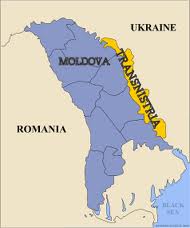
Putin Said to Be Planning Radar Station for Transnistria.  The Russian Federation plans to install a radar station in the de facto independent Pridnestrovian Moldavian Republic (a.k.a. Transnistria), a sliver of land wedged between Moldova and Ukraine which is propped up by Russia but granted diplomatic recognition only by Abkhazia and South Ossetia.  Most of the world regards Transnistria as part of the Republic of Moldova.  The plans—apparently in response to the North Atlantic Treaty Organization’s missile shield and its presence in Romania—were reported by the newspaper Nezavisimaya Gazeta on April 17th, citing anonymous sources close to Vladimir Putin, Russia’s president.  The report, along with assertions that similar plans were afoot for a base in Armenia, was denied by Russia’s defense ministry, saying that all radar bases would be based within Russian territory.  (See my blog article on Transnistria.)


Exiled Chechen to Be Tried in Absentia for Plot to Assassinate Putin.  Doku Khamatovich Umarov, the exiled Chechen rebel who goes by the nom du guerre Dokka Abu Usmanwill be tried in absentia for plotting to assassinate the president of the Russian FederationVladimir Putin.  The alleged assassination plot emerged after two men arrested in Odessa, Ukraine, claimed they had been hired by Umarov to kill Putin.  Putin’s K.G.B. past and his penchant for media manipulation, along with the fact that the revelations conveniently bumped Putin’s poll numbers before a crucial election amid widespread protests against him, have thrown the likelihood of the plot into doubt, but such show trials in modern Russia are rarely designed to actually get to the facts of a matter.  Umarov, former president of the Chechen Republic of Ichkeria’s government-in-exile, in 2007 declared himself emir of the planned Caucasus Emirate—to be carved out of Russia’s North Caucasus region. He has claimed numerous terrorist attacks, is sometimes called Chechnya’s Osama bin Laden, and already has a $5-million bounty on his head from the United States government.

Bombings in Dagestan Capital Kill 2; 10 Others Killed as Police Battle Militants.  An Islamist rebel was killed and a Russian secret-police officer and his wife were wounded, the wife fatally, in the Republic of Dagestan, which is part of the Russian Federation, on April 16th.  The militant died when a bomb-making operation went awry in an apartment in the Dagestani capital, Makhachkala.  A car bomb that morning, also in the capital, wounded a colonel in the Federal Security Service (F.S.B., successor to the K.G.B.) and his wife—she died later—while another explosion near a home in the same city left a burned body in its wake.  The day before, two students were injured by a bomb that went off outside a shop in Makhachkala.  Meanwhile, on the 16th, three policeman were wounded in a battle with gunmen northwest of the capital.  This may or may not be the same incident as the one in which, it was reported, one militant was killed and two fled in a remote area of Novolaksky district, on the border with Chechnya.  Then, on April 18th, two policemen were wounded, one fatally, in a clash with militants near the Dagestani village of Kvanada.  Two bodies of militants, believed to be killed in that same battle, were discovered the next day.  Also on the 18th, a traffic stop in the Khasavyurt district led to a car carrying three militants from the Khasavyurt gang firing at police officers and being killed by the return fire.  One of those killed was Arsen Kakayev, a wanted extortionist and terrorist.  In Moscow, a gang of unknown people attacked a judge from Dagestan in the street in the early hours of April 18th.  The judge, who was 24 years old (sic!), fired a pistol in the air and sent them fleeing.  They escaped in a Ford with Dagestani license plates.  (See also a recent New York Daily News article on a recent disturbing trend of Russian Federation authorities seizing and burning moderate Muslim literature in Dagestan and elsewhere.)

Aftermath of a car-bombing in Dagestan that killed a security officer’s wife

Policeman Attacked in Kabardino-Balkaria.  A police major in the employ of the Interior Ministry was attacked on April 18th in Nalchik, capital of the Kabardino-Balkar Republic, in the Russian Federation’s North Caucasus region.  Both the major and his attacker were wounded in the ensuing gun battle and taken to the hospital.

Kurdish Separatists Hijack Two Vessels in German Cities.  A pleasure boat on the Rhine river in Cologne, Germanywas briefly hijacked by about ten members of Turkey’s banned Kurdistan Workers’ Party (P.K.K.), who, having boarded as legitimate passengers, shoved the crew aside and attempted to steer the 20-passenger ship to shore where they could read a manifesto from loudspeakers.  They were arrested and expected to be released on bail.  No one was injured.  Then, on April 19th, eight P.K.K. supporters—four men and four women—briefly overpowered the captain of a river ferry in Hamburg, waving flags and chanting slogans for the release of Abdullah Öcalan, the P.K.K.’s imprisoned founder.  They were arrested by a police boat that came to the ferry’s rescue.  (See my recent article on the Kurdish campaign for independence and a more recent one on shifting alliances in the Kurdish struggle.)

BITS OF ASIA WHICH LIKE TO PRETEND THEY’RE PART OF EUROPE

2 Abkhaz Suspects in Assassination Plot, One a Former Minister, Commit Suicide.  In the de facto independent Republic of Abkhazia, two men suspected in the February assassination attempt on President Alexander Ankvab have committed suicide, including a former interior minister.  Almasbei Kchach, the former minister, was reportedly found dead from a self-inflicted gunshot wound on April 17th by police who arrived at his apartment in the Black Sea resort city of Gagra to arrest him for masterminding the February 22nd highway ambush of Ankvab (as reported in this blog), which involved rocket-propelled grenades and in which two bodyguards were killed.  Kchach, who was 54 and is survived by three children, served as interior minister from 1996 to 2003, during which time he was responsible for the personal security of President Vladislav Ardzinba, who died mysteriously in 2010.  The same night as Kchach’s death, a second suspect in the assassination attempt, Temur Khutabahanged himself in his jail cell using his clothes.  A third suspect, Murtaz Sakania, tried to cut his own throat during his arrest.


Aftermath of the assassination attempt on Alexander Ankvab in February

Tibilov Sworn In as South Ossetia President.  Leonid Tibilov, a former K.G.B. official, was sworn in on April 19th as president of the Republic of South Ossetia, the de facto independent South Caucasus statelet which most of the world, other than Russia and a handful of tiny countries, regards as part of the Republic of Georgia.  Georgia, the United States, the European Union, and other major powers have called the elections and inauguration illegal.  (See my article on last year’s disputed South Ossetian elections.)

Turkish Republic of Northern Cyprus Threatens Name Change.  Media are reporting this week that the Turkish Republic of Northern Cyprus, an unrecognized puppet state which administers the northern third of the island of Cyprusmay drop the word Northern from its name unless the decades-old conflict over Cyprus is not resolved by July 1st.  That is when the Republic of Cyprus, the ethnically-Greek-dominated southern two-thirds of the island, takes over the rotating presidency of the European Union.  Dr. Derviş Eroğlu, the unrecognized pseudo-state’s president, also mentioned the possible names Northern Cyprus Turkish State and Northern Turkish State, and even hinted at possible full annexation by Turkey.  The Turkish Republic’s government in Ankara says such decisions are up to Turkish Cypriots themselves.  (See this week’s blog article for an extended analysis of Northern Cyprus’s possible name change.)

Iraqi Vice-President, under Guard in Turkey, Seeks Turkish Help, Asylum in Jordan.  The Sunni Arab vice-president of IraqTareq al-Hashemi, who had until recently been hiding for months in Iraqi Kurdistan since fleeing an arrest warrant in December, is still in Turkeyseeking assistance from the Turkish government in his plight.  He and his family and entourage are under heavy guard by Turkish police in Istanbul hotel after receiving death threats.  Hashemi has also reportedly applied to Jordan for political asylum.  The vice-president was on the last leg of a state visit of sorts to QatarSaudi Arabia, and Turkey—the three premier regional counterbalances to the Shiite dictatorship in Iran with which he accuses Iraq of being increasingly allied.  Hashemi initially fled to Kurdistan in December after Iraq’s authoritarian Shiite prime minister, Nouri al-Maliki, issued a warrant for his arrest, charging him with running his own death squads.  On April 19th, the president of northern Iraq’s Kurdistan Regional GovernmentMassoud Barzanimet with Hashemi during a state visit to Turkey.


Barzani Urges P.K.K. to Quit Violence; Turkish and Iraqi Premiers Spar.  The president of northern Iraq’s Kurdistan Regional Government met with Turkey’s prime minister, Recep Tayyip Erdoğan, on April 20th and told reporters that Turkey’s banned separatist Kurdistan Workers’ Party (P.K.K.must abandon violence, saying, “You won’t get anywhere with weapons.  The P.K.K. should lay down its arms,” Barzani told reporters in Ankara on Friday on the last day of his two-day visit to Turkey. “I will not let the P.K.K. prevail in northern Iraq.  If the P.K.K. goes ahead with weapons, it will bear the consequences.”  Erdoğan also criticized the Iraqi central government, referring to “current prime minister's treatment toward his coalition partners” and “his egocentric approach within Iraqi politics.”  Iraq’s prime minister, Nouri al-Maliki, responded by saying that Turkey was becoming a “hostile state.”  (See my recent article on the Kurdish campaign for independence and a more recent one on shifting alliances in the Kurdish struggle, as well as an article on prospects for the partition of Iraq.)

P.K.K.’s Black Sea Commander Killed in Turkish Raid.  Two members of Turkey’s banned separatist Kurdistan Workers’ Party (P.K.K.), including its commander of Black Sea operations, were killed in a Turkish military attack on April 14th in Asmaya province.  The attack was in retaliation for a nearby attack last week in which two Turkish soldiers died.  The commander was Mahir Koç, who used the nom de guerre Celal Başkale.  The previous evening, two P.K.K. fighters were killed in Mardin province.  Then, Turkish media reported the discovery on April 17th in an Istanbul cemetery of a cache of P.K.K. explosives, following a tip from captured P.K.K. fighters, including four Kurdistan Communities’ Union (K.C.K.) members rounded up in the city of Van.  (See my recent article on the Kurdish campaign for independence and a more recent one on shifting alliances in the Kurdish struggle.)

ASIA

Obama Removing Iraqi Kurdish Parties from Terrorism List.  The Reuters news agency reported on April 17th that the United States president, Barack Obama, has agreed with Congress to remove two Kurdish political parties in Iraq from a list of terrorist groups.  The agreement comes in the wake of last week’s state visit to Washington, D.C., by Massoud Barzani, president of northern Iraq’s autonomous Kurdistan Regional Government (K.R.G.).  Also, the U.S. consulate in the city of Arbil, in K.R.G. territory, will begin issuing U.S. visas.  The two political parties to be delisted are the K.R.G.’s two main ones, the Patriotic Union of Kurdistan (P.U.K.) and the Kurdistan Democratic Party (K.D.P.), which was founded in 1946 by Barzani’s father, Mustafa Barzani, in the brief-lived Kurdish Republic of Mahabad in what is now northwestern Iran.  Reuters placed the moves in the context of Obama’s accelerated efforts to ease tensions between the K.R.G. and Iraq’s Shiite-dominated central government to avoid an Iraqi civil war in a U.S. election year.  And Iraq’s president (significantly less powerful than the prime minister), Jalal Talabani, who is a Kurd, told al-Jazeera that an independent Iraqi Kurdistan was not possible in the foreseeable future and would not be in anyone’s interest.  Meanwhile, the Turkish Republic’s foreign minister, Ahmet Davutoğluagain urged Pres. Barzani on April 20th to crack down harder on militants from the banned Kurdistan Workers’ Party (P.K.K.), who it says are using Iraqi Kurdistan as a base from which to launch terrorist operations in southeastern Turkey in their fight for a separate state.  (See my recent article on the Kurdish campaign for independence and a more recent one on shifting alliances in the Kurdish struggle, as well as an article on prospects for the partition of Iraq.)

Baghdad Excludes Exxon from Bidding in Punishment for Kurdistan Deal.  The United States firm the Exxon Mobil Corporation has been dropped from the list of bidders in the late-May round of bidding for energy-exploration contracts in Iraq, the country’s oil ministry announced on April 19th.   The official, Sabah Abdul-Kadhim, was explicit that “Exxon Mobil was disqualified from the fourth bidding round because of its contract with the Kurdistan Regional Government.”  The K.R.G. and the central government are in conflict over whether oil deals in the Kurdish region must be approved by Baghdad, as well as the question of who gets the revenue.  (See my recent article on the Kurdish campaign for independence and a more recent one on shifting alliances in the Kurdish struggle, as well as an article on prospects for the partition of Iraq.)

Kurds Demand Release of Election Officials.  In a further escalation of the tussles over sovereignty between the Republic of Iraq’s government in Baghdad and the autonomous Kurdistan Regional Government (K.R.G.) in Iraq’s north, the K.R.G. released a statement on April 13th calling on Baghdad to release the head of the Independent Electoral Commission and a second, lower-ranking official.  The two men had been arrested the day before on charges of corruption.  The two men were released on bail on April 15th.  (See my recent article on the Kurdish campaign for independence and a more recent one on shifting alliances in the Kurdish struggle, as well as an article on prospects for the partition of Iraq.)

Iraqi Kurdish Governor Dies in Jail Cell; Family Disputes Suicide Claim.  On April 14th, the deputy governor of the urban Sulaimaniyah district in northern Iraq’s Kurdistan region, Zana Hama Salehdied by hanging himself in a jail cell where he was held pending trial for corruption.  His family insists it was not a suicide and is demanding an official investigation.  (See my recent article on the Kurdish campaign for independence and a more recent one on shifting alliances in the Kurdish struggle, as well as an article on prospects for the partition of Iraq.)

Israel Arrests Dozens at “Fly-In” Protest at Tel Aviv Airport.  Palestinian and pro-Palestinian activists staged a disruptive and high-profile “fly-in,” or “flytilla,” protest at Ben Gurion International Airport near Tel Aviv, Israel, on April 15th, causing Israeli authorities to arrest scores and to scramble to prevent further arrivals.  Over a thousand protesters, mostly from Europe, bought tickets to Tel Aviv and intended to travel en masse to the West Bank for an event called “Welcome to Palestine,” focused on home-stays with Palestinian families and attempts to open an international school and a museum in Bethlehem—a town which Israel conquered from Jordan in 1967 and is now administered by the Palestinian Authority.  Israeli authorities detained 45 protesters for deportation, plus nine Israelis who had been holding “Welcome to Palestine” signs in the waiting area.  Israel distributed no-fly lists to European airports and barred some passengers from boarding in Brussels, Belgium—where about 100 activists were turned away—as well as in Manchester, Paris, and elsewhere.  (See my article listing Palestine as one of “Ten Separatist Movements to Watch in 2012.”)

Palestinian Prisoners Begin Mass Hunger Strike.  More than 1,200 Palestinian prisoners in Israel on April 17th began a mass hunger strike to mark what Palestinians have come to call Prisoners’ Day.  The open-ended fast is to call attention to solitary confinement, refusal of family visits, denial of newspapers and books, and other complaints.  At least eight of the foreign activists imprisoned since the April 15th arrests in Tel Aviv during the “Welcome to Palestine” protest (see above) have joined the strike.  (See my article listing Palestine as one of “Ten Separatist Movements to Watch in 2012.”)

Protesters marking Prisoners’ Day in Gaza City

Denmark Fumes over Israeli Beating of Danish Protester; 2 Arabs Shot in Gaza.  At a “bicycle rally” for peace in Jericho, in the Israeli-occupied West Bank, on April 16th, a senior Israeli military officer was captured on video smashing a nonviolent Danish protester in the face with the butt of an M-16 rifle, prompting an official demand from Denmark’s ambassador for an explanation.  The victim being a European rather than a Palestinian, Israel’s prime minister, Binyamin Netanyahuquickly condemned the officer’s behavior.  Meanwhile, in Khan Yunis, in the Gaza Strip, one Palestinian farmer was shot in the thigh by an Israeli soldier on April 16th, and the following day an Israeli soldier shot and wounded a Palestinian girl.  (See my article listing Palestine as one of “Ten Separatist Movements to Watch in 2012.”)

“Welcome to Palestine”

Top Pakistani General Supports Demilitarizing Disputed Kashmiri Glacier.  The highest-ranking Pakistani general, after touring the scene of a deadly April 18th avalanche in Kashmir—called by some the world’s highest-altitude battlefield, at 6,000 meters above sea level—urged that the glacier area should be demilitarized.  The general, Ashfaq Parvez Kayani, was referring to the Siachen glacier—in the area claimed by both India and Pakistan, and where there is also a Kashmiri separatist movement—where 129 Pakistani soldiers were buried alive on April 7th.  They were there because of a decades-old military stand-off with India over the glacier.


India Interrogates Kashmir Activists over Facebook Posts.  Indian police in the disputed state of Jammu and Kashmir announced on April 15th that they had rounded up and interrogated 16 young people for posting “anti-nationalist” comments on Facebook that supposedly were designed to incite protests against India’s rule over the territory.  They were given warnings.  The Facebook pages in question included “Freedom of Dawn,” “Balai Khuda,” “Aalov,” and “We Love Syed Ali Shah Geelani,” this last referring to the elderly Islamist chairman of the All Parties Hurriyat Conference, which seeks independence for Kashmir.

Separatists Kill Policeman in Srinagar.  Police in Srinagar, the capital of India’s disputed Jammu and Kashmir state, reported that one of their officers was shot and killed April 20th by separatist guerillas.  The dead officer was identified as Sukhpal Singh, an assistant sub-inspector.  No group has claimed responsibility.

Naga Rebels Schedule Talks with Burmese Junta.  The junta that runs Burma under the name Republic of the Union of Myanmar will be holding talks on April 20th with the National Socialist Council of Nagaland–K (N.S.C.N.–K).  As part of the government’s push to reconcile with its many restive minorities (or to create the appearance of such reconciliation), talks have been held over the past several months with many insurgent groups representing ethnic minorities.  The Naga people are an allied group of ethnic groups speaking related languages who form the majority of the population of the state of Nagaland in India.  They form a much smaller portion of Burma’s population.  The N.S.C.N.–K signed a cease-fire with the Indian government in April 2011.  (See my recent blog article on ethnic minorities in Burma.)

2 Tibetans Self-Immolate in Sichuan.  Two Tibetan men in their twenties died on April 19th after setting themselves on fire in front of a Buddhist monastery in a Tibetan region within the People’s Republic of China’s Sichuan province.  There have been over 30 such self-immolations over the past year, which are a form of protest against Chinese rule in Tibet.

Muslim Separatists Blamed for Thailand School Burning; 5 Rebels Killed.  A two-story school building in southern Thailand’s Narathiwat province was torched by arsonists on April 18th, and the authorities are blaming ethnically-Malay Muslims who have been fighting for decades for a separate state in the predominantly Buddhist country.  A police truck racing to the scene was targeted by a land mine in the road.  There were no injuries in either incident.  Meanwhile, five separatist rebels were killed on April 19th in a shoot-out with police in a village in nearby Yala province.  One of the dead was Sakuree Japakeeya, a member of the Runda Kumpulan Kecil (R.K.K.) rebel group who was wanted for a 2007 passenger-bus ambush in 2007 which killed seven, as well as other terrorist crimes.

The destroyed school in southern Thailand; separatists are suspected

OCEANIA

Former Rebel Leaders Elected in East Timor and Aceh.  José Maria Vansconselos, known by his nom de guerre Taur Matan Ruak, a former leader in the fight for independence from Indonesiawon enough votes in the April 16th run-off election in the Democratic Republic of Timor-Leste (a.k.a. East Timor) to succeed the Nobel Peace Prize laureate José Ramos-Horta in the (mostly ceremonial) presidency of then ten-year-old nation.  Ruak, who received 61% of the vote, is backed by Prime Minister Xanana Gusmão.  Meanwhile, in Aceh, Indonesia’s westernmost province, it was announced on April 17th that the new governor after the April 9th elections is Zaini Abdullah, head of the Aceh Party, which succeeded the main separatist militia after the 2004 peace deal that brought Aceh back into Indonesia as an autonomous region.  Abdullah won 55.75% of the vote, defeating the incumbent governor, Irwandi Yusuf, who had (as reported last week in this blog) accused Abdullah of fraud.  These are the first gubernatorial elections in Aceh since the peace agreement.

Taur Matan Ruak, Timor-Leste’s new president

West Papua Separatists Seek Observer Status in Melanesian Regional Body.  A representative for West Papua’s indigenous people said this week in Port Vila, Vanuatu, that a separatist coalition from the western part of the island of New Guinea plan to apply next year for observer status in the Melanesian Spearhead Group, an international organization consisting of the member states Vanuatu, FijiPapua New Guinea, and the Solomon Islands along with New Caledonia’s Kanak and Socialist Liberation Front.  The delegate, Dr. John Ondawame, said that, if accepted, a priority will be removing Indonesia, which administers West Papua in violation of international law, from the ranks of M.S.G. observer states.  (See my article listing West Papua as one of “Ten Separatist Movements to Watch in 2012.”)

NORTH AMERICA

Fort Erie, Ontario, Mulls Leaving Canada—Only Half Jokingly.  Fort Erie, a town of just under 30,000 people across the Niagara River from Buffalo, New York, in Ontarionow has a secession movement, and it is Canada, not Ontario, they are talking about seceding from.  A local newspaperman, Gord Bowes, started the “Bloc de Fort Erie” as a joke on Twitter, citing the grim local economy, but he told an interviewer the idea is “half serious.”  A number of things would have to happen first, however.  For one thing, Fort Erie does not have its own flag, though the county-level administration in which it sits, the Regional Municipality of Niagara, has a quite fetching one:


Controversial Pro-Pipeline Tribal Leader Appointed to Port Authority in British Columbia.  A Canadian First Nations leader who controversially supports the $5.5-billion Enbridge Northern Gateway Pipelines Project, which would transport crude oil and natural gas from Alberta to coastal British Columbia and which is deeply unpopular in First Nations communities, has just been appointed by Canada’s government to the Prince Rupert Port Authority.  The leader, Elmer Derrick, is chief negotiator with the Gitxsan Treaty Office in interior B.C.  Nathan Cullen, the local federal Member of Parliament, said, “It’s a strange appointment.  It raises the possibility it’s a quid pro quo for supporting the pipeline.”

Clifford Bolton, Tsimshian Land-Claims Pioneer, Dies in British Columbia.  Members of the Tsimshian Nation in northwestern British Columbia (Canada) and southeast Alaska are mourning Clifford Bolton, a renowned traditional totem-pole and canoe carver, spiritual leader, and pioneering land-claims negotiator, who died on April 12th at age 73.  From the early 1980s to the mid-1990s, Bolton served as Chief Councillor of the Kitsumkalum Band (near Terrace, B.C.), as the tribe’s treaty researcher, and in other capacities during a period when a new, forward-thinking legal and scholarly approach to land-claims helped reshape Canadian treaty politics for the 21st century.  The Tsimshian, and in particular the Gitsmgeelm (Kitsumkalum) people were near the forefront of this development.  He is survived by his wife Rena Point Bolton, a member of the Stó:lō (Salish) nation from southern B.C., and mother to his step-son Steven Point, a jurist who is currently Lieutenant-Governor (i.e., viceroy) of British Columbia.

Lt.-Gov. Steven Point, Speaker Bill Barisoff, and Tsimshian artist and politician Cliff Bolton

2 California Indians Admit Arson against Ejected Mercenary Camp.  Two members of the Los Coyotes Band of Cahuilla and Cupeño Indians, in San Diego County, Californiapleaded guilty on April 13th of committing arson against a mercenary militia that a court had ordered to depart the reservation, though they had not planned the raging 22-square-mile wildfire that ensued.  On April 9th, the band succeeded in convincing an intertribal court to evict the Eagle Rock Training Center (E.R.T.C.) from the remote and tiny reservation (its population is 74), due to technicalities.  The United States’ federal Bureau of Indian Affairs had not properly permitted the lease.  E.R.T.C. is a combat-training program founded by Brian Bonfligio, a former vice-president with Blackwater (now known as Academi), a mercenary group based in Arlington, Virginia, which has contracted with the U.S. military and the Central Intelligence Agency and is accused of a wide range of war crimes in IraqAfghanistan, and elsewhere.  E.R.T.C. is now required to remove their operation from the reservation by June.  The two arsonists, Jesse James Durbin, aged 23, and Jeremy Joseph Ortiz, 24, will be given six-year sentence.  It is not clear to what extent their crime was politically motivated; Ortiz, at least, was a disgruntled employee.  The fire took a week to control and caused several injuries to firefighters.

Missouri Tea-Partier Proposes Legislative Independence from U.S.  A Republican state senator in MissouriBrian Nieves, whose district includes suburbs of St. Louis, has proposed an amendment to the state constitution which would prohibit “the Missouri legislative, executive, and judicial branches of government from recognizing, enforcing, or acting in furtherance of any federal action that exceeds the powers delegated to the federal government.”  The proposed amendment would also declare that humans have legal rights beginning at “the zygote stage” and that any Missouri citizen—perhaps even a zygote?—has the right to take up arms to enforce this amendment.  The measure is considered to have no hope of passing.

Missouri’s Sen. Brian Nieves

U.S. Resettles Uighur Militants from Guantánamo Prison in El Salvador.  The United States military announced April 19th that two prisoners from the People’s Republic of China’s Xinjiang Uyghur Autonomous Region, who had been held for nearly ten years without charge at the U.S.’s notorious Guantánamo Bay prison in an illegally U.S.-occupied enclave of the Republic of Cuba, have been resettled in El Salvador.  The two Uyghurs, Abdul Razakah and Hammad Memet, were captured in Pakistan shortly after the September 11, 2001, terrorist attacks.  It was feared that they would face arrest or persecution if returned to China.  They are reported to be learning Spanish and settling in.

SOUTH AMERICA

Lawmakers Demand Bolivia Explain Death of Irish Mercenary.  Members of the European Parliament representing the Republic of Ireland called again this week on the government of Bolivia to explain more satisfactorily the 2009 killing of an Irishman by Bolivian security officers.  The 24-year-old victim, Michael Dwyer, from Tipperary, was suspected of being a mercenary on a mission to assassinate Bolivia’s president, Evo Morales, when he was gunned down in a raid on a hotel in Santa Cruz, after allegedly resisting arrest and firing at special forces.  Eduardo Rosza-Flores, a Hungarian–Bolivian–Croatian soldier of fortune, was also killed in the raid.  Bolivian authorities cite a video in which Rosza-Flores claimed he was in Bolivia to assemble a separatist army in Santa Cruz province.  Dwyer’s mother, Catherine, has offered a different version, stating, “From all the evidence available there was no shoot-out, Michael never fired any guns, he was unarmed, he was executed while he was asleep.”

Mercenaries Michael Dwyer and Eduardo Rosza-Flores

PRACTICALLY BLOODY ANTARCTICA

Argentina President, Angry over Falklands, Storms out of Summit Meeting.  The president of the Argentine RepublicCristina Fernández Kirchnerstormed out of the Summit of the Americas conference in Cartagena, Colombia, over the April 14-15 weekend, upset that a condemnation of the United Kingdom’s governance of the Falkland Islands, which Argentina claims, was not being mentioned often enough.  She was heard to say, “This is pointless, why did I even come here?” before leaving in a huff.  The summit’s tiptoeing around the Falklands question was seen by some as a capitulation to the United States, which, though tacitly supporting its ally the U.K. and thus the wishes of Falkland Islanders themselves, is officially neutral on the Falklands question.  The U.S.’s lone support for an economic embargo on Cuba was a much more significant bone of contention with southern neighbors at the meeting.  Meanwhile, when the U.S. president, Barack Obama, reiterated his neutrality on the Falklands question on April 16th, he seemed to be channeling his malapropism-prone predecessor, George W. Bush, when referring to the Falklands as the Maldives, apparently distracted by the similarity to the Spanish name for the Falklands, Malvinas.  (See my blog article on the latest conflict over the Falklands.)

[Also, for those who are wondering, yes, this blog is tied in with a forthcoming book, a sort of encyclopedic atlas to be published by Auslander and Fox under the title Let’s Split! A Complete Guide to Separatist Movements, Independence Struggles, Breakaway Republics, Rebel Provinces, Pseudostates, Puppet States, Tribal Fiefdoms, Micronations, and Do-It-Yourself Countries, from Chiapas to Chechnya and Tibet to Texas.  Look for it in spring 2013.  I will be keeping readers posted of further publication news.]

Subscribe Now: Feed Icon