Showing posts with label MASSOB. Show all posts

Wednesday, February 12, 2014

Biafra Bikers Rejoice: Igbo May Not Have Their Own Nation, but They Have License Plates


The slowly simmering separatist movement in southeastern Nigeria’s region of Biafra does not achieve very much that is concrete nowadays—not after a crushing, near-genocidal defeat of their briefly independent state in 1970 pushed Igbo nationalism underground.  But this week one Biafran pro-independence group scored a symbolic hit.  There is now such thing as a Biafra license plate.


Not for cars, just for motorcycles—oddly enough.   Over the weekend of February 8-9, the largest Biafran separatist group, the Movement for the Actualisation of the Sovereign State of Biafra (MASSOB) unveiled a license-plate for motorbikes, to be used in Nigeria’s Enugu state, in what some claim as Biafran territory.  Chief Larry Odimma, who represents MASSOB in Aba, in nearby Abia state, told the public in Nskukka, in Enugu, “I am here on the mandate of our [that is, MASSOB’s] leader, Chief Ralph Uwazuruike, to launch this plate number, which is aimed at identifying Biafrans and forestalling criminal activities among people who hide under our name to perpetrate evil.”
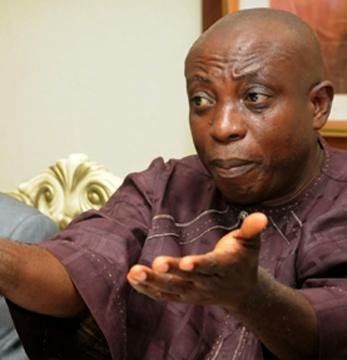
Chief Ralph Uwazuruike, head of MASSOB

He added, “the national leadership of MASSOB applauds the freedom being enjoyed here in Enugu State unlike what we witness in places like Aba, Ontisha, and Umuahia, where our members are constantly harassed by security agents.”

Igbos can never forget that the Nigerian military
killed hundreds of thousands with a starvation blockade in the late 1960s.
Odimma said the plates would only be issued to citizens with “unquestionable character.”  Perhaps this—and the whole scheme, too—is aimed partly at MASSOB’s newer rival, the Biafra Zionist Movement (B.Z.M.).  MASSOB is more inclusive than the B.Z.M.; the plates say “United States of Biafra,” suggesting a kinder envisioned policy toward minorities within Biafra like Ibibios, Efiks, and Ogonis.  It is also a little more level-headed: the B.Z.M. declared independence for Biafra on November 5, 2012, and seemed to sincerely expect swift diplomatic recognition by the United States and Israel.  The use of the term Zionist echoes an old, discredited theory that Igbos are descended from the Lost Tribes of Israel.  Often, MASSOB and the B.Z.M. seem to spend more time fighting each other, sometimes literally, than working against the Nigerian state.  So perhaps the license plates will announce to sympathetic Enugu constables that these particular motorcyclists are upstanding MASSOB patriots, not B.Z.M. riff-raff.

The Biafra Zionist Movement’s 2012 independence-day parade
Perhaps a bigger concern should be how the use of such license plates will be interpreted if a motorist takes a spin outside the confines of independence-friendly Enugu.  After all, the display of the Biafra flag is still a crime in Nigeria.  This may be as sure a way to invite trouble as to speed through Oklahoma with a Grateful Dead bumper sticker.

Lawbreakers

[For those who are wondering, yes, this blog is tied in with my forthcoming book, a sort of encyclopedic atlas to be published by Auslander and Fox under the title Let’s Split! A Complete Guide to Separatist Movements, Independence Struggles, Breakaway Republics, Rebel Provinces, Pseudostates, Puppet States, Tribal Fiefdoms, Micronations, and Do-It-Yourself Countries, from Chiapas to Chechnya and Tibet to Texas.  The book, which contains dozens of maps and over 500 flags, is now in the layout phase and should be on shelves, and available on Amazon, by early fall 2014.  I will be keeping readers posted of further publication news.  Meanwhile, please “like” the book (even though you haven’t read it yet) on Facebook.]


Saturday, November 10, 2012

Hundreds Arrested as Biafra Zionists Declare Independence, Former Dictator Nixes Boko Haram Negotiations, More Northern Carnage: Nigerian Separatism Update, 4-10 November 2012


Igbo Separatists from Rival Groups Arrested as Biafra Zionists Declare Independence.  A press statement from the Movement for the Actualisation of the Sovereign State of Biafra (MASSOB), released on November 3rd, demanded that police in Nigeria’s Anambra State release of three MASSOB officers who were arrested when they tried two days earlier to hand a member of another Igbo secessionist group to the authorities.  The other group, the Biafra Zionist Movement (B.Z.M.), claimed last week (as reported at the time in this blog) that MASSOB had abducted four B.Z.M. members, including its leader, Benjamin Onwuka.  Meanwhile, at least 100 B.Z.M. members were arrested at a rally in Enugu State on November 5th, the date of a planned B.Z.M. declaration of independence.  Some reports put the number at 500, adding that Onwuka was among those arrested and that authorities also confiscated 61 Biafran flags (which are illegal to display in Nigeria), along with B.Z.M. uniforms.  At least 100 were charged with treason.

The Biafra Zionist Movement, celebrating their declaration of independence.
The French and Israeli flags represent nations they, quixotically, hope will recognize them.
17 Dead in Week of Boko Haram Violence, Including Bombs, Drive-By Shootings.  Three people, including a fire chief, were killed on November 2nd in Nigeria’s insurgency-torn northeastern Borno State by gunmen suspected of being members of the Islamist terrorist group Boko Haram.  The perpetrators set fire to government offices and a state-run housing estate in the town of Damboa, then opened fire on firefighters who responded to the blaze.  In addition to the fire chief, two security guards were killed.  In Kano, in northern Nigeria, three people were killed in a drive-by shooting on November 4th, blamed on Boko Haram.  Two days later, in Gashua, in Yobe State, Nigerian troops killed four suspected Boko Haram members in a shootout during a raid on a suspected terrorist hideout.  Four were arrested, and a cache of weapons was seized.  The victims and those arrested were suspected of carrying out an attack on November 4th in Fika, also in Yobe State.  Two people were dead in two separate explosions in northeastern Nigeria on November 7th.  The first, at a cattle market in Mubi, in Adamawa State, targeted a military patrol but instead killing two civilians.  Children were among those seriously injured.  The same day, in Maiduguri, capital of Borno State, a remote-controlled roadside bomb went off while a military patrol passed, but there were no casualties.  Also the same day, in Benishek, Borno State, two Chinese engineers at a worksite were killed by unidentified gunmen.  In Bonny Yadi, in Yobe State, Boko Haram gunmen attacked a police station, killing three police and stole weapons before burning down the station along with three churches and a primary school.  Meanwhile, Boko Haram has denied any role in the killing of Maj.-Gen. Muhammadu Shuwa, a hero of the Nigerian Civil War (outside Nigeria a.k.a. the Biafra War), who was shot dead along with two others in Maiduguri, the Borno capital, on November 2nd (as reported at the time in this blog).


Former Nigerian Dictator Rejects Role of Mediating with Boko Haram.  A former military dictator of Nigeria, Muhammadu Buhari, declined this week to act as a mediator between the current democratic government of Nigeria and the brutal Islamist insurgent group in the north of the country, Boko Haram.  The use of Buhari as a mediator was one of the conditions for peace talks laid out in a conference call on November 1st between journalists and a self-described Boko Haram spokesman (as reported last week in this blog).  Locating the talks in Saudi Arabia was another condition.  The Nigerian government has rejected the proposal.  Buhari is a Muslim from the Fulani ethnic group, which dominates the northern insurgency.

Muhammadu Buhari, though a Fulani, wants no part in any Boko Haram negotiations.
Boko Haram Commander Escapes from Police Custody in Abuja.  A leading Boko Haram commander, Sani Mohammed, escaped from police custody on November 8th in Abuja, Nigeria’s capital.  Mohammed and another commander, Kabir Sokoto, were arrested in January 2012.


[For those who are wondering, yes, this blog is tied in with my forthcoming book, a sort of encyclopedic atlas to be published by Auslander and Fox under the title Let’s Split! A Complete Guide to Separatist Movements, Independence Struggles, Breakaway Republics, Rebel Provinces, Pseudostates, Puppet States, Tribal Fiefdoms, Micronations, and Do-It-Yourself Countries, from Chiapas to Chechnya and Tibet to Texas.  The book, which contains dozens of maps and over 500 flags, is now in the layout phase and should be on shelves, and available on Amazon, by early fall 2014.  I will be keeping readers posted of further publication news.  Meanwhile, please “like” the book (even though you haven’t read it yet) on Facebook.]

Saturday, November 3, 2012

Nigerian Troops Massacre Civilians, Boko Haram Church Suicide Bombing, Kalabari-Bayelsa Border Row, Biafra Abductions: Nigeria Separatism Update, 28 October - 3 November 2012

The aftermath of an attack in Kaduna
TOP STORY:
NIGERIAN MILITARY MURDERS SCORES OF YOUNG MEN IN MAIDUGURI,
BRINGING CIVIL WAR WITH BOKO HARAM TO HIGHER LEVEL

Numerous witnesses in the northeastern Nigerian city of Maiduguri, in Borno State, say that federal troops murdered dozens of young men over the night of October 31st–November 1st in a series of house raids and in a chillingly described summary execution in a field.  Many of the men—at least 39 of them, according to a local morgue, and perhaps as many as 70—were killed in front of their parents.  The men, aged 18 to 25, were apparently accused or suspected of membership in Boko Haram, the Islamist insurgency in northern Nigeria.  The Nigerian military says it knows nothing about it, but a new report by Amnesty International, coincidentally released the morning after the killings, takes the Nigerian government to task for its heavy-handedness, concluding, “We found that the very grave human rights abuses by the armed group Boko Haram are being met with serious human rights violations by security forces in their response to Boko Haram.”  The report mentions not just killings or disappearances but detention without trial, torture, and military retaliation against entire neighborhoods, including bulldozing of homes.

A retired general was assassinated at his home in Maiduguri on November 2nd, according to the military, in what may have been retaliations for the military massacres.

Boko Haram Spokesman Offers Nigeria Peace Talks, with Conditions.  Journalists in Maiduguri, in Borno State, held a conference call November 1st with a man claiming to be a Boko Haram leader named Abu Mohammed Ibn Abdulaziz, who offered Nigeria’s government the chance to engage them in peace talks, but on strict conditions.  The conditions were that the talks must take place in Saudi Arabia and must involve Muhammadu Buhari, Nigeria’s former military ruler, who is a Muslim from the northern Fulani ethnic group.  Abdulaziz claimed to be speaking on behalf of Boko Haram’s leader, Abubakar Shekau.  Nigeria’s federal anti-terrorist Joint Task Force (J.T.F.) has rejected the conditions.

Abubakar Shekau
Jeep-Bombing of Northern Nigerian Church Kills 10; Christian Mob Kills 3 Muslims.  At least 10 people were killed in a suicide car-bombing of a Roman Catholic church in Kaduna, in north-central Nigeria, on October 28th, and over 140 were injured.  The bomber used a jeep to ram the church before detonating himself and much of the building.  No one has claimed responsibility, but Boko Haram is suspected.  In reprisal, a mob of young Christians with sticks and machetes rampaged in the city, beating three Muslims to death.  Kaduna is in the Middle Belt region where Christians and Muslims live side by side.

Boko Haram Arsonists Attack 2 Schools, Police Station in Remote Village.  Gunmen suspected of being members of the Islamist militia Boko Haram set a police station, two schools, and a telecommunications tower on fire in Chibok, in northeastern Nigeria’s Borno State, on October 30th.  Witnesses said they arrived in Volkswagens and threw Molotov cocktails while shouting, “God is great!”  Youths with bows and arrows chased the terrorists out of town.  There were no injuries, but the fires raged uncontrolled, since the village has no fire department.

Kalabari Kingdom Accuses Bayelsa of Altering Maps to Grab Resources.  A leading chief from the Kalabari Kingdom (a.k.a. Calabar) in southeastern Nigeria’s Rivers State, in the Niger Delta region, said at a news conference in Abuja, the Nigerian capital, on October 29th that he opposed plans by Bayelsa State, which borders Rivers to the west, to annex part of its traditionally Kalabari-ruled territory.  The chief, Emmanuel Awoyesuku, chairman of Akulga Local Government Area, blamed the effort—first introduced without comment via an altered map, he said—on Bayelsa leaders’ attempt “to exert economic control over the oil and gas rich communities within Kalabari territory.”  Bayelsa is the home state of Nigeria’s president, Goodluck Jonathan, an Ijaw, who has been accused of supporting Bayelsan separatism (as reported in this blog).  The Bayelsa State government denies the charges and also says Jonathan does not support annexation either.  The five communities Awoyesuku accuses Bayelsans of coveting are Ijaw, which is the dominant ethnic group in Bayelsa but not in Rivers or in the Kalabari Kingdom.  Meanwhile, the Kalabari Kingdom is also involved in a territorial dispute on its eastern flank, where the Bakassi Peninsula has been ceded, against residents’ will (as discussed in detail in this blog), to the Republic of Cameroon.

Kalabari activists in Abuja
Human-Rights Group Sues Nigerian Government over Denial of Biafran Independence.  Trial began in Owerri, Nigeria, in a lawsuit brought by a human-rights group against the federal government for the suffering and death caused to the indigenous Igbo people of southeastern Nigeria during the Biafra War of 1967-70.  The plaintiff, listed as Bilie Human Rights Initiative, is asking for nothing less than a court order for the government to implement “the self-actualisation and self-determination of the People of Biafra.”  The attorney general and president of Nigeria are listed as the defendants.

Biafra “Zionists” Claim Leader, 3 Others Abducted by Rival Igbo Separatist Group.  Just a few days before its planned declaration of independence from Nigeria (as discussed earlier in this blog), the leader of a fringe Igbo separatist group, the Biafra Zionist Movement (B.Z.M.), was abducted by members of the more mainstream separatist group, MASSOB.  The leader, Benjamin Onwuka, a lawyer, was one of four members kidnapped, according to Cornelius Anyanwu, the B.Z.M.’s “director of mobilisation.”  The other three were the organization’s national chairman, Samuel Edeson; its national secretary, Nweke Nweke; and another member named Chukwuma Orienta.  For its part, MASSOB—or, in full, the Movement for the Actualisation of the Sovereign State of Biafra—claims that it was not an abduction but an “invitation” to a meeting about the planned declaration.  One of the abducted men called Anyanwu to tell him they had been snatched from their homes and were being driven to Imo State, where MASSOB’s leader, Ralph Uwazulike, lives.  But B.Z.M. spokesmen said the declaration of independence would occur on the 5th as scheduled, in Enugu.

Members of the Biafra Zionist Movement

[For those who are wondering, yes, this blog is tied in with my forthcoming book, a sort of encyclopedic atlas to be published by Auslander and Fox under the title Let’s Split! A Complete Guide to Separatist Movements, Independence Struggles, Breakaway Republics, Rebel Provinces, Pseudostates, Puppet States, Tribal Fiefdoms, Micronations, and Do-It-Yourself Countries, from Chiapas to Chechnya and Tibet to Texas.  The book, which contains dozens of maps and over 500 flags, is now in the layout phase and should be on shelves, and available on Amazon, by early fall 2014.  I will be keeping readers posted of further publication news.  Meanwhile, please “like” the book (even though you haven’t read it yet) on Facebook.]

Subscribe Now: Feed Icon