Showing posts with label West Bank. Show all posts

Wednesday, October 30, 2013

Israel to Let In Hundreds from Ethnic Group in India Claiming Jewish Descent


The State of Israel this month agreed to allow 899 members of a small ethnic group on India’s border with Burma (Myanmar) to immigrate under the constitutional provision for the “right of return” for any Jews.  The Indians, who call themselves the Bnei Menashe, are a few thousand members of a larger ethnolinguistic group called the Kuki, from around the far-eastern state of Manipur, who are related to the Mizo people of neighboring Mizoram state and the Chin people just over the border in Burma.

One flag used by Kuki nationalists in India
Also called the Lushai or Hmar, the Kuki–Chin–Mizo speak a language related to Burmese and Tibetan and are East Asian in their ethnic appearance, but Kuki oral traditions tell of descent from the Tribe of Manasseh, one of the Lost Tribes of Israel.  Scholars investigating the claims find some of the preserved stories and rituals to be too similar to ancient Judaism to be coincidental.  Genomic data have been inconclusive, as opposed to the well-documented diasporas among the Lemba of the South AfricaZimbabwe border region or the Falashas of Ethiopia.  (See an earlier article from this blog on Jewish diaspora theories in the Americas.)  Also, researchers point out that meriting the migration tale does not necessarily mean that all Kukis are of Jewish descent.  A migration of Manasseh tribespeople centuries or millennia ago to what is now eastern India could have deposited cultural traditions which took hold, with their descendants in the group remaining more limited in number.


However, that is good enough for the Shevai Israel organization, which advocates for immigration of far-flung branches of the Jewish family, and clearly also for the Israeli government.  Indeed, there are already about 2,000 Bnei Menashe Indians in Israel.  But controversy plagues state relations at both ends of this migratory path.  In India, delegations from Israel have run afoul of Indian laws banning the conversion of populations of people from one faith to another (a legacy of India’s delicate relations between Hindus and Muslims, dating to partition and earlier).  Meanwhile, in Israel, the government has been accused of exploiting Kuki–Chin–Mizo migrants by settling them en masse in occupied parts of the West Bank and (formerly) Gaza Strip, in territories nearly two-thirds of the world’s countries recognize as a sovereign State of Palestine.  At one point, they were even the largest immigrant population in Gaza (though Menasseh’s territory, according to the Old Testament, is farther north, incluiding Tel Aviv, the Golan Heights, and parts of the west and east banks of the Jordan River).  To add insult to injury, some Kuki–Chin–Mizo Israelis in occupied territories had their homes dismantled by Prime Minister Ariel Sharon’s government in 2005.


Back in Asia, most Kuki–Chin–Mizo consider themselves distinct, and oppressed, even though far from all identify as Jewish (most are Presbyterian, a few Muslim or Hindu, while some follow local religions).  Kukis want to carve out about half of Manipur state as a separate Kukiland state; this campaign has reignited in recent months after New Delhi’s decision in July to allow the Telugu nationality to split from Andhra Pradesh state as a separate state within India called Telangana (as discussed at the time in this blog).  Some Kukis even hanker for an independent “Greater Kukiland” called Zale’n-gam.  Rebels from the Mizo, who, as their name suggests, form a majority in Mizoram state, have been fighting for secession since the 1960s.  And the Chin are among several nationalities that have been fighting for autonomy and independence from Burma since the country’s founding dictatorship, in the 1940s, reneged on promises of federalism (as discussed in an earlier article in this blog).


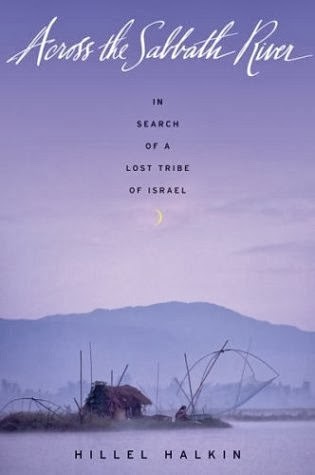
Note: Those wishing to learn more about the Kuki–Chin–Mizo and their relationship to Judaism could do worse than to read Hillel Halkin’s excellent 2002 book Across the Sabbath River: In Search of a Lost Tribe of Israel.


[Also, for those who are wondering, yes, this blog is tied in with a forthcoming book, a sort of encyclopedic atlas to be published by Auslander and Fox under the title Let’s Split! A Complete Guide to Separatist Movements, Independence Struggles, Breakaway Republics, Rebel Provinces, Pseudostates, Puppet States, Tribal Fiefdoms, Micronations, and Do-It-Yourself Countries, from Chiapas to Chechnya and Tibet to Texas.  Look for it some time in 2014.  I will be keeping readers posted of further publication news.]

Friday, November 30, 2012

In U.N. Vote, Palestine Gains Nearly the Last Remaining Markers of Sovereign Statehood


Some countries that win their independence get it all at once.  Others achieve it in painful, incremental steps over decades.  The State of Palestine is in the second category.  Yesterday, November 29, 2012, the State of Palestine was admitted as an “observer state”—not member state—in the United Nations General Assembly.  This is the same status that Switzerland had before 2002 and which Vatican City still has—both of them long recognized by the entire world as true, sovereign states in every sense of the word.

What is—or rather, perhaps, will eventually be seen to be as—the date of Palestine’s independence?  1948?  1974?  1988?  1993?  2011?  2012?


Palestinians were offered an independent state after the Second World War, as part of the same U.N. plan that created the State of Israel, but Palestinians did not want their homeland divided and half given away to new arrivals, so they rejected the plan, and Israel filled the entire vacuum created by the United Kingdom’s relinquishment of its Palestinian mandate, and Israel forced aside as many Palestinians as it felt it needed to in order to build a nation in its enlarged allocation.  The seeds of decades of grievance were planted.


Born in two disconnected shards of territory—the West Bank and the Gaza Strip—relinquished by Jordan and Egypt in the 1970s after their defeat by Israel in the 1967 Six-Day War, the idea of a newly sovereign Palestine arose gradually, with the establishment of the Palestine Liberation Organization (P.L.O.).  The P.L.O. was granted “observer” status in the U.N. General Assembly in 1974 as the “sole representative of the Palestinian people,” but it was not a member state.  The P.L.O.’s government-in-exile declared independence in 1988, and one by one nations around the world, starting with its Arab allies, recognized it.  Not just the Muslim states that never—and in some cases still don’t—recognize Israel, but eventually most of the world.  Perhaps the moment when states recognizing Palestine tipped above 50%, whenever that was (some time in the 1990s?) could be thought of as its independence day.


In 1993, the concrete trappings of statehood—the administration of actual territory—came with the Oslo Accords.  These agreements created the Palestinian National Authority, which now governs Gaza Strip and much of the West Bank.  In exchange, the P.L.O. and Fatah (which governs the West Bank) officially pursue a two-state solution and recognize Israel’s right to exist.


In 2011, Palestine applied for full member-state status in the U.N.—a symbolic gesture, since it was a foregone conclusion that the United States—Israel’s only true ally—would use its veto power as one of the five permanent members of the U.N. Security Council to block the move, despite the fact that the motion had an overwhelming majority of member states supporting it.


This time around, with a revised goal of observer-state status, vetoes are not possible; it is a clear vote by the General Assembly.  The vote yesterday was 138-9 in favor of admission, with 41 abstentions and 5 absences.


The “yes” votes included the Security Council members Russia, China, and France; and major nations such as India, PakistanJapan, Brazil, Argentina, MexicoNigeria, South Africa, New Zealand, Indonesia, Spain, Italy, Austria, all of Scandinavia, nearly all of Latin America, the entire Muslim world, nearly all of Africa, etc. etc.


The 41 abstentions included NATO and other U.S. allies such as Australia, the U.K., the Netherlands, Germany, and South Korea, as well as NATO and other western-leaning countries in eastern Europe which are known for their slavish adherence to U.S. foreign policy: Poland, the Baltic States, Slovakia, and so on.  But even these countries would not go along fully with the U.S. denial of the arc of history.


The eight “no” votes were the U.S., Israel, Canada, the Czech Republic (see “slavish adherence,” previous paragraph), four former U.S. colonies (Panama, plus the quasi-independent Marshall IslandsFederated States of Micronesia, and Palau), and Nauru, an eight-square-mile speck in the Pacific which is the third-smallest country in the world.  If there were ever any doubt that the U.S. was on the wrong side of history on this question, this pathetic list drives the point home once and for all.


How U.N. member states voted on Palestinian statehood this week.  “Yes” votes are in green, “no” votes in red, abstentions in yellow, and absences in blue.
So what does this mean in practical terms?  Not much right off the bat.  Palestine already enjoys diplomatic relations of a sort with much of the world and deals, to all practical purposes, as a sovereign state with nearly every country—even those that do not recognize it diplomatically, including Israel.  But now all of the things Israel does to Palestine—bombing its cities, blockading its ports, building illegal armed settlements in its territory, assassinating its leaders—are acts of aggression by one state against another.  So, of course—and very justly so—are Hamas’s rocket attacks on Israeli civilians.  No longer can Hamas hide behind the legalistic ambiguities enjoyed by “non-state actors.”  In the long term, this is the best thing for the Israeli people and the Palestinian people both; their fates are intertwined, and they both deserve equal amounts of dignity and recognition—and responsibility for being peaceful global citizens.

Meanwhile, not only the terrorists of Hamas but also Israel’s bloodthirsty generals, its unaccountable and amoral intelligence agencies, and its ultra-right-wing fanatical West Bank settlers—who do not represent the Israeli people as a whole, it should be said—all of them are stomping mad about what happened yesterday.  That’s perhaps the surest sign that this was the right thing to do.


Happy birthday, Palestine.


[Also, for those who are wondering, yes, this blog is tied in with a forthcoming book, a sort of encyclopedic atlas to be published by Auslander and Fox under the title Let’s Split! A Complete Guide to Separatist Movements, Independence Struggles, Breakaway Republics, Rebel Provinces, Pseudostates, Puppet States, Tribal Fiefdoms, Micronations, and Do-It-Yourself Countries, from Chiapas to Chechnya and Tibet to Texas.  Look for it in spring 2013.  I will be keeping readers posted of further publication news.]

Subscribe Now: Feed Icon